 St. Petersburg Siding
 Picking a siding color feels like the fun part of a project — until you realize that in St. Petersburg, the color you choose has to survive conditions that would strip an ordinary paint job in a few seasons. Between the subtropical sun beating down nearly year-round, salt-laden air rolling in off Tampa Bay and the Gulf, and the wind-driven rain that comes with every serious storm, Pinellas County is a tough place to keep a house looking good. James Hardie's ColorPlus finish was built specifically to deal with that kind of punishment, and understanding how it actually works — not just which colors are available — is what helps a homeowner make a choice they won't regret in five years.
What ColorPlus Technology Actually Is
ColorPlus isn't paint applied on site. It's a factory-controlled finishing process applied to the fiber cement board before it ever reaches a jobsite. Multiple coats are baked on in a climate-controlled facility under conditions no field crew could replicate outdoors — consistent temperature, no humidity swings, no wind carrying dust or salt spray onto a wet coat. That process is what gives the finish its bond strength and its resistance to fading, chipping, and cracking compared to a board that gets primed at the factory and painted after installation.
The distinction matters most in a coastal climate. Field-applied paint has to cure in whatever conditions exist that day — including the humidity and salt content of the air near the water — and it's only as good as the prep work and the weather on the day it went on. A factory finish removes that variability entirely.
Why This Matters More Here Than Inland
St. Petersburg sits on a peninsula surrounded by saltwater. Salt air accelerates the breakdown of standard paint films, and intense UV exposure — Pinellas County gets some of the highest year-round solar radiation in the continental U.S. — breaks down pigment and resin faster than in northern climates. A finish that's rated for average conditions elsewhere in the country gets tested harder here.
The ColorPlus Palette
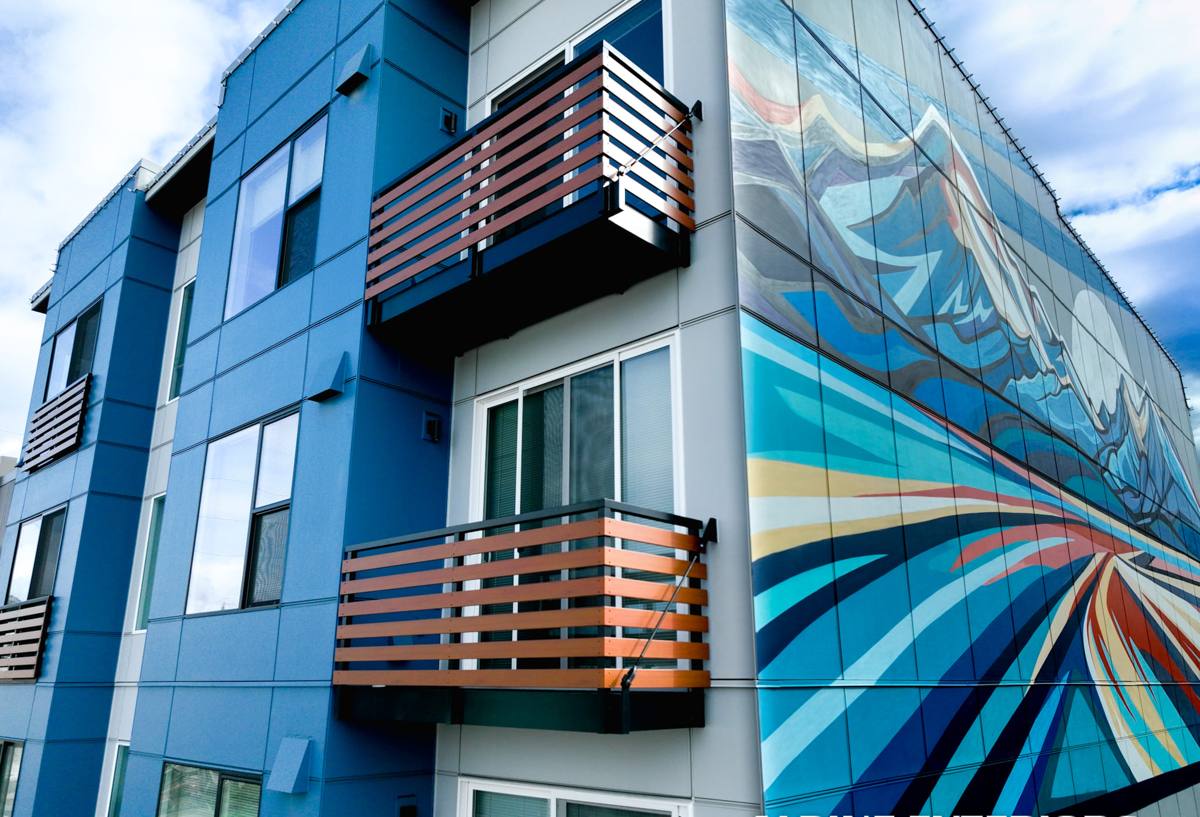
James Hardie offers ColorPlus in a range of curated palettes rather than an open-ended color wheel. That's intentional — the colors are engineered together with the finish chemistry, and the palette is built around families that work well on real homes: warm neutrals and beiges, cooler grays and taupes, deeper charcoal and espresso tones for trim and accent, and a set of blues and greens that read well on coastal-style homes. Some lines lean traditional and muted; others (marketed as bolder "statement" tones) are meant for accent walls, shutters, or a single feature elevation rather than a whole house.
The practical takeaway for a St. Pete homeowner: you're choosing from a smaller, vetted set of options rather than an infinite custom-match system. That's a trade-off. You give up unlimited customization, but every option in the lineup has been tested for adhesion and fade resistance as a complete system, not just picked off a color chip.
Light vs. Dark Colors in a Florida Climate
Lighter colors reflect more heat and tend to show less fading contrast over time, since any gradual fade is less visually obvious than on a saturated dark color. Darker colors absorb more solar heat, which can matter for siding facing direct west or south sun for most of the day, and any long-term color shift is more noticeable against a deep tone. Neither is off the table — Hardie's darker ColorPlus options are engineered with UV-resistant pigments specifically because dark colors are more demanding — but it's worth weighing on a house with a lot of unshaded, sun-facing wall area.
How the Finish Holds Up to Local Conditions
| Condition | Effect on Ordinary Field Paint | How ColorPlus Is Engineered to Respond |
|---|---|---|
| Intense year-round UV | Pigment fades, resin chalks and dulls over a few years | UV-resistant resin and pigment formulation baked on in multiple coats |
| Salt air / coastal humidity | Poor cure conditions weaken bond, accelerates peeling | Cured in controlled factory environment before installation |
| Wind-driven rain | Water intrusion at poorly sealed field-painted joints | Finish is on the board itself; performance still depends on correct installation and caulking at joints |
| Hurricane-force wind loading | Not a finish issue — a fastening and substrate issue | HZ5 product line and proper fastening schedule address wind resistance separately from color finish |
That last row matters: color and finish quality protect the surface, but wind performance during a hurricane comes down to the board itself and how it's fastened — which is a separate engineering question from which color you pick.
The Warranty Behind the Color
James Hardie backs ColorPlus finishes with a dedicated finish warranty, separate from the substrate warranty on the board itself, and it's transferable to a subsequent owner if the home sells within the coverage period — a detail worth mentioning to a buyer's agent down the road. The finish warranty covers issues like cracking, peeling, and fading beyond stated limits, provided the siding was installed according to Hardie's specifications. That last condition is why installation quality is inseparable from color performance: a warranty on a beautiful finish is only as good as the crew that put the boards up.
Maintenance and Touch-Up
ColorPlus is engineered to reduce maintenance, not eliminate it entirely. A few practical points:
- Factory-matched touch-up product is available for nicks and scratches from handling or minor impact — it's not a full repaint, just a spot match.
- Cut edges exposed during installation (at corners, openings, and trim) need to be sealed with the appropriate touch-up or primer per Hardie's instructions — this is a common spot where installers cut corners, and it's the first place moisture or fading shows up if skipped.
- Routine rinsing to remove salt residue and airborne grime helps the finish look its best longer, especially for homes closer to the water.
- Caulking at trim joints and penetrations should be inspected periodically — the caulk, not the ColorPlus finish, is usually the first thing to need attention in a coastal environment.
Cost Factors to Understand
ColorPlus siding costs more upfront than primed fiber cement that gets painted after installation, but the comparison isn't just sticker price — it's total cost over the time you own the house.
| Factor | Primed Board, Field-Painted | ColorPlus Factory Finish |
|---|---|---|
| Upfront material cost | Lower | Higher |
| Repaint interval in this climate | Often needed within 5-10 years depending on exposure | Designed to go significantly longer before a repaint is needed |
| Labor cost of eventual repaint | Full house repaint labor at some point | Spot touch-up only in most cases |
| Finish warranty | Typically none, or limited paint manufacturer warranty | Dedicated, transferable Hardie finish warranty |
For a lot of homeowners, the math favors ColorPlus once you account for a single avoided repaint — which in Pinellas County's climate tends to come sooner than in milder markets.
Installation Details That Affect How the Color Performs
A factory finish is only as durable as the installation underneath it. A few specifics worth asking a contractor about directly:
- Whether cut edges will be sealed with Hardie-approved touch-up product before or immediately after installation.
- What caulk and sealant products are being used at joints, and whether they're rated for the movement and exposure of a coastal installation.
- Fastener spacing and type, since Hardie's warranty terms are tied to installing per their published specifications.
- Whether the crew is factory-trained on Hardie products specifically, versus general siding experience.
Choosing a Color for a St. Petersburg Home
Beyond personal taste, a few things are worth weighing locally: HOA or neighborhood covenants in some Pinellas County communities restrict color ranges, older Florida bungalow and coastal-style homes tend to read well in the cooler and neutral palettes, and homes with a lot of unshaded western or southern exposure may hold up more predictably in lighter tones over the long haul. None of that means darker or bolder colors are off-limits — it just means it's worth thinking about sun exposure and neighborhood context before committing, since a full re-side isn't something you want to redo over a color you regret.
Getting This Right the First Time
The color decision and the installation decision aren't really separate conversations. A ColorPlus finish protects a home from St. Petersburg's sun and salt air for a long time, but that protection depends on correct cutting, sealing, and fastening — the parts of the job that don't show up in a color swatch. If you're weighing colors and want a clear, no-pressure look at what a specific palette would look like on your home, along with a straightforward estimate, we're happy to walk through it with you.