 St. Petersburg Siding
 Siding Is a Water Management System, Not a Wall Decoration
Most homeowners think of siding as the "skin" of the house — the thing that makes it look finished. That's true, but it undersells the job siding actually does. Every siding system, regardless of material, is designed to be part of a layered water management assembly: siding sheds the bulk of the water, a weather-resistant barrier (WRB) behind it manages what gets past the surface, and flashing directs water away from vulnerable points like windows, doors, and roof lines. When any one of those layers fails, the others are supposed to catch the slack. When more than one fails at once — which is common — water starts working its way into places it was never supposed to reach.
That's the real story behind almost every "siding failure" we get called out to look at in St. Petersburg. It's rarely the visible siding panel itself that's the root problem. It's what's happening two inches behind it, out of sight, for months or years before anyone notices a bubble, a soft spot, or a musty smell near an exterior wall.
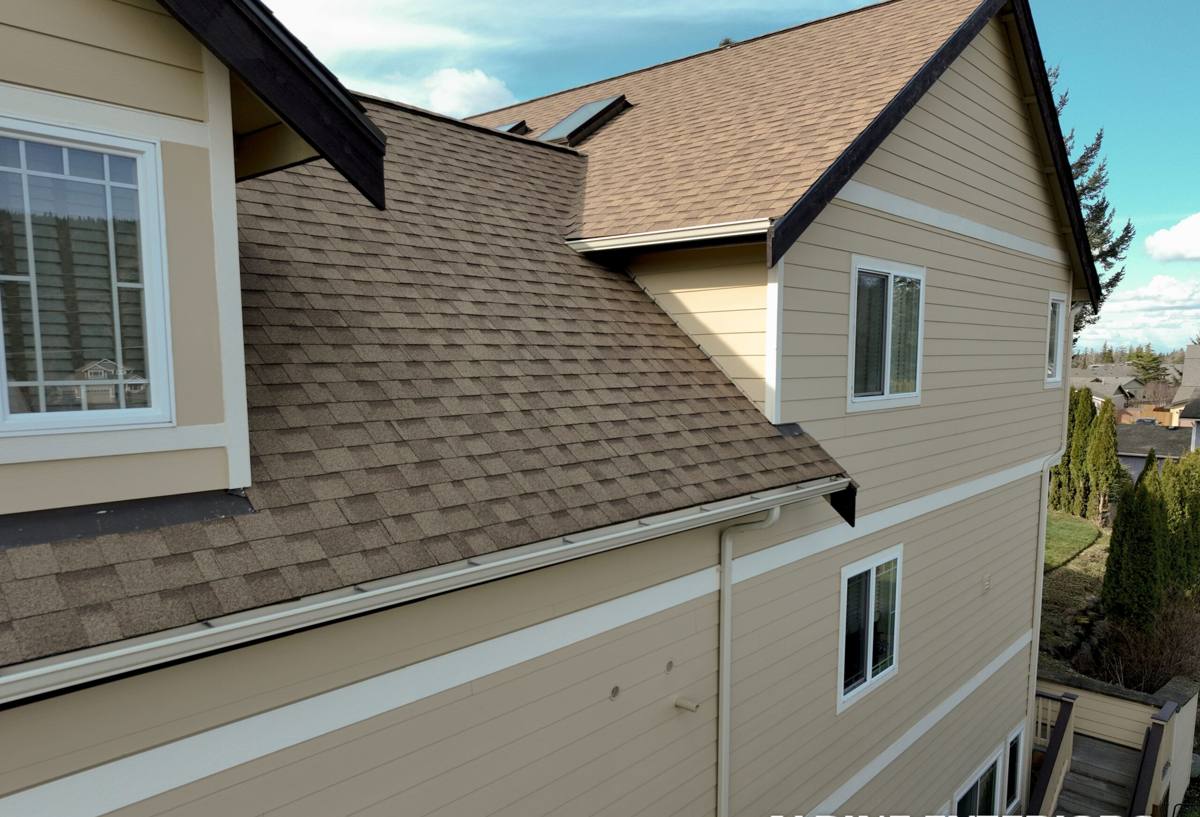
How Moisture Actually Gets Behind Siding
There's no single culprit — it's usually a combination of small gaps that add up. The most common entry points we find are:
- Failed or missing caulk joints around windows, doors, and trim, especially where the sealant has UV-degraded and cracked
- Improper or missing flashing above windows, doors, and horizontal trim boards where water is supposed to be diverted outward
- Butt joints and seams in lap siding that weren't sealed or flashed correctly during the original installation
- Nail and fastener penetrations that were overdriven, underdriven, or placed in the wrong zone of the panel
- Wind-driven rain forced sideways and upward under laps during storms, rather than falling straight down like normal rainfall
- Capillary draw, where water wicks upward through tight gaps even without wind pushing it
None of these are dramatic on their own. A single hairline gap in caulking doesn't flood a wall cavity. But Pinellas County doesn't get occasional rain — it gets sustained, wind-driven rain events, sometimes for days at a stretch during tropical systems. Small gaps that would barely matter in a drier climate get tested over and over, year after year, until they fail.
Wind-Driven Rain Is a Different Problem Than Rain
Standard rainfall mostly runs down a wall and off. Wind-driven rain, the kind St. Petersburg sees during tropical storms and hurricane-adjacent weather, gets pushed sideways and even upward against the building envelope. It finds every lap, seam, and penetration a straight-down rain never would. This is exactly why the water management layers behind the siding — not just the siding itself — matter so much here.
What Happens Once Water Gets Trapped
Once moisture is behind the siding, the clock starts. What happens next depends on how long it sits and what it's sitting against:
- Wood sheathing and framing begin to absorb moisture, softening over weeks to months of repeated wetting
- Mold and mildew colonize damp sheathing and insulation, often well before it's visible from inside the house
- Wet insulation loses much of its R-value, which shows up as higher energy bills before it shows up as visible damage
- Fasteners holding the siding in place can corrode and lose their grip, especially in a salt-air environment
- Left long enough, sheathing and even structural framing members can rot to the point of needing replacement, not just repair
The frustrating part for homeowners is that the siding itself often still looks fine on the surface while all of this is happening underneath. By the time you see a stain, a soft spot you can push a finger into, or paint bubbling and peeling in one consistent spot, the damage has usually been developing for a while.
Why This Is Worse in St. Petersburg Than in a Drier Climate
Every siding system in the country deals with some moisture exposure. What makes Pinellas County different is that several stressors hit the same wall assembly at once, year-round, instead of one at a time seasonally:
| Regional Factor | What It Does to Siding |
|---|---|
| Hurricane-force and tropical storm winds | Drives rain sideways and upward under laps and seams; stresses fasteners and panel edges |
| Intense, near-constant UV exposure | Breaks down caulk, paint, and some engineered wood coatings faster than in northern climates |
| High year-round humidity | Slows drying time for any moisture that does get behind the siding, extending the window for rot and mold |
| Salt air off the Gulf and Tampa Bay | Accelerates corrosion of fasteners, flashing, and metal trim components |
Individually, none of these are unusual for Florida. Together, they mean a siding system that's marginal on installation quality or moisture tolerance tends to show problems here years sooner than the same product would in a milder climate.
Warning Signs Worth Investigating
You don't need to climb a ladder to catch most of these early. A slow walk around the exterior a couple of times a year is usually enough:
| What You See | Likely Cause |
|---|---|
| Soft spots you can press in with a thumb | Sheathing or panel material has absorbed water and started to break down |
| Paint bubbling or peeling in one recurring spot | Moisture pushing out from behind the siding at that location |
| Dark streaking or staining below seams or trim | Water tracking down from a failed joint or flashing point |
| Musty smell near an exterior wall indoors | Mold or mildew growth in the wall cavity, often before visible exterior signs appear |
| Visible gaps or cracked caulk at trim and window edges | An active entry point for wind-driven rain |
| Warping or buckling panels | Repeated wet-dry cycling has distorted the material |
Not All Siding Materials Handle Moisture the Same Way
This is the part of the conversation that matters most when it's time to replace siding rather than patch it. Different materials respond to trapped moisture very differently, and that difference drives a lot of our recommendations.
| Material | Moisture Behavior |
|---|---|
| Vinyl siding | The panel itself doesn't absorb water, but it isn't a true water barrier either — it relies entirely on what's behind it, and gaps at seams and penetrations are common failure points |
| Engineered wood (LP-type) siding | Wood-based core is vulnerable at cut edges and fastener penetrations if factory sealant isn't maintained; once moisture reaches the core, swelling and deterioration can progress quickly |
| Primed spruce or cedar | Natural wood absorbs and releases moisture constantly; performance depends heavily on ongoing maintenance — repainting, resealing cut ends, and prompt repair of any damage |
| Fiber cement (James Hardie) | Cement-based composition doesn't swell, rot, or support fungal growth the way wood-based products can, and holds up to repeated wet-dry cycling without losing structural integrity |
This is exactly why our company installs James Hardie fiber cement exclusively. It's not that other materials are junk — vinyl and engineered wood both have a place and plenty of homes wear them well when properly installed and maintained. But given what this climate throws at a wall assembly, we'd rather stand behind one product system we know handles moisture, wind, UV, and salt air well over decades, than split our installation standards across several products with different vulnerabilities.
What Correct Installation Actually Involves
A siding failure is almost never just about the material — installation quality matters as much or more. Whatever material goes on a wall, the underlying assembly needs to be right:
- A continuous, properly lapped weather-resistant barrier (WRB) behind the siding
- Correct flashing above every window, door, and horizontal trim transition
- Proper fastener placement, following the manufacturer's nailing zone specifications exactly
- Sealed and back-primed cut ends on any material where the manufacturer requires it
- Adequate clearance between the bottom of the siding and the ground, roofline, or deck surface
- Correct panel gapping to allow for expansion and contraction without stressing joints
James Hardie's installation specifications are detailed for a reason — the HZ5 product line is engineered specifically for high-humidity, wind-driven-rain climates like ours, but that engineering only pays off when it's installed to spec. A great product installed carelessly can fail just as fast as a mediocre one.
Why We Point Homeowners Toward Hardie
When we're talking with a St. Petersburg homeowner about replacing siding — whether it's failing from moisture damage or just aging out — the recommendation almost always lands in the same place: James Hardie fiber cement, ColorPlus factory-finished, installed to manufacturer spec. It's non-combustible, it doesn't feed the kind of moisture-driven deterioration we see constantly in this climate, and the factory finish holds up to Florida sun far longer than field-applied paint. Paired with a strong transferable warranty, it's the system we're comfortable standing behind on a coastal Pinellas County home.
If you're seeing any of the warning signs above, or you just want an honest read on what's happening behind your current siding, we're glad to take a look. Reach out for a free, no-pressure estimate — no obligation, just a straight answer about what we find.