 St. Petersburg Siding
 Two Different Materials, One Decision
Homeowners in St. Petersburg shopping for new siding usually narrow their choices to two serious contenders: fiber cement and engineered wood. Vinyl gets ruled out early by most people who've lived through a Gulf Coast summer, and cedar or primed spruce are mostly gone from new installations because of upkeep. That leaves fiber cement, led by James Hardie, against engineered wood, led by LP SmartSide. Both are legitimate products with real manufacturers standing behind them. This page is about why our company made a deliberate choice between the two and why we don't install engineered wood siding, even though plenty of qualified contractors do.
We're not writing this to trash a competitor's product line. LP SmartSide has a place in the market and works fine in a lot of the country. Our reasoning is specific to what we've seen happen to wood-based siding products in a barrier peninsula climate — hurricane-force wind events, sustained high humidity, intense UV exposure nearly year-round, and salt air moving in off Tampa Bay and the Gulf. Those four conditions together are a harder test than most siding products were designed around.
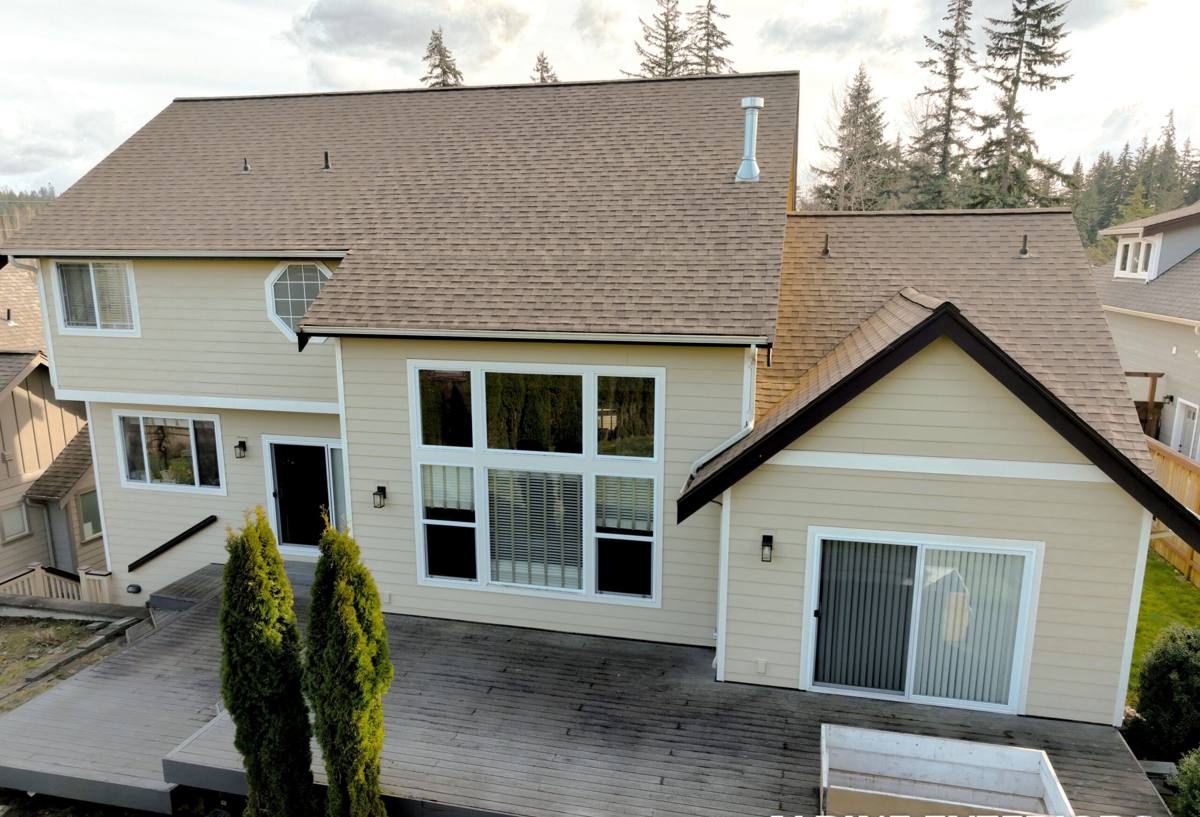
What Engineered Wood Siding Actually Is
LP SmartSide and similar engineered wood products are made from wood strands or wafers bonded with resins under heat and pressure, then coated with a resin-saturated overlay and factory primer. It's a genuine engineering improvement over old-style solid wood or hardboard siding from decades past — it resists splitting better, holds paint more evenly, and comes with treatment against fungal decay and termites baked into the substrate.
It installs light, cuts easily with standard wood tools, and costs less per square than fiber cement in most markets. For a contractor working in a drier, more temperate climate, it's a reasonable, cost-effective choice that a lot of homeowners are happy with for many years.
What Fiber Cement Siding Actually Is
Fiber cement is a mix of Portland cement, sand, and cellulose fiber, cured into a dense, stable board. There's no wood grain to swell, no organic material for fungus to feed on in the way it can with wood-based products, and the material itself doesn't burn. James Hardie's HZ5 and HZ10 product lines are engineered for specific climate zones — HZ5 for standard performance, HZ10 for the harsher moisture and humidity conditions found across Florida — and the ColorPlus finish is baked on at the factory under controlled conditions rather than field-painted.
It's heavier, requires carbide-tipped blades and different fastening practices, and costs more upfront. It is also, in our experience installing both products over the years before we standardized, the one that keeps performing after a decade of Pinellas County summers.
Where Engineered Wood Genuinely Holds Up Well
To be fair to the product: engineered wood siding performs reasonably in climates with moderate humidity and limited direct coastal exposure. It's lighter to handle on a job site, it's less brittle at the edges during installation than fiber cement can be if handled carelessly, and its lower material cost makes it attractive on tighter budgets. For inland homes in cooler, drier regions of the country, complaints about engineered wood siding are relatively rare when it's installed and maintained correctly.
The problem isn't that the product is poorly made. It's that its core vulnerability — moisture intrusion at cut edges and panel seams leading to swelling and eventual delamination — is exactly the failure mode that a Gulf Coast climate is built to trigger.
The Trade-Offs That Matter in a St. Petersburg Climate
Moisture and Edge Sealing
Engineered wood siding is only as good as its factory seal at every cut edge, nail penetration, and butt joint. Miss a spot in the field-applied sealant, and that's an entry point for water. In most of the country that's a minor risk. In St. Petersburg, where wind-driven rain during tropical storms and hurricanes gets forced sideways into wall assemblies at pressures a calm-weather rain never produces, every unsealed seam becomes a real liability. Fiber cement doesn't eliminate the need for proper flashing and joint treatment, but its cement-based core doesn't swell or rot the way a wood-strand core can once moisture gets past the surface.
UV and Sun Exposure
Pinellas County sees strong, direct UV exposure most of the year, not just in summer. Painted or coated wood-based surfaces break down faster under sustained UV than a factory-baked ColorPlus finish, meaning shorter intervals between repainting and more frequent inspection for cracking at the coating layer, which is exactly where moisture starts working its way in.
Salt Air
Homes within a few miles of Tampa Bay or the Gulf deal with airborne salt that accelerates wear on a lot of exterior materials, siding included. Salt doesn't break down cement the way it can corrode metal fasteners or degrade some coatings over time, so fastener selection and coating durability both matter more here than they would inland.
Wind Load
Hurricane-force wind events put real lateral load and uplift pressure on siding systems. Both products can be installed to meet Florida Building Code wind requirements when installed correctly, but fiber cement's density and rigidity give it an inherent advantage in impact resistance from wind-borne debris, which is a real consideration during named storm season.
Fire and Impact Considerations
Fiber cement is non-combustible. Engineered wood, even with treatment, is a wood product and will burn. For most homeowners this isn't the deciding factor day-to-day, but it matters for insurance conversations in some cases, and it matters if a wildfire or a neighboring structure fire is ever a risk. It's one more point in fiber cement's favor that we factor into recommending it as our standard.
Side-by-Side Comparison
| Factor | Fiber Cement (James Hardie) | Engineered Wood (LP SmartSide) |
|---|---|---|
| Core material | Cement, sand, cellulose fiber | Wood strands with resin binder |
| Combustibility | Non-combustible | Combustible (treated) |
| Moisture behavior | Stable, doesn't swell at properly cut edges | Can swell/delaminate if edge seal fails |
| Finish | Factory-baked ColorPlus finish | Factory primer, field paint typically needed |
| Weight/handling | Heavier, requires specific blades and fasteners | Lighter, easier field cutting |
| Upfront material cost | Higher | Lower |
| Typical warranty | 30-year limited, transferable (per Hardie terms) | Varies by product line, generally shorter on finish |
| Climate-specific engineering | HZ5/HZ10 lines built for humidity zones | Not zone-differentiated by climate |
What Correct Installation Actually Requires
Neither product performs the way its manufacturer intends if it's installed sloppily. Fiber cement demands its own discipline: proper fastener spacing and depth, correct clearance from grade and roof lines, sealed and flashed joints, and following Hardie's published installation instructions to keep the warranty valid. We install to those specifications because a warranty is only as good as the installation behind it.
- Minimum clearance maintained between siding and grade, roofline, and horizontal surfaces
- Fasteners set at correct depth and spacing per manufacturer specification
- All butt joints and penetrations properly flashed and sealed
- ColorPlus finish touch-up done only with manufacturer-matched product
- Proper house wrap and drainage plane behind the siding, not just the siding itself
- Documentation kept for warranty registration
Warranty Structure
James Hardie backs its fiber cement siding with a 30-year limited warranty on the substrate that's transferable to a new owner if the home sells, which matters in a market like St. Petersburg where homes change hands regularly. Engineered wood products carry warranties too, but they're generally structured with shorter coverage on the factory finish and more conditions tied to maintenance documentation. We'd rather stand behind a product with a warranty structure that holds up over the decades a homeowner actually keeps their siding.
Why We Standardized on James Hardie
We made the call years ago to install only James Hardie fiber cement siding, full stop. Not because engineered wood is a scam or a bad product in general — it isn't — but because we're a Pinellas County contractor, and the specific combination of hurricane wind exposure, salt air, relentless UV, and wind-driven rain that defines our climate is the environment where fiber cement's advantages actually show up over a 20 or 30-year ownership period. We'd rather install one product exceptionally well, understand its failure points cold, and warranty it with confidence than spread our expertise across multiple systems with different installation rules and different long-term track records in this climate.
If you're weighing fiber cement against engineered wood for a St. Petersburg home, we're happy to walk through your specific house, your sun and wind exposure, and what a correct Hardie installation would look like. Reach out for a free, no-pressure estimate — no obligation, just a straight answer about what your home needs.