 St. Petersburg Siding
 Homeowners in St. Petersburg ask us some version of the same question almost every week: "You install other brands too, right?" The honest answer is no. We install James Hardie fiber cement siding exclusively — not LP SmartSide, not vinyl, not Cemplank or Allura fiber cement, not primed spruce or cedar lap. That's not a marketing angle. It's a standard we set after years of watching which products actually hold up on homes in Pinellas County and which ones create callbacks, warranty headaches, or premature replacement. This page explains the reasoning, not just the conclusion.
Why We Narrowed to One Brand
Most siding contractors carry two or three product lines so they can quote whatever price point a homeowner wants. We used to do the same. The problem is that "good, better, best" pricing tiers usually mean installing products with different moisture tolerances, different fastening requirements, and different failure modes on the same crew, the same week. That's how mistakes happen — a crew trained on vinyl clearances gets sloppy with fiber cement gaps, or a product that needs field-painted cut edges gets treated like one that doesn't.
Standardizing on one system means our crews install it the same correct way every time, our warranty conversations are simple, and we're not asking a homeowner to gamble between four products with four different 20-year outcomes. James Hardie is the one we settled on after weighing performance against St. Petersburg's climate specifically, not against a national average.
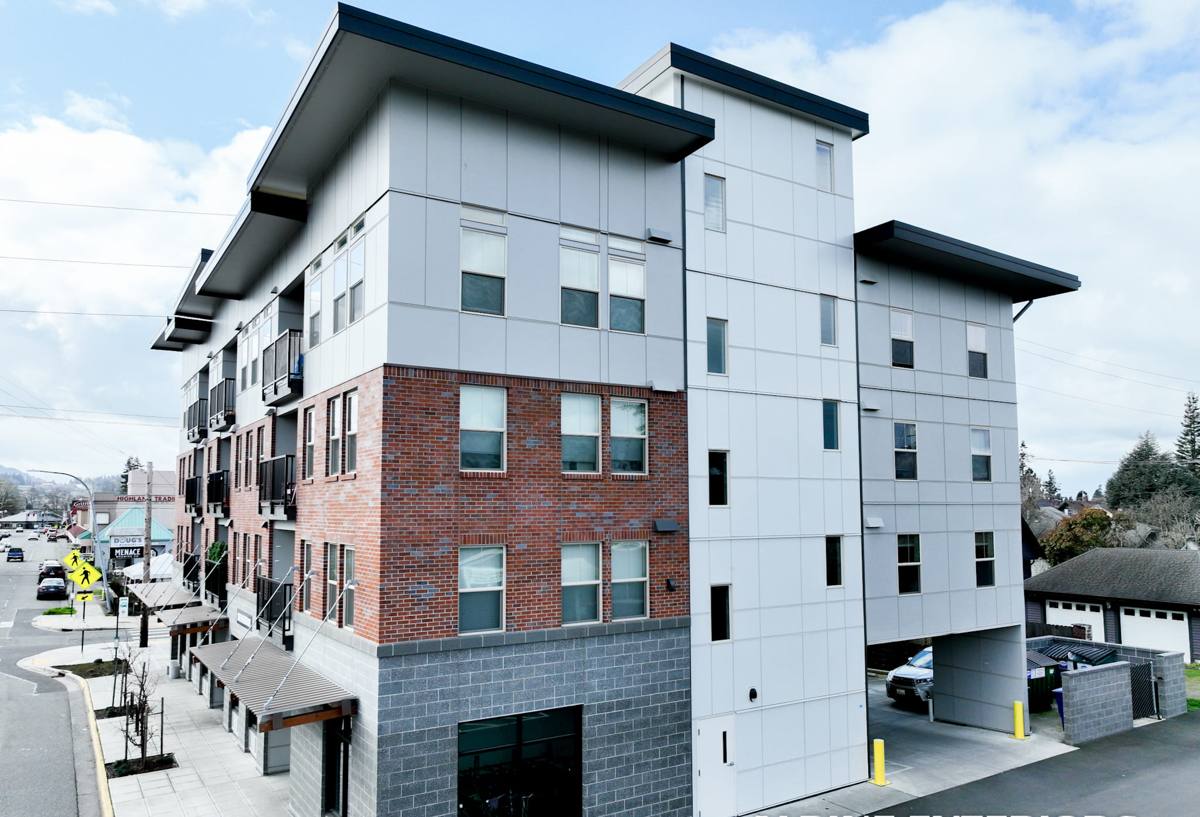
What Fiber Cement Actually Is
James Hardie siding is made from Portland cement, sand, and cellulose fiber, cured under pressure. It is not plastic (like vinyl), not a wood composite (like LP SmartSide), and not raw wood (like cedar or primed spruce). That composition matters because it determines how the material responds to the four things that wreck siding in this region: sustained UV, humidity, wind-driven rain, and salt-laden air off Tampa Bay and the Gulf.
Because it's cement-based, fiber cement doesn't warp with heat the way vinyl can, doesn't feed mold and rot the way wood fiber can when moisture gets behind it, and doesn't become brittle from UV exposure the way some plastics do after a decade in Florida sun. It's also non-combustible, which matters less for hurricane risk and more for everyday fire safety — grill flare-ups, electrical faults, neighboring structure fires.
The Pinellas County Climate Problem
St. Petersburg sits on a peninsula between Tampa Bay and the Gulf of Mexico, which means every home here deals with a combination most inland markets never see at the same intensity:
- Hurricane-force wind loading — siding has to stay fastened and intact through sustained wind events, not just resist a stiff breeze.
- Wind-driven rain — during tropical systems, rain doesn't fall straight down, it drives sideways into laps, seams, and trim intersections where lesser products let moisture track behind the cladding.
- Near-constant UV exposure — Florida gets more annual sun hours than almost anywhere in the continental U.S., which fades paint and degrades plastics faster than a four-season climate would.
- Salt air — proximity to the bay and Gulf means airborne salt settles on exterior surfaces, accelerating corrosion of fasteners and breakdown of some coatings.
Any one of those is manageable. All four, year-round, on the same wall assembly, is what separates a product that performs fine in a lab or in Ohio from one that actually holds up on a St. Petersburg home for 30 years.
The HZ5 Line: Engineered for This
James Hardie doesn't sell one formulation everywhere. The company engineers regional product lines, and the HZ5 (HardieZone 5) formulation is built specifically for hot, humid, coastal climates like ours — as opposed to the HZ10 formulation sold in colder, drier northern markets. HZ5 boards are engineered with moisture and humidity resistance as the priority, not freeze-thaw cycling, because freeze-thaw isn't what threatens siding in Pinellas County.
This regional engineering is one of the clearest differences between Hardie and generic fiber cement competitors. A board that's simply "fiber cement" isn't automatically formulated for Gulf Coast humidity and salt exposure — Hardie's climate-specific manufacturing is a deliberate design choice, and it's a meaningful part of why we standardized on this brand rather than a lower-cost fiber cement alternative.
What This Means Day to Day
In practice, HZ5 siding resists the two failure modes we see most often on older St. Petersburg homes: moisture intrusion at poorly flashed penetrations, and coating breakdown from sustained sun exposure. It won't prevent bad installation, but it gives a correctly installed system a real margin against the climate instead of fighting it from day one.
ColorPlus: Why the Finish Matters as Much as the Board
A siding board is only half the product. The other half is the finish, and this is where a lot of homeowners underestimate what they're buying. Standard primed siding — whether it's Hardie's own primed product, LP SmartSide, or cedar — needs to be field-painted after installation, and repainted on a cycle after that. In St. Petersburg's UV and humidity, that cycle runs shorter than the marketing brochures suggest.
James Hardie's ColorPlus finish is a factory-applied, baked-on coating system applied under controlled conditions before the boards ever reach a job site. It's backed by its own separate finish warranty, distinct from the substrate warranty on the board itself. The practical benefit: better fade and chip resistance than a field-applied coat, more color consistency across a whole elevation, and — for most homeowners — meaningfully longer time before a repaint is needed.
We push clients toward ColorPlus over primed-and-field-painted Hardie for the same reason we standardized on Hardie over other brands: a factory-controlled process is more consistent than a job-site process, and consistency is what survives this climate.
How the Products Compare
Homeowners shopping siding usually compare four materials, whether or not their contractor offers all of them. Here's an honest side-by-side of the trade-offs, based on how each performs specifically in a hot, humid, coastal, hurricane-exposed market — not a generic national comparison.
| Material | Moisture Behavior Here | UV/Salt Air Durability | Wind/Impact Resistance | Typical Maintenance Cycle |
|---|---|---|---|---|
| James Hardie (HZ5, ColorPlus) | Cement-based, doesn't rot; performance depends on correct flashing/gaps | Factory finish resists fade and salt-driven coating breakdown | Rated for high wind zones when installed to spec | Caulk/inspect periodically; repaint interval is long, not never |
| Vinyl siding | Doesn't rot itself, but seams and J-channels can let water track behind it | Can fade, chalk, or become brittle under sustained Florida UV over time | Can deform, crack, or blow off in high wind if under-fastened | Low, but color is not repairable — faded panels must be replaced |
| LP SmartSide (wood strand) | Engineered wood core; vulnerable to swelling and rot if moisture reaches the core | Coating protects it, but any breach exposes wood-based substrate | Generally solid when fastened correctly | Field-painted; repaint cycle and edge-sealing are critical, not optional |
| Cedar / primed spruce | Natural wood; most vulnerable to rot, insects, and moisture of the group | Requires ongoing sealing/staining to resist sun and salt damage | Adequate if maintained, but degrades faster unmaintained | Highest — regular refinishing required to avoid deterioration |
None of these materials are "bad" in a vacuum — vinyl and LP SmartSide are legitimate, widely used products elsewhere in the country. Our decision to install only Hardie is about which material gives the most consistent, lowest-maintenance outcome specifically in Pinellas County's combination of heat, humidity, salt air, and wind exposure.
What Correct Installation Actually Requires
Fiber cement's biggest weakness isn't the material — it's installation sensitivity. Hardie siding installed off-spec can fail early even though the product itself is sound. This is true of every fiber cement brand, not just Hardie, which is part of why we treat installation discipline as seriously as product selection. A correct James Hardie installation in a coastal wind zone includes:
- Proper clearance between siding and roofline, deck, or grade to prevent wicking
- Correctly sized starter strips and consistent reveal across every course
- Fastener placement and type matched to the wind zone and substrate (not just "enough nails")
- Sealed and back-primed field cuts, since factory finish only protects the face and edges, not raw cuts
- Proper flashing and weather-resistive barrier integration behind every window, door, and penetration
- Correct panel and joint treatment at butt seams to prevent water tracking
Any of those done wrong can undermine even the best-engineered board. That's a real trade-off worth being upfront about: fiber cement rewards precise installation and punishes shortcuts more than vinyl does. We think that trade-off is worth it for the durability gain, but it's also why we don't treat installation as an afterthought to the product sale.
The Warranty Structure
James Hardie backs its siding with a non-prorated limited warranty on the substrate, plus a separate finish warranty on ColorPlus coatings, and both are transferable to a new owner if the home sells within the coverage period — something worth mentioning to anyone weighing resale value. That transferability is a meaningful difference from many field-painted or shorter-warranty products, where coverage often resets to nothing the moment a home changes hands.
Warranty coverage is conditioned on installation following the manufacturer's specifications, which is another reason installation quality and product choice aren't really separate decisions — a warranty is only as good as the install it's attached to.
The Honest Cost Picture
James Hardie with ColorPlus finish generally costs more upfront than vinyl and is often comparable to or somewhat above field-painted fiber cement or engineered wood siding, largely because of the factory-finish process and the labor precision correct installation requires. We won't pretend it's the cheapest option on the table. The case for it is a total-cost-of-ownership argument: fewer repaint cycles, better resistance to the specific climate stresses that shorten the life of alternatives here, and a warranty structure that holds up if the house is sold. For a homeowner planning to stay in a St. Petersburg home for the long haul, or one who wants siding that won't need attention again in five to eight years, that math tends to favor Hardie. For someone doing a fast, budget-driven flip, it may not be the right call — and we'll say so directly if that's the situation.
Getting a Straight Answer for Your Home
Every home's exposure is a little different — a house facing open water in a flood zone deals with more wind-driven rain and salt than one tucked a few blocks inland, and existing wall assembly, trim, and moisture history all factor into what a re-side project actually needs. If you're weighing siding options for a St. Petersburg home and want a straight answer about what your house needs — not a sales pitch for whatever's in stock — we're happy to walk the exterior with you and put together a free, no-pressure estimate.