 St. Petersburg Siding
 Vinyl siding is the most common siding material sold in the United States, and there's a reason for that: it's inexpensive, it goes up fast, and in a lot of the country it holds up fine for a couple of decades. If you've called around St. Petersburg for siding quotes, you've probably gotten at least one vinyl bid that came in well under everything else. We get asked about it constantly, and we think homeowners deserve a straight answer instead of a sales pitch. So here it is: we don't install vinyl siding, and this page explains exactly why, based on how the product actually behaves in Pinellas County's climate rather than how it performs in a showroom or in Ohio.
What Vinyl Siding Actually Is
Vinyl siding is extruded PVC (polyvinyl chloride) formed into interlocking panels, usually with a woodgrain or smooth texture stamped into the surface. Color is mixed into the material itself rather than sprayed on, which is a genuine advantage in normal conditions — light surface scratches don't show a different color underneath. It's lightweight, it doesn't rot, and insects don't eat it. Installed correctly on the right house, it does its basic job of keeping water out.
The issue isn't that vinyl is a bad product in general. The issue is what happens to that specific chemistry — PVC — when you put it on a home a few miles from Tampa Bay, under a Florida sun, for twenty summers in a row.
How It's Installed
Vinyl panels hang on a wall rather than being fastened rigidly to it. Nails go through slotted holes near the top of each panel, and the panel is left to float — it has to be able to expand and contract with temperature swings, or it buckles. That "hung, not fastened" installation method is exactly what makes it fast and cheap to install, and it's also the root of most of the problems we'll walk through below.
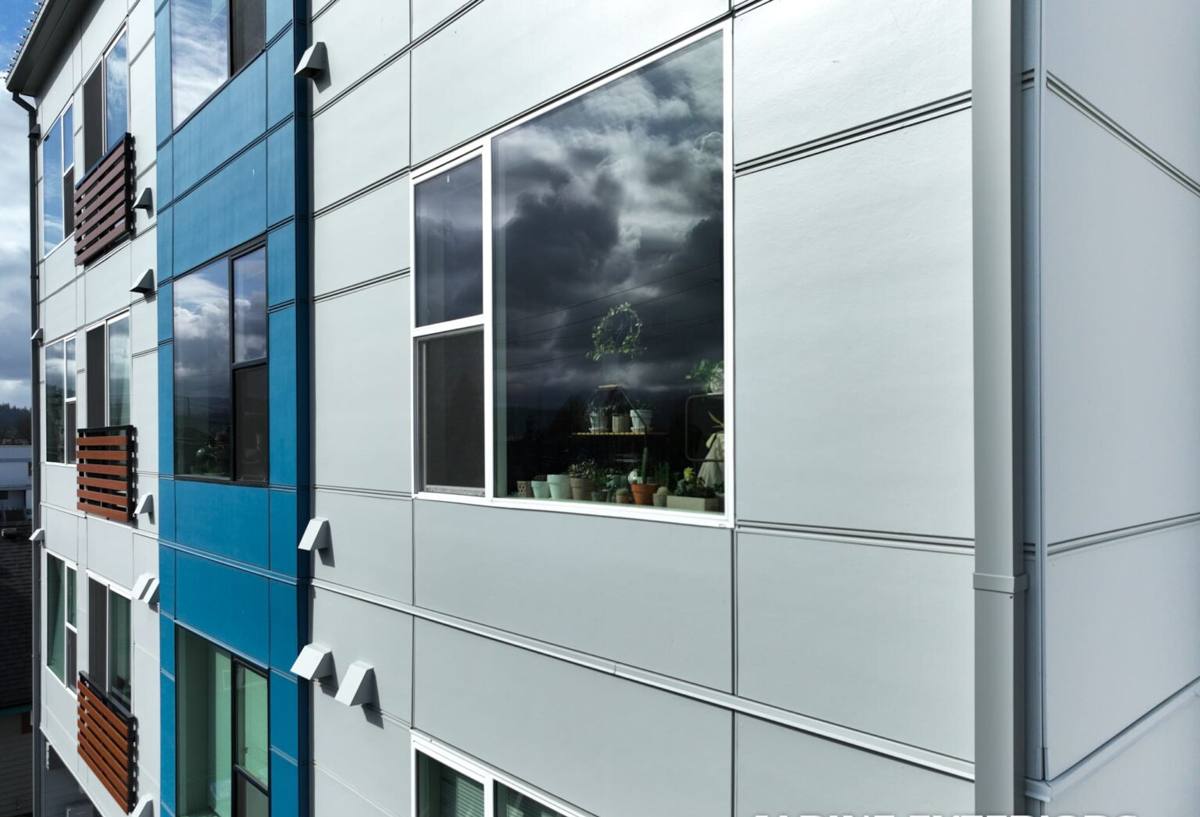
Problem One: Florida Heat and Sun Warp and Fade It
PVC is a thermoplastic. That means heat doesn't just fade it — heat physically softens and reshapes it. St. Petersburg roofs and walls routinely see surface temperatures well above the surrounding air temperature on a sunny July afternoon, and vinyl siding facing south or west absorbs that heat directly. Over years of that cycle, panels can warp, ripple, or sag, especially near dark colors, which absorb more heat than light ones. That's also why vinyl manufacturers restrict which colors you're allowed to use in hot climates — many darker shades are simply off-limits or come with installation caveats specifically because of heat distortion risk.
UV exposure is the other half of it. Pinellas County gets strong, direct sun essentially year-round, not just in summer. UV breaks down the plasticizers in PVC over time, and the visible result is chalking — a dull, powdery surface — and gradual color fade, most noticeably in darker or richer colors. Once vinyl fades or chalks, there's no refinishing it back to new; the color is baked into the material, so restoring it means replacing panels, and matching old, sun-faded vinyl to new stock is rarely a clean match.
Problem Two: Wind-Driven Rain and Hurricane Exposure
Because vinyl panels are hung loosely and interlock at the edges rather than being sealed as a continuous water barrier, the whole system depends on gravity and lap design to shed water. In a normal rain, that's fine. In the kind of wind-driven, sideways rain that comes through with a tropical system or a strong summer storm off the Gulf, water can get pushed up and behind panels rather than running down and off them. What happens behind the siding then depends entirely on the quality of the underlying weather-resistant barrier and flashing — which is a bigger deal on a hung system than on one that's mechanically fastened tight to the wall.
Wind load is the other half of hurricane exposure. Vinyl siding is rated for wind resistance, but those ratings assume correct nailing pattern, correct fastener spacing, and panels that haven't already been loosened by years of thermal cycling. A panel that's been expanding and contracting every summer for fifteen years and then takes a direct hurricane-force gust doesn't behave the same as one on day one. We're not saying vinyl always fails in a storm — plenty of it doesn't — but the margin for installation error is thinner than most homeowners realize, and Pinellas County is not a market where you want a siding system with a thin margin for error.
Problem Three: Salt Air and Coastal Corrosion
St. Petersburg sits on a peninsula between Tampa Bay and the Gulf, and salt-laden air travels much farther inland here than people expect — it's not just a beachfront problem. Salt air doesn't degrade the vinyl panel itself the way it corrodes metal, but it does accelerate the breakdown of the caulking, sealants, and exposed fasteners that hold the whole system together and keep water out at trim, corners, and penetrations. Once those seals start failing, the panels themselves might look fine while the assembly behind them is no longer doing its job.
What Vinyl Gets Right — To Be Fair
It would be dishonest to pretend vinyl has no upside. In climates without intense sustained heat, low-UV regions, or inland areas without hurricane exposure, vinyl siding has a long track record of reasonable performance for the price. Its strengths are real:
- Lowest material and labor cost of any common siding option
- Color runs through the material, so small scratches don't reveal a different substrate color
- Doesn't rot, and isn't a food source for termites or wood-boring insects
- Fast installation timeline compared to fiber cement or masonry systems
- Low maintenance in the sense that it never needs painting
None of that is marketing spin — those are legitimate reasons vinyl remains the best-selling siding in the country. They just don't outweigh what happens to the product specifically in a hot, humid, storm-exposed, coastal Florida market, which is the only market we install in.
How Vinyl Compares to What We Actually Install
| Factor | Vinyl Siding | James Hardie Fiber Cement |
|---|---|---|
| Base material | PVC (thermoplastic) | Cement, sand, cellulose fiber (non-combustible) |
| Heat/UV behavior | Can warp, ripple, chalk, and fade under sustained heat and sun | Dimensionally stable; ColorPlus factory finish is engineered for UV resistance |
| Installation method | Hung loose to allow expansion/contraction | Fastened tight to the wall per manufacturer spec |
| Wind-driven rain | Relies on lap/gravity drainage behind loose panels | Rigid, tightly fastened assembly with engineered water management |
| Salt air resistance | Sealants and fasteners degrade faster; panel itself is inert | Formulated for coastal exposure; HZ5 product line built for humid climates |
| Fire behavior | Combustible plastic; can melt or ignite near heat sources | Non-combustible |
| Repainting/refinishing | Color is embedded — fading means replacement, not repainting | Can be repainted; factory finish carries its own long-term warranty |
| Typical warranty structure | Often prorated after early years | Strong transferable warranty on the board itself |
Why We Standardized on James Hardie Instead
We stopped offering a menu of siding options and settled on one system: James Hardie fiber cement, installed to the manufacturer's specification. Hardie's HZ product lines are specifically engineered for climates like ours — hot, humid, storm-exposed, and salt-adjacent — rather than adapted from a national product line as an afterthought. It's non-combustible, which matters given how much of the Tampa Bay area sees lightning activity and grill/fire exposure at the exterior. The ColorPlus factory finish is baked on under controlled conditions and is formulated to resist the same UV load that chalks and fades vinyl, and it comes with its own finish warranty separate from the board itself.
Just as important: fiber cement is fastened rigidly to the wall rather than hung loose, which means the whole assembly — siding, house wrap, flashing, fasteners — behaves as one system rather than a floating panel relying on gravity. That matters a lot more here than it would in a mild inland climate, because Pinellas County asks more of an exterior than most of the country does.
What This Means If You're Comparing Bids
If you're getting quotes and one contractor is proposing vinyl at a noticeably lower price, that's not automatically a red flag — it may just reflect the real cost difference between the materials. What we'd encourage you to ask, regardless of which contractor you're talking to, is how the product is rated for wind exposure in your specific area, what the color and heat restrictions are for the product you're being sold, and what the warranty actually covers versus what it excludes.
- Ask whether the specific vinyl color you're considering has any heat or climate-zone restriction from the manufacturer
- Ask what wind rating the installed system carries, and whether that rating assumes a specific fastening pattern
- Ask whether the warranty is prorated, and at what year the coverage starts stepping down
- Ask who is responsible if water intrusion happens behind the siding rather than through it
- Compare the total installed cost against the expected replacement interval, not just the sticker price
The Honest Bottom Line
Vinyl siding isn't a scam and it isn't automatically a bad choice everywhere. It's a product built around a cost and simplicity trade-off that makes sense in a lot of climates. Pinellas County's combination of sustained heat, intense UV, hurricane-force wind exposure, and coastal salt air is a tougher environment than the one vinyl was designed to shine in, and we'd rather turn down the job than install something we don't think will hold up to what a St. Petersburg exterior actually has to deal with. That's the whole reason we standardized on one fiber cement system instead of offering a menu of products with very different long-term outcomes.
If you'd like to talk through what's actually driving your siding decision — budget, timeline, storm exposure, HOA rules, or just wanting an honest second opinion on a bid you already have — we're happy to walk your home with you and give you a free, no-pressure estimate using the form below.