 St. Petersburg Siding
 Homeowners in St. Petersburg ask us about LP SmartSide more than almost any other product, usually because a neighbor has it, a builder quoted it, or it showed up cheaper on a bid from another contractor. It's a legitimate, code-approved building product with real engineering behind it. We still don't install it. Not because it's a scam or a bad product on paper, but because of how it performs over 15-20 years in a coastal Gulf climate specifically, and because we've made a business decision to install one siding system we can stand behind completely rather than several we'd have to caveat. Here's the honest breakdown of what LP SmartSide is, what it does well, and where it runs into trouble in Pinellas County.
What LP SmartSide Actually Is
LP SmartSide is an engineered wood siding product. It's made from wood strands, similar to what you'd find in OSB (oriented strand board) roof decking, bonded with resins under heat and pressure, then treated with a zinc borate solution called SmartGuard to resist termites and fungal decay. It comes as lap siding, panels, and trim, and can be purchased primed for field paint or with LP's factory-applied ExpertFinish coating.
Why It Exists
SmartSide was developed as an alternative to traditional cedar and to older generations of hardboard siding that had well-documented moisture failures in the 1990s. LP re-engineered the resin systems and added the borate treatment specifically to address those old failure modes. It's a genuinely improved product compared to what came before it.
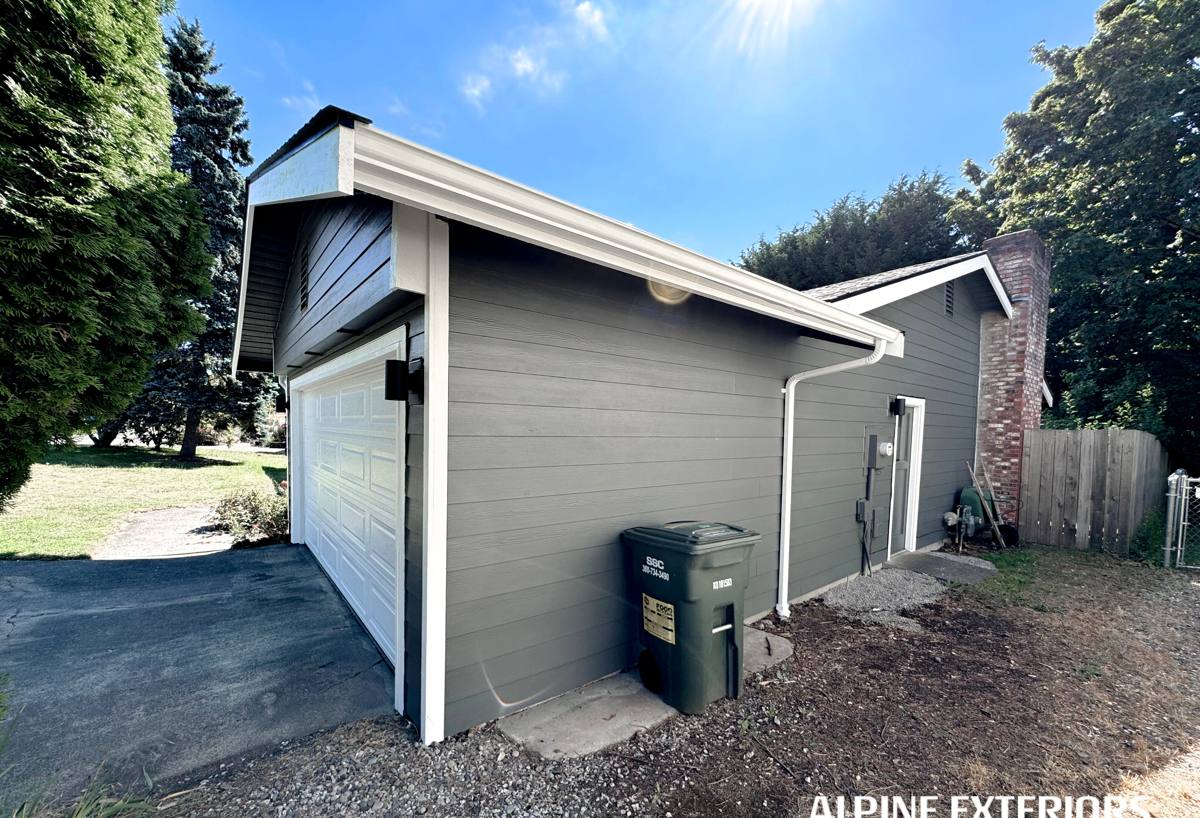
What LP SmartSide Gets Right
We're not going to pretend there's nothing to like here. Homeowners deserve the real picture.
- It cuts, nails, and handles like real wood, which some crews and homeowners prefer over the more brittle feel of fiber cement.
- It's noticeably lighter than fiber cement, which can speed up installation labor.
- Impact resistance is solid, generally better than vinyl and comparable to fiber cement in most independent testing.
- The borate treatment does provide real, tested resistance to termites and fungal decay when the product stays properly sealed.
- LP backs it with a warranty structure that includes a 5-year 100% replacement period followed by a prorated term, with an extended finish warranty available on ExpertFinish products.
If you're building in a dry, low-humidity climate with mild winters and no hurricane exposure, SmartSide has a reasonable track record. That's just not the climate we work in.
Why Pinellas County's Climate Is a Different Test
St. Petersburg sits on a peninsula between Tampa Bay and the Gulf of Mexico. That means near-constant humidity, salt-laden air, intense year-round UV exposure, and direct exposure to hurricane-force wind and wind-driven rain during storm season. Every siding product sold nationally gets tested against some version of this environment, but wood-based products face a specific problem the others don't: the base material itself absorbs and swells with moisture. Fiber cement and vinyl don't have that vulnerability in the same way.
Wind-Driven Rain
During a tropical system, rain doesn't just fall — it gets driven sideways and upward into laps, seams, and fastener penetrations under pressure. Any siding product can leak if installed poorly. But an engineered wood product that absorbs water at an exposed edge doesn't just leak; it can swell, and swelling at a seam or cut end is how long-term problems start, even after the water itself is gone.
Sustained Humidity
Pinellas County doesn't get a dry season the way most of the country does. Relative humidity sits high for most of the year. That means any moisture that does get behind or into the product has fewer opportunities to fully dry out between events, compared to a drier inland climate.
The Maintenance Schedule Most Homeowners Don't See Coming
This is the part that gets left out of a lot of sales conversations. LP SmartSide's own installation and warranty documentation requires every field-cut edge, every panel joint, and every fastener penetration to be sealed with specific approved caulks and primers, and it requires that caulking and paint film be inspected and maintained on a recurring schedule to keep the warranty valid. In a high-UV, high-humidity, coastal climate like ours, caulk and paint degrade faster than they would in a milder region, which means that maintenance interval effectively gets shorter here, not longer.
In practice, that means:
- Cut ends and seams need to be caught, sealed, and re-sealed as caulk breaks down from UV exposure.
- Paint film needs to be monitored and refreshed to keep water from reaching the wood substrate.
- Homeowners who skip a maintenance cycle — which is easy to do since the failure isn't visible from the street — can end up with hidden moisture damage before anyone notices.
- A missed maintenance step can also affect warranty coverage, since most engineered wood warranties are conditioned on documented upkeep.
We install exterior siding as a long-term system, not a product that needs a maintenance calendar to avoid moisture damage. That's a core part of why we standardized on something else.
Where Moisture Actually Gets In
Every siding failure we've seen on wood-based products traces back to a handful of predictable entry points. None of them are exotic — they're the ordinary places water always tries to get in, and they're the same places that need extra discipline on any wood-based product.
| Entry Point | Why It's a Risk on Engineered Wood |
|---|---|
| Field-cut ends at corners, windows, doors | Raw cut exposes the wood core; must be field-sealed correctly every time, on every cut |
| Horizontal lap joints | Butt joints rely entirely on caulk staying intact; UV and heat cycling break caulk down faster here |
| Fastener penetrations | Each nail or screw is a tiny breach; incorrect fastener type or placement accelerates wear |
| Ground-level and roofline clearances | Splash-back and roof runoff concentrate moisture exposure at these zones |
None of these risks are unique to LP specifically — they apply to any wood-based siding. But they're the reason engineered wood siding is more installation-sensitive than fiber cement in a climate like ours: a small lapse in field technique has a bigger downstream consequence here than it would in a drier region.
Combustibility Is Part of the Conversation Too
LP SmartSide is a treated wood product, which means it's combustible, even with the borate treatment (which addresses insects and fungal decay, not fire). James Hardie fiber cement siding is non-combustible. Wildfire exposure isn't the primary risk profile in Pinellas County the way it is out West, but non-combustibility still matters for insurance considerations, for fire-rated assembly requirements near property lines in some zoning situations, and simply as a baseline material property we'd rather not have to explain away on every job.
Warranty Structure: Read the Fine Print
Both LP and James Hardie offer meaningful warranties, but the structure and the conditions attached matter as much as the length.
| Factor | LP SmartSide (Engineered Wood) | James Hardie Fiber Cement |
|---|---|---|
| Base material | Wood strand composite, moisture-reactive | Cement, sand, cellulose fiber — dimensionally stable, non-combustible |
| Field maintenance to keep warranty valid | Requires ongoing caulk/paint inspection and upkeep on a defined schedule | ColorPlus factory finish reduces field painting/caulk maintenance burden significantly |
| Coastal/humidity engineering | General national product | Climate-specific HZ product line engineered for Gulf/humid regions |
| Combustibility | Combustible (treated wood) | Non-combustible |
| Warranty transferability | Prorated, conditions apply | Transferable, non-prorated coverage on most product lines |
Warranty disputes over moisture damage tend to come down to whether maintenance was documented and performed on schedule. That's a burden we don't want to put on our clients, and it's a liability conversation we don't want to have five or ten years after the install.
Why We Standardized on James Hardie Instead
We made a deliberate call a while back to install one primary siding system — James Hardie fiber cement — rather than offering a menu of products with different risk profiles. Hardie's board is cement-based, not wood-based, so it doesn't swell, rot, or feed termites the way a wood substrate can if a seal fails. The HZ10 product line is specifically engineered for high-humidity, high-UV Gulf climates like ours. The ColorPlus factory finish is baked on under controlled conditions and holds color and film integrity far longer than field-applied paint, which cuts down dramatically on the repainting and recaulking cycle homeowners otherwise have to stay on top of. It's non-combustible, and the warranty coverage is transferable without the same maintenance-documentation conditions attached to engineered wood products.
That's not a knock on every home currently wearing LP SmartSide in this area — plenty are performing fine, especially where installation and maintenance have been diligent. It's a reflection of what we're willing to put our name behind for the next 20-plus years on a home exposed to hurricane season, salt air, and Florida sun every single year.
Questions to Ask Before You Choose Engineered Wood Siding
If you're still considering LP SmartSide or a similar engineered wood product for a home in Pinellas County, ask any contractor bidding the job these questions before you sign anything:
- Will every field cut be sealed with the manufacturer-approved sealant, and how is that verified — not just promised?
- What's the required caulk/paint maintenance interval to keep the warranty valid, and who is responsible for tracking it?
- What fastener type and spacing does the manufacturer require for coastal wind exposure, and will the crew follow it exactly?
- Is the warranty transferable to a future buyer, and what conditions would void it?
- What happens at ground-level clearances, roof-to-wall transitions, and window/door flashing — the highest-risk moisture zones on any siding job?
If a contractor can't answer those clearly and specifically, that's worth knowing before the product goes on your walls, regardless of which siding you ultimately choose.
If you're weighing your siding options for a home in St. Petersburg or elsewhere in Pinellas County, we're glad to walk through what we see on real jobs in this climate and give you a straight answer, not a sales pitch. Reach out for a free, no-pressure estimate — we'll look at your home specifically and tell you what we'd actually recommend.