 St. Petersburg Siding
 Siding Built for the Euclid-St. Paul Neighborhood
Euclid-St. Paul sits in one of St. Petersburg's older, well-established residential pockets, where tree-lined streets and a mix of home ages mean every exterior has its own history of sun exposure, storm patches, and past repairs. When we send a crew into this part of Pinellas County, we're not guessing at what the climate has done to a house — we've worked on enough homes in the surrounding blocks to know the pattern: siding that looks fine from the curb but is quietly failing at the seams, the trim, and the low corners where water lingers after a downpour.
St. Petersburg's exterior wear-and-tear is not subtle. Hurricane-force wind events, intense year-round UV, wind-driven rain, and salt-laden air off Tampa Bay all take a toll on building materials, and they don't take turns — they hit at the same time, on the same wall. A siding product that handles heat well but swells with moisture, or resists water but chalks and fades under UV, only solves half the problem. That's the core reason we standardized on one material system rather than offering a menu of options that each fail in a different way.
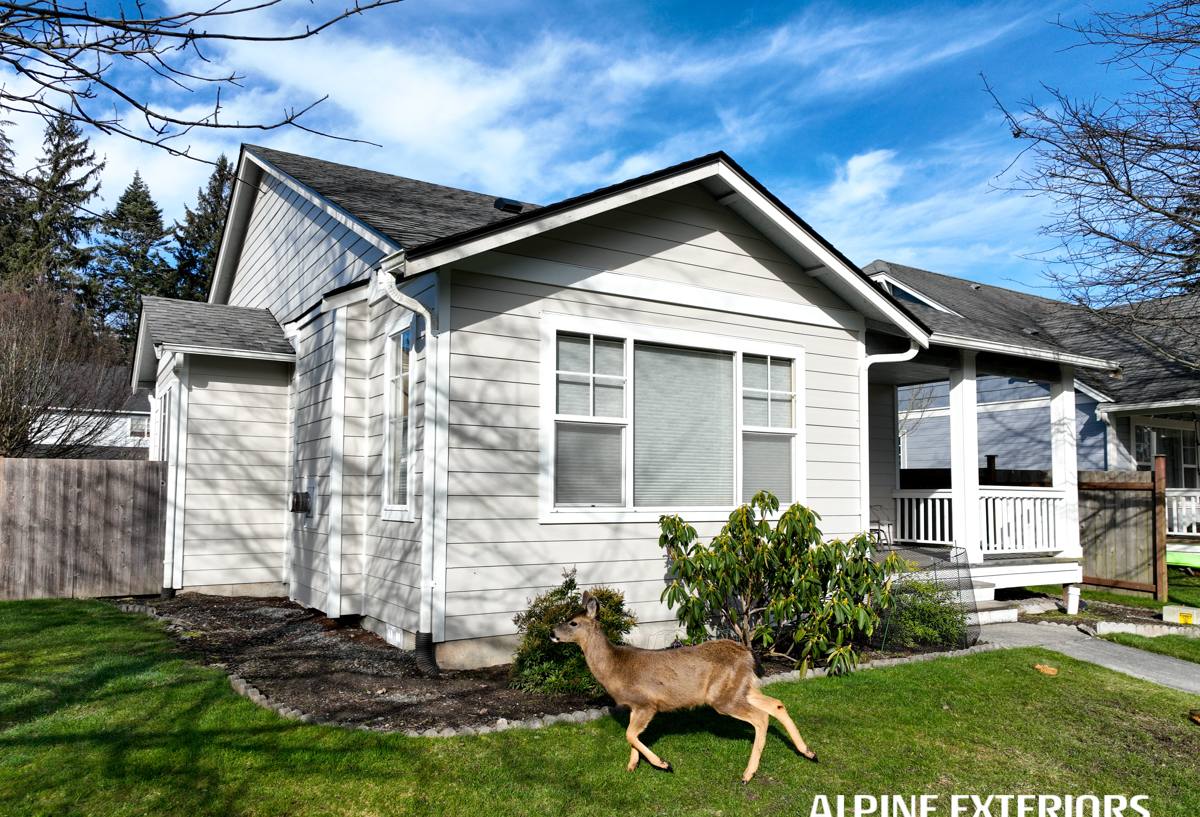
What Euclid-St. Paul Homes Actually Face
Every neighborhood in St. Petersburg deals with the same regional climate, but the specifics of an individual home — its age, orientation, tree canopy, and construction era — determine where problems actually show up. In an established neighborhood like this one, we typically see:
- Older siding materials (wood, early-generation composite, or aging vinyl) that have been through multiple hurricane seasons without a full inspection
- Sun-facing walls with visibly more fading, chalking, or cracking than shaded elevations
- Trim and butt joints where caulking has failed and moisture has started working its way behind the cladding
- Salt-air corrosion on fasteners, flashing, and any exposed metal components
- Humidity-driven mold or mildew staining in shaded, low-airflow areas along the siding
None of this is unique to Euclid-St. Paul — it's what Pinellas County does to exterior materials generally. But knowing which of these issues shows up most on a given street, given the tree cover and prevailing wind exposure, is exactly the kind of local knowledge that makes an inspection more useful than a generic checklist.
Why "Local Crew" Isn't Just a Marketing Line
A crew that works St. Petersburg neighborhoods regularly knows the county's permitting requirements, understands what wind-load and water-resistance standards apply in this coastal zone, and has seen firsthand how different products hold up after two or three actual hurricane seasons — not just in a lab test. That matters when you're deciding what to put on your home, because a product's marketed performance and its real-world performance on a house four blocks from the bay can be two different things.
Why We Only Install James Hardie Fiber Cement
We get asked regularly why we don't offer vinyl, LP SmartSide, or other engineered wood products, since they're common and often cheaper up front. The honest answer is that we've made a professional judgment call based on how materials perform specifically in this climate, and we'd rather stand behind one system we trust completely than offer a menu where some options are more likely to disappoint a homeowner five or ten years down the road.
| Factor | James Hardie Fiber Cement | Vinyl / Engineered Wood Alternatives |
|---|---|---|
| Moisture behavior | Non-organic core, engineered to resist moisture-related swelling and rot | Vinyl can warp/distort in heat; engineered wood products are organic-based and vulnerable to moisture intrusion if seams fail |
| UV/fade resistance | ColorPlus factory finish is baked on and warrantied against fading and chipping | Field-applied or lower-grade finishes often fade or chalk faster under constant Florida sun |
| Wind/impact performance | Dense, non-combustible material holds up to wind-driven debris and hurricane-force gusts | Vinyl is lighter and more prone to cracking or blowing off in high wind; impact resistance varies by product |
| Fire rating | Non-combustible — a real factor for insurance and safety | Vinyl and wood-based products are combustible |
| Long-term maintenance | Occasional wash-down; factory finish reduces repainting cycles | Often needs more frequent caulking, painting, or seam maintenance |
To be fair to the alternatives: vinyl is inexpensive and easy to install fast, and engineered wood products can look attractive with the right trim details. We're not claiming those products are worthless — plenty of homes around the country wear them fine. Our position is narrower and more specific to this climate: on a coastal Florida property that will see decades of intense UV, salt air, and periodic hurricane-force wind, we don't think those trade-offs are worth it, and we're not willing to install something we don't believe will hold up to the standard we want to be known for.
The James Hardie System We Install
James Hardie makes climate-specific product lines, and for Gulf Coast homes we work primarily with their HZ5 formulation, engineered for high-humidity, moisture-heavy regions like ours. The system includes lap siding, vertical panels, shingle-style siding for architectural detail, and matching trim boards, so a home can get a cohesive look rather than mismatched materials at the transitions.
ColorPlus finish is the other half of the equation — it's a factory-applied, baked-on finish rather than something painted on site, which means better fade resistance and a warranty structure that covers the finish itself, not just the substrate. For a homeowner, that translates to fewer repaint cycles and a more consistent look over the life of the siding.
Installation Details That Actually Matter
Fiber cement siding is only as good as its installation. Hardie is explicit about clearances, fastening patterns, and flashing details, and skipping those steps is where most siding failures — regardless of brand — actually originate. On every job we:
- Maintain proper clearance between siding and grade, roofing, and other surfaces to prevent wicking moisture
- Use corrosion-resistant fasteners suited for coastal, salt-air exposure
- Install and integrate flashing correctly at windows, doors, and butt joints — the most common failure points
- Follow Hardie's specified fastening pattern and nailing zones rather than shortcutting for speed
- Caulk and seal per manufacturer spec, not just "close enough"
This level of care is also what keeps a manufacturer warranty valid — most fiber cement warranty claims we've seen elsewhere get denied not because the material failed, but because installation didn't follow spec.
Roofing, Windows, and Decks: The Full Envelope
Siding doesn't work in isolation. A home's roof, windows, and any attached deck or porch structure all interact with the same wind, water, and UV exposure, and a weak point in any one of them can undermine the others — a leaking roof flashing can rot sheathing behind good siding, and failing window seals can let wind-driven rain behind trim regardless of how well the siding itself was installed. Because we handle roofing, windows, and decks alongside siding, we can look at a Euclid-St. Paul home as one connected system rather than four separate trades that don't talk to each other. That matters most during storm-prep season, when the weak point in an exterior is often not the material everyone assumes.
What Affects Your Project Cost
| Factor | Why It Matters |
|---|---|
| Home size and story count | More surface area and access complexity (ladders, staging) increase labor time |
| Extent of tear-off | Full removal of old siding vs. partial repair affects both labor and disposal cost |
| Underlying damage | Rotted sheathing or moisture damage found during tear-off requires repair before new siding goes on |
| Siding profile and trim complexity | Shingle-style siding and detailed trim work take longer than straight lap siding runs |
| Finish selection | ColorPlus factory colors vs. field-painted options affect material and finishing cost |
We don't publish blanket price lists because every home in this neighborhood has a different combination of these factors — an accurate number only comes from an actual look at your walls, trim, and any damage that isn't visible from the ground.
A Quick Homeowner Checklist
- Walk your home's exterior after each storm season and look for cracking, gapping, or soft spots near the base of walls
- Check caulk lines at trim and window edges — failed caulk is often the first sign of a bigger moisture problem
- Note any sections with heavier fading or chalking; that's usually your most sun-exposed elevation and the first to need attention
- Ask any contractor for their manufacturer certification and proof of insurance before signing anything
- Get a written scope of work that specifies flashing, fastening, and clearance details, not just "install siding"
Get a Local, No-Pressure Estimate
If your Euclid-St. Paul home's siding is showing its age, or you're planning ahead of the next storm season, we're happy to take a look and give you an honest read on what's going on — no upsell, no pressure. Use the form below to request a free estimate, and a local crew member will follow up to schedule a walk-through.