 St. Petersburg Siding
 Siding Built for Coquina Key's Waterfront Exposure
Coquina Key sits on a peninsula along the water in St. Petersburg, and that location shapes everything about how a home's exterior ages here. Homes on or near the canals and open water in this part of Pinellas County take on a different kind of weathering than a house set back inland — more direct salt air, more wind funneling off the water, and more sustained moisture in the air on humid days. If you own a home in Coquina Key, you've probably already noticed it in small ways: faster fading on the sun-facing side, chalky residue on siding that never seems to fully wash off, or trim that needs repainting more often than it should.
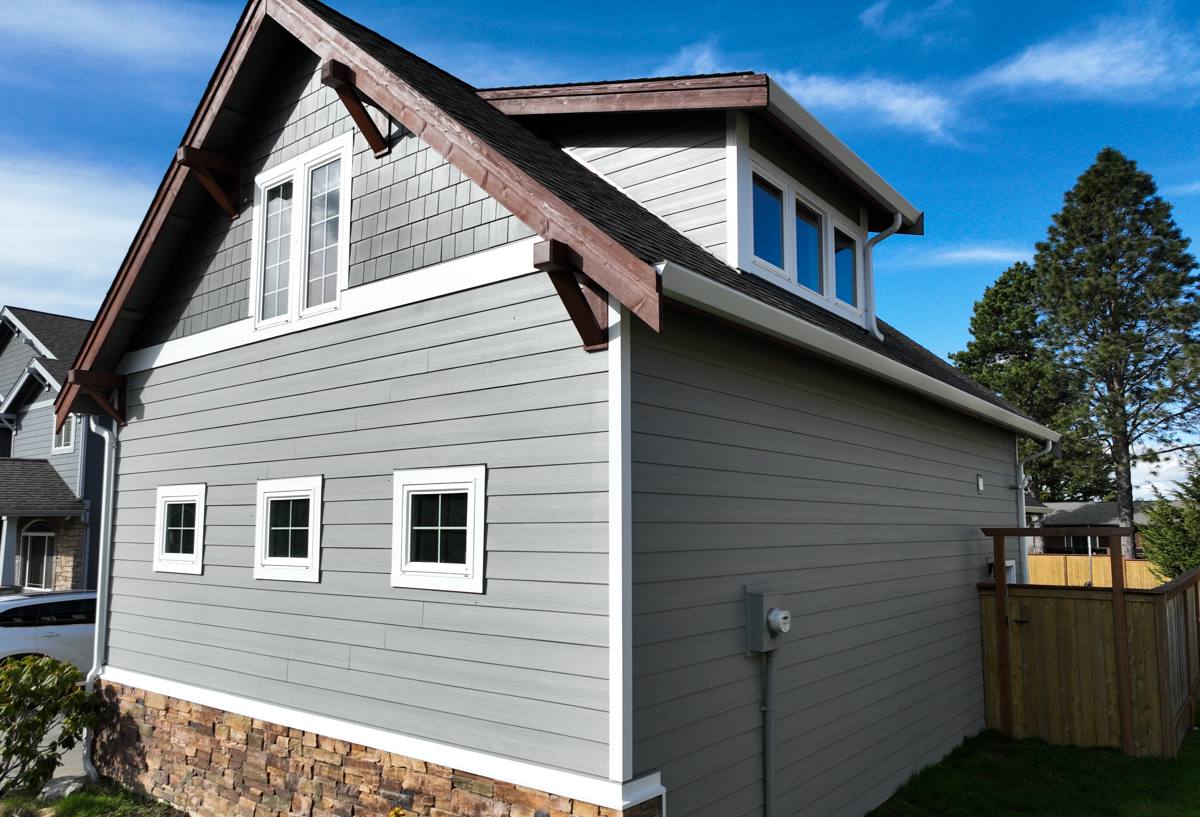
We're a St. Petersburg-based exterior contractor, and Coquina Key is inside our regular service area — not a neighborhood we occasionally drive out to. That matters because the right siding choice and the right installation details for a waterfront-adjacent lot in Pinellas County aren't automatically the same as what works fine forty miles inland. We install one siding product across every home we touch: James Hardie fiber cement. This page explains why, and what that actually looks like for a house in this part of St. Petersburg.
What Coquina Key's Climate Does to a House Exterior
A handful of environmental factors combine here in ways that are worth understanding before you replace siding, roofing, windows, or a deck.
Salt Air and Humidity
Proximity to open water means airborne salt is a constant, low-grade presence on exterior surfaces, even when you can't see or smell it. Salt is corrosive to fasteners and metal trim, and it accelerates the breakdown of finishes that aren't engineered to resist it. Combine that with Florida's year-round humidity and you get a climate that's genuinely harder on paint, caulking, and porous or moisture-absorbent materials than most of the country experiences.
Hurricane-Force Wind and Wind-Driven Rain
Pinellas County sits in an active hurricane corridor, and a peninsula neighborhood like Coquina Key gets wind exposure from multiple directions depending on a storm's track. It's not just the wind speed that matters — wind-driven rain gets forced sideways into seams, laps, and penetrations that would stay dry in a normal rainstorm. Siding and trim that aren't installed with tight, correctly flashed details become the entry point for water intrusion during these events, sometimes without visible damage on the surface.
Intense, Year-Round UV
St. Petersburg gets a lot of sun, and it doesn't let up seasonally the way it does farther north. UV exposure breaks down pigments and resins in lower-grade siding and paint finishes over years of cumulative exposure. South- and west-facing elevations typically show it first — fading, chalking, and eventually cracking as the material dries out and loses flexibility.
Ground Moisture and Low Elevation
Much of Coquina Key sits at low elevation with canal frontage common throughout the neighborhood. That proximity to water and the water table means siding near grade, especially on the sides of a home closest to a seawall or canal, deals with more ambient moisture than a comparable elevation inland. Materials that swell, wick water, or hold moisture against the wall assembly are a poor match for a site like this.
Why We Only Install James Hardie Fiber Cement
We used to get asked why we don't offer vinyl, LP SmartSide, or other fiber cement brands like Cemplank or Allura. The honest answer is that after years of installation and repair work across Pinellas County, we standardized on one product system because it holds up better, on average, against the specific stresses homes here face — and because standing behind one product means we know it inside and out, rather than juggling installation specs and warranty terms across five different brands.
| Material | Why we don't install it |
|---|---|
| Vinyl siding | Can deform or crack in sustained high wind and heat, seams allow more water intrusion, limited impact resistance |
| LP SmartSide (engineered wood) | Wood-based substrate is more vulnerable to moisture absorption and swelling in a humid, salt-air coastal climate |
| Cemplank / Allura fiber cement | Also fiber cement, but we standardized on Hardie's specific formulation, factory finish, and local manufacturer support |
| Primed spruce / cedar | Natural wood requires the most ongoing maintenance and is the most sensitive to Florida humidity and pests |
None of these are junk products in every application — vinyl and engineered wood siding have legitimate uses in other climates and budgets. Our position is narrower: for the wind, salt, UV, and moisture combination that Coquina Key and the rest of coastal Pinellas County deal with, James Hardie fiber cement is the product we're willing to put our name behind and warranty.
What Makes Hardie Different
- Non-combustible core. Fiber cement doesn't feed a fire the way wood-based products can, which matters for insurance considerations as well as safety.
- Engineered for humidity. Hardie's HZ5 product line is specifically formulated for high-humidity, moisture-prone climates like Florida's Gulf Coast — it resists swelling, cracking, and moisture damage better than wood-based alternatives.
- Factory-applied ColorPlus finish. Instead of relying on field-applied paint that starts breaking down under UV within a few years, ColorPlus is baked on at the factory with a finish designed to hold color longer against sun exposure.
- Won't rot or attract termites. Because it's cement-based rather than wood-based, it eliminates two of the most common exterior problems in Florida.
- Strong transferable warranty. Hardie backs its products with a warranty that can transfer to a new owner if you sell, which is a real factor in home value and buyer confidence in a coastal market.
How Siding Installation Works in a Coastal Neighborhood Like This
Product choice is half the equation. The other half is installation detail, and it's where a lot of siding failures actually start — not with the material itself, but with shortcuts in the install.
Flashing and Water Management First
Before a single piece of siding goes up, the water management plan behind it matters more than almost anything else. That means correctly lapped house wrap, properly flashed window and door openings, and kick-out flashing wherever a roofline meets a wall, so that wind-driven rain has a designed path to shed water rather than a chance to find its way behind the cladding.
Fastening for Wind Resistance
Hardie's installation instructions specify fastener type, spacing, and placement for a reason — under-fastened or incorrectly fastened siding is one of the most common causes of panels loosening or failing in high wind. We follow manufacturer fastening schedules exactly, which also matters if you ever need to file a warranty claim.
Caulking and Sealant Details
In a salt-air environment, the sealants used around trim, joints, and penetrations need to hold up to both UV and moisture cycling. We use products rated for that combination, and we pay attention to the small joints — around light fixtures, hose bibs, vents — that get skipped on rushed installs and become the first place water gets in.
Ventilation Behind the Cladding
A wall assembly needs to be able to dry out if any moisture does get in. Proper rainscreen or drainage plane detailing behind the siding gives trapped moisture somewhere to go instead of sitting against the wall sheathing, which is especially important in a humid coastal climate where things simply don't dry out as fast as they would elsewhere.
Roofing, Windows, and Decks — The Rest of the Exterior Envelope
Siding doesn't work in isolation. On a Coquina Key home, roofing, windows, and decking all face the same wind, salt, and UV load, and they all interact with how well the exterior sheds water.
Roofing
A roof system that's properly sealed, ventilated, and rated for local wind speeds protects the siding below it by controlling where water goes during a storm. We handle roof installation and repair alongside siding so the water management plan is consistent across the whole envelope, not patched together by two different contractors working from two different assumptions.
Windows
Impact-rated windows matter throughout Pinellas County, and correct window flashing integration with the siding is one of the most common places we find water intrusion on older homes. When we replace siding, we check window flashing as part of the job rather than treating it as someone else's problem.
Decks
For canal-front and waterfront properties in Coquina Key, decks face constant humidity and UV along with occasional saltwater spray. Material choice and fastener selection for a deck near the water need the same climate-specific thinking as siding does.
Signs Your Coquina Key Home May Need Siding Attention
- Visible cracking, warping, or buckling in siding panels, especially on sun-facing walls
- Soft or spongy spots when you press on siding near the bottom of the wall or around window trim
- Paint that's peeling, bubbling, or chalking heavily within just a few years of being applied
- Visible gaps or separation at seams, corners, or where siding meets trim
- Musty smell or visible mold/mildew on interior walls that back up to exterior siding
- Siding that flexes noticeably or feels loose when pushed on
- Rust streaking from fasteners, a sign the fastener material or coating wasn't right for a coastal environment
If you're seeing more than one of these, it's worth having someone look at the wall assembly, not just the surface — because in this climate, the underlying water management is usually the real story.
Cost Factors for Siding Projects in This Area
| Factor | Why it affects your project |
|---|---|
| Home size and elevation count | More linear footage and more complex rooflines mean more material and labor |
| Extent of existing damage | Rot or moisture damage found behind old siding may require sheathing repair before new siding goes on |
| Trim and detail work | Corner boards, window trim, and fascia detailing add labor time but affect both looks and water resistance |
| Access and site conditions | Canal-front lots, fencing, landscaping, and dock structures can affect staging and scaffolding needs |
| HardiePanel line and finish selected | Different Hardie product lines and ColorPlus finish options carry different material costs |
We won't quote a number without seeing the home, and we're not going to pretend every project costs the same — a full re-side with sheathing repair is a different job than a partial replacement on a well-maintained home. What we can tell you honestly is that skipping proper flashing and fastening to save money up front tends to cost more later in a climate like this one.
Why a Local Crew Matters Here
Coquina Key isn't a generic suburb, and a crew that mostly works inland jobs doesn't always think about kick-out flashing at every roof-wall intersection, salt-tolerant fastener specs, or how close a property sits to tidal water when planning a project timeline around Florida's storm season. Being based in St. Petersburg means we're doing this kind of coastal-adjacent work regularly, not occasionally, and we're accountable to the same community we're working in — not a crew that drives in from out of county for one job and disappears.
If you'd like an honest look at your home's siding, roofing, windows, or deck, we offer a free, no-pressure estimate. Fill out the form below and we'll take a look and tell you straight what we see.