 St. Petersburg Siding
 Decks in Euclid-St. Paul Have to Work Harder Than Decks Almost Anywhere Else
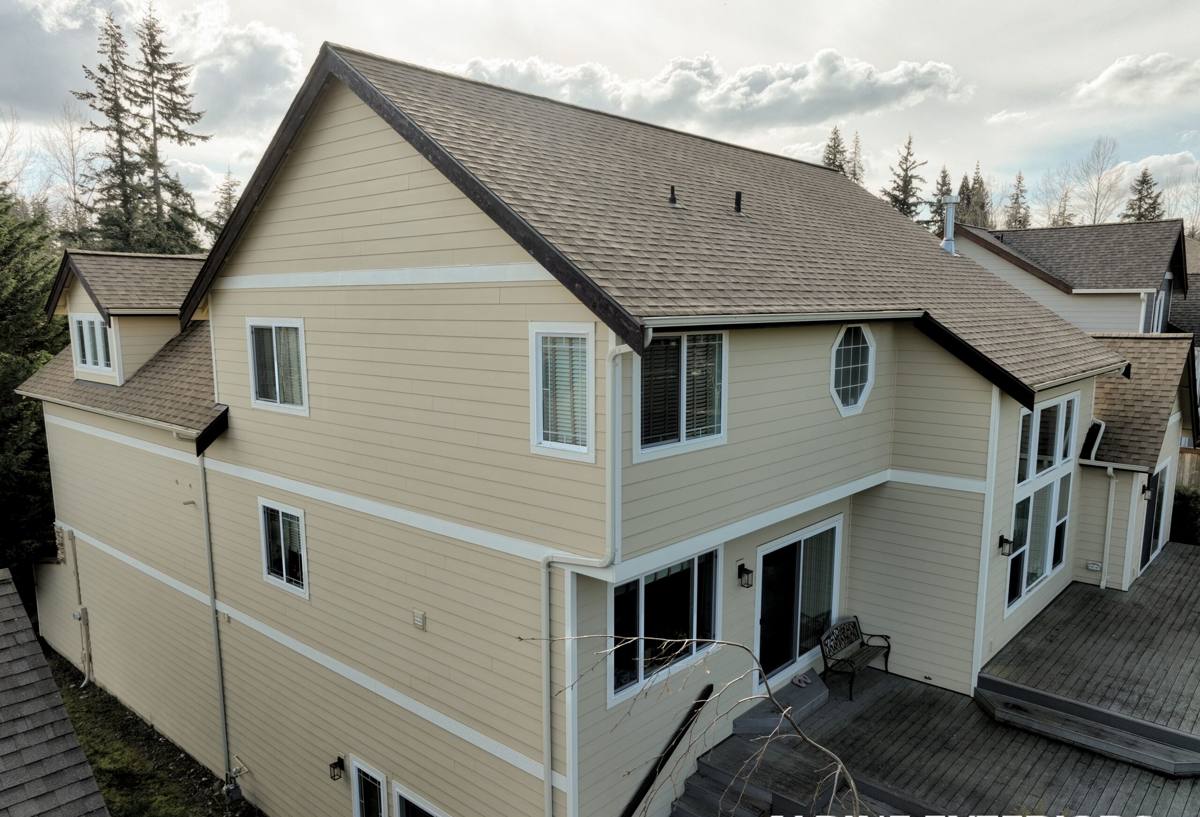
Euclid-St. Paul is an established, tree-lined residential part of St. Petersburg, and a lot of the homes here are older than the decks bolted onto them. That mismatch matters. A deck isn't just a platform of boards — it's a structure that has to survive Pinellas County's particular combination of stresses: hurricane-force wind gusts during storm season, intense sun exposure nearly twelve months a year, wind-driven rain that gets pushed sideways into places it was never meant to reach, and a steady dose of salt air carried in off the Gulf and Tampa Bay. Any one of those on its own is manageable. All four, year after year, is what separates a deck that lasts fifteen-plus years from one that starts failing at the fasteners and framing within three or four.
This page is about one thing specifically: building a deck for a home in Euclid-St. Paul, done in a way that accounts for this climate from the footings up, not just from the decking down.
What This Climate Actually Does to a Deck Over Time
Most deck problems we get called out to inspect didn't start with the decking boards — they started underneath, out of sight, where nobody was looking. Understanding what's actually attacking the structure changes how you build it in the first place.
Salt Air and Corrosion
St. Petersburg sits on a peninsula surrounded by saltwater, and that air moves inland further than most homeowners assume. Standard zinc-coated screws, nails, and joist hangers corrode faster here than they would in a landlocked climate. Once a fastener starts rusting, it loses grip strength long before it looks obviously bad, which is exactly why a deck can seem fine right up until a board lifts in a storm.
UV Exposure
Florida sun is intense and consistent almost all year. Wood fibers dry out, split, and gray under it. Some capped composite and PVC products handle UV well; others — especially older or lower-grade formulations — can fade unevenly or become brittle at the surface over a decade of exposure. Material choice matters more here than in most parts of the country.
Wind-Driven Rain
Rain in Pinellas County doesn't always fall straight down. During storms it gets driven sideways, which means it finds its way behind ledger boards, into fastener holes, and under flashing that wasn't detailed correctly. This is the single most common cause of hidden rot we find at the point where a deck attaches to the house.
Hurricane-Force Wind
Wind doesn't just push on a deck — it lifts on it. Railings, decking boards, and especially the ledger connection all experience uplift forces during high wind events. A deck that was only ever screwed and never properly through-bolted or lag-fastened per code is a deck that's one storm away from a serious problem.
What a Correctly Built Deck Needs to Have
None of the above is exotic engineering — it's a handful of decisions that have to be made correctly and in order:
- Footings sized and set to the depth Pinellas County soil and code actually require, not a generic minimum
- A ledger board through-bolted to the house rim joist with proper flashing behind it, not just nailed or lag-screwed into siding
- Fasteners and structural connectors rated for coastal exposure — stainless steel or heavy hot-dip galvanized, not standard exterior-coated hardware
- Joist tape or an equivalent moisture barrier across the top of every framing member before decking goes down
- Decking material chosen deliberately for UV and moisture behavior, not just upfront price
- Proper slope and gapping so water sheds off the deck instead of pooling against the house or in the frame
- Railing and baluster spacing that meets current Florida Building Code, not whatever the last contractor considered close enough
Decking Material Options: An Honest Comparison
Every decking material available has real trade-offs in this climate. We'll walk through the honest version of each rather than push whatever has the best margin.
| Material | Upfront Cost | Maintenance | How It Handles Salt Air & UV | Realistic Lifespan Here |
|---|---|---|---|---|
| Pressure-treated pine | Lowest | Needs re-sealing every 1-2 years | Handles moisture fine if sealed; UV grays it quickly if neglected | 10-15 years with upkeep |
| Tropical hardwood | High | Periodic oiling to prevent graying and surface checking | Naturally dense and rot-resistant, but installation sensitivity is high — poor fastening leads to splitting | 20-25+ years if maintained |
| Capped composite | Mid-high | Occasional washing, no sealing or staining | Very stable in UV and salt air; quality varies a lot by product line | 20-25 years, manufacturer-dependent |
| PVC decking | Highest | Lowest — wash only | Excellent moisture and salt resistance; can feel warmer underfoot in direct sun | 25+ years |
We'll talk you through which of these fits your budget, how much maintenance you're realistically willing to do, and what look you're after — there's no universally "right" answer, just the right trade-off for your household.
Permits, Wind Load, and What St. Petersburg Actually Requires
A deck attached to a house is a permitted structure in the City of St. Petersburg, and that's not a formality — inspectors are checking footing depth, ledger attachment, and structural connections at specific stages of the build, not just signing off at the end. Pinellas County isn't in Florida's High-Velocity Hurricane Zone the way South Florida is, but the Florida Building Code still requires wind-load design well above what a lot of older, informally built decks were ever engineered for. That shows up in things like:
- Minimum footing depth and diameter based on soil conditions and structure size
- Ledger-to-house attachment specs (bolt size, spacing, and flashing detail)
- Guard rail height and baluster spacing (no gaps a 4-inch sphere can pass through)
- Post-to-beam and beam-to-joist connection hardware, not just toe-nailing
Skipping or shortcutting permitting doesn't just risk a fine — it can create real problems at resale, when a buyer's inspector or the county has no record of an approved structure attached to the house.
Our Process for Building a Deck in Euclid-St. Paul
- Site visit and consultation — we look at your existing structure, the ground conditions, sun and tree exposure, and how you actually plan to use the space
- Design and material selection — sizing, layout, and an honest conversation about material trade-offs and budget
- Permit drawings and submission — handled by us, so you're not the one chasing city paperwork
- Footings and framing — set to code depth, inspected before we build on top of them
- Ledger attachment and flashing — through-bolted, flashed, and sealed before any framing covers it up
- Decking, railing, and stairs — installed with coastal-rated fasteners and correct gapping
- Final inspection — city sign-off before we call the job done
- Walkthrough — we show you what's underneath, what to expect from the material you chose, and what basic upkeep looks like
The Hardware Most People Never Think About — Until It Fails
The visible decking gets all the attention, but the hardware underneath is what actually determines how long a deck lasts near saltwater. This is where corners get cut on cheaper jobs, because the buyer never sees the difference until years later.
| Hardware Type | Relative Cost | Corrosion Resistance in Salt Air | Where It Belongs |
|---|---|---|---|
| Standard exterior-coated screws/connectors | Low | Poor to fair — coating breaks down over time | Not recommended for coastal-exposed structural use |
| Hot-dip galvanized connectors | Moderate | Good | Structural framing, joist hangers, post bases |
| Stainless steel fasteners | Higher | Excellent | Ledger bolts, visible fasteners, anything near the ground or splash zone |
Beyond the fastener itself, a few details make an outsized difference: joist tape over every framing member to stop water from wicking into end grain, a proper post base that keeps wood off standing water instead of resting it directly on a footing, and consistent gapping between deck boards so water and debris don't sit and hold moisture against the frame.
Keeping a Deck Healthy in a Salt-Air, High-UV Climate
Even a well-built deck needs some basic attention out here. None of this is complicated, but skipping it is how a 20-year deck becomes a 10-year deck.
- Rinse off salt film and pollen buildup a few times a year, especially closer to the bay
- Do a visual check of fasteners and railing connections annually — look for rust streaking or movement
- Reseal or oil wood decking on the schedule the material actually needs, not "when it looks bad"
- Clear leaves and debris out of the gaps between boards so moisture doesn't sit trapped
- Check ledger flashing and caulking where the deck meets the house for any gaps or cracking
- After any major storm, walk the structure and check for loosened railings, lifted boards, or shifted footings before assuming everything's fine
Why It Matters That We Already Work in This Neighborhood
A deck built by a crew that's never worked in an established St. Petersburg neighborhood like Euclid-St. Paul is guessing at things a local crew already knows — how mature tree canopy affects sun exposure and material choice, what kind of framing and ledger conditions tend to show up on older homes in this part of the city, and what the permitting process actually looks like day to day rather than on paper. It also means if something needs a follow-up look under warranty, or a question comes up two years later, you're not waiting on a crew that has to drive across the county or has moved on to other regions entirely. For a structure that has to hold up against Gulf Coast wind, sun, and salt for decades, that kind of local continuity isn't a nice-to-have — it's part of what makes the build reliable in the first place.
If you're planning a new deck or replacing one that's showing its age, we're happy to walk your property, look at what you're working with, and give you a straight assessment — no pressure, no upsell script. Fill out the form below for a free estimate.