 St. Petersburg Siding
 Why Decks in Old Northeast Wear Out Faster Than the Manuals Say
Old Northeast is one of St. Petersburg's older, tree-canopied neighborhoods, and that shade and proximity to Tampa Bay is part of what makes it desirable — but it's also exactly the combination that ages a deck ahead of schedule. Most deck framing and decking products are rated and warrantied based on general national conditions. Pinellas County isn't a general condition. Between hurricane-force wind loading, near-constant UV exposure, wind-driven rain that gets pushed sideways under railings and through gaps, and salt-laden air drifting in off the bay, a deck here is working harder every single day than the same structure would in most of the country.
That shows up as fastener corrosion, ledger board rot, surface graying and splintering, warped boards, and — the one that actually matters for safety — weakened structural connections that aren't visible from the top. A deck can look fine from the yard and still have a ledger board or post base that's failed underneath. Replacement, done right, isn't just about a new walking surface. It's about resetting the whole structure to handle what this climate actually throws at it.
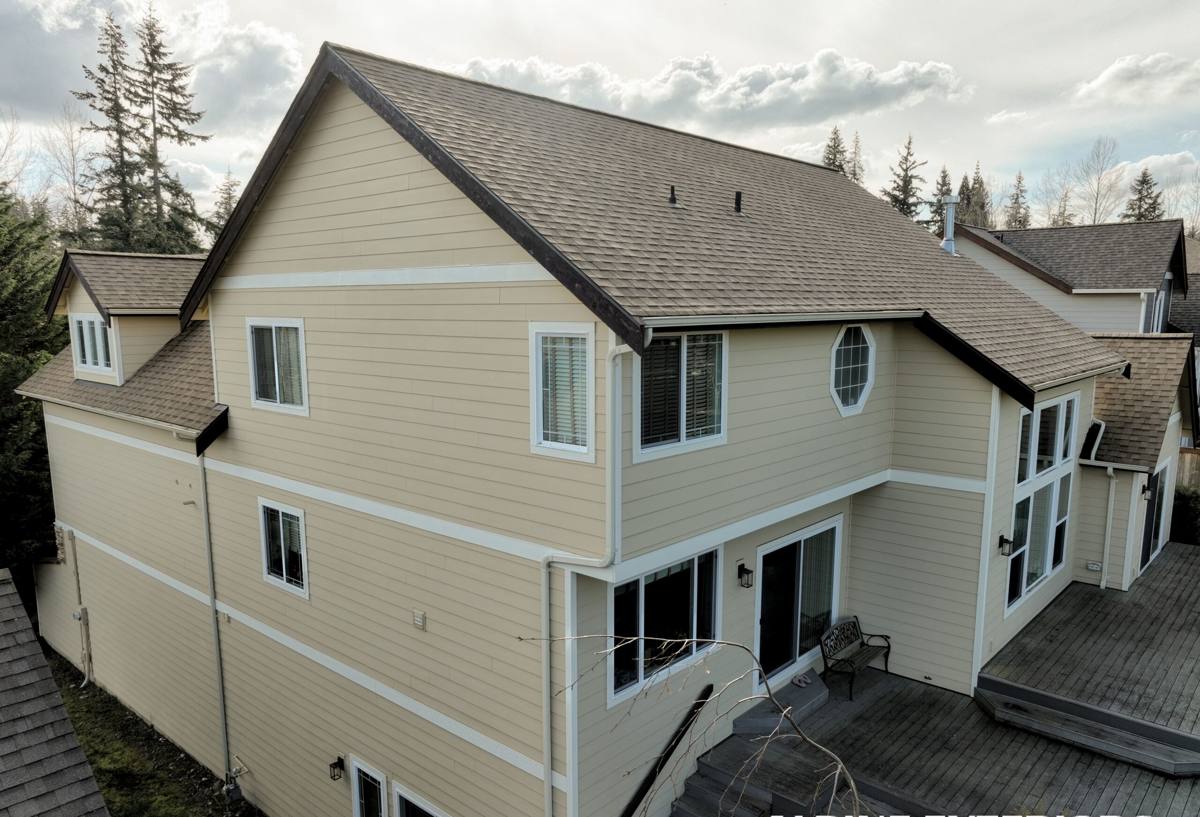
Repair, Resurface, or Full Replacement?
Not every tired deck needs a full teardown. But in a lot of Old Northeast homes — especially older properties with decks that were added or rebuilt decades ago — the framing underneath no longer meets current wind and load standards even if the boards on top look serviceable. Here's how we sort it out:
- Surface wear only, structure sound: boards are gray, splintering, or cupping, but joists, beams, posts, and footings test solid — resurfacing or board replacement may be enough.
- Localized rot or damage: soft spots near the ledger, a single rotted post, or damage around a stair stringer — targeted repair can work if it's caught early and isolated.
- Structural fatigue, undersized framing, or corroded connectors: this is where we recommend full replacement — patching a structure that's already below current standards just delays the real cost and adds risk.
We'll always tell you honestly which category your deck falls into. If a repair genuinely solves the problem, that's what we'll recommend — a deck replacement isn't the right answer for every deck, and we're not going to sell you one it doesn't need.
What a Correct Deck Replacement Actually Involves
It Starts Underground and at the House Connection
The two failure points we see most in this climate are the ledger board connection to the house and the footings. A proper replacement means removing the old ledger entirely, checking the rim joist and sheathing behind it for hidden moisture damage, and reinstalling with correct flashing so wind-driven rain can't work its way back into the house structure. Footings get evaluated for depth and bearing capacity — Pinellas County's sandy soils and high water table mean footings that were adequate 20-30 years ago may not meet current code depth or size requirements.
Fasteners and Hardware Matter More Here Than Almost Anywhere
Standard galvanized fasteners corrode fast in salt air, especially anywhere within a few miles of the bay or Gulf. We use stainless steel or heavy-duty coated fasteners and structural connectors rated for coastal exposure — joist hangers, hurricane ties, post bases, and lag bolts all get selected with corrosion resistance as a real requirement, not an afterthought. A deck can look brand new on top and still be failing from the inside if the hardware holding it together is the wrong grade for this environment.
Framing to Current Wind Load Standards
Florida's building code accounts for hurricane wind exposure, and deck framing spacing, beam sizing, and connection hardware all get engineered to that standard — not just "what was there before." This is one of the biggest differences between a real replacement and a cosmetic redo: we're not copying the old framing plan, we're building to what current code and wind exposure actually require for this location.
Choosing a Decking Material for This Climate
There's no single "best" decking material — there's a best material for your budget, your maintenance appetite, and how much sun and salt exposure your specific lot gets. Here's how the common options actually perform in a St. Petersburg, Pinellas County setting:
| Material | UV / Heat Performance | Moisture & Salt Air | Maintenance |
|---|---|---|---|
| Pressure-treated pine | Fades and can check/crack under intense sun without regular sealing | Treated for rot resistance but fasteners and hardware still need coastal-grade selection | Needs sealing/staining every 1-2 years to hold up |
| Composite decking | Modern capped composites resist fading well; uncapped older-style composites can chalk over time | Doesn't rot, handles moisture well; still needs proper ventilation underneath | Low — periodic cleaning, no sealing |
| Tropical hardwoods (e.g., ipe) | Very durable under UV but will gray without oiling | Naturally dense and rot-resistant | Moderate to high — oiling to maintain color, otherwise low structural maintenance |
| PVC decking | Excellent UV stability, doesn't absorb heat like some composites | Fully moisture-proof, unaffected by salt air | Low |
We'll walk through these trade-offs against your budget and how much upkeep you actually want to do — there's no wrong answer here, just an honest one for your situation.
Why We Don't Cut Corners on Hardware or Flashing
It's tempting to save money on fasteners, flashing, or footing depth on a deck project — none of it is visible once the boards go down. But those are exactly the components that determine whether a deck lasts 10 years or 25 in this climate, and they're also the components most tied to actual safety. Our standard is to spec every hardware and flashing detail for coastal wind and moisture exposure regardless of which decking material you choose on top. A deck that looks identical to a corner-cut version on install day can be a completely different structure five years later.
Our Replacement Process
- On-site evaluation: we inspect the existing deck's framing, footings, ledger connection, and hardware condition, and give you a straight assessment of repair vs. replacement.
- Design and material selection: we go over decking material options, railing style, and layout, matched to your budget and maintenance preference.
- Permitting: deck replacements in St. Petersburg typically require a permit — we handle the paperwork and coordinate inspections so you don't have to navigate the county process yourself.
- Demolition and structural rebuild: old decking, framing, and any compromised ledger or footing components are removed and rebuilt to current code.
- Decking, railing, and finish work: your chosen material goes down, railings and stairs are installed, and every connection is checked before we call it done.
- Final walkthrough: we go over the finished deck with you, including what maintenance (if any) it needs going forward.
What Drives the Cost of a Deck Replacement
| Factor | Why It Matters |
|---|---|
| Deck size and shape | Multi-level decks, curves, and built-in features add material and labor |
| Decking material | Pressure-treated is the lowest upfront cost; composite and PVC cost more but need less upkeep over time |
| Height and railing requirements | Taller decks need code-compliant railings and often more substantial framing |
| Footing and framing condition | If footings need to be re-poured or relocated to meet current code, that adds scope |
| Access to the site | Tight side yards or limited equipment access can add labor time |
We give a written estimate that breaks out these factors so you can see exactly what you're paying for — not a single lump number with no explanation behind it.
Extending the Life of Your New Deck
Whatever material you choose, a few habits make a real difference in this climate:
- Keep gutters and downspouts directed away from the deck to limit standing water and splash-back against framing.
- Sweep debris out of gaps between boards regularly — trapped organic material holds moisture against wood and can stain or degrade composite.
- Rinse salt residue off the surface periodically if you're within a few miles of the bay or Gulf, especially after storms.
- Check railings and stair connections once or twice a year for looseness — early tightening is a five-minute fix; a failed connection later is not.
- Follow the manufacturer's sealing or cleaning schedule for whichever material you chose — this is the single biggest factor in how long a deck actually lasts here.
Why a Crew That Already Works Old Northeast Matters
Old Northeast has a specific mix of older homes, mature trees, narrow lots, and proximity to the water that isn't the same as building a deck in a newer inland subdivision. A crew that already works this neighborhood knows what to expect from the soil, understands how tree canopy affects moisture and drying time after storms, and has already been through the St. Petersburg and Pinellas County permitting process enough times to keep your project moving instead of stalled on paperwork. That familiarity translates into fewer surprises mid-project and a deck that's actually built for the conditions it's going to face, not a generic spec sheet from somewhere else.
Getting Started
If your deck is showing its age — soft boards, rusted hardware, gaps that have opened up, or just a structure that doesn't feel as solid as it used to — it's worth having it looked at before it becomes a safety issue. We offer free, no-pressure estimates for deck replacement throughout Old Northeast and the rest of St. Petersburg. Fill out the form below and we'll take a look and give you a straight answer on what your deck actually needs.