 St. Petersburg Siding
 Composite Decking Built for Childs Park's Climate
Childs Park sits inland from the bay but still gets the full brunt of what Pinellas County weather does to outdoor living spaces: long stretches of intense sun, sudden downpours, high humidity nearly year-round, and the occasional direct hit or near-miss from a tropical system. A deck here isn't just an outdoor amenity — it's a structure that has to survive the same climate stress as the roof and siding on the house it's attached to. Composite decking, installed correctly, holds up to that environment far better than wood, but "composite" is not one product with one set of rules. The board brand, the substructure underneath it, and the way it's fastened all determine whether a deck lasts fifteen years or needs rebuilding after five.
We work on homes throughout St. Petersburg, and Childs Park comes with its own mix of housing stock — a lot of mid-century homes with additions, some newer construction, and yards where a deck replaces or extends an older wood or concrete patio. That mix matters, because what's already there (ledger condition, grade, drainage) shapes what a correct composite deck build actually requires.
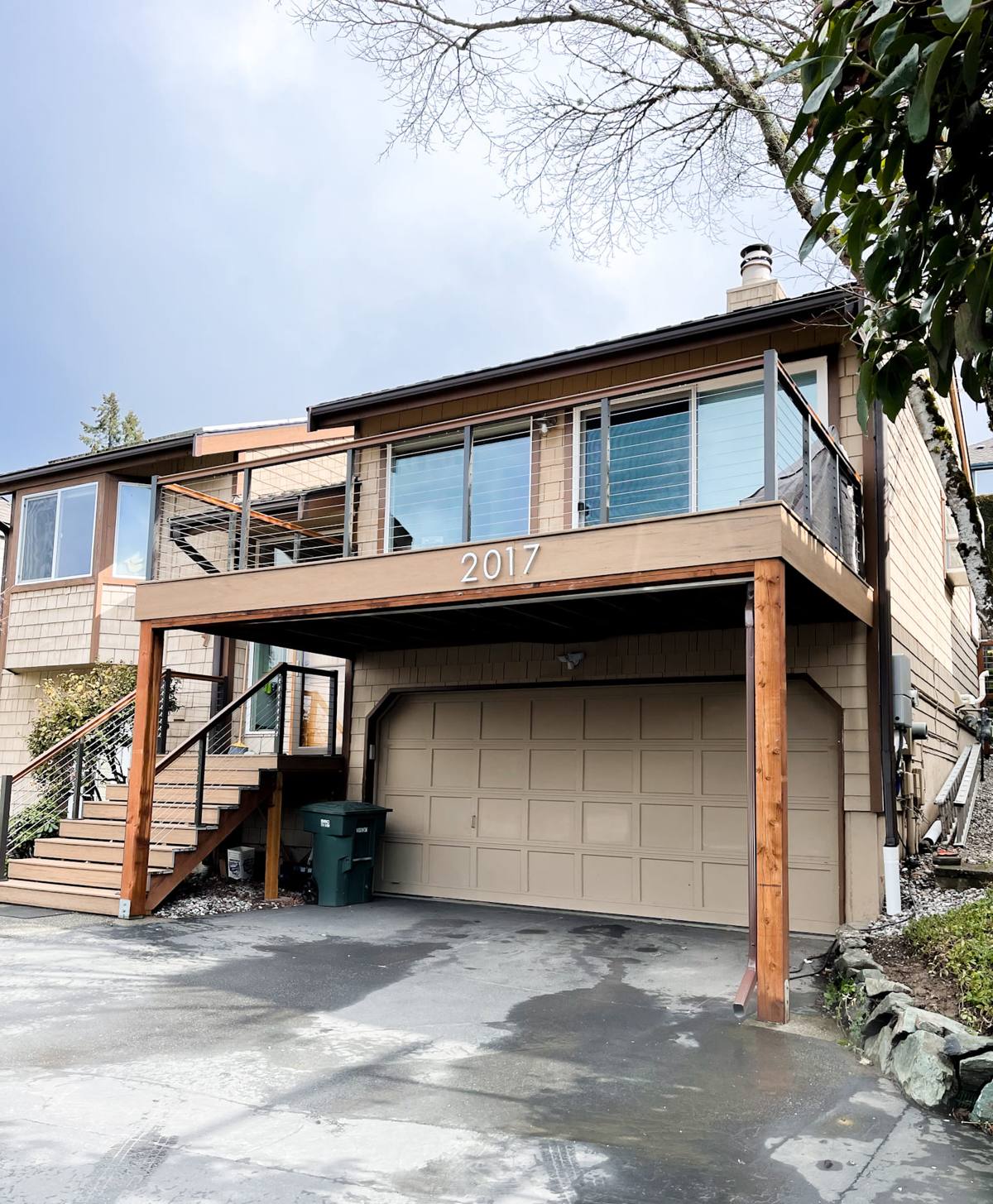
What Florida Weather Does to a Deck Over Time
Before talking about materials, it helps to understand the specific ways this climate attacks a deck, because every decision in a proper build is a response to one of these:
- UV exposure: Central Florida gets some of the highest year-round UV intensity in the continental U.S. Untreated or low-grade materials fade, chalk, and become brittle faster here than in most of the country.
- Wind-driven rain: Storms in this region rarely fall straight down. Rain gets pushed sideways into ledger boards, under railings, and into any gap that wasn't flashed or sealed correctly.
- Humidity and moisture cycling: Boards and hardware go through constant wet-dry cycles. Anything that traps water — poor drainage gaps, unventilated framing, the wrong fasteners — accelerates rot in wood substructure or corrosion in metal connectors.
- Hurricane-force wind loads: Even homes that never take a direct hit see repeated high-wind events. Railings, post connections, and ledger attachments need to be rated for that, not just built to "look sturdy."
- Salt-laden air: St. Petersburg's proximity to the bay and Gulf means airborne salt reaches inland neighborhoods like Childs Park too, especially during onshore wind events. Salt accelerates corrosion in fasteners and metal brackets that aren't rated for coastal exposure.
Composite decking itself resists most of this well — it doesn't rot, splinter, or need annual staining the way wood does. But the composite board is only one part of the system. A deck built with premium boards on an under-spec'd, poorly fastened frame will still fail early, just at the substructure instead of the surface.
Composite vs. Other Decking Materials for This Climate
Homeowners in this area usually compare three options. Here's how they actually perform under Pinellas County conditions:
| Material | UV / Fade Resistance | Moisture Behavior | Maintenance | Typical Lifespan Here |
|---|---|---|---|---|
| Pressure-treated wood | Fades and grays quickly; needs regular sealing | Absorbs water, prone to cupping, splitting, rot at fasteners | Annual cleaning/sealing recommended | 8-15 years with upkeep |
| Capped composite | Strong — cap layer resists fading and staining | Water-resistant core, doesn't rot or splinter | Occasional washing; no sealing or staining | 25-30+ years, warranty-backed |
| PVC / cellular PVC | Very strong, though some products run hotter underfoot | Fully water-resistant, won't absorb moisture | Minimal; some products scratch more easily | 25-30+ years, warranty-backed |
We install capped composite as our standard recommendation for most Childs Park homes because it strikes the best balance for this climate: it handles UV and moisture as well as PVC, generally costs less, and the cap layer means you're not maintaining the board itself over its lifespan — you're maintaining the frame underneath it, which is where our process puts the real attention.
Why We Don't Push Uncapped or Budget Composite
Older-generation composite (uncapped, all-organic-fiber blends) can absorb moisture at the cut edges and is more prone to mold staining in humid climates like ours. It's a legitimate product with a lower price point, but we're upfront with clients that it's not our standard recommendation for this region — the ongoing appearance and moisture issues tend to outweigh the upfront savings once you factor in a Florida summer's humidity. That's a trade-off call, not a claim that the product is defective; homeowners who want it can still get it, we just want the decision made with full information.
What a Correctly Built Composite Deck Requires
Most composite deck problems we get called to fix aren't board failures — they're substructure and fastening mistakes made during the original build. A correct install includes:
Framing and Substructure
Joists and beams should be either naturally decay-resistant, properly pressure-treated, or capped/wrapped to prevent moisture wicking. In a climate with this much rain and humidity, we also pay close attention to joist spacing — composite boards typically need tighter joist spacing than wood decking to prevent long-term sagging, especially on diagonal patterns.
Ledger Attachment and Flashing
Where the deck attaches to the house is the single most common point of hidden water damage. Proper flashing, correctly lapped and sealed, keeps wind-driven rain from tracking behind the ledger board and into the home's structure — a failure point that can go unnoticed for years until it shows up as rot or interior water intrusion.
Fasteners and Hardware
Everything below the board — joist hangers, screws, structural connectors — should be corrosion-resistant hardware rated for exposure, not standard interior-grade fasteners. This matters more here than in drier, inland climates because of the combination of humidity and salt air.
Hidden Fastener Systems
Most capped composite boards use a hidden fastener/clip system rather than face screws. Done correctly, this gives a clean surface and allows the board slight room to expand and contract with temperature swings — important in a climate that goes from cool winter mornings to 95-degree summer afternoons.
Drainage and Airflow Underneath
Standing water or trapped moisture under a deck is a mold and pest magnet in this climate. Grading, gaps, and ventilation under the structure need to move water and air, not trap it.
Our Process for a Childs Park Composite Deck
We keep the process straightforward and don't skip steps to move faster:
- On-site assessment: We look at the existing structure (if replacing a deck or patio), grade, drainage, ledger condition, and sun/wind exposure specific to the lot.
- Design and material selection: Board color, pattern, railing style, and any code-driven requirements (railing height, stair specs) are worked out with the homeowner.
- Permitting: Decks typically require a building permit in St. Petersburg. We handle the permit process rather than leaving it to the homeowner.
- Substructure build: Framing, ledger flashing, joist spacing, and hardware selection all follow the standards above — this is the part of the job that determines longevity, even though it's invisible once the deck is finished.
- Decking and railing installation: Boards, hidden fasteners, and railing system installed per manufacturer spec, which is also what keeps the product warranty valid.
- Final walkthrough: We go over the finished deck with the homeowner, including basic care and what to expect over the first year of Florida seasons.
Permitting and Code Considerations in St. Petersburg
Deck projects in the city generally require a permit, inspections at key stages, and compliance with wind load and railing safety requirements tied to Florida's building code. Because Pinellas County is a high-wind zone, structural connections — post-to-beam, beam-to-ledger, railing posts — need to meet load ratings that go beyond what's typical in most of the country. We don't treat this as optional paperwork; it's part of what keeps a deck safe in a storm and keeps the homeowner's insurance and resale situation clean. Every lot is a little different, so exact requirements should be confirmed for your specific address rather than assumed from a neighbor's project.
Maintenance: What Homeowners Actually Need to Do
One of the real advantages of composite over wood is how little upkeep it needs — but "low maintenance" isn't "no maintenance." A realistic care checklist for a Childs Park composite deck:
- Rinse or wash the surface periodically to prevent pollen, dirt, and organic buildup from staining the cap layer.
- Keep the gap under and around the deck clear of debris so water and air can keep moving underneath.
- Check railing and post connections annually, especially after a significant storm.
- Trim back vegetation that holds moisture against the deck edge or framing.
- Address any standing water in the yard near the deck footing before it becomes a drainage problem for the structure.
Cost Factors to Expect
Composite decking costs more upfront than pressure-treated wood but less over its lifetime once you factor out sealing, staining, and board replacement. Rough cost drivers, without pinning down a number that won't hold for every yard:
| Factor | Impact on Cost |
|---|---|
| Deck size and shape | Larger footprints and complex angles/curves increase material and labor |
| Height off grade | Elevated decks need more substructure, stairs, and railing |
| Board tier (capped composite vs. PVC vs. premium composite) | Material cost varies by product line and color/finish options |
| Railing style | Composite/aluminum/cable railing all price differently than basic composite balusters |
| Substructure condition | Replacing vs. reusing existing framing changes labor significantly |
| Permitting and engineering | Required for most projects; scope depends on size and elevation |
We give homeowners a written, itemized estimate rather than a single lump number, so it's clear what's driving the price and where there's room to adjust scope if needed.
Why Hiring a Crew That Already Works in Childs Park Matters
A lot of decking problems we're called to repair trace back to crews that build the same way regardless of region — treating a Pinellas County deck like it's going up in a dry, low-wind climate. Framing spacing, fastener grade, flashing detail, and wind-load connections all need to reflect what this specific coastal-adjacent environment does to a structure over time. A crew that regularly works in and around St. Petersburg neighborhoods like Childs Park has already seen how the local combination of sun, rain, humidity, and wind plays out on real decks over years, not just at handoff. That local track record shows up in the small decisions — hardware grade, joist spacing, drainage detail — that don't appear on a spec sheet but determine whether the deck is still solid a decade from now.
If you're considering a new composite deck or replacing an aging wood one in Childs Park, we're happy to take a look and give you a straightforward, no-pressure estimate — just fill out the form below.