 St. Petersburg Siding
 Why Coquina Key's Waterfront Setting Changes the Roofing Equation
Coquina Key sits on the water, and that changes what a roof has to survive. Homes here face a combination most inland St. Petersburg neighborhoods don't deal with in the same intensity: near-constant salt-laden air coming off the canals and Tampa Bay, direct sun exposure with little tree cover on many waterfront lots, and the full brunt of wind-driven rain whenever a tropical system moves through Pinellas County. A roof that's fine three miles inland can start showing corrosion, fastener failure, or leaks around penetrations years earlier out here simply because of the environment it's sitting in.
Metal roofing is a strong fit for this kind of exposure when it's specified and installed correctly. It handles wind uplift better than most other roofing materials, doesn't absorb water the way a compromised shingle roof does, and — with the right coating and fastener system — resists the salt-air corrosion that eats away at lower-grade materials near the water. But "metal roofing" isn't one product. The panel gauge, coating, fastener type, and underlayment all matter more here than they would on a typical inland re-roof, and getting any one of them wrong shortens the roof's life considerably.
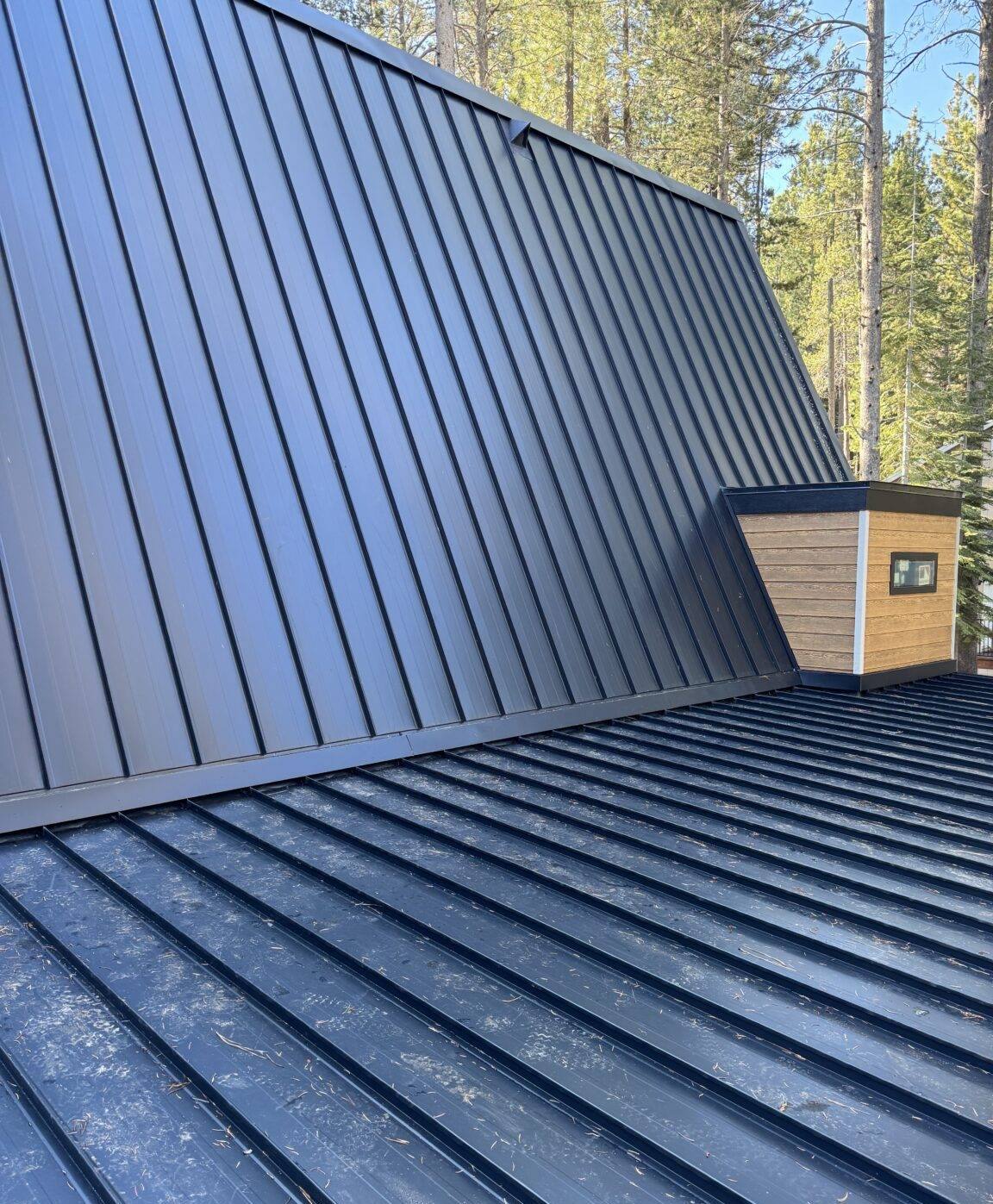
What a Correct Metal Roof Install Actually Involves
A metal roof is only as good as the details underneath it. On a canal-front or near-water property, we pay close attention to a few things that are easy to skip on a standard job.
Deck Condition Before Anything Goes On
Salt air and humidity work on the roof deck too, not just the surface material. Before installing any new metal roofing system, we check the decking for soft spots, delamination, or moisture damage — especially around older penetrations, valleys, and any area where a prior roof may have allowed slow leaks. Installing a premium metal system over a compromised deck just hides the problem; it doesn't fix it.
Underlayment and Moisture Barrier
Wind-driven rain during a tropical storm or hurricane doesn't fall straight down — it drives sideways and works its way under panels at seams, ridges, and flashing points. A high-temperature, self-adhering underlayment (not the older felt paper) gives the roof a real second line of defense if wind ever pushes water past the panels themselves, which is a realistic scenario on an exposed waterfront lot.
Fastening and Panel Attachment
This is where a lot of the wind performance actually comes from. Fastener spacing, clip type, and panel-to-deck attachment method all need to match the wind exposure category for the property, not a generic minimum. On an open, waterfront lot with few windbreaks, we don't cut corners on attachment schedule just to save time.
Flashing and Penetrations
Vent stacks, chimneys, skylights, and wall-to-roof transitions are where most metal roof leaks actually start — not the flat panel areas. Properly formed and sealed flashing at every one of these points is non-negotiable, and it's worth asking any roofer directly how they detail these areas before work begins.
Choosing the Right Metal System for a Coquina Key Property
Not every metal roofing profile makes sense for every home. The table below breaks down the main options we install and how each one performs specifically under salt-air, high-wind, waterfront conditions.
| System | Wind Performance | Salt-Air/Corrosion Resistance | Typical Fit |
|---|---|---|---|
| Standing seam (concealed fastener) | Excellent — panels interlock, fewer exposed penetration points | Very good with a marine-grade or Kynar-based coating | Homes with direct canal or bay exposure, longer-term ownership |
| Exposed-fastener panel | Good, but fastener seals are a long-term maintenance item | Fasteners are the weak point unless upgraded and re-checked periodically | Budget-sensitive projects, secondary structures, sheds/garages |
| Stone-coated steel | Very good — heavier profile with strong uplift resistance | Good when coating stays intact; damaged coating exposes steel | Homeowners wanting a shingle-like appearance with metal's durability |
For most primary residences directly on Coquina Key's canals, we lean toward standing seam because it minimizes the number of exposed fasteners that salt air can eventually work on. That said, the right choice always depends on the home's specific exposure, roof shape, and budget — which is exactly what a site visit is for.
What Affects Your Cost
A few factors drive the price difference between systems more than anything else:
- Panel gauge (thickness) — thicker steel or aluminum costs more but resists denting and holds up longer under wind and hail
- Coating quality — premium PVDF/Kynar-type finishes cost more upfront but resist fading and corrosion far longer than basic coatings
- Roof complexity — number of valleys, penetrations, and hip/ridge lines all add labor time for proper flashing
- Deck repair needs — any rot or delamination found during tear-off adds material and labor before the new roof goes on
- Fastener and clip system — concealed-fastener systems cost more than exposed-fastener panels but reduce long-term maintenance
Wind Performance: What Actually Matters
Pinellas County's building code sets minimum wind-load requirements based on location and exposure category, and waterfront properties like those on Coquina Key typically fall into a higher exposure classification than inland homes because there's less surrounding structure to break up wind speed. This isn't just a paperwork detail — it directly affects fastener spacing, clip selection, and panel gauge requirements. A metal roof installed to code minimums for an inland lot may not be attached aggressively enough for an open waterfront exposure. We install to the wind rating the property actually needs, not a generic baseline, and pull permits accordingly.
Salt Air and Long-Term Corrosion Control
Salt air is a slow, steady process — it doesn't fail a roof overnight, it fails it over years if the wrong materials were used. The two biggest corrosion risk points on a metal roof are fasteners and cut edges where the protective coating has been compromised. We use fasteners rated for coastal exposure, seal cut edges during fabrication, and select coatings designed to hold up against salt exposure rather than standard inland-grade finishes. It's a small difference in material cost that has a large effect on how the roof looks and performs a decade in.
Our Process for Coquina Key Metal Roofing Projects
- On-site assessment — we inspect the existing roof, deck condition, flashing points, and the property's specific wind exposure before recommending anything
- System recommendation — based on that assessment, we walk through panel, coating, and fastener options with honest tradeoffs, not a one-size pitch
- Permitting — pulled through the City of St. Petersburg with wind-load documentation matching the property's exposure category
- Tear-off and deck inspection — old roofing removed and the deck checked and repaired as needed before anything new goes down
- Underlayment, flashing, and panel installation — installed to the attachment schedule the wind exposure actually requires
- Final walkthrough — we go over the completed roof with the homeowner, including what routine maintenance looks like going forward
Why It Matters That We Already Work in This Neighborhood
A roofer who mostly works inland jobs isn't necessarily prepared for what a canal-front property in St. Petersburg throws at a roof. Crews familiar with Coquina Key already know to expect higher wind exposure ratings on permits, understand how quickly unprotected fasteners corrode this close to the water, and don't need to relearn coastal detailing on the homeowner's dime. That familiarity also shows up in smaller, practical ways — knowing which flashing details tend to fail first on older waterfront homes in this area, and not being surprised by the permitting requirements that come with a higher wind exposure classification.
Maintenance That Keeps a Metal Roof Performing Near the Water
Metal roofing is low-maintenance compared to most alternatives, but "low" doesn't mean "none" — especially this close to salt water. A simple annual routine goes a long way:
- Rinse accumulated salt residue off the roof surface periodically, especially after long dry stretches
- Check exposed fasteners (if applicable) for signs of rust or a failing rubber washer/seal
- Clear debris from valleys and around penetrations so water doesn't pool or back up
- Have flashing at chimneys, vents, and wall transitions inspected after any major storm
- Watch for coating wear or chalking, which signals it's time to address it before bare metal is exposed
If you own a home on Coquina Key and want a straight answer on what your roof actually needs given its exposure to the canal, the sun, and hurricane season, we're glad to take a look. Fill out the form below for a free, no-pressure estimate — we'll assess your specific roof and exposure before recommending anything.