 St. Petersburg Siding
 Crescent Lake's Siding Challenge: What St. Petersburg Weather Actually Does to a House
Homes around Crescent Lake sit in one of St. Petersburg's older, established neighborhoods, and that means a lot of these houses are carrying siding that was installed decades ago under very different expectations for what Florida weather can do. Pinellas County homes take a combination of stresses that few other regions deal with at once: hurricane-force wind gusts that load up exterior walls and hunt for any weak seam, intense year-round UV that breaks down pigments and surface coatings faster than most manufacturers design for, wind-driven rain that gets forced sideways into laps and joints instead of falling straight down, and salt-laden air off Tampa Bay and the Gulf that corrodes metal fasteners and trim from the inside out.
None of these forces act alone. A siding product that handles UV fine but swells with moisture will still fail here, because the same storm that brings the rain also brings the wind that drives it into every gap. A material that resists moisture but chalks and fades under sun exposure will look tired within a few years even if it's structurally sound. Getting siding right in this neighborhood means choosing a product engineered for the combination, not just one threat at a time, and installing it in a way that closes off every entry point before the next storm season arrives.
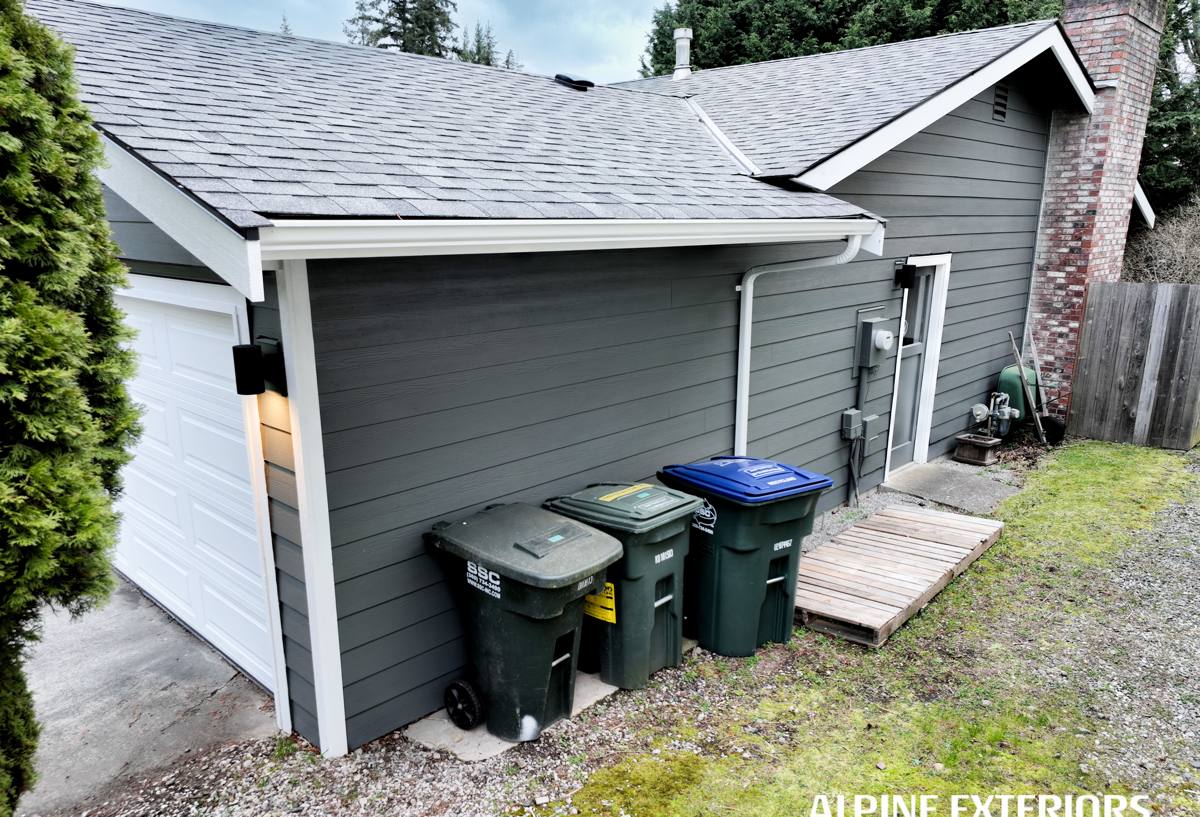
Why Fiber Cement Holds Up Where Other Materials Don't
Fiber cement is a blend of cement, sand, and cellulose fiber, pressed and cured into a dense, rigid board. That composition is what makes it a fundamentally different answer to Florida's climate than vinyl, wood, or engineered wood products.
Wind and Impact Resistance
Fiber cement is heavier and more rigid than vinyl, which means it holds its fastening pattern under wind load instead of flexing, oil-canning, or popping loose at the nail line the way lighter materials can. That rigidity also makes it far more resistant to wind-borne debris impact during a storm.
UV and Color Retention
Because the substrate itself doesn't contain organic wood fiber the way wood or wood-based composite siding does, it doesn't check, split, or absorb moisture the way those products can when UV exposure breaks down surface protection over time. Combined with a factory-applied finish engineered for UV exposure, the color stays consistent far longer than field-painted materials.
Moisture, Rot, and Salt Air
Fiber cement doesn't rot, and it isn't a food source for wood-destroying insects, both of which matter in a humid coastal climate where wood siding stays damp longer between rain events than it would inland. It also doesn't corrode, which matters directly for salt air — though the fasteners, flashing, and trim connected to it absolutely can, which is why installation detail matters as much as the board itself.
| Factor | Vinyl Siding | Untreated/Primed Wood | Fiber Cement |
|---|---|---|---|
| Wind resistance | Can flex, crack, or blow off in high gusts | Rigid but fasteners work loose over time | Rigid, holds fastening pattern under load |
| UV/fade resistance | Chalks and fades, especially darker colors | Paint film breaks down under constant sun | Factory finish engineered for UV exposure |
| Moisture/rot risk | Low rot risk but traps moisture behind panels | High — swells, rots, and invites insects | Does not rot; no insect food source |
| Salt air behavior | Can become brittle over time near the coast | Finish fails faster; grain absorbs salt spray | Substrate is inert; hardware needs corrosion resistance |
| Typical repaint/refinish need | Not paintable in most cases; replace when faded | Every 3–7 years in this climate | 15+ years with a factory ColorPlus finish |
What Correct Fiber Cement Installation Actually Involves
Fiber cement's reputation is built almost entirely on installation quality. The board itself is engineered to perform, but every manufacturer's warranty and every real-world failure story traces back to whether the crew followed the installation instructions to the letter — clearances, fastening, flashing, and joint treatment are not optional details, they're the difference between siding that lasts decades and siding that lets water in behind year one.
The Details That Actually Matter
- Correct clearance between the bottom edge of the siding and the roofline, deck, and grade so wind-driven rain and splash-back don't sit against the board
- A continuous, properly lapped weather-resistant barrier behind the siding, not just housewrap tacked up as an afterthought
- Corrosion-resistant fasteners driven at the manufacturer's specified pattern and depth — not overdriven, not underdriven, and rated for coastal exposure
- Butt joints and end cuts sealed or flashed per the manufacturer's method, since a factory-finished edge is only protected until it's cut on site
- Flashing integrated at every window, door, and roof-to-wall transition before the siding goes on, not caulked over afterward as a substitute
- Panel and lap gaps sized correctly for expansion, with sealant used only where the manufacturer calls for it — not everywhere, and not as a substitute for proper flashing
Skipping any one of these doesn't usually cause an immediate, visible problem. It shows up two or three storm seasons later as a soft spot behind a window, a stained soffit, or a section of siding that's failing while the rest of the wall looks fine — which is exactly the kind of issue a crew unfamiliar with this climate can miss during a quick inspection.
Product Options: Matching the Line to the House
James Hardie makes several siding profiles and product lines, and part of doing this job right is matching the product to the house rather than defaulting to one option for every project.
| Product Type | Best Fit | Notes for This Climate |
|---|---|---|
| HardiePlank lap siding | Traditional and bungalow-style homes | Most common choice; wide range of factory colors and textures |
| HardiePanel vertical siding | Accent walls, gables, modern facades | Fewer horizontal joints to detail and maintain |
| HardieTrim boards | Corners, fascia, window and door surrounds | Matches the siding's moisture and UV performance instead of mixing in wood trim |
| ColorPlus factory finish | Any of the above | Baked-on finish engineered for UV and coastal exposure, backed by its own finish warranty |
We install James Hardie exclusively rather than offering a menu of competing fiber cement or engineered wood brands. That's a deliberate standard, not a limitation — it lets us install to one set of specifications we know cold, back one manufacturer's warranty without hedging, and keep color and texture consistent if a homeowner ever needs a repair or addition matched years down the road.
Our Process for a Crescent Lake Home
- On-site assessment — we look at the existing siding, sheathing condition, trim, and any moisture history before quoting anything
- Tear-off, not overlay — we remove the old siding rather than installing over it, because covering existing damage or trapped moisture just hides a problem that will resurface
- Sheathing and structure check — any soft or water-damaged sheathing gets addressed before new siding goes up, not buried underneath it
- Weather barrier and flashing installed correctly — this is the layer that actually keeps water out; the siding is the second line of defense, not the first
- Siding installed to manufacturer specification — clearances, fastener pattern, and joint treatment followed exactly, with corrosion-resistant hardware throughout
- Final walkthrough — we go over the finished job with the homeowner before calling it done
Why a Crew That Already Works This Neighborhood Matters
A lot of the value in hiring locally isn't visible until something needs a second look. A crew that already works St. Petersburg and Pinellas County jobs knows the wind-load and building code requirements the permitting office will actually enforce, rather than learning them on your project. They're familiar with the age and construction style common to homes in and around Crescent Lake — older framing, older sheathing, and the kinds of moisture issues that tend to show up in this specific part of the county. And when a warranty question or a minor callback comes up two years after installation, a local crew is a phone call away instead of a company that's moved on to a different region entirely.
That familiarity also shows up in smaller ways: knowing which product lead times to plan around, knowing how Pinellas County inspections typically run, and being able to walk a homeowner through what's normal for a house near the water versus what's a genuine red flag.
Maintenance in a Salt Air, High-UV Climate
Correctly installed fiber cement is low-maintenance, not no-maintenance. A few habits go a long way toward getting the full lifespan out of it in this environment:
- Rinse the siding periodically with a garden hose to clear salt residue, pollen, and grime buildup, especially on walls facing prevailing wind off the water
- Avoid high-pressure washing directly at joints and edges, which can force water past sealant that was never meant to handle that kind of pressure
- Walk the exterior after major storms and check caulking at trim, windows, and joints for cracking or separation
- Keep gutters and downspouts clear so runoff doesn't sheet down the siding face or pool at the base of a wall
- Have any fastener staining or rust streaking looked at promptly — it's usually a hardware issue, not a board issue, and it's an easy fix while it's small
None of this is a heavy lift, but it's the difference between a job that looks the same in year fifteen as it did in year one and one that starts showing avoidable wear.
What This Costs to Get Right
Pricing on a fiber cement job depends on more than square footage. The factors below are what actually move the number, and they're worth understanding before comparing quotes:
| Cost Factor | Why It Matters |
|---|---|
| Existing siding removal | Full tear-off costs more up front but avoids hiding problems behind new material |
| Sheathing repair | Water-damaged sheathing found during tear-off has to be replaced before siding goes on |
| Home height and complexity | Multiple stories, gables, and cutouts around windows add labor time |
| Trim scope | Full HardieTrim replacement costs more than reusing sound existing trim |
| Siding profile | Lap siding is typically more economical than panel or mixed-profile designs |
| Color and finish | Factory ColorPlus finishes cost more than primed board painted on site, but eliminate that repaint cycle |
A trustworthy quote walks through each of these line items rather than handing over a single flat number, since two houses with the same square footage can end up priced very differently depending on what's underneath the old siding.
If you're weighing a siding project for a home near Crescent Lake, we're glad to come take a look, walk the exterior with you, and put together a straightforward, no-pressure estimate — just fill out the form below to get started.