 St. Petersburg Siding
 Why Crescent Lake Homes Need Siding Built for This Climate
Crescent Lake is one of St. Petersburg's older, established residential neighborhoods — mature tree canopy, a mix of early-to-mid-century bungalows and updated homes, and a lot of original wall assemblies that were never designed for what Pinellas County throws at a house today. Hurricane-force winds test every fastener and joint. Intense, near year-round UV bakes paint and breaks down anything not engineered to hold color. Wind-driven rain doesn't just fall straight down here — it gets pushed sideways into laps, corners, and trim where a lesser product or a sloppy install will eventually let water in. And because St. Petersburg sits close to open water on multiple sides, salt-laden air is a constant, low-grade corrosive presence on fasteners, flashing, and finish coatings.
None of that is unique to Crescent Lake specifically, but it's worth saying plainly: this is not a climate where "good enough" siding holds up for its expected lifespan. It's a climate where the product and the installation both have to be right, because the margin for error is smaller than in most of the country.
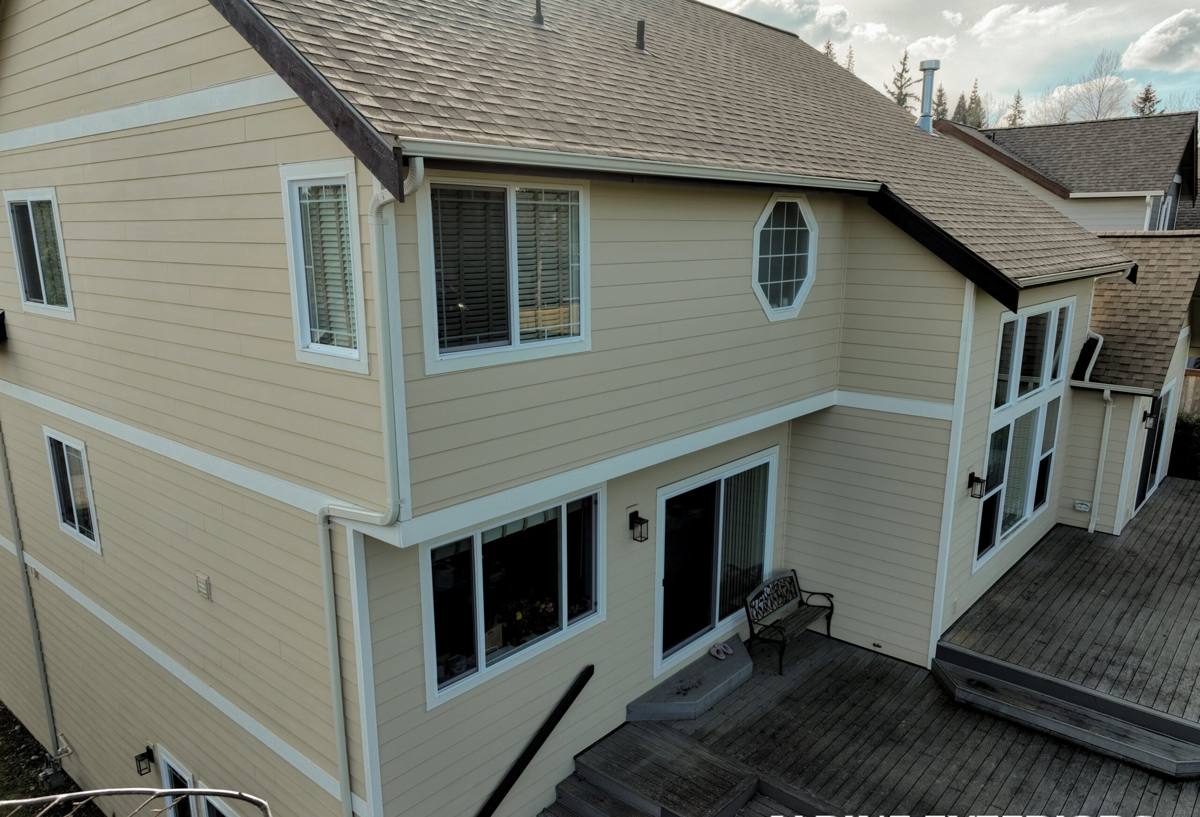
What James Hardie Brings to an Older Pinellas County Neighborhood
We install James Hardie fiber cement siding exclusively — not as a sales preference, but because it's the product we're comfortable standing behind on homes in this exposure. Fiber cement is non-combustible, dimensionally stable in heat and humidity swings, and doesn't rely on a surface coating alone to keep water out the way some engineered wood and composite products do.
The HZ5 Product Line
James Hardie engineers its siding by climate zone, and HZ5 is the version built for hot, humid, high-moisture regions like the Gulf Coast. It's formulated to resist the moisture cycling and humidity load that this region produces year-round — relevant in a neighborhood like Crescent Lake where tree cover keeps some walls shaded and damp longer after a storm than others.
ColorPlus Factory Finish
Field-painted siding is only as good as its weakest coat, and repainting fiber cement or wood siding every several years is a real, recurring cost most homeowners underestimate. ColorPlus is baked on at the factory in multiple coats under controlled conditions, which holds up to UV fade far better than a site-applied paint job and comes with its own finish warranty separate from the substrate warranty.
Why Not the Alternatives
We get asked about vinyl, LP SmartSide, Cemplank, Allura, and primed wood or cedar fairly often. Each has a place in the market, and each has real trade-offs we're upfront about: vinyl can distort in intense heat and doesn't stand up to wind-driven debris the way fiber cement does; engineered wood products are more sensitive to installation and moisture management; cedar and primed spruce need real, ongoing maintenance to survive UV and salt air; and warranty structures vary a lot between manufacturers. We standardized on James Hardie because, installed correctly, it's the product we've found gives homeowners in this climate the best combination of longevity, low maintenance, and warranty backing.
What a Correct Installation Actually Involves
Fiber cement siding is only as good as the install behind it. James Hardie publishes detailed fastening, clearance, and flashing specifications for a reason — skip them and you can void the warranty and create the exact moisture problems the product is supposed to prevent.
Fastening and Clearances
Correct nail or screw patterns, proper embedment, and minimum clearances from grade, roof lines, and abutting surfaces all matter more in a wind-and-rain climate than in a mild one. Under-fastened panels are one of the most common failure points we find on homes that were re-sided by crews unfamiliar with Hardie's specs.
Weather-Resistive Barrier, Flashing, and Sealant
Behind every panel there should be a continuous weather-resistive barrier, properly lapped and taped, with flashing at every penetration, window, and door head. Sealant gets used at specific joints — not everywhere, and not as a substitute for correct flashing. In a neighborhood exposed to wind-driven rain, gaps at trim returns and butt joints are where water gets in first.
Local Code and Wind Requirements
St. Petersburg sits in a wind-borne debris region under Florida's building code, which affects fastening schedules, product selection, and sometimes permitting requirements depending on the scope of work. A crew that pulls permits regularly in Pinellas County knows what the local building department expects on a re-side and won't leave you dealing with a failed inspection mid-project.
What Drives the Cost of a Hardie Re-Side in Crescent Lake
Every home is different, and we don't quote sight unseen — but these are the factors that consistently move a project up or down before we ever get to material and labor totals.
| Factor | Why It Matters Here | Typical Cost Impact |
|---|---|---|
| Existing siding removal | Older Crescent Lake homes often have original wood or a prior re-side to tear off and dispose of | Moderate |
| Tree canopy and site access | Mature trees common in this neighborhood affect staging, scaffolding, and material handling | Low to Moderate |
| Trim and architectural detail | Gables, dormers, and decorative trim on older homes take more labor per square foot | Moderate to High |
| Number of stories and access points | Affects staging, lift or ladder work, and crew time | Moderate |
| Moisture or rot found at tear-off | Common on older wall assemblies once original siding comes off | Variable |
| ColorPlus vs. field-painted finish | Factory finish costs more upfront but removes a recurring repaint expense | Low |
Most Crescent Lake re-sides land somewhere in a wide range depending on how many of these factors stack up on a given home. We'll give you real numbers after we've actually looked at the walls, not before.
How Our Process Works in This Neighborhood
- On-site assessment of the existing siding, wall assembly, and any visible moisture or rot before we quote anything
- A written scope that specifies product line, finish, fastening approach, and flashing details — not just a square-footage number
- Tear-off and disposal of existing siding, with the wall sheathing inspected and any damage addressed before new material goes up
- Weather-resistive barrier installation, correctly lapped and sealed
- James Hardie panel or plank installation to manufacturer fastening and clearance specs, with flashing at every penetration
- Trim, caulking at designated joints only, and a final walkthrough before we call the job done
Common Issues We Find on Older Crescent Lake Homes
Because so much of this neighborhood's housing stock predates modern wall assembly practices, a few patterns show up repeatedly once siding comes off: wood sheathing that's absorbed years of moisture behind an old paint film, previous repairs that used inconsistent or missing flashing, and trim that was caulked in place of being properly flashed. None of this is a reason to worry — it's just what tear-off on a home built decades ago in a humid, storm-exposed county tends to reveal. It's a reason to work with a crew that inspects before it quotes, and stops to address what it finds instead of covering it up with new siding.
Why a Crew That Already Works Crescent Lake Matters
Siding work in an older, tree-lined neighborhood is different from a new-construction subdivision. Access is tighter, trim details are more varied, and the wall assemblies behind the siding have more history. A crew that's already worked houses in this part of St. Petersburg knows what a Crescent Lake tear-off is likely to reveal, how to stage around mature trees and narrow lots, and what Pinellas County's permitting and wind-zone requirements mean for the fastening schedule and product selection on your specific home. That familiarity shows up in fewer surprises mid-project and a job that's planned around the realities of your street, not a generic template.
What a Correct Hardie Installation Should Include
- A written scope naming the exact James Hardie product line, profile, and finish — not a vague "fiber cement" line item
- Manufacturer-spec fastening, clearances, and flashing detail at every penetration and trim joint
- A continuous, properly lapped weather-resistive barrier behind the siding
- Inspection and repair of any sheathing damage found at tear-off, disclosed to you before it's covered up
- Proper permitting through the City of St. Petersburg where required
- Clear documentation of the product warranty and workmanship warranty, in writing
If we come out to look at your home, we'll walk you through exactly what we see, what it'll take to do the job right, and what that means for cost — no pressure, no obligation. Use the form below to request a free estimate.