 St. Petersburg Siding
 Shore Acres Sits Right on the Water — Your Deck Has to Handle That
Shore Acres is one of the closest-to-the-bay neighborhoods in St. Petersburg, and that waterfront position is exactly why a deck built here needs different thinking than a deck built inland. Canal frontage and open bay exposure mean more salt in the air, more direct sun bouncing off the water, and a higher chance that storm season brings tidal push and standing water onto the property. A deck that would hold up fine in a shaded, inland Pinellas County yard can fail years early on a waterfront lot if it wasn't designed with that exposure in mind.
We build custom decks across St. Petersburg, and Shore Acres jobs get treated as waterfront jobs from the first conversation — not a standard deck with better wood. That means different fastener choices, different framing decisions, and a real look at how the property sits relative to flood zone requirements before we ever talk about railing style or board color.
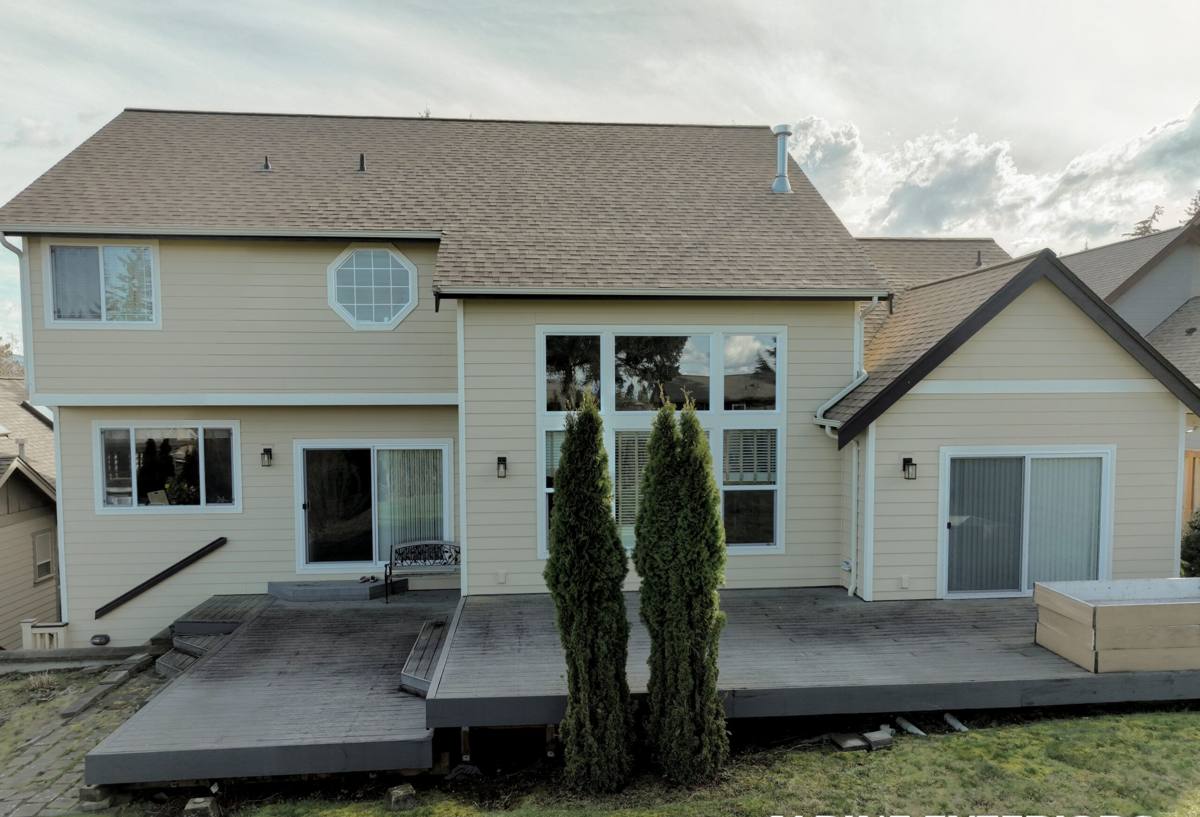
What St. Petersburg's Climate Actually Does to an Outdoor Deck
Every deck in this area is fighting the same four things, and Shore Acres homes get them at close range because of the water.
Salt Air and Corrosion
Salt-laden air off Tampa Bay accelerates corrosion on anything metal — fasteners, joist hangers, railing brackets, even the screws holding down the decking itself. Standard zinc-coated hardware can start rusting and staining a deck within a couple of seasons this close to the water. It's one of the most common shortcuts we see on decks that were built cheap and are already failing.
Intense, Year-Round UV
Florida sun doesn't take a break in winter the way it does farther north. Constant UV exposure dries out and fades wood fibers, breaks down cheaper composite formulations, and can make dark decking surfaces uncomfortably hot underfoot in summer. Color and material choice both matter more here than they would in a milder climate.
Wind-Driven Rain and Storm Surge
Hurricane-force wind doesn't just push rain sideways into ledger connections and railing posts — on a waterfront lot like Shore Acres, storm season can also bring temporary tidal rise onto lower parts of the property. A deck's framing, fastener choice, and elevation all need to account for the possibility of getting wet from below, not just from above.
Choosing Decking Material for a Waterfront Lot
There's no single "best" decking material — there's a best material for this lot, this budget, and this level of exposure. Here's how the common options actually perform near the bay.
| Material | Upfront Cost | Salt Air Resistance | Maintenance | Notes for Shore Acres |
|---|---|---|---|---|
| Pressure-treated pine | Lowest | Fair — needs sealing | Annual cleaning and re-sealing | Workable if budget-driven, but needs a disciplined maintenance schedule near salt air |
| Tropical hardwood (e.g., ipe) | High | Good | Periodic oiling to hold color | Dense and durable, but heavy and requires stainless fasteners to avoid staining |
| Composite decking | Mid-high | Good | Low — occasional washing | Consistent performance; check the manufacturer's coastal/UV warranty terms |
| Cellular PVC decking | Highest | Very good | Lowest | Doesn't absorb moisture, handles salt spray well, best for lots with regular water exposure |
For most Shore Acres homeowners, the decision comes down to composite or PVC versus real wood. Wood gives you a traditional look and a lower entry price, but it demands consistent upkeep to survive the salt air and sun. Composite and PVC cost more up front but shed water and salt exposure without the annual sealing routine — a real consideration if the deck sits low or close to the seawall.
What's Underneath Matters More Than What's On Top
Homeowners naturally focus on the decking surface, but the framing and fasteners are what actually determine whether a deck lasts on a waterfront lot.
- Fasteners: We use stainless steel or coated fasteners rated for coastal/salt exposure — standard hardware store screws corrode too fast this close to the bay.
- Joist hangers and connectors: Hot-dip galvanized or stainless connectors, sized and installed to the manufacturer's load spec, not just "close enough."
- Ledger flashing: The connection where the deck meets the house is the single most common source of hidden water damage. Correct flashing keeps wind-driven rain from working its way into the wall sheathing behind it.
- Footings: Concrete footings sized for both the load and the local soil conditions, set to the depth Pinellas County code requires — not a shortcut poured shallow to save a day of work.
- Post-to-beam and beam-to-joist connections: Hurricane clips or straps at every structural connection, not just at the corners.
A deck can look finished and still be built wrong underneath. The framing is the part that decides whether it's standing — solidly — in ten years.
Flood Zone Elevation and Permitting in St. Petersburg
Because of its proximity to the water, a meaningful share of Shore Acres sits in a mapped flood zone. That affects a custom deck project in a few concrete ways: the City of St. Petersburg's permitting process will look at the property's flood zone designation, and depending on where the deck falls relative to base flood elevation, that can influence footing depth, materials below a certain elevation, and how the structure attaches to the house.
This isn't something to guess at or skip. A deck built without a permit, or without accounting for flood zone requirements, can create real problems later — at resale, at insurance renewal, or if the city's code enforcement catches it during an unrelated inspection. Every custom deck we build in St. Petersburg goes through proper permitting, and on Shore Acres jobs specifically we check the property's flood zone status before finalizing the design, not after.
Our Custom Deck Process for Shore Acres Homeowners
- On-site consultation: We walk the property, look at sun exposure, water proximity, existing drainage, and how the deck will connect to the house.
- Design and material selection: Layout, decking material, railing style, and footing plan, sized to the site — not a stock template.
- Permitting: We handle the City of St. Petersburg permit application, including any flood zone documentation the property requires.
- Framing and inspection: Footings, framing, and connections go in first, with the required inspections signed off before decking goes down.
- Decking, railing, and finish work: Surface material, railings, and any built-ins (steps, lighting, benches) go in last.
- Final walkthrough: We go over the finished deck with you and cover the maintenance routine for whatever material you chose.
Maintenance: Keeping a Coastal Deck Looking Right for Years
Every decking material needs some upkeep near the water — the difference is how much and how often.
- Rinse regularly: A periodic fresh-water rinse removes salt residue before it can pit metal fasteners or dull a finish.
- Check fasteners and connections yearly: Catching a corroding screw or bracket early is a five-minute fix; catching it late can mean replacing boards.
- Reseal or oil wood decking on schedule: Don't wait for it to look gray and dry — by then the UV damage has already started.
- Clear drainage gaps between boards: Debris trapped between boards holds moisture against the framing longer than it should.
- Inspect after major storms: A quick check of footings, railings, and ledger flashing after a hard blow catches problems before the next one.
Why a Crew That Already Works Shore Acres Matters
A contractor who builds decks all over Tampa Bay in general is not the same as a crew that already knows Shore Acres specifically. We know what the City of St. Petersburg's permitting office expects for this area, we've already priced and installed the fastener and footing upgrades that waterfront lots need, and we're not learning the neighborhood's flood zone quirks on your project. That familiarity shows up as fewer surprises mid-build and a design that's realistic about this property's exposure from day one, instead of a generic deck plan retrofitted after the fact.
It also matters after the sale. A local crew is a phone call away if a fastener starts showing rust or a board needs attention two years down the line — not a company that built one deck in the area and moved on.
What a Correctly Built Deck Includes: Our Checklist
Whoever you hire, this is what should be true of any deck built on a Shore Acres waterfront lot:
- A pulled and approved City of St. Petersburg permit, including flood zone review where applicable
- Footings sized and set to code depth for the local soil and load
- Stainless steel or coated, coastal-rated fasteners throughout — not standard hardware
- Correctly flashed ledger board where the deck meets the house
- Hurricane clips or straps at structural connections
- Decking material matched honestly to your budget and exposure level, not just what's cheapest to install
- Code-compliant railing height and baluster spacing
- A final inspection sign-off before the job is called complete
If a proposal skips several of these to hit a lower price, it's worth asking why — on a waterfront lot, those are the details that decide whether the deck is still solid in ten years or needs early repairs.
If you're planning a custom deck in Shore Acres, we're happy to walk the property and give you a straight, no-pressure estimate — just fill out the form below.