 St. Petersburg Siding
 Decks on Pinellas Point Live in a Harder Climate Than Most
Pinellas Point sits out on the water, and that location is exactly why decks here fail faster than decks built the same way a few miles inland. The combination of salt air, near-constant humidity, intense year-round UV, and the real chance of hurricane-force wind and wind-driven rain during a storm puts more stress on an outdoor structure in a single Florida summer than many decks up north see in a decade. A deck built without that in mind doesn't fail all at once — it fails slowly, one loose fastener or one soft board at a time, until a homeowner is looking at a rebuild years before they should be.
We build and repair decks for homes in this part of St. Petersburg, and the patterns repeat: corroded fasteners bleeding rust streaks down light-colored decking, ledger boards that were never flashed properly and started rotting from the house side out, and railings that loosened after a season or two because standard hardware wasn't rated for a coastal environment. None of that is inevitable. It comes down to material choices and installation details that matter more here than they do in most of the country.
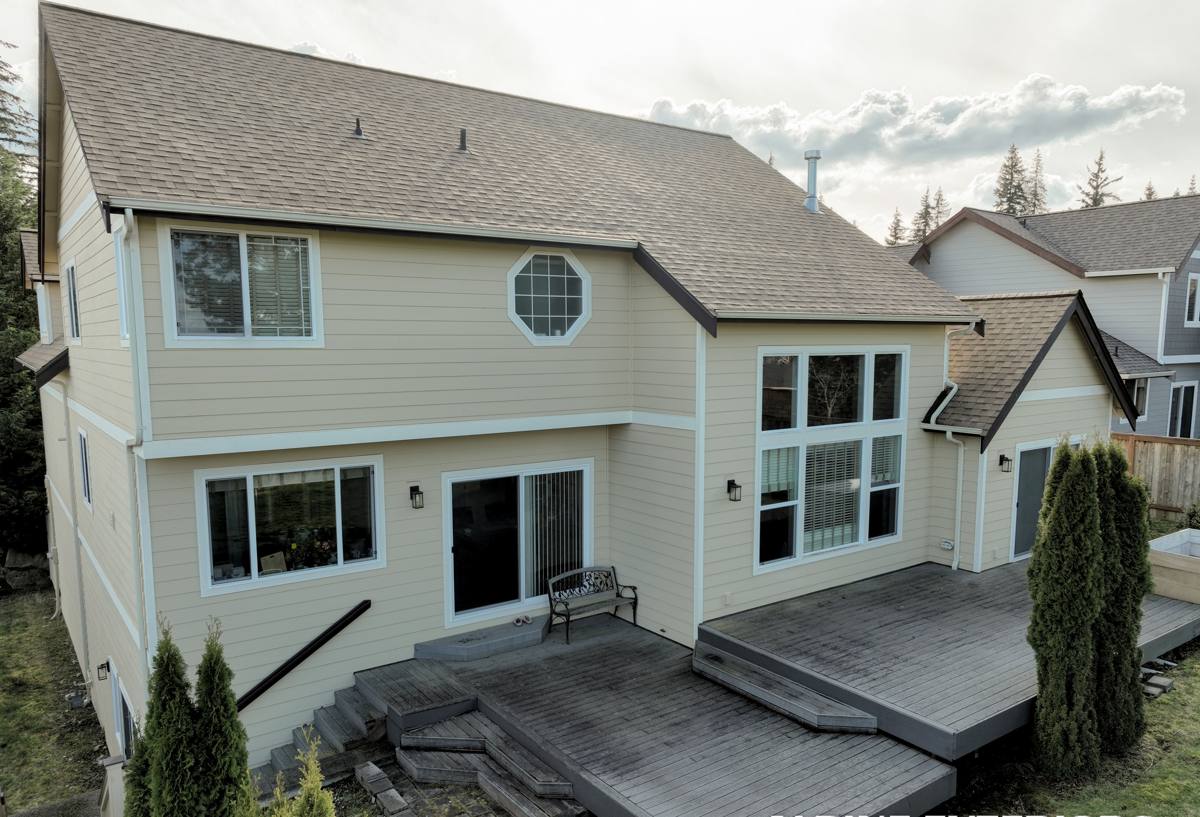
What a Pinellas Point Deck Actually Needs to Hold Up
Structural Attachment
The single most important connection on any deck is where it ties into the house — the ledger board. In a humid, salt-exposed coastal environment, that connection needs proper flashing (not just caulk) to keep water from wicking into the house rim joist, and lag bolts or through-bolts rated for exterior and corrosive-exposure use. We've seen decks that were structurally fine everywhere else but had a rotting ledger connection because the flashing detail was skipped to save an hour of labor.
Wind Resistance
A deck attached to a Pinellas County home has to be built to handle uplift and lateral loads from wind, not just the static weight of people and furniture. That means correctly spaced and sized joist hangers, hurricane ties or straps at key connections, and footings sized for the load path of the whole structure — not just resting on the smallest footing that will pass a quick glance.
Moisture Management
Wind-driven rain during a tropical storm or hurricane doesn't fall straight down — it drives sideways and gets up under boards, behind fascia, and into any gap that isn't sealed correctly. Proper board spacing, joist tape over framing lumber, and drainage away from the house foundation all matter more here than in a dry climate.
Decking Material Choices for Salt Air and Sun
There's no single "best" decking material for every home — it's a real trade-off between upfront cost, maintenance commitment, and how the material behaves specifically in salt air and UV exposure over years, not just in the showroom.
| Material | How It Handles This Climate | Maintenance | General Cost Range |
|---|---|---|---|
| Pressure-treated pine | Affordable, structurally solid, but needs consistent sealing to resist UV graying and moisture cycling near the coast | Reseal every 1-2 years | Lowest upfront |
| Composite decking | Resists rot and doesn't need sealing; quality varies by product on fade and moisture resistance in coastal sun | Periodic cleaning, no sealing | Mid to upper-mid |
| Capped PVC/composite | A fully capped shell resists salt spray, UV fade, and moisture absorption better than uncapped composite | Low — occasional wash | Higher upfront |
| Tropical hardwood (e.g., ipe) | Naturally dense and rot-resistant, but still needs oiling to hold color and can be harder to source and repair | Annual oiling recommended | Premium |
Our honest take: we don't push one product on every homeowner. A rental or lower-maintenance property often does better with capped composite because there's nothing to reseal. A homeowner who doesn't mind upkeep and likes real wood underfoot can get a lot of life out of well-maintained pressure-treated lumber if it's sealed on schedule — the trade-off is that schedule has to actually get kept.
Framing and Hardware: The Part Nobody Sees, Until It Fails
Framing lumber and fasteners are the part of a deck almost nobody thinks about after the build, but in a salt-air environment they're often the first thing to show wear. Standard galvanized screws and hangers can start showing rust streaks and losing holding strength faster near the water than they would a few miles inland. We build with stainless steel or coastal-rated coated fasteners and hangers on decks in this area as a matter of standard practice, not an upcharge option, because the cost difference over the life of the deck is small compared to the cost of re-decking a structurally sound frame because the fasteners failed first.
- Stainless steel or coastal-rated coated screws and bolts at all structural connections
- Corrosion-resistant joist hangers and post bases rated for exterior, ground-contact, or coastal exposure as appropriate
- Properly flashed ledger board connection to the house structure
- Footings sized and set to local frost-free, load-bearing depth requirements
- Hurricane ties or straps at connections identified in the structural plan
- Post bases that keep wood posts off standing water and direct soil contact
Permits, Codes, and Wind Ratings in Pinellas County
Deck construction in St. Petersburg and unincorporated Pinellas County generally requires a permit, and inspections along the way confirm the footings, framing, and attachment meet Florida Building Code requirements for wind resistance in this region. Skipping the permit might save time up front, but it creates real problems later — insurance claims can be denied on unpermitted structural work, and an unpermitted deck can complicate a home sale when it shows up (or doesn't show up) on inspection.
We pull the permits and coordinate the inspections as part of the job. That's not paperwork for its own sake — it's the mechanism that confirms the footings are deep enough, the ledger connection is sound, and the structure is actually built to hold up to the wind loads this area sees.
How We Approach a Pinellas Point Deck Build
- On-site assessment. We look at the house structure where the deck will attach, the soil and drainage on the lot, sun and rain exposure, and how the space will actually be used.
- Material and layout conversation. We walk through decking and railing options honestly, including maintenance trade-offs, and design a layout that fits the home and the budget.
- Permitting. We handle the permit application and scheduling with the county or city so the homeowner isn't chasing paperwork.
- Framing and structural work. Footings, ledger attachment, joists, and hardware go in to code, with the coastal-rated fasteners and connections described above.
- Decking, railing, and finish work. Boards, railing, stairs, and any trim get installed and finished to spec.
- Final walkthrough and inspection. We confirm the county inspection is passed and walk the finished deck with the homeowner before calling the job done.
Living With a Coastal Deck: Maintenance That Actually Matters
Every deck material in this climate needs some level of upkeep — the difference is how much and how often. A little consistency goes a long way toward avoiding a premature rebuild.
- Rinse salt residue and debris off the deck surface periodically, especially after storms
- Check fastener heads and railing connections once or twice a year for corrosion or looseness
- Reseal or stain wood decking on the schedule the product actually requires, not "when it looks bad"
- Keep gutters and downspouts near the deck clear so runoff doesn't pool against footings or the ledger connection
- Trim back vegetation that traps moisture against framing or decking
- After any major storm, walk the deck and check for movement at the ledger board or posts before heavy use resumes
Why Hiring a Crew That Already Works This Neighborhood Matters
A deck built by a crew that's already worked in Pinellas Point shows up understanding things a crew from outside the area has to learn on the job: what the soil and drainage tend to do on lots this close to the water, which permitting steps the local jurisdiction actually checks closely, and which hardware and material choices hold up here versus which ones look fine on paper but underperform once salt air and sun get to them for a few years. That local track record isn't a marketing line — it shows up in fewer surprises during the build and a deck that's actually specified for the conditions it has to survive, not a generic spec sheet.
What Drives the Cost of a Pinellas Point Deck
| Factor | Why It Matters Here |
|---|---|
| Decking material | Pressure-treated lumber costs less upfront; capped composite and hardwood cost more but shift maintenance burden |
| Size and layout | Multi-level decks, built-in seating, and stairs add material and labor beyond a simple rectangular platform |
| Fastener and hardware grade | Coastal-rated stainless hardware costs more than standard galvanized but resists salt-air corrosion far longer |
| Height and footing depth | Elevated decks and deeper footings required for load and wind resistance add labor and material |
| Railing style | Wood, aluminum, and cable railing systems vary in cost and in how they hold up to salt exposure |
| Permitting and inspection needs | More complex structures may require additional engineering review before permitting |
Because every lot and every homeowner's priorities are different, we don't quote a deck without seeing the site and understanding what the homeowner actually wants out of the space.
Let's Look at Your Property
If you're weighing a new deck or need an existing one evaluated for storm readiness, we're happy to come take a look. There's no cost and no pressure to move forward — just an honest read on what your home needs and what it would take to get it done right. Use the form below to request a free estimate.