 St. Petersburg Siding
 Why Euclid-St. Paul Decks Need to Be Built Differently
Euclid-St. Paul sits close enough to the water that every outdoor structure on the property deals with the same combination: intense year-round UV, salt-laden air, wind-driven rain, and the occasional hurricane-force gust. A deck in this part of St. Petersburg isn't just furniture for the backyard — it's an exterior structure that has to survive Pinellas County's climate the same way your siding and roof do. Composite decking handles that combination better than most alternatives, but only when it's specified and installed correctly for this environment. A lot of the decking problems we get called out to fix in this neighborhood aren't material failures — they're installation shortcuts that didn't account for local conditions.
That's the distinction worth understanding before you hire anyone: composite decking is a good product for St. Petersburg. Composite decking installed like it's going in a dry inland climate is a problem waiting to happen.
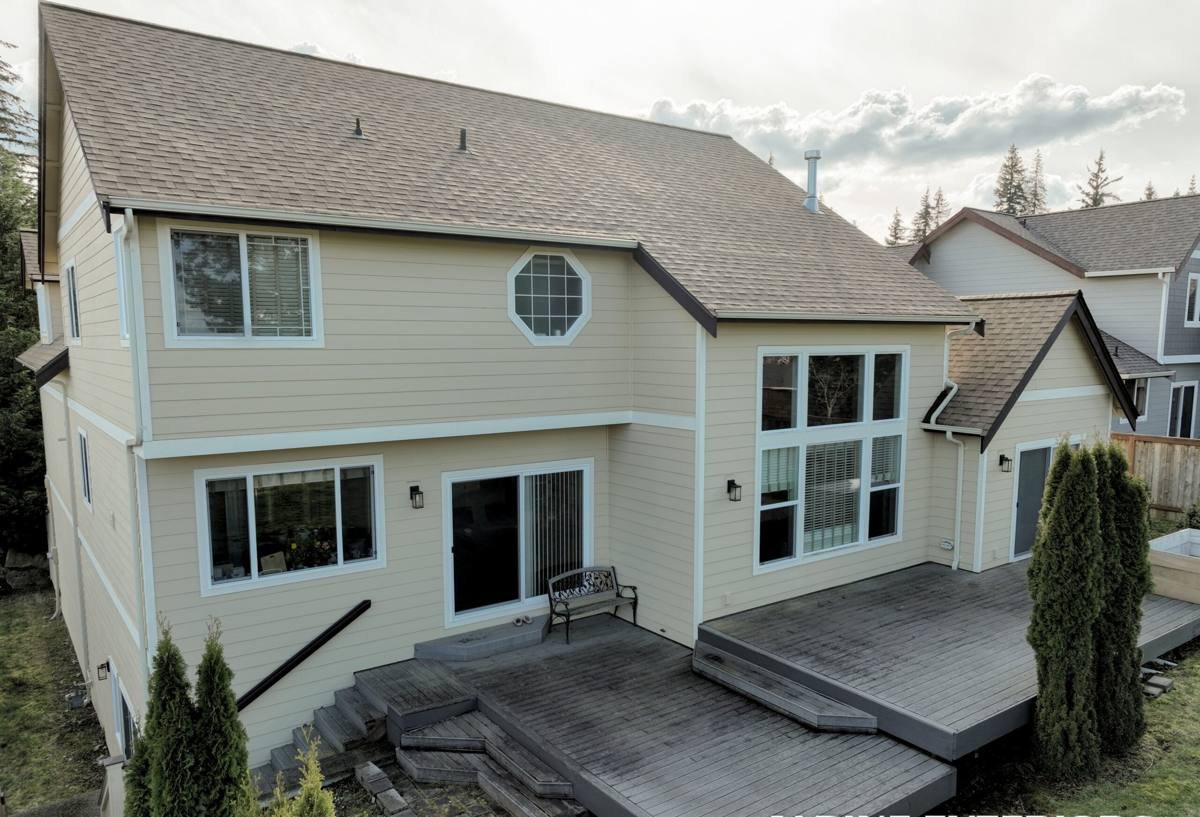
What Local Conditions Actually Do to a Deck
Salt Air and Corrosion
Salt-laden air doesn't just affect homes directly on the water — it travels inland on Gulf breezes and settles on every metal surface it touches. Fasteners, joist hangers, and structural screws that aren't rated for coastal exposure will corrode from the inside of the deck outward, long before the composite boards on top show any wear. This is one of the most common failure points we find on decks that were built with standard hardware instead of stainless or coated coastal-grade fasteners.
UV Exposure
Florida sun is relentless, and a west- or south-facing deck in this neighborhood gets hit with strong, direct UV for most of the day, most of the year. Lower-quality composite boards without adequate UV inhibitors in the cap layer will fade unevenly and can become brittle at the surface over time. Board quality matters more here than in most parts of the country.
Wind-Driven Rain and Moisture Cycling
Composite decking resists rot the way wood can't, but the substructure underneath — the joists, beams, and posts — still needs to be protected and ventilated. Wind-driven rain gets pushed sideways and underneath deck boards during storms, and if the framing below can't dry out between rain events, you get trapped moisture, mold, and eventually structural softening, even with a composite deck surface that looks fine.
Hurricane-Force Wind Loads
Pinellas County's wind-load requirements exist for a reason. Railings, post connections, and ledger attachments all need to meet code for uplift and lateral load, not just look sturdy. A deck that isn't properly anchored is a liability risk in a storm — for the structure itself and for anything nearby it could damage if it fails.
What a Correct Composite Deck Installation Involves
Substructure First
The framing is the part of the deck nobody sees once it's finished, and it's the part that determines whether the deck lasts 10 years or 25. For this area, that means pressure-treated or coastal-rated lumber, joist tape or flashing to keep water off the top of the joists, and hardware rated for coastal/marine exposure — not standard galvanized fasteners that will corrode faster in salt air.
Ventilation and Drainage
Composite decking needs airflow underneath it to manage the humidity that builds up between rain events. Proper joist spacing, gapping between boards, and grading the ground below the deck so water doesn't pool are all part of doing this right in a humid coastal climate.
Fastening System
Hidden fastener clip systems are common with composite decking and generally look better than face-screwing, but the clips and screws still need to be corrosion-resistant hardware suited to this environment. We don't cut corners here — it's one of the cheapest parts of the job and one of the most consequential if it fails early.
Railings and Structural Connections
Post-to-frame connections, railing attachment, and ledger-to-house connections all need to be built to withstand Pinellas County wind loads and pass local inspection, not just meet a manufacturer's minimum spec sheet.
Composite vs. Other Decking Materials for This Climate
| Material | Salt Air / Humidity Behavior | UV Fade Resistance | Maintenance |
|---|---|---|---|
| Composite decking | Doesn't rot or absorb moisture like wood; correct hardware still required | Good with quality cap-stock boards | Occasional wash; no staining or sealing |
| Pressure-treated wood | Absorbs moisture, prone to warping and rot in coastal humidity | Fades and grays without regular sealing | Annual sealing/staining recommended |
| PVC decking | Fully moisture-resistant, similar corrosion concerns for hardware | Very good, tends to run hotter underfoot | Low; can show scratches more visibly |
| Tropical hardwood | Naturally dense and rot-resistant but still needs sealed fasteners | Grays without maintenance | Higher; periodic oiling to maintain color |
Composite decking is a solid middle ground for most Euclid-St. Paul homeowners: less upkeep than wood, generally more comfortable underfoot and more forgiving on installation tolerances than PVC. The trade-off is upfront cost versus treated wood, which is why we walk homeowners through the real lifetime cost, not just the sticker price, before they decide.
Maintenance Reality for Coastal Composite Decks
Composite decking is low-maintenance, not no-maintenance — especially this close to the Gulf. Salt residue, pollen, and organic debris build up on the surface and, combined with humidity, can lead to surface mildew if it's never cleaned. None of this is difficult, but it matters more here than it would inland.
- Rinse or wash the deck surface every few months to remove salt residue and organic buildup
- Sweep debris out of board gaps so water can keep draining properly
- Check railing posts and stair connections annually for looseness after storm season
- Inspect under-deck hardware periodically for corrosion, especially on decks over five years old
- Trim back landscaping that shades the deck and keeps it from drying out after rain
Permitting and Wind Requirements in Pinellas County
Decking projects in St. Petersburg generally require a permit, and inspectors will check footing depth, post connections, railing height, and structural fastening against current wind-load requirements for the area. This isn't paperwork for its own sake — it's the same set of standards that determines whether a deck survives a bad storm intact. Skipping the permit process, or working with a crew that doesn't pull permits, can leave a homeowner responsible for bringing an unpermitted structure up to code later, often at a worse price than doing it right the first time.
Our Process for Euclid-St. Paul Decking Projects
1. On-Site Evaluation
We walk the property, look at sun exposure, drainage, existing structure (if replacing a deck), and talk through how the space will actually be used before recommending a board and layout.
2. Material and Layout Plan
We go over composite board options, color and cap-stock quality, and railing systems, with honest pricing — not just the cheapest board on the shelf.
3. Permitting
We handle the permit process with the city so the finished deck is inspected and up to code, not something you have to sort out later.
4. Build
Coastal-rated framing hardware, proper ventilation and drainage, and correct fastening — the parts of the job that don't show but determine how long the deck lasts.
5. Final Walkthrough
We go over the finished deck with you, including basic care so it holds up through Florida's seasons.
What Composite Decking Typically Costs
| Cost Factor | What Drives It |
|---|---|
| Deck size and shape | More square footage, angles, and stairs increase labor and material |
| Board tier | Entry-level vs. premium cap-stock composite boards vary significantly in price and warranty |
| Substructure condition | New framing costs more than reusing sound existing framing, when that's an option |
| Railing style | Composite or metal railing systems cost more than basic options but hold up better to salt air |
| Site access | Elevated decks, tricky lot access, or removal of an old deck add labor time |
We give a firm, itemized quote after seeing the site — not a phone estimate — because the framing condition and layout genuinely change the price.
Why It Matters That We Already Work in This Neighborhood
Every established neighborhood in St. Petersburg has its own quirks — older homes with framing that needs extra attention, HOA guidelines in some communities, lot layouts that affect drainage and access. A crew that's already worked decks in and around Euclid-St. Paul isn't guessing at what Pinellas County inspectors look for or what the local climate does to a deck over five, ten, or fifteen years. We're not learning the area on your project.
If you're weighing composite decking for your home in Euclid-St. Paul, we're happy to come take a look, walk the property, and put together a straightforward, no-pressure estimate — use the form below to get started.