 St. Petersburg Siding
 Why Deck Repair Looks Different in Euclid-St. Paul
Euclid-St. Paul is a settled, tree-shaded residential pocket of St. Petersburg, and a lot of the decks here were built or last resurfaced years ago — long before the current run of hard hurricane seasons and the steady creep of Gulf Coast humidity into everything wood and metal. A deck repair in this neighborhood isn't just cosmetic sanding and a coat of stain. It's checking the parts you can't see from the yard: the ledger board bolted to the house, the joists underneath, the hardware holding it all together, and whether water has been finding its way into places it shouldn't.
We work decks throughout St. Petersburg and Pinellas County, and the failure patterns we see in Euclid-St. Paul track closely with what you'd expect from an older, established neighborhood a few miles inland from the water: less direct storm-surge risk than the barrier islands, but the same relentless sun, the same wind-driven rain during summer storms, and the same salt-laden air that blows in off Tampa Bay and the Gulf and settles on every exposed fastener and board.
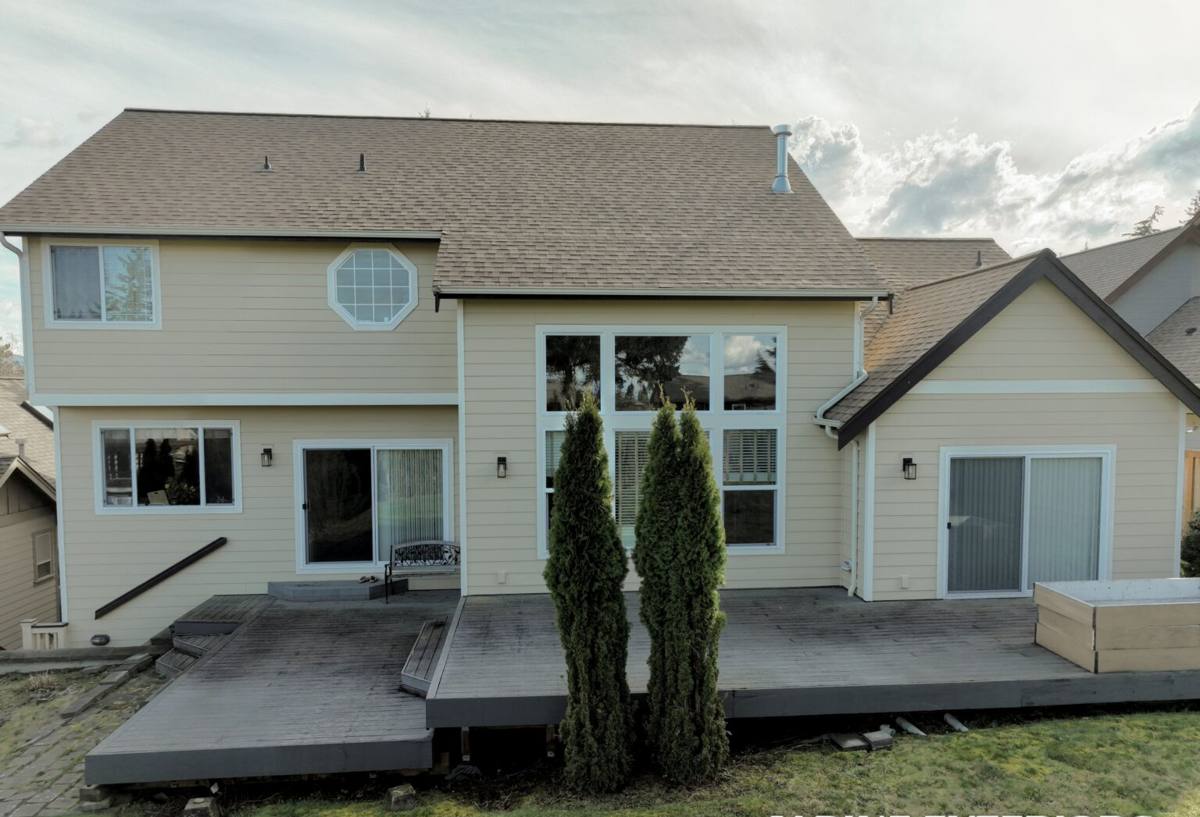
What Pinellas County Weather Does to a Deck Over Time
UV and Heat
Florida gets more direct sun exposure than almost anywhere else in the country, and it doesn't let up seasonally the way it does farther north. Constant UV breaks down the lignin in wood fibers, drying out the surface and causing graying, splintering, and checking — those long surface cracks that run with the grain. On composite boards, years of UV exposure can fade color and, on older or lower-grade products, cause the surface to become brittle at the edges.
Wind-Driven Rain and Humidity
Afternoon thunderstorms are a fact of life here, and they rarely fall straight down — wind pushes rain sideways into railings, under boards, and against the house where the deck ties in. Combined with Pinellas County's high humidity, that moisture doesn't dry out as fast as it would in a drier climate. Wood that stays damp for extended periods is exactly what invites rot, and it's also what corrodes hidden hardware from the inside out, long before the surface shows a problem.
Salt Air and Hardware Corrosion
Even well inland from the beaches, homes throughout the St. Petersburg area sit in a salt-air environment. Salt in the air accelerates corrosion on anything that isn't rated for it — standard fasteners, budget brackets, and uncoated hangers can start rusting years before the wood around them shows obvious damage. A deck can look structurally fine on top while the connectors holding it together are quietly failing underneath.
The Deck Problems We Most Often Find
Surface and Board-Level Issues
- Cupped, warped, or splintering boards from repeated wet-dry cycles
- Soft or spongy spots where water has been sitting instead of draining
- Failed or peeling stain and sealer leaving wood unprotected
- Loose or popped fasteners working their way up through the decking
- Rust staining bleeding out around screw heads and brackets
Structural and Framing Issues
These are the problems that matter most, because they affect safety, not just appearance. We look for a ledger board pulling away from the house — often from missing or failed flashing that let water get behind it — joists and beams softened by long-term moisture exposure, undersized or corroded joist hangers, wobbly or rotted railing posts, and stair stringers that have lost their footing or connection. Any one of these can turn a deck that looks usable into one that isn't safe to stand on, and none of them are visible from a quick walk across the boards.
Repair or Replace? How We Make That Call
Not every deck problem calls for tearing the whole thing out, and we don't default to recommending replacement just because it's the bigger job. The honest answer usually comes down to how much of the structure is still sound versus how much has been compromised, and that's something we check directly rather than guess at.
| Factor | Repair Is Usually Enough | Replacement Makes More Sense |
|---|---|---|
| Framing (joists, beams, ledger) | Solid, no soft spots or rot found on inspection | Widespread rot, corrosion, or a failed ledger connection |
| Decking boards | A handful of boards damaged; the rest is sound | Most boards cupped, splintering, or failing at once |
| Age and repair history | Deck is younger or has been well maintained | Deck has already had multiple past repairs stacking up |
| Hardware and fasteners | Localized rust, easily swapped in place | Corrosion is widespread through hangers and brackets |
| Footings and posts | Stable, plumb, properly set | Settled, cracked, or undersized for current code |
When we inspect a deck in Euclid-St. Paul, we weigh all five of these together, not just the single problem you called us about. A deck with one bad board but a rotted ledger underneath isn't a one-board fix — it's a ledger repair with a board replaced along the way, and pricing it as anything less would be misleading.
What a Correct Repair Actually Involves
Inspection First
Before any work starts, we get underneath the deck and check the framing directly — not just from the top. That means probing joists and the ledger board with an awl or screwdriver to find soft wood, checking flashing at the house connection, testing railing posts for movement, and looking at footings for cracking or settlement. A repair estimate built without this step is a guess dressed up as a number.
Fixing the Cause, Not Just the Symptom
A soft board is often a symptom, not the problem itself. If water is pooling because of poor drainage or missing flashing, replacing the board without addressing the water source just buys a year or two before the same spot fails again. Correct repair work fixes what's letting moisture in — flashing, gaps, grading, or ventilation underneath the deck — at the same time as the visible damage, so the fix actually holds.
Our Process From Call to Finished Deck
- On-site inspection. We walk the deck, get underneath it, and document what we find — good and bad, in plain language.
- Written estimate. You get a clear breakdown of what needs repair, what's optional, and what it costs, with the reasoning explained rather than just a total.
- Repair work. Framing and structural fixes come first, then decking, railings, and stairs, using fasteners and materials matched to Florida's outdoor exposure.
- Final walkthrough. We check the deck together before we call the job done, including how it drains and how the railings and stairs feel underfoot.
Materials and Fasteners We Use, and Why
For framing repairs, we use pressure-treated lumber rated for ground contact where it's called for, paired with fasteners and connectors rated for coastal or high-moisture exposure — stainless steel or heavy hot-dip galvanized, not the standard-grade hardware that corrodes quickly in this climate. It costs more up front than mixing in whatever hardware happens to be on the shelf, but replacing a hanger twice ends up costing more than doing it right the first time.
For decking surfaces, both quality pressure-treated wood and composite boards have a place, and the right choice depends on the homeowner's priorities. Wood costs less up front and is straightforward to spot-repair board by board, but it needs regular sealing to hold up against Florida sun and rain. Composite costs more initially and needs far less routine maintenance, but matching color on an aged composite board can be harder than swapping a single wood board, and it's less forgiving of installation shortcuts around spacing and ventilation. We'll walk through both options honestly for your specific deck rather than steering you toward one across the board.
A Simple Maintenance Checklist for Euclid-St. Paul Homeowners
Between repairs, a few habits go a long way toward keeping a Pinellas County deck out of trouble:
- Sweep off leaves and debris regularly so moisture doesn't sit trapped against boards
- Check that gaps between boards stay clear so water can drain through instead of pooling on top
- Look underneath the deck once or twice a year for soft wood, rust streaks, or sagging
- Reseal or restain wood decking on the schedule the product calls for, not just when it looks faded
- Tighten or replace any fastener showing rust before the corrosion spreads to the wood around it
- After a named storm, check railings and stair connections for movement before anyone uses them
Why a Crew That Already Works This Neighborhood Matters
A deck repair crew that works Euclid-St. Paul and the surrounding St. Petersburg neighborhoods on a regular basis has already seen how homes here age under Pinellas County's specific mix of sun, humidity, and storm exposure. That familiarity means faster, more accurate diagnosis — knowing where flashing tends to fail on homes of a certain age, which hardware holds up and which doesn't, and what the City of St. Petersburg expects on permitted repair work. It also means being reachable for a follow-up question after a storm rather than a one-time crew that's left town by the next season.
If your deck has soft spots, loose railings, or just doesn't feel as solid as it used to, we're glad to take a look. Reach out for a free, no-pressure estimate — we'll tell you honestly what needs fixing and what doesn't, using the form below.