 St. Petersburg Siding
 Snell Isle's Exposure Is Different From the Rest of St. Petersburg
Snell Isle sits on water on nearly every side, and that changes what a siding job has to survive. Homes here take on salt-laden air coming off Tampa Bay, near-constant humidity, and wind that doesn't have much to slow it down before it reaches an exterior wall. Add Florida's UV load, which runs strong essentially year-round, and you have a combination that is harder on exterior materials than what a home a few miles inland deals with.
We install James Hardie fiber cement siding exclusively, and Snell Isle is a good example of why that standard matters. It's not that other products can't be installed here — it's that the failure modes we've had to answer for over the years (swelling at joints, coating breakdown, fastener corrosion, moisture intrusion behind the cladding) show up faster and more often in an exposure like this one. This page focuses specifically on what a correct James Hardie job looks like for a Snell Isle home, not siding in general.
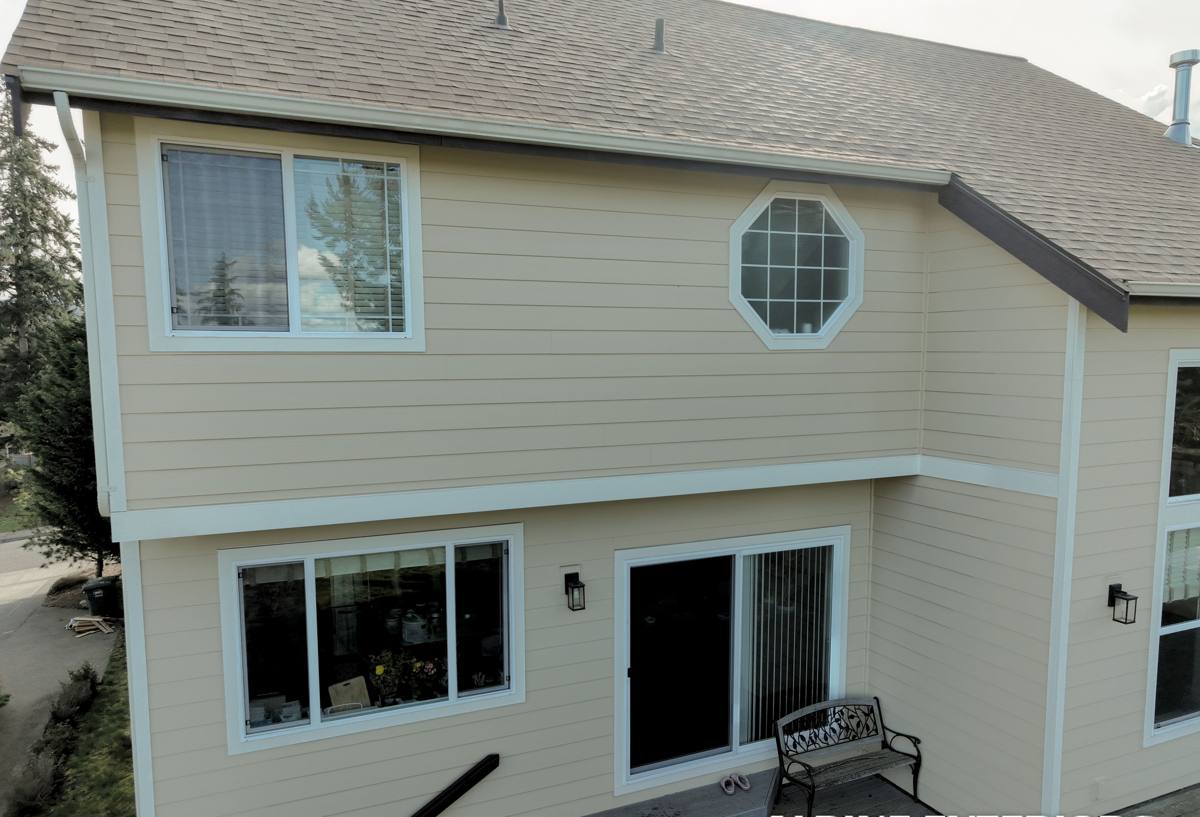
What This Climate Actually Does to Exterior Walls
Salt Air and Metal Fasteners
Waterfront and near-waterfront air carries chloride salts that accelerate corrosion on anything metal — fasteners, flashing, trim connectors. On a home this close to the water, the fastener and flashing spec matters as much as the siding brand. Hardie's installation guidelines call for corrosion-resistant fasteners in coastal exposure, and that's not a detail we treat as optional here.
Wind-Driven Rain
St. Petersburg doesn't just get rain — during tropical systems and seasonal storms, rain comes in sideways under real wind pressure. Siding that isn't lapped, flashed, and sealed correctly at penetrations (window and door trim, utility penetrations, corners) will let water behind the cladding long before the face material shows any obvious damage. By the time a homeowner notices a soft spot or a stain on an interior wall, the moisture has usually been working for a while.
UV and Heat Cycling
Pinellas County gets intense, direct sun for most of the year. Painted wood and some composite products chalk, fade, or need repainting well ahead of schedule under that load. Repeated heat-and-cool cycling also stresses caulk joints and paint film adhesion faster than it would in a milder climate.
Hurricane-Force Wind Events
Snell Isle is not exempt from the same tropical storm and hurricane exposure that the rest of the Tampa Bay coastline faces. Siding on a home in this location needs to hold up under sustained wind loads and wind-borne debris, and it needs fastening that meets that reality — not the minimum spec used in a low-exposure inland install.
Why James Hardie Fits This Exposure
James Hardie fiber cement is non-combustible and dimensionally stable — it doesn't absorb and swell the way wood-based or wood-fiber composite siding products can when they take on repeated moisture exposure. That matters directly for a neighborhood where humidity and occasional flooding-adjacent conditions are part of normal weather, not an edge case.
Hardie's ColorPlus factory-applied finish is baked on and warranted separately from the substrate, which holds up better against sustained UV than field-applied paint. For a home with heavy year-round sun exposure, that difference shows up in how long the color actually holds before it needs attention.
Hardie also builds region-specific product engineering — its HZ5 product line is formulated for higher-moisture, higher-humidity climate zones like ours, as opposed to a one-size-fits-all specification. For a home on Snell Isle, that's the more defensible starting point than a general-purpose or northern-climate product.
This is also why we don't install LP SmartSide, vinyl, Cemplank, Allura, or primed wood siding. Each of those has legitimate uses in the right climate and budget — but for this specific combination of salt air, wind-driven rain, and sun load, we've standardized on the product line we trust to hold up without surprises.
What a Correct Installation Actually Involves
The siding panel itself is only part of the job. Most siding failures we get called to diagnose trace back to installation details, not the product. On a Snell Isle home, we pay particular attention to:
- Weather-resistive barrier installed and lapped correctly behind the siding, with all penetrations sealed before panels go up
- Proper clearance between the bottom edge of siding and grade, roofing, decks, and patios — this is a common corner-cutting point that lets water wick into the panel edge
- Corrosion-resistant fasteners driven to Hardie's specified pattern and depth, not just "close enough"
- Flashing at every window, door, and penetration, integrated with the water-resistive barrier rather than caulked over as an afterthought
- Correct joint treatment at butt seams and panel ends, including factory-primed or field-sealed cut edges
- Fastening schedule and clearances adjusted for the wind exposure category of the specific lot, not a blanket inland spec
Cutting corners on any one of these doesn't usually show up in month one. It shows up two, five, or eight years later as a soft spot, a stain, or paint failure that traces back to water that had a path in.
Trim, Corners, and Water Management
Trim boards and corner details are where a lot of water intrusion actually starts, not the flat field of siding. We treat trim-to-wall transitions, especially around window and door openings, as their own scope of work with their own flashing sequence — not just a finishing touch after the siding is up.
Our Process for a Snell Isle Job
1. Site Assessment
We walk the home and look at more than the visible siding condition — soffit and fascia condition, existing flashing, any signs of past moisture intrusion, and the home's specific wind exposure given its position relative to open water and prevailing storm direction.
2. Scope and Product Selection
We determine which Hardie product line and profile fits the home — lap siding, panel systems, or a mix with trim and accent details — and walk through ColorPlus color options that fit the neighborhood's character.
3. Permitting
Exterior siding replacement in the City of St. Petersburg and unincorporated Pinellas County typically requires a permit, and wind-load and fastening requirements are tied to code compliance, not just manufacturer suggestion. We handle that process rather than leaving it to the homeowner.
4. Tear-Off and Substrate Check
Old siding comes off and we inspect the sheathing underneath before anything new goes up. This is the point where hidden moisture damage from a prior installation, if any exists, gets found and addressed — not sealed over.
5. Installation
Weather barrier, flashing, and Hardie panels go up to manufacturer spec and local wind-exposure requirements, in the sequence outlined above.
6. Final Walkthrough
We review the finished job with the homeowner, including care and maintenance expectations specific to a waterfront-adjacent property.
What Correct Installation Costs Depend On
| Factor | Why It Matters on Snell Isle |
|---|---|
| Home size and wall complexity | More corners, dormers, and trim details mean more flashing and cut work |
| Substrate condition | Waterfront-adjacent homes more often need sheathing repair discovered at tear-off |
| Product line and profile | HZ5 lap siding, panel systems, and trim packages price differently |
| Wind exposure category | Higher exposure can call for tighter fastening schedules and additional labor |
| Access | Waterfront lots, seawalls, and tight side yards can affect staging and labor time |
| Color and finish | ColorPlus factory finishes vs. field-painted options affect material cost |
We don't quote a job without walking it first — anyone who gives a firm number over the phone for a coastal-exposure home is skipping the substrate and access check that actually drives the price.
Maintenance for a Waterfront-Adjacent Home
James Hardie siding is low-maintenance relative to wood and most composites, but "low-maintenance" doesn't mean "no maintenance," especially this close to salt water. We recommend homeowners:
- Rinse salt residue off the siding periodically, particularly on the sides of the home facing open water
- Inspect caulk joints around windows, doors, and trim annually and after major storms
- Keep an eye on any areas where irrigation or sprinklers hit the siding directly, since repeated wetting in one spot accelerates wear
- Check for sealant or paint issues at cut edges and seams, which are the first place moisture problems tend to appear
- Have the exterior looked at after any named storm that produced sustained high winds or heavy wind-driven rain
Why the Crew Matters as Much as the Product
James Hardie's warranty coverage assumes installation to their published specifications. A homeowner can buy the right product and still end up with the wrong outcome if the installation misses flashing, clearance, or fastening details — and those mistakes are often invisible until years later. A crew that regularly works Snell Isle and the surrounding waterfront neighborhoods has already seen how this specific exposure behaves and adjusts the install accordingly, rather than treating every job as generic.
What to Look For in a Contractor Here
- Installs James Hardie to manufacturer specification, not a modified or shortcut sequence
- Can explain their flashing and water-management approach in plain terms, not just "we use good materials"
- Understands Pinellas County permitting and wind-exposure requirements for the area
- Uses corrosion-resistant fasteners and hardware appropriate for coastal exposure
- Will walk the home and inspect the substrate before quoting, rather than pricing off a phone call
If you're weighing a siding replacement for a Snell Isle home, we're happy to walk the property, look at what's actually driving any current issues, and put together a straightforward, no-pressure estimate for a correctly installed James Hardie system built for this exposure. Use the form below to get started.