 St. Petersburg Siding
 Board & Batten in a Town Built on Ranch Homes
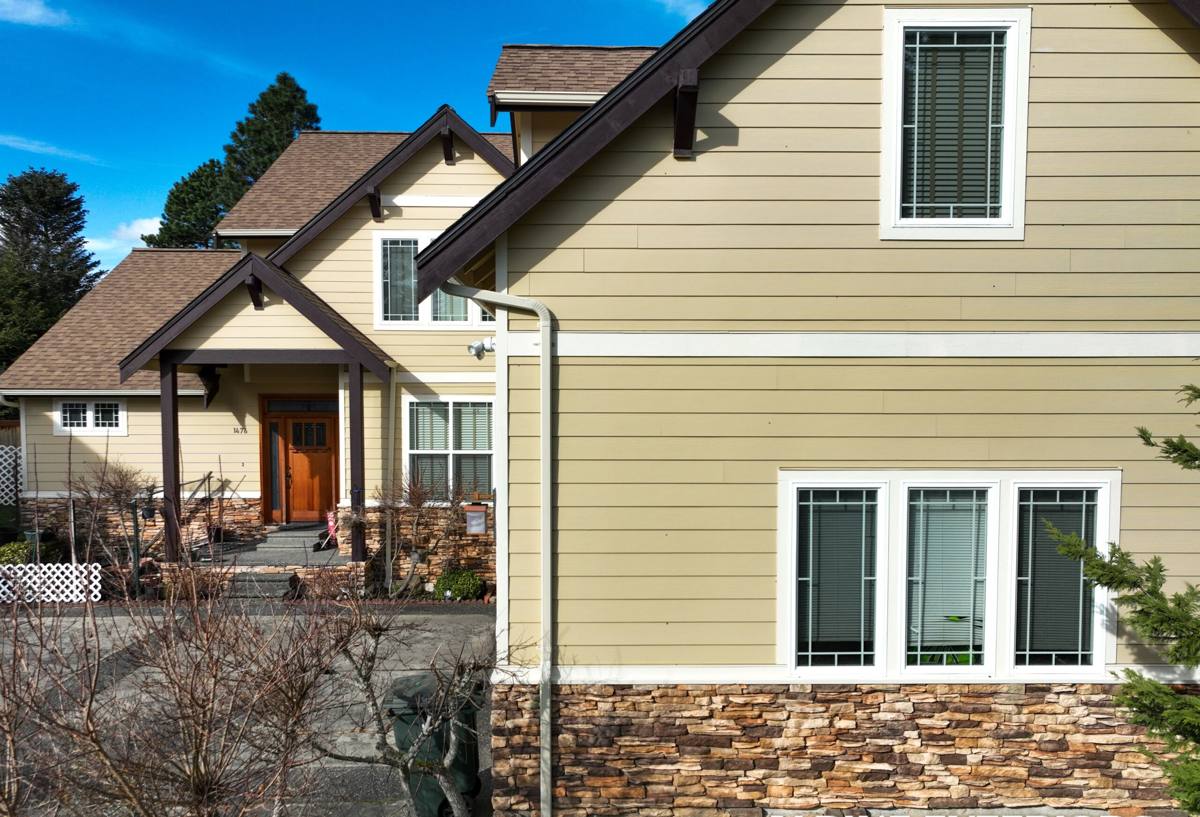
Kenneth City sits tucked into the middle of Pinellas County, surrounded by St. Petersburg and Pinellas Park, and its housing stock reflects the mid-20th-century boom that shaped most of this part of the county: modest ranch and block homes with simple rooflines, low-pitched gables, and straightforward facades. That kind of architecture is exactly where board and batten siding earns its keep. The vertical lines break up a long, flat elevation, dress up a plain gable end, and give an otherwise unremarkable ranch a farmhouse or craftsman-style presence without changing the footprint of the house at all.
We get calls from Kenneth City homeowners for two different reasons: some want board and batten as an accent — a porch gable, a dormer, a garage face — and others want it as the primary siding across the whole home during a full re-side. Both are good uses of the material. What matters more than which one you're doing is whether the installation underneath the good looks is actually built for this climate.
Why the Vertical Look Holds Up Well Here
Vertical siding sheds wind-driven rain differently than horizontal lap siding — water runs straight down the face instead of catching on overlaps — which is a real advantage during the summer storm season. That advantage only shows up, though, if the panels and battens are installed with the right drainage plane behind them. A board and batten wall that looks sharp on install day but was rushed on the water-management details will show problems in two or three Florida summers, not twenty.
What Pinellas County's Climate Actually Does to This Siding
Kenneth City doesn't sit directly on the Gulf, but it's close enough to Tampa Bay and the coastline that salt-laden air, high humidity, and hurricane-season wind and rain all reach it regularly. Combined with Florida's UV exposure, that's a tough combination for exterior materials, and board and batten siding faces all four stresses at once:
- Wind uplift — vertical panels present a lot of surface area to sustained wind and gusts; fastening pattern and panel engineering matter more here than on a low-wind inland job.
- Wind-driven rain — even well-shed water can get forced sideways under battens and into seams during a tropical system if the flashing details are wrong.
- UV exposure — year-round Florida sun fades paint and breaks down unstable substrates faster than in most of the country.
- Salt air — accelerates corrosion of fasteners and trim hardware, and speeds up rot in any wood-based product.
None of these individually is exotic — plenty of regions deal with one or two. Pinellas County homes deal with all four, continuously, which is why we treat every board and batten job here as a coastal-climate installation, not a cosmetic upgrade.
What a Correct Board & Batten Installation Actually Involves
The finished look of board and batten is simple: wide flat panels with narrow strips (battens) covering the seams. The install underneath that look is where jobs succeed or fail.
Weather-Resistant Barrier and Drainage
Every wall gets a continuous weather-resistant barrier (WRB) before any siding goes up, lapped correctly at seams and around every penetration. On masonry or furred assemblies we build in a drainage gap so that any moisture that does get behind the panel has somewhere to go, rather than sitting against the substrate. Skipping this step is invisible on installation day and expensive five years later.
Fastening for Wind Resistance
Florida Building Code wind speed maps put Pinellas County in a wind zone that requires specific fastener type, spacing, and embedment for vertical siding — this isn't optional and it isn't the same fastening schedule you'd use on a low-wind inland project. We follow the manufacturer's engineered fastening schedule for the wind zone, not a generic pattern, and pull the permit that documents it.
Flashing and Trim Details
Every window, door, outlet, light fixture, and roof-to-wall transition needs proper flashing integrated with the WRB before trim and panels close in around it. Board and batten in particular has more vertical seams than lap siding, which means more places where a shortcut shows up as a leak. This is the part of the job that a homeowner can't see once it's finished — which is also why it's the part worth asking a contractor about directly before hiring.
Material Options — And Why We Standardized on One
Board and batten can be built from several materials. We get asked regularly why we only install one of them, so here's the honest comparison:
| Material | Moisture/Rot Behavior | Wind & Impact Performance | UV & Color Retention | Maintenance |
|---|---|---|---|---|
| James Hardie fiber cement | Non-combustible, engineered to resist moisture damage when installed to spec | Engineered and tested for high-wind regions | Factory ColorPlus finish resists fading far longer than field-applied paint | Occasional rinse; no repainting cycle with ColorPlus |
| Primed wood or cedar | Prone to rot and swelling in humid, salt-air climates without diligent upkeep | Adequate when new, degrades with moisture exposure | Requires repainting/resealing on a recurring cycle | High — regular inspection and repainting |
| Vinyl vertical panel | Won't rot, but seams and fasteners can loosen or warp in heat and wind | Lower impact resistance; can crack or blow off in high wind | Fades and becomes brittle under sustained UV | Low, but limited repair options once faded |
| LP SmartSide / engineered wood | Wood-strand core is more moisture-sensitive than fiber cement; seam and edge sealing is critical | Reasonable when installed exactly to spec | Field-applied or factory finishes vary in longevity | Moderate — edge and joint maintenance matters |
We install James Hardie exclusively — HardiePanel vertical siding with HardieTrim battens — because it's the combination that holds up best against the specific stresses Kenneth City homes face: salt air, sustained UV, and wind-driven rain. That's not a knock on every alternative in that table; wood siding done right and maintained diligently can look great, and vinyl has its place on lower-exposure builds. It's that for a coastal Florida re-side we don't want to sell a homeowner a product whose long-term performance here depends on a maintenance schedule most people don't keep up with, or on a warranty structure that doesn't match how long we expect the siding to actually last.
Our Process for a Kenneth City Board & Batten Project
- On-site assessment — we look at the existing substrate, check for moisture or rot behind current siding, and confirm which walls or elevations make sense for board and batten versus a different Hardie profile.
- Scope and permit — we write up the fastening schedule and flashing plan for the applicable wind zone and pull the required permit before work starts.
- Tear-off and substrate prep — old siding comes off, sheathing is inspected and repaired as needed, and any hidden moisture damage is addressed before anything new goes up.
- Weather barrier and drainage plane — WRB installed continuously, with furring for a drainage gap where the wall assembly calls for it.
- Panel and batten installation — HardiePanel and HardieTrim installed to the engineered fastening schedule, with flashing integrated at every penetration and transition.
- Final detailing and walkthrough — caulking, trim, and touch-up completed, followed by a walkthrough so you know exactly what was done and why.
Maintenance After Installation
One of the practical advantages of Hardie's ColorPlus finish is how little upkeep it asks for. There's no repainting cycle to plan around. What we do recommend for Kenneth City homeowners:
- Rinse the exterior periodically to clear salt residue and airborne grime, especially on walls facing prevailing wind.
- Walk the exterior after any major storm and look for loose trim, damaged caulking, or debris impact — catching small issues early is cheaper than letting them sit through another storm season.
- Keep sprinklers and irrigation from spraying directly on the siding long-term; sustained water contact isn't what any siding material wants, fiber cement included.
- Have caulking at trim joints and penetrations inspected every few years and refreshed if it's cracking or pulling away.
Why It Matters That We Already Work in This Area
Kenneth City is a small footprint sandwiched between larger jurisdictions, and the practical details of a siding job here — permit requirements, typical wall assemblies on homes of this era, how a given elevation handles wind and rain — are things a crew learns by actually working the area, not by reading a spec sheet once. A contractor who already knows the housing stock in this part of Pinellas County isn't guessing at the fastening schedule or discovering mid-job that the substrate needs more repair than expected. That familiarity shows up in fewer surprises and a tighter, better-sealed finished product.
What a Correctly Installed Job Should Include
- Continuous weather-resistant barrier, properly lapped, with no gaps at seams or penetrations
- Drainage plane behind the panels where the wall assembly requires it
- Fastening schedule matched to Pinellas County's required wind zone rating, documented on the permit
- Flashing integrated at every window, door, and roof-to-wall transition before trim closes in
- James Hardie HardiePanel and HardieTrim battens with factory ColorPlus finish — no field-painted seams
- Corrosion-resistant fasteners and hardware suited to a salt-air environment
- A final walkthrough where the crew shows you the completed detailing, not just the overall look
If you're weighing board and batten siding for a home in Kenneth City — whether it's an accent gable or a full re-side — we're happy to take a look and put together a straightforward, no-pressure estimate. Use the form below to get started.