 St. Petersburg Siding
 Why Kenneth City Siding Takes More Punishment Than Most Places
Kenneth City sits inland enough to avoid direct beachfront exposure, but it's still well within the reach of everything Pinellas County throws at exterior building materials. Salt-laden air moves inland on prevailing winds off Tampa Bay and the Gulf, humidity sits high for most of the year, and afternoon thunderstorms drive rain sideways into walls rather than straight down. Add in a full hurricane season every year and near-constant UV exposure, and you have a climate that's genuinely hard on siding — harder than almost anywhere outside the Gulf Coast and South Florida.
That combination matters because it doesn't just affect how siding looks. It affects how siding performs. Wind-driven rain finds every gap in flashing and fastening. UV breaks down pigments and surface coatings faster than in drier, cooler climates. Salt air accelerates corrosion on fasteners and hardware, and humidity keeps wall assemblies damp longer after every storm, which is exactly what wood-based products and low-quality installations struggle with. A siding replacement done right in Kenneth City has to be engineered for this environment, not just installed to a generic national standard.
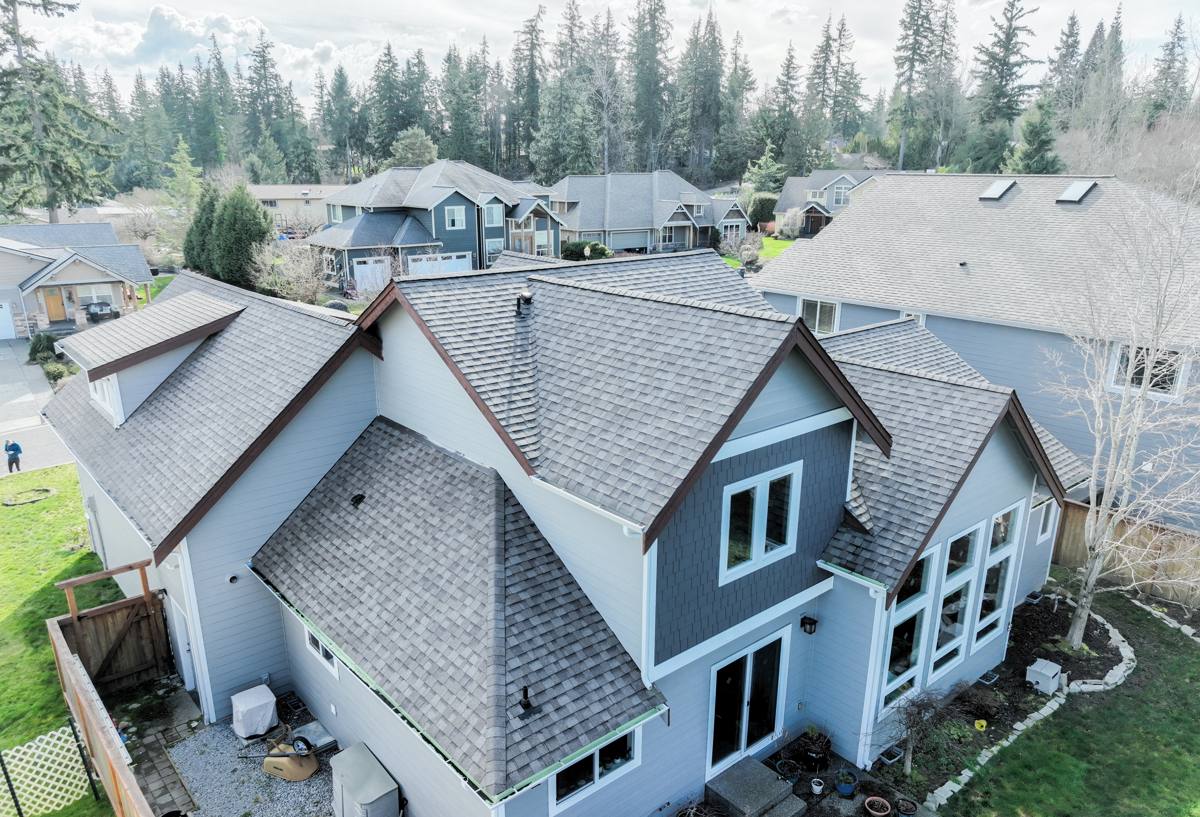
Signs a Kenneth City Home Is Due for Siding Replacement
Most homeowners don't think about siding until something looks wrong, but by the time damage is visible from the street, there's often more going on behind it. Here's what we look for, and what you should look for too:
- Soft or spongy spots when you press on the siding, especially near the bottom courses and around windows
- Visible warping, buckling, or panels that have pulled away from the wall
- Cracking or splitting, particularly after a storm season
- Paint that's peeling or blistering repeatedly, even after repainting
- Chalky residue (a sign of UV breakdown) that keeps returning after washing
- Rust streaks around fasteners or trim
- Rising utility bills with no other explanation, which can point to a failing weather barrier
- Visible mold, mildew, or dark staining that keeps coming back in the same spots
Any one of these can sometimes be a spot repair. Several together, especially on a home that's 15-20+ years old, usually means the siding system as a whole is past the point where patching makes sense.
What Correct Siding Replacement Actually Involves
It's Not Just Swapping Old Panels for New Ones
A lot of what determines whether siding lasts in a climate like this happens before the first new panel ever goes up. Full tear-off lets us actually see the wall — the sheathing, the framing, and any hidden moisture damage that's been building for years. Skipping that step and installing over existing siding might save a day of labor, but it buries problems instead of fixing them.
The Weather Barrier Does the Real Work
Underneath any siding system, the water-resistive barrier and flashing details are what actually keep water out of the wall. Around windows, doors, and any wall penetration, flashing has to be layered correctly — upper pieces overlapping lower ones — so water sheds outward instead of getting trapped. In a market where wind-driven rain is routine, this step separates a siding job that holds up from one that leads to rot complaints two or three years later.
Fastening Has to Match the Wind Zone
Pinellas County falls within Florida's high-velocity wind zones, and siding fastening schedules — how many nails or screws, how far apart, how deep — are not optional details. Manufacturer specs exist for a reason, and in coastal Florida counties, code enforcement pays attention to this. Correct fastening is the difference between siding that stays put through a tropical storm and siding that peels off in sheets.
Why We Only Install James Hardie Fiber Cement
We get asked regularly why we don't offer vinyl or wood-composite alternatives like LP SmartSide. The honest answer is that we've made a professional call to stop installing products that, in our experience, don't hold up as well to this specific climate — and we'd rather stand behind one system we trust completely than offer several and let a homeowner gamble on the wrong one.
| Material | Moisture/Rot Risk | UV & Fade Behavior | Wind Performance | Salt Air Durability |
|---|---|---|---|---|
| Vinyl | Low rot risk itself, but can trap moisture behind it if installed poorly | Fades and can warp or become brittle in high UV over time | Can crack or blow off in high wind if fastening isn't precise | Holds up reasonably, but color and rigidity degrade faster in coastal sun |
| Wood-based composite (e.g., LP SmartSide) | Engineered wood strand core is moisture-resistant but still wood — sustained humidity and any breach can lead to swelling or rot | Performs well but coating maintenance is more critical over time | Good when installed to spec | Cut edges and fastener points need diligent sealing in salt air |
| James Hardie fiber cement | Non-combustible cement-based composition; engineered to resist moisture-related swelling and rot | ColorPlus factory finish is formulated for UV and fade resistance | Dense, heavy material performs well against wind-driven debris and pressure | Fiber cement composition is not vulnerable to the same salt-driven degradation as organic materials |
James Hardie also builds region-specific product lines (their HZ5 formulation is engineered for humid, high-moisture climates like ours), backs the product with a strong transferable warranty, and offers a factory-applied ColorPlus finish so color consistency doesn't depend entirely on field painting. That combination — climate-engineered material, factory finish, and a warranty that means something — is why it's the only system we put on homes.
Our Process for Kenneth City Projects
- On-site assessment. We walk the exterior, check for soft spots and moisture damage, and look at existing flashing and trim conditions before quoting anything.
- Scope and product selection. We help you choose the right James Hardie plank profile, exposure width, and ColorPlus color for the home's style and your budget.
- Permitting. Siding replacement in Pinellas County typically requires a permit; we handle that process and make sure the installation meets local wind-zone requirements.
- Full tear-off and inspection. Old siding comes off, sheathing gets inspected, and any damaged wood is repaired before anything new goes up.
- Weather barrier and flashing. Correct layering around every window, door, and penetration, done to manufacturer spec.
- Installation. Fastening schedule matched to the wind zone, proper clearances maintained at grade and roofline to keep the bottom edge out of standing water.
- Final walkthrough and cleanup. We review the finished work with you and clear the site completely.
What Siding Replacement Costs Depend On
Every home is different, but the same handful of factors drive most of the cost variation we see on Kenneth City projects:
| Factor | Why It Matters |
|---|---|
| Home size and wall complexity | More square footage and more corners, gables, and dormers mean more material and labor |
| Number of stories | Two-story homes require more scaffolding and safety setup than single-story |
| Extent of hidden damage | Rotted sheathing or framing found during tear-off adds repair scope |
| Siding profile and exposure | Wider reveals and specialty profiles cost more than standard lap siding |
| Trim and accessory work | Corner boards, soffits, and fascia replacement add to the total scope |
| Access and site conditions | Tight lots, fencing, or landscaping close to the house can add labor time |
We give a firm, itemized quote after the on-site assessment — not a rough phone estimate — because guessing at hidden damage before we've opened up the wall doesn't serve anyone.
Why Local Experience in Kenneth City Matters
A crew that regularly works Pinellas County knows the wind-zone fastening requirements without having to look them up, knows what county permitting expects, and has already seen how sun and salt air behave on siding a few years after installation — not just on the day it goes up. That experience shows up in the details: flashing sequencing, fastener spacing, and trim choices that hold up through actual hurricane seasons instead of just looking right at handoff.
After Installation: Keeping It Looking Right
James Hardie siding with a ColorPlus finish is low-maintenance, but "low-maintenance" isn't "no-maintenance." A rinse with a garden hose a couple of times a year keeps salt residue and pollen from building up. Keep an eye on caulking around trim and penetrations, and have any landscaping trimmed back so sprinklers and plants aren't keeping the bottom courses of siding constantly wet.
If your Kenneth City home is showing any of the signs above, or it's simply due for a fresh, durable exterior, we'd be glad to take a look. Fill out the form below for a free, no-pressure estimate.