 St. Petersburg Siding
 Custom Decks in Old Northeast: What Makes This Neighborhood Different
Old Northeast is one of St. Petersburg's older, more established residential neighborhoods, with a mix of home styles, mature tree canopy, and lots that back up to canals, alleys, or shared property lines. A deck here has to do double duty: look like it belongs with the house, and hold up to a Pinellas County climate that does not go easy on outdoor wood or fasteners. We build and repair custom decks throughout the area and see the same failure patterns over and over — most of them tied directly to material choice, fastener quality, and how the structure was framed underneath, not just what's visible on top.
A deck built for a mountain town or a dry inland climate is not automatically a deck built for St. Petersburg. Hurricane-force winds during tropical systems, intense UV exposure nearly every day of the year, wind-driven rain that gets under flashing and railings, and salt-laden air moving in off the Gulf and Tampa Bay all shorten the life of a deck that wasn't specified correctly the first time.
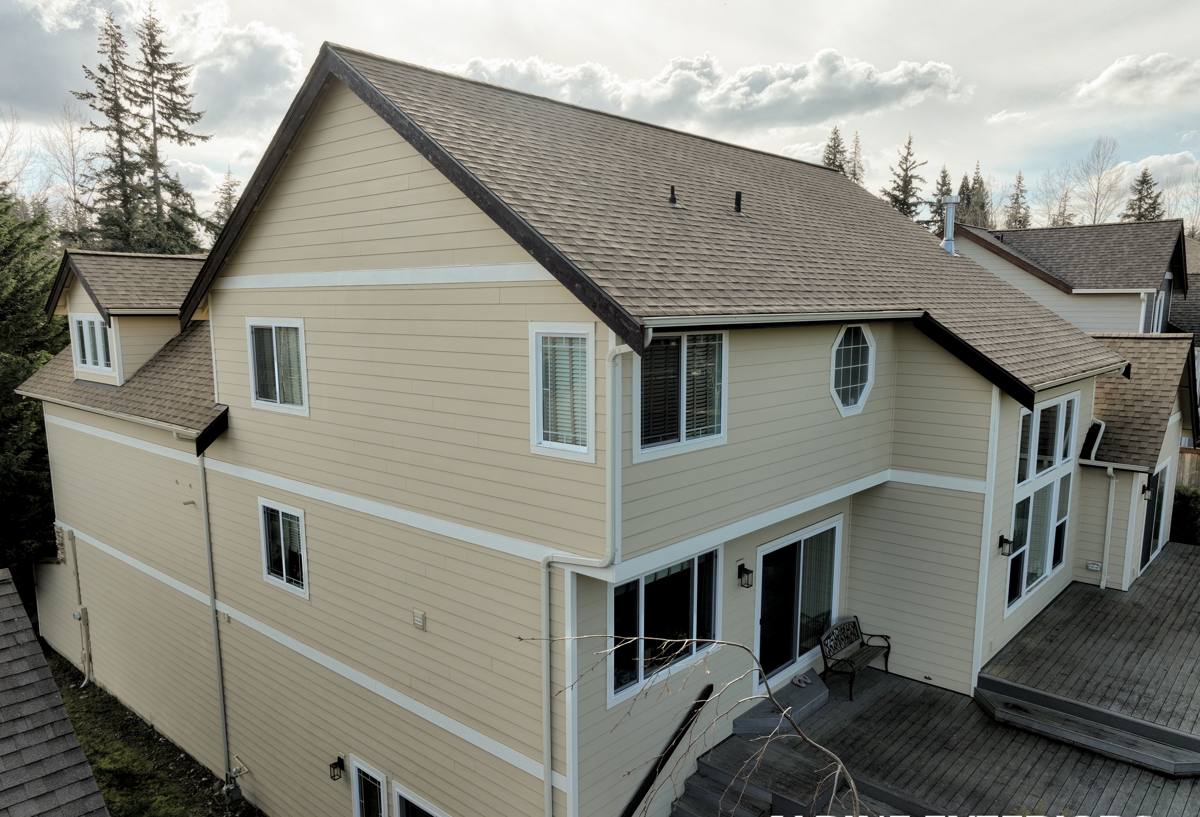
What Local Homes Actually Need From a Deck
Sun and Heat
Florida sun is relentless. Composite decking without UV-stabilized capping will fade and can get uncomfortably hot underfoot. Untreated or poorly sealed wood grays and checks (cracks along the grain) within a couple of seasons. Fasteners and hardware left exposed to constant heat cycling loosen faster than most homeowners expect.
Wind-Driven Rain and Humidity
It's not just rainfall totals — it's rain pushed sideways and up under ledger boards, railings, and stair stringers during storms. Any deck that isn't flashed and sloped correctly at the ledger connection (where the deck attaches to the house) will eventually let water into that joint, which is the single most common structural failure point on older decks in this area.
Salt Air
Old Northeast isn't directly on the water, but it's close enough that salt-laden air is a real factor, especially with onshore winds off Tampa Bay. Standard carbon-steel fasteners and connectors corrode faster here than the manufacturer's generic literature usually accounts for. This is why fastener and hardware spec matters as much as the decking material itself.
Storm Wind Loads
Pinellas County enforces wind-load and attachment requirements through the Florida Building Code, and St. Petersburg's permitting process checks that a deck's framing, post spacing, and ledger attachment can handle hurricane-force wind events — not just everyday use. A deck that looks fine day to day can still be under-built for what a named storm will put on it.
What a Correctly Built Deck Involves
A deck that's going to last in this climate is really three systems working together: the structure underneath, the decking surface, and the fasteners/hardware tying it all together. Skimping on any one of the three shortens the life of the whole project.
- Ledger attachment and flashing: Proper through-bolting into house framing (never just lag screws into siding) with correct flashing to shed water away from the house structure.
- Footings sized for local soil: Pinellas County soil and water table conditions affect how deep and how wide footings need to be — this is inspected, not guesswork.
- Corrosion-resistant hardware: Stainless steel or hot-dip galvanized connectors, joist hangers, and fasteners rated for coastal exposure, not generic zinc-coated hardware.
- Post-to-beam and beam-to-joist connections: Rated structural connectors, not just angled screws or nails, to meet wind uplift requirements.
- Decking material matched to sun and moisture exposure for the specific spot on the property (full sun vs. shaded/tree canopy areas behave differently).
- Railing and stair systems built to code height and baluster spacing, with hardware that won't corrode and loosen over a few seasons.
Choosing a Decking Material for This Climate
There's no single "best" decking material for every Old Northeast property — it depends on budget, how much sun the deck gets, and how much maintenance a homeowner actually wants to do. Here's how the common options really compare in this climate, based on what we see holding up (and not holding up) on jobs in the area.
| Material | UV/Heat Performance | Moisture Resistance | Maintenance | Typical Lifespan Here |
|---|---|---|---|---|
| Pressure-treated pine | Fades, grays without regular sealing | Good if properly sealed and re-sealed | Annual cleaning/sealing recommended | 10–15 years with upkeep |
| Composite (capped) | Strong; capped boards resist fading | Excellent; won't rot or absorb water | Occasional washing, no sealing | 25+ years |
| Composite (uncapped) | More prone to fading/staining over time | Good, but surface is more porous | More frequent cleaning | 15–20 years |
| Tropical hardwood (e.g., ipe) | Naturally UV-resistant, ages to gray if unsealed | Very good, dense and rot-resistant | Periodic oiling for color retention | 25+ years |
| Aluminum decking | Excellent, doesn't fade or degrade | Excellent; won't rot, corrode-resistant finish | Very low | 30+ years |
For most Old Northeast homeowners, capped composite hits the best balance of low maintenance and coastal durability at a reasonable cost. Wood — treated pine or hardwood — still has a place, especially where matching an existing historic or period-appropriate look matters more than minimizing upkeep.
Repair, Replace, or Rebuild? How We Evaluate an Existing Deck
Not every aging deck in Old Northeast needs to be torn out. Before quoting a full rebuild, we check the parts that actually determine whether a deck is safe and worth keeping:
- Ledger board and flashing condition — soft or discolored wood here usually means water has been getting into the house-to-deck connection.
- Post and footing stability — any movement, rot at the base, or undersized footings relative to current code.
- Joist condition underneath the decking — surface boards can look fine while joists underneath are compromised.
- Fastener and hardware corrosion — rusted or corroding connectors are a sign the original hardware wasn't rated for this environment.
- Railing and stair structural integrity — a common weak point on older decks that predate current code requirements.
If the structure underneath is sound, we can often replace just the decking surface and railings, which costs less than a full rebuild. If the framing or ledger connection has failed, resurfacing over it just hides a problem that will resurface later — we'll tell you honestly which situation you're in before we quote anything.
Our Process for an Old Northeast Deck Project
We keep the process straightforward and give you real information at each step, not just a sales pitch:
- On-site evaluation: We look at the existing structure (if there is one), the site conditions — sun exposure, drainage, tree cover — and talk through how you actually plan to use the space.
- Design and material selection: We walk through decking, railing, and layout options with honest trade-offs on cost, maintenance, and how each material performs in this specific climate.
- Permitting: Deck projects in St. Petersburg typically require a building permit and inspection through Pinellas County or city permitting, depending on scope. We handle that process rather than leaving it on you.
- Construction: Proper footings, code-compliant framing, corrosion-resistant hardware throughout, and correct flashing at the ledger.
- Final walkthrough: We review the finished deck with you, including basic maintenance expectations for the material you chose.
Cost Factors for a Custom Deck in This Area
Every property is different, so we don't post fixed prices, but these are the main factors that move the number up or down on an Old Northeast project:
| Factor | Why It Matters |
|---|---|
| Size and footprint | More square footage means more framing, decking, and footings |
| Decking material | Composite and hardwood cost more upfront than treated pine but need less upkeep |
| Height and elevation changes | Multi-level decks or elevated decks need more structural framing and railing |
| Site access | Tight lots, fences, and mature landscaping in older neighborhoods can slow material staging |
| Existing structure condition | A full tear-out and rebuild costs more than replacing decking over sound framing |
| Permitting scope | Larger or attached structures may trigger more detailed engineering review |
Why Hire a Crew That Already Works in Old Northeast
A contractor who's worked in this neighborhood already knows the general lot patterns, the tree canopy considerations, and how St. Petersburg and Pinellas County permitting and inspection actually run in practice — that saves time and avoids surprises mid-project. More importantly, we build every deck to the same standard: correctly flashed ledgers, corrosion-resistant hardware, and framing sized for real Gulf coast wind and rain, not the minimum a generic build guide assumes. That standard doesn't change whether the deck is small and simple or a larger custom layout — it's what keeps a deck safe and low-maintenance for decades instead of needing major repairs in five or six years.
If you're planning a new deck or trying to figure out whether an existing one in Old Northeast needs repair or replacement, we're happy to take a look and give you a straight answer. Reach out for a free, no-pressure estimate using the form below.