 St. Petersburg Siding
 What Pinellas Park Siding Is Up Against
Pinellas Park sits inland from the Gulf but still gets the full weather package that defines this part of Pinellas County: long stretches of intense UV, sudden wind-driven downpours, and salt-laden air that drifts in off both Tampa Bay and the Gulf. None of that is dramatic on any single day, but siding doesn't fail from one bad day — it fails from years of small ones stacking up. A house that looks fine from the curb can still have a section of siding that's been quietly absorbing moisture behind a cracked seam for two summers.
Add hurricane season into the mix and you get a second, sharper kind of stress: sustained wind loads and horizontal rain that finds every gap in flashing, trim, and butt joints. Siding that was installed a little loose, caulked a little thin, or fastened a little short of spec usually holds up fine in normal weather. It's the named storms and the tropical-storm-force gusts that expose those shortcuts. St. Petersburg Siding Co repairs a lot of siding in this area precisely because of that gap between "looks okay" and "installed to spec."
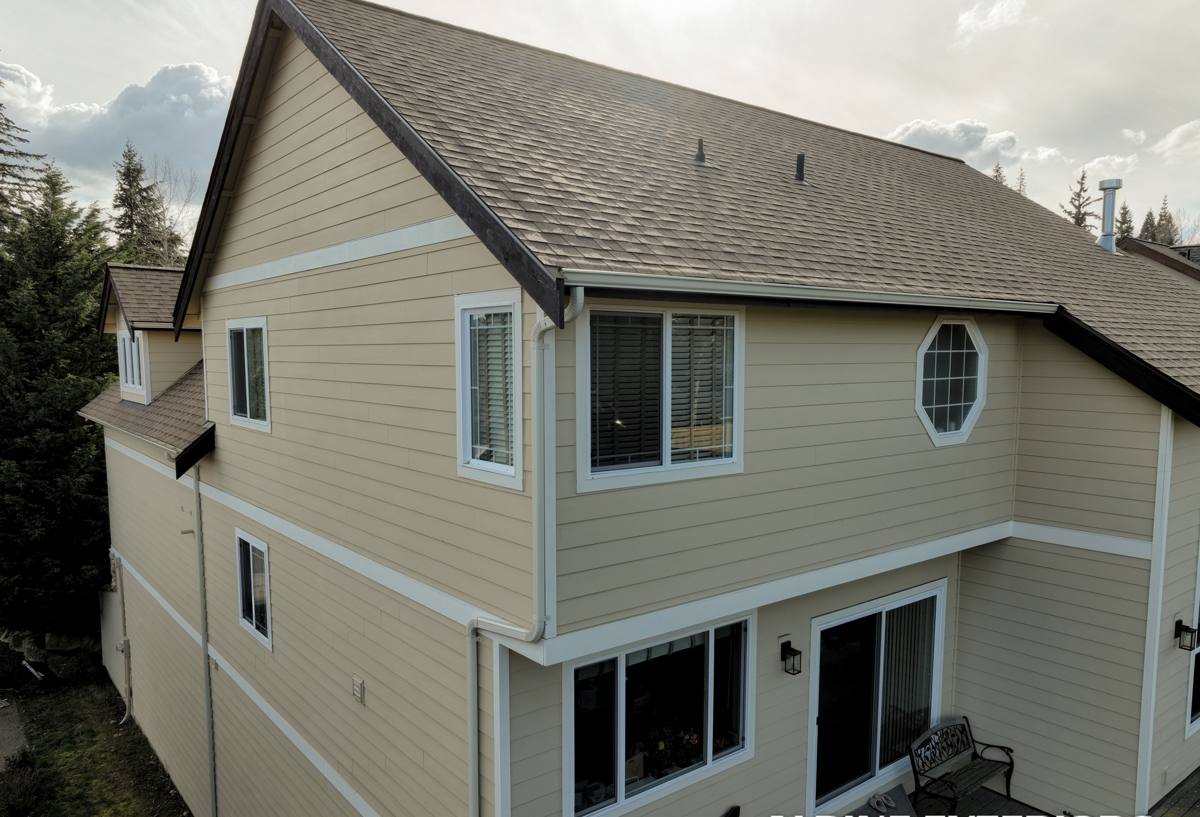
Signs Your Siding Needs Repair — Not Just Paint
Homeowners often reach for a paint quote when the real problem is underneath the surface. A few minutes of paint or caulk can mask a symptom for a season, but it won't stop water from continuing to work its way behind the panel. Here's what actually warrants a repair call:
- Cracked, chipped, or split panels, especially near corners and window trim where wind stress concentrates
- Soft or spongy spots when you press on the siding — a sign moisture has reached the substrate
- Visible gaps at butt joints or where panels meet trim, soffit, or flashing
- Bubbling, peeling, or discolored paint in a localized area rather than across the whole wall
- Streaking or staining that keeps returning in the same spot after cleaning
- Panels that have started to pull away from the wall or show fastener heads popping through the face
- A musty smell or visible mold on interior walls that back up to an exterior siding section
Any one of these on its own might be minor. Two or three in the same area, or any sign of softness, means it's worth having someone look at what's happening behind the siding, not just at the siding itself.
Repair or Replace? How We Make the Call
Not every damaged section needs a full re-side, and we're not going to tell a homeowner they need a whole new exterior when a targeted repair will hold up fine. The honest answer depends on how far the damage has spread and what's happening underneath.
| Factor | Leans toward repair | Leans toward replacement |
|---|---|---|
| Extent of damage | Isolated to one or two sections/elevations | Spread across multiple walls or the whole house |
| Water intrusion | Caught early, sheathing still sound | Rot has reached the sheathing or framing |
| Age of existing siding | Under 10–12 years, still within useful life | Near or past the product's expected service life |
| Material on the house | James Hardie fiber cement in good general condition | Failing material we don't service long-term, or damage that keeps recurring |
| Cost pattern | One-time, contained repair cost | Repeated repair calls to the same areas over a few years |
If a house has had two or three repair visits to the same wall over a few years, that's usually a sign of an underlying moisture or installation issue that a patch won't solve permanently — at that point we'll say so plainly instead of billing another repair.
What a Correct Siding Repair Actually Involves
A siding repair that's done right is not just "cut out the bad piece and nail in a new one." That approach might look fine for a few months and then fail again in the next storm season. A repair that actually holds involves several steps that are easy to skip and easy for a homeowner to miss if they're not watching for them:
Diagnosing before cutting
Before removing anything, we check how far the moisture or damage has actually traveled. Water rarely stays exactly where it entered — it tends to travel down behind the panel before it shows up as a visible problem. Cutting out only the visibly damaged piece without checking what's behind it is how repairs end up redone a year later.
Checking the water-resistive barrier and flashing
Fiber cement siding is a rain-screen system, not a waterproof shell on its own. The barrier behind it and the flashing around windows, doors, and penetrations are what actually keep water out. If that layer is compromised, replacing the visible panel without addressing what's underneath just resets the clock on the same failure.
Matching material and fastening to spec
Replacement pieces need to match the existing panel in thickness, profile, and exposure so the wall reads as one continuous surface, not a patchwork. Fasteners need to land in framing at the manufacturer's specified spacing and depth — not just "close enough" — because under-fastened siding is exactly what wind gusts pry loose first.
Sealing and finishing correctly
Joints, seams, and cut edges need the right sealant, applied where the manufacturer's install guide actually calls for it (and left open where it shouldn't be sealed, since fiber cement systems are designed to let incidental moisture drain and dry). Then the finish work — caulk lines, paint or factory-finish touch-up — needs to hold up to UV and salt air, not just look good on install day.
Our Repair Process for Pinellas Park Homes
- Inspection: We look at the damaged area and the surrounding siding, not just the spot you called about, since related issues often show up nearby.
- Diagnosis: We identify whether this is surface damage, a fastening issue, a flashing/barrier failure, or a sign of broader wear, and explain which one we're dealing with in plain terms.
- Written scope and estimate: You get a clear description of what's being repaired and why, before any work starts.
- Repair: Damaged sections are removed, the substrate and barrier are checked and corrected if needed, and matched material is installed to manufacturer fastening and clearance specs.
- Finish and quality check: Seams, caulk, and finish are completed and the repaired area is checked against the surrounding siding for fit and color match.
Why We Only Repair and Install James Hardie Fiber Cement
St. Petersburg Siding Co made a deliberate call some time ago to standardize on James Hardie fiber cement and stop installing vinyl, LP SmartSide, or other engineered wood and composite products. That decision matters for a repair conversation, not just a full install, because the material on your wall determines how well a repair will actually hold in this climate.
Fiber cement is non-combustible and dimensionally stable, meaning it doesn't expand, contract, or warp with Florida's heat-humidity-heat cycles the way some engineered wood products can, and it doesn't soften or distort under sustained sun the way vinyl can over a long service life. When Hardie panels are cut and refastened during a repair, they hold their shape and their fastener grip the same way the original install did. Its ColorPlus factory finish is also baked on and engineered for UV resistance, so a properly matched repair section blends in and keeps its color rather than fading at a different rate than the surrounding panels.
That's not a knock on every alternative product on the market — vinyl and engineered wood siding have legitimate uses and plenty of homes carry them without major issue. But we've seen enough repair calls over the years, on coastal and near-coastal homes specifically, where the underlying material's moisture behavior or UV sensitivity was working against the repair rather than with it. We'd rather stand behind one product system we know performs and back with a strong transferable warranty than split our expertise across several. That's the whole reason our repair work and our new-install work both start and end with James Hardie.
Why a Crew That Already Works Pinellas Park Matters
Siding repair isn't just a technical skill, it's a local one. A crew that regularly works Pinellas County homes knows what fastening schedule actually holds up through a real storm season here, not just what a spec sheet says in theory. They know how salt air and afternoon UV tend to show up first on certain elevations, and they've already seen how Hardie panels age on homes a few streets over — which makes color and profile matching faster and more accurate.
There's also a scheduling reality: hurricane season runs June through November here, and demand for both storm-damage repairs and preventive fixes spikes right around it. A crew that's local and established has the relationships and routing to get to a Pinellas Park repair without the multi-week wait that out-of-area or overbooked contractors often carry during peak season. And if a permit or inspection is needed for a repair, a local crew already knows the process rather than learning it on your job.
After the Repair: Keeping It That Way
A correctly done repair should last as long as the surrounding siding, but a little upkeep goes a long way in this climate:
- Rinse siding periodically to clear salt residue, especially on walls facing prevailing wind
- Keep an eye on caulk lines around windows, doors, and trim — they're usually the first thing to show wear
- Trim back landscaping that keeps foliage or sprinkler spray in constant contact with the siding
- After any major storm, do a quick visual check for new cracks, loose panels, or fresh staining
- Address small issues promptly — the cost difference between a small repair and a rot-driven replacement is significant
If you're seeing any of the warning signs above on a Pinellas Park home, or you just want a second opinion on whether a section needs a repair or something more, we're happy to take a look. Fill out the form below for a free, no-pressure estimate.