 St. Petersburg Siding
 Roofing in a Neighborhood That Sits Right on the Water
Pinellas Point is one of the more exposed pockets of St. Petersburg. Homes here sit close to open water on multiple sides, which means roofs take a steady combination of salt-laden air, direct sun for most of the year, and the full force of whatever weather rolls in off the Gulf or Tampa Bay. An asphalt shingle roof built for an inland subdivision in another part of the country is not automatically built for this. The materials, the fastening pattern, and the flashing details all need to account for what this specific stretch of Pinellas County throws at a roof year after year.
We work in and around this neighborhood regularly, which matters more than it might sound. A roof crew that knows the wind exposure, the typical roof pitches and shapes on Pinellas Point homes, and the way salt air degrades certain materials faster than others is going to make different decisions than a crew driving in from across the bay for a one-off job.
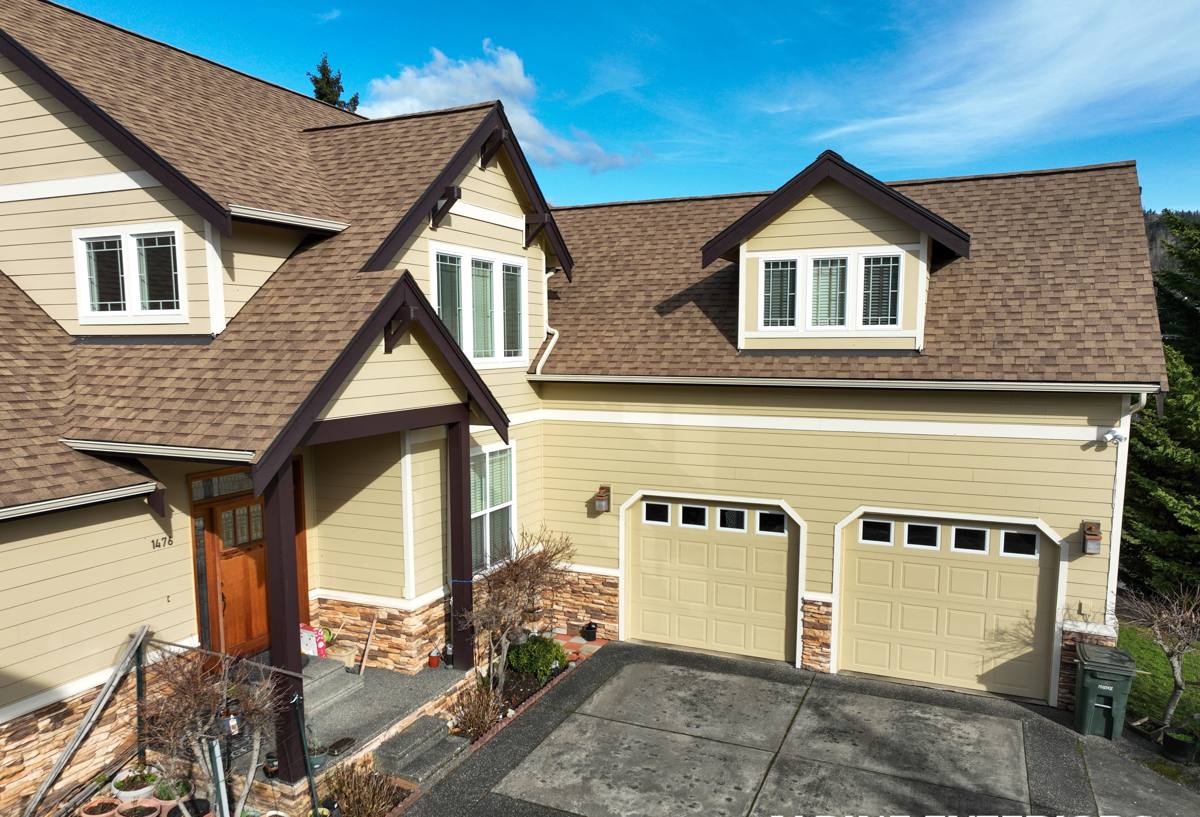
What Pinellas Point's Climate Actually Does to a Shingle Roof
Wind
Hurricane-force and near-hurricane wind events are a real possibility every storm season, and even routine summer squalls in this area can produce gusts strong enough to lift poorly fastened shingles. Wind damage on asphalt roofs almost always starts at the edges — the perimeter of the roof, the rakes, and the ridge — because that's where uplift pressure concentrates. A shingle roof that looks fine from the ground can still have edge shingles that are one strong gust away from peeling back.
UV exposure
St. Petersburg gets strong, direct sun essentially year-round. UV breaks down the asphalt in shingles over time, drying out the mat and causing the granules on the surface to loosen and shed. Granule loss is one of the clearest signs of a shingle roof aging out, and it happens faster here than it does in less sun-intensive climates.
Wind-driven rain
It's not just rain volume — it's the angle. Wind-driven rain during storms gets forced sideways and upward under shingle edges, into vents, and around flashing in ways that vertical rain never would. A roof that's watertight in a calm downpour can still leak during a wind event if the underlayment and flashing weren't detailed for driven rain.
Salt air
Being this close to open water means airborne salt settles on the roof constantly. Salt accelerates corrosion on exposed metal — nail heads, flashing, vent stacks, and drip edge — and it also contributes to a faster buildup of algae and organic growth on the shingle surface, especially on north-facing slopes that stay damp longer.
What a Correct Asphalt Shingle Job Involves Here
A roof that's going to hold up on Pinellas Point needs more than shingles nailed to plywood. Every layer underneath the shingle matters as much as the shingle itself.
- Deck inspection and repair — any soft, delaminated, or water-damaged sheathing gets replaced before anything else goes down. Shingles fastened to a compromised deck will fail early no matter how good the shingle is.
- Self-adhering underlayment at vulnerable points — valleys, eaves, and roof-to-wall transitions get a self-adhering, waterproof underlayment as a second line of defense against wind-driven rain and ice-dam-style water intrusion (relevant here mainly for wind-forced water, not ice).
- Synthetic underlayment across the field — a durable synthetic underlayment across the rest of the roof, properly lapped and fastened, rather than cutting corners with a thinner felt that degrades faster in heat and humidity.
- Corrosion-resistant fasteners and flashing — given the salt air, we don't treat standard-grade metal as good enough for every application. Where corrosion resistance matters most — drip edge, step flashing, valley metal — the extra cost up front is small compared to a repair down the line.
- Correct nailing pattern and nail placement — this is one of the most common shortcuts in the industry, and it's also the single biggest factor in whether a shingle roof survives high wind. Nails placed too high, too few per shingle, or with a nail gun set to overdrive the fastener all reduce wind resistance even when the shingle itself is a good, wind-rated product.
- Sealed and properly lapped ridge and hip caps — these take the most direct wind pressure on the roof and are frequently under-fastened on lower-quality installs.
- Ventilation that actually balances intake and exhaust — proper attic ventilation keeps shingle temperatures down, which slows UV-driven aging, and it keeps moisture from building up under the deck in Florida's humidity.
Choosing a Shingle for This Kind of Exposure
Not every asphalt shingle product is a good match for a coastal, high-sun, high-wind neighborhood. The table below lays out the honest trade-offs between the shingle classes we typically discuss with Pinellas Point homeowners.
| Shingle Type | Wind Performance | UV/Heat Aging | Typical Trade-Off |
|---|---|---|---|
| Standard 3-tab | Lower wind rating, lighter weight | Ages faster under constant sun | Lowest upfront cost, shortest realistic service life in this climate |
| Architectural (laminate) | Higher wind rating due to thicker, layered construction | Holds granules and color better over time | Moderate cost increase for meaningfully better durability |
| Impact-resistant architectural | Same strong wind performance, plus better resistance to wind-blown debris strikes | Comparable to standard architectural | Higher upfront cost; some insurers offer premium credits that offset it over time |
For most homes in this neighborhood, we steer the conversation toward architectural shingles at minimum, with impact-resistant options worth serious consideration given how exposed the area is to wind-blown debris during storms. We'll walk through actual product options and pricing during an on-site look at your roof — this table is about the categories, not a specific brand recommendation made sight unseen.
How We Approach a Pinellas Point Roofing Job
1. On-site assessment
We look at the current roof's condition, the deck underneath where accessible, ventilation setup, and any problem areas like valleys, chimney flashing, or low-slope sections that are more prone to trouble.
2. Honest scope and estimate
We explain what's actually needed — full replacement, partial repair, or in some cases just targeted maintenance — and give a written estimate with no pressure to decide on the spot.
3. Material selection
We go over shingle options suited to this exposure, including wind rating and impact resistance, and let you weigh cost against long-term performance with real numbers in front of you.
4. Tear-off and deck repair
Old roofing comes off down to the deck so we can actually see what's there, rather than layering over unknown problems.
5. Installation to manufacturer and code specification
Underlayment, flashing, fastening pattern, and ventilation are installed to the shingle manufacturer's published specifications and current Florida Building Code requirements for wind resistance — not shortcuts that happen to look finished.
6. Final walkthrough
We go over the completed roof with you, explain what was done, and cover basic maintenance expectations for a coastal property.
Signs a Pinellas Point Roof Needs a Closer Look
- Granules collecting in gutters or at downspout outlets
- Shingle edges that look curled, cupped, or lifted, especially along the perimeter
- Dark streaking or algae growth, particularly on shaded or north-facing slopes
- Visible corrosion or rust staining around vent stacks, flashing, or nail heads
- Any soft spot noticeable when walking the attic or visible sagging from the ground
- Missing or displaced shingles after any wind event, even a routine summer storm
- Daylight visible through the roof deck from inside the attic
None of these automatically means a full replacement is needed — some are simple repairs. But on a roof exposed to this much wind and salt air, small issues tend to compound faster than they would inland, so it's worth having them looked at sooner rather than later.
Wind Resistance and Local Code
Florida Building Code sets wind-resistance requirements for roofing that scale with a property's location and exposure, and coastal areas of Pinellas County are held to meaningfully stronger standards than roofs further inland. That affects everything from the shingle's wind rating to the required fastening pattern and edge metal. We install to those requirements as a floor, not a ceiling — meeting code is the minimum, and on a roof this exposed we don't treat the minimum as automatically sufficient for every detail.
Maintenance That Actually Matters in Salt Air
A few habits go a long way toward protecting the investment once the roof is on: keep gutters clear so wind-driven rain has somewhere to drain instead of backing up under shingle edges, rinse off heavy salt or organic buildup periodically rather than letting it sit indefinitely, and have the roof checked after any significant storm even if nothing looks obviously wrong from the ground. Catching a lifted shingle or a cracked pipe boot early is a small fix; leaving it through another storm season usually isn't.
Why Local Experience on This Roof Type Matters
A lot of roofing problems in this neighborhood aren't caused by bad materials — they're caused by installation details that work fine in a milder climate but aren't enough for this one. A crew that's worked other roofs in Pinellas Point already knows which slopes tend to hold moisture, how the wind exposure here compares to more sheltered parts of St. Petersburg, and which details are worth spending a little more on. That's the difference between a roof that needs attention after every storm season and one that quietly does its job for years.
If you're weighing a repair, a full replacement, or just want an honest read on how much life is left in your current roof, we're glad to come out, take a real look, and walk you through your options. There's a free, no-pressure estimate form below whenever you're ready.