 St. Petersburg Siding
 Why Pinellas Point's Climate Is Hard on a Deck
Pinellas Point sits at the southern tip of St. Petersburg, much of it close to canals or open water on Tampa Bay and Boca Ciega Bay. That location is part of what makes the neighborhood desirable, and it's also exactly why decks here take a beating that decks in drier, cooler parts of the country never see. Salt-laden air corrodes fasteners and hardware faster than inland air does. Intense, nearly year-round UV breaks down wood fibers and cheaper plastics alike, fading color and drying out the surface. Wind-driven rain during summer storms and hurricane season drives moisture up under boards and into end grain, not just down from above. And when a named storm brings sustained wind, an improperly fastened deck or railing system is a real liability, not a hypothetical one.
None of this means a deck can't hold up in Pinellas County — it means the material and the installation both have to be chosen with this specific climate in mind, not a generic one. That's the difference between a deck that looks good for two summers and one that still looks good in year twelve.
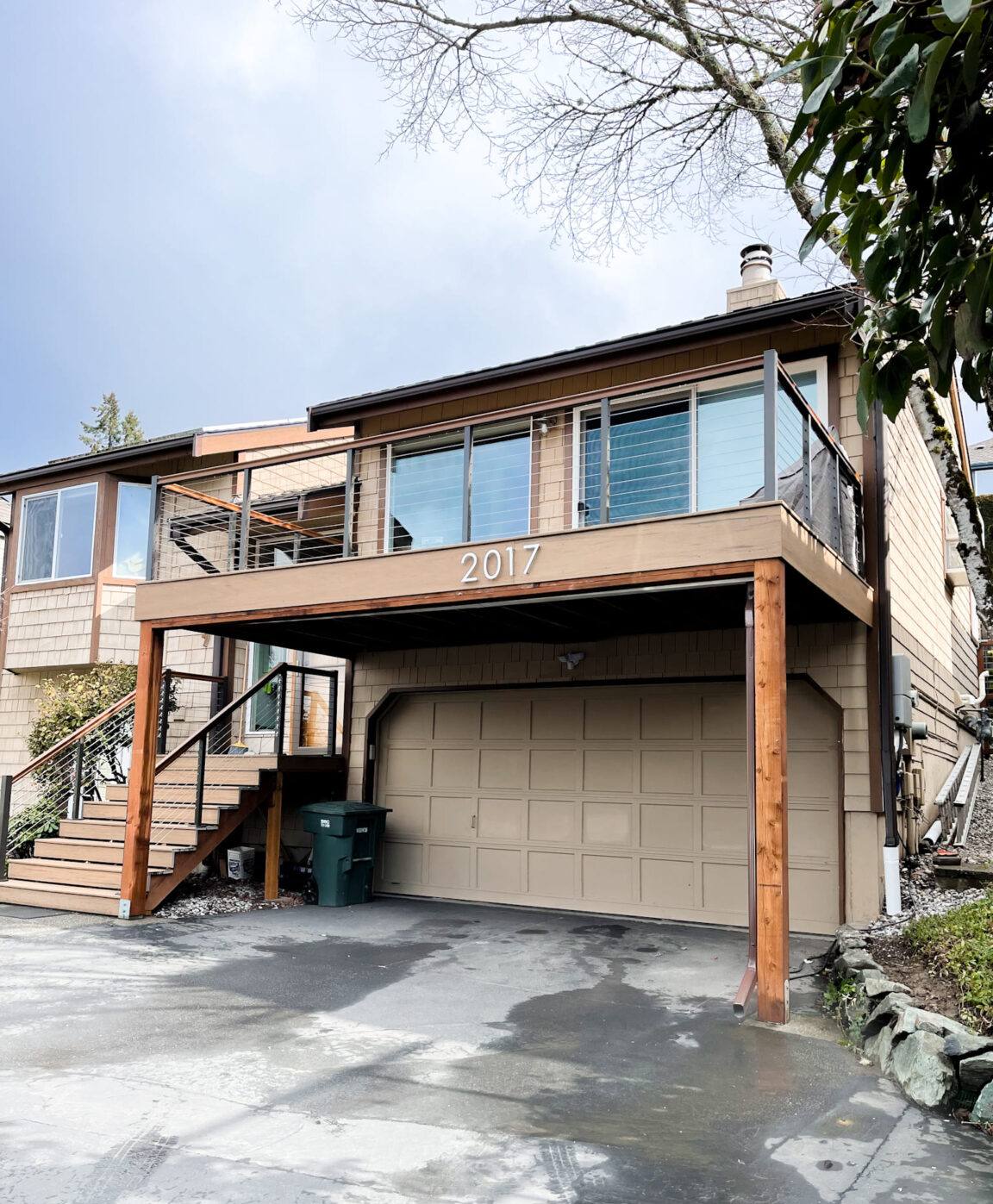
What a Correct Composite Decking Installation Involves
Composite decking gets marketed on its surface — the color, the wood-grain texture, the low maintenance. But almost everything that determines whether a composite deck survives our climate happens underneath, in parts homeowners never see once the job is done.
Substructure and Fasteners
Composite boards are heavier than wood, and they behave differently with temperature swings — they expand and contract more than lumber does across a hot Florida day. That means joist spacing, blocking, and fastener spacing have to follow the manufacturer's engineering specs, not general carpentry habits. In a coastal zone, we use stainless steel or coated, corrosion-rated fasteners and hardware throughout — regular galvanized hardware is a common source of early rust staining and hardware failure near salt air.
Ledger Board and Flashing
Where a deck attaches to the house, the ledger board and flashing detail is the single most common point of failure we see on decks of any material in this area. Wind-driven rain gets pushed sideways and upward, and if flashing wasn't installed correctly — or wasn't installed at all — water tracks behind the ledger and into the house framing over time. This is a place where doing it right costs nothing extra in materials, only in taking the time to do it properly.
Drainage and Ground Clearance
Many lots in Pinellas Point are low-lying or close to canals, so standing water and poor drainage under a deck are common problems. Framing needs enough ground clearance and airflow to dry out after heavy rain, and any posts or footings set in ground that holds water need hardware and post bases rated for that exposure.
Composite vs. Wood vs. PVC: What Actually Holds Up Here
There's no single "best" decking material for every homeowner — it depends on budget, how the deck will be used, and how much upkeep you're willing to do. Here's the honest comparison for our climate specifically.
| Material | Upfront Cost | Maintenance | Sun & Salt Air Behavior | Typical Lifespan Here |
|---|---|---|---|---|
| Pressure-Treated Wood | Lowest | Annual sanding/staining or sealing recommended | Grays, cracks, and splinters faster under intense UV; fasteners can corrode | 10-15 years with upkeep |
| Capped Composite | Mid to upper-mid | Occasional soap-and-water cleaning | Cap layer resists fading and moisture intrusion much better than wood | 20-30 years |
| PVC (Cellular Vinyl) | Highest | Lowest — no wood fiber to absorb moisture | Excellent moisture resistance; some products run hotter underfoot in direct sun | 25-30+ years |
We install composite decking as our standard recommendation for most Pinellas Point homeowners because it strikes the best balance for this climate: it doesn't rot, it doesn't need annual refinishing, and today's capped composite products have solved most of the fading and staining issues that gave early composite decking a bad reputation years ago. We're upfront that uncapped, older-style composite boards absorbed moisture at the core and could swell or mildew — that's a real trade-off worth knowing about, which is why we only install capped composite products that seal the core against moisture.
What Drives the Cost of a Composite Deck in Pinellas Point
Composite decking typically costs more upfront than pressure-treated wood — often noticeably more per square foot — but less over a 15-to-20-year span once you factor in wood's recurring sanding, staining, and board replacement. Beyond the material itself, several project-specific factors move the price:
| Cost Factor | Why It Matters |
|---|---|
| Existing framing condition | Rotted or undersized joists need to be replaced or sistered before new decking goes down — skipping this shortens the life of even the best boards |
| Deck height and footings | Taller decks and homes on flood-zone lots may need engineered footings and additional support |
| Railing system | Composite or aluminum railing costs more than basic wood but resists corrosion and fading far better near salt air |
| Board pattern and picture-framing | Diagonal layouts and border/accent boards add labor and material waste beyond a straight install |
| Permitting and inspection | St. Petersburg and Pinellas County require permits for most deck construction and rebuilds — factored into project timelines and cost |
Our Process for a Pinellas Point Composite Deck
- On-site assessment. We look at the existing structure (if there is one), the ground conditions, proximity to water, and sun exposure before recommending anything.
- Design and material selection. We walk through composite board options, colors, and railing systems, and explain the honest trade-offs of each for your specific lot and budget.
- Permitting. We handle the permit application and coordinate required inspections with the city or county, so you're not chasing paperwork.
- Demo and framing. Any existing decking is removed and the substructure is inspected, repaired, or rebuilt to current code and manufacturer spec before a single composite board goes down.
- Installation. Boards, fasteners, and railing are installed per manufacturer engineering requirements, with attention to the ledger flashing and drainage details that determine long-term performance.
- Final walkthrough. We go over the finished deck with you, including basic care and what warranty coverage applies to the materials installed.
Maintaining a Composite Deck Near the Water
One of the real selling points of composite decking is how little it asks of you compared to wood — but "low maintenance" doesn't mean "no maintenance," especially this close to salt air.
- Rinse the deck surface periodically to clear salt residue, pollen, and airborne grit before it builds up in the board texture
- Clean with plain soap and water or a manufacturer-approved deck cleaner — avoid harsh solvents that can dull the cap layer
- Keep gutters and nearby drainage clear so water isn't sheeting onto the deck surface or pooling underneath
- Check railing hardware and fasteners once or twice a year for corrosion, especially on homes closest to the water
- Trim back vegetation that holds moisture against the deck edge or blocks airflow underneath
Signs Your Current Deck Needs Attention
Whether you have an aging wood deck or an older composite deck installed before capped products became standard, watch for these warning signs:
- Soft, spongy, or visibly sagging boards when you walk across them
- Rust streaks running down from screws, bolts, or railing brackets
- Boards that have swollen, cupped, or separated at the seams
- Visible gaps or movement where the deck meets the house at the ledger board
- Railings that flex or feel loose when you lean on them
- Mildew or algae that keeps coming back no matter how often it's cleaned
Any of these point to a substructure or moisture problem, not just a cosmetic one — and in a climate with hurricane-force wind potential, a weak railing or loose ledger connection is worth addressing before storm season, not after.
Why a Crew That Already Works Pinellas Point Matters
Deck-building rules aren't the same everywhere. St. Petersburg and Pinellas County have their own permitting requirements, wind-load standards, and inspection processes, and lots near canals or open water often carry flood zone considerations that affect footing depth and ground clearance. A contractor who works this specific area regularly already knows which details the local inspectors look for, which fastener and hardware ratings hold up against this air, and how to frame a deck that can take a direct hit of wind-driven rain without a decade-long slow leak developing behind the ledger board. That local, repeated experience is what turns a "correct on paper" installation into one that's actually correct for a Pinellas Point address.
If you're considering a new composite deck, a replacement, or just want an honest opinion on what's going on with your current one, we're happy to take a look. Fill out the form below for a free, no-pressure estimate.