 St. Petersburg Siding
 Why Siding Fails Faster in Seminole
Seminole sits in the thick of Pinellas County's exterior-punishing climate — close enough to the Gulf that salt air reaches every block, exposed to the same tropical-storm and hurricane wind events that sweep across the peninsula, and baked by some of the most intense year-round UV in the country. Siding here doesn't fail because homeowners neglect it. It fails because the material and the installation weren't built to survive what this specific location throws at a house, year after year.
Three forces do most of the damage. Wind-driven rain gets pushed sideways and upward during storms, finding any gap in a butt joint, a nail hole, or a piece of failed caulk and driving water behind the siding instead of down the face of it. UV breaks down pigments, sealants, and the surface of anything not engineered to resist it, which is how you end up with chalky, faded, or brittle panels years before they should look that way. And salt air corrodes fasteners and trim metal quietly, from the inside out, so the first visible sign is often a rust streak or a soft spot that's already been forming for a while.
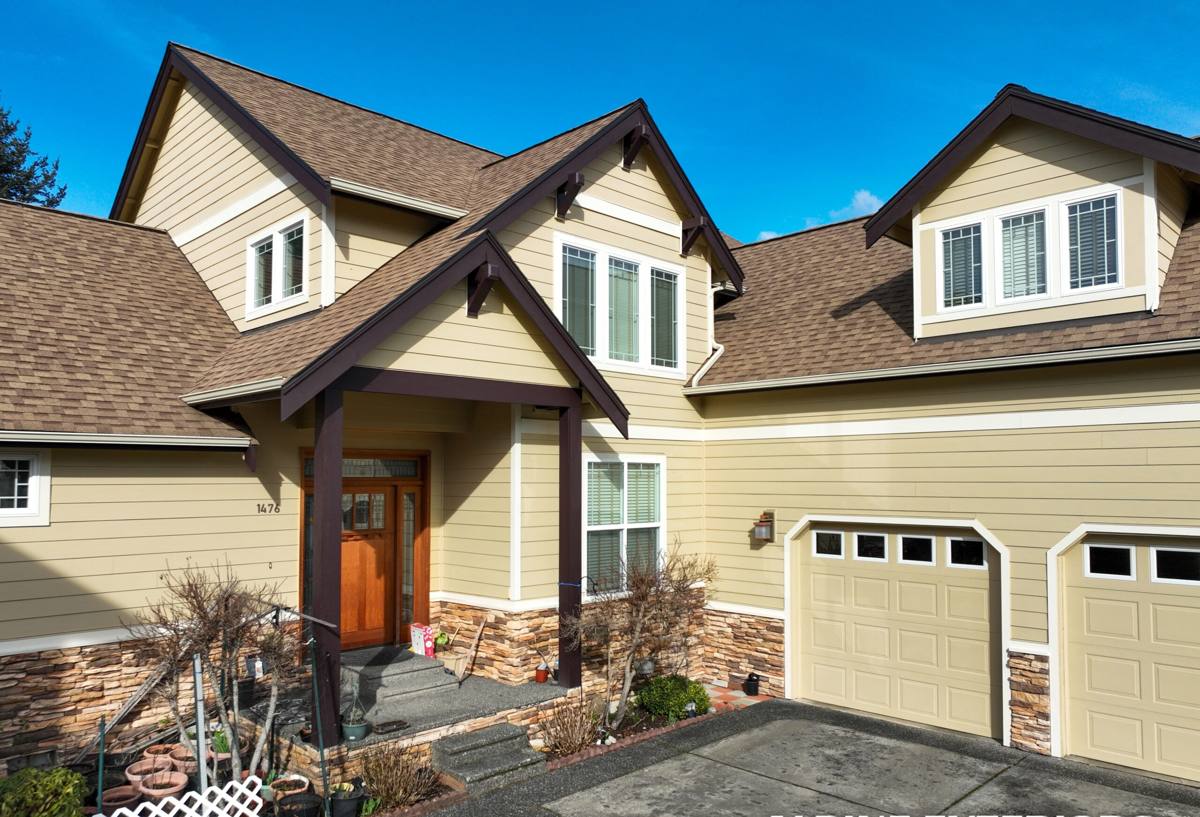
What Actually Goes Wrong on Local Homes
When we're called out to look at damaged siding in this area, the problems tend to fall into a short list of repeat offenders:
- Cracked or split boards from wind-driven debris impact or from moisture cycling that swells and shrinks a material not rated for it
- Buckled or warped panels, common on materials that expand and contract more than fiber cement, especially after sustained heat and humidity
- Rot and soft spots at butt joints and corners, where two pieces meet and caulk or flashing has failed
- Nail pops and loose fastening, where corroded or under-driven fasteners let panels shift in wind
- Faded, chalky, or peeling paint on any siding relying on field-applied paint rather than a factory finish
- Hidden moisture damage behind the siding — the sheathing or framing underneath rotting quietly while the surface still looks mostly fine
That last one is the reason we never treat siding repair as a purely cosmetic job. What's underneath the panel matters more than the panel itself.
Repair or Replace? How We Actually Decide
Not every damaged section needs full replacement, and not every homeowner needs to hear "you need a whole new house" from a contractor who'd rather sell the bigger job. We look at the extent and cause of the damage, not just the symptom.
| Factor | Points Toward Repair | Points Toward Replacement |
|---|---|---|
| Extent of damage | Isolated to a few boards or one wall | Spread across multiple elevations |
| Underlying sheathing | Dry, intact when opened up | Soft, discolored, or rotted |
| Age of existing siding | Newer, still within useful life | Already near end of service life |
| Material match | Matching profile/color still available | Discontinued or badly weathered mismatch |
| Root cause | One-time impact or fastener failure | Systemic moisture or installation defect |
Spot repairs on a section or two typically run a few hundred to around a thousand dollars depending on access and the extent of hidden damage found once we open things up; full elevation or whole-house replacement is a different scope and cost entirely. We'll tell you honestly which category your house falls into before any work starts, not after.
Why "Just Caulk It" Isn't a Repair
A lot of the siding damage we see in this area started as a small gap that someone caulked over instead of properly flashed or fastened. Caulk is a maintenance item, not a structural fix — it degrades under UV within a few years and was never meant to be the primary water barrier. If a repair is only as good as the sealant holding it together, it's not really fixed.
What a Correct Siding Repair Actually Involves
A repair done right isn't just pulling off a damaged board and nailing up a new one. It's a sequence:
- Open it up and check for moisture. We remove enough surrounding material to see whether the sheathing, house wrap, and framing underneath are still sound.
- Address the cause, not just the symptom. If a butt joint failed because it wasn't flashed, we flash it correctly this time — otherwise the same spot fails again in the next storm season.
- Match the material and reveal. Mismatched board width, texture, or color turns a repair into an eyesore. We match profile and, where the product allows it, factory-finish color rather than field-painting a patch that ages differently than the rest of the wall.
- Fasten to spec. Corrosion-resistant fasteners, correct spacing, correct penetration — this is where cheap repairs cut corners and where wind resistance actually comes from.
- Seal and finish properly. Sealant goes where it belongs, not as a substitute for flashing, and the finished repair is checked against the surrounding wall for color and alignment.
Why We Repair (and Replace) With James Hardie
We install James Hardie fiber cement exclusively — we don't carry vinyl, LP SmartSide, Cemplank, Allura, or primed wood siding. That matters for repair work too, because when we're patching in new material, we're not going to hand a Seminole homeowner a product we don't believe holds up here.
Vinyl handles rain fine but can warp or crack under sustained heat and impact, and it's not the product we choose to match into or replace with. LP SmartSide and similar engineered wood products perform well when the factory coating and sealed edges stay intact, but any breach lets moisture into the wood core — a real risk in a climate with this much wind-driven rain. Primed spruce or cedar looks great on day one and requires the most ongoing maintenance of any option, which is a tough ask given the sun and salt exposure here. None of these are bad products in the abstract — they're just trade-offs we decided not to put our name behind after weighing how this specific coastal climate treats exterior materials over time.
James Hardie fiber cement is non-combustible, doesn't expand and contract the way wood-based or vinyl products do, and comes with a factory-applied ColorPlus finish that resists the fading and chalking that UV causes on field-painted siding. Hardie's HZ5 product line is engineered specifically for the moisture and humidity cycling of climates like ours. When we're doing a repair on an existing Hardie installation, we can typically match into it cleanly. When we're repairing damage on a different material, we'll be straightforward with you about whether a true match is realistic or whether it's a good moment to think about transitioning that section — or the whole house — to something built for what this climate does.
Our Repair Process, Start to Finish
- Inspection. We walk the exterior, identify every affected area (not just the one you called about), and check for hidden moisture with the tools appropriate to the situation.
- Honest scope and estimate. You get a clear explanation of what's damaged, why, and what fixing it correctly involves — repair or replace, no upsell pressure either direction.
- Material sourcing and matching. We confirm profile, reveal, and finish match before work begins so there are no surprises on the wall.
- The repair itself. Removal, moisture check, correct flashing and fastening, new material installed to manufacturer spec.
- Final check. We inspect the finished repair for fit, alignment, and weather-sealing before we call it done.
Why Local Experience in Seminole Matters
A crew that regularly works this part of Pinellas County already knows the wind-load and wind-borne debris standards that apply under the Florida Building Code and how they affect fastening schedules and material specs on a repair — a patch has to meet the same code as new construction, not just look the part. We also know how quickly salt air corrodes the wrong fastener and how much UV a south- or west-facing wall takes on around here, which shapes how we prioritize repairs and what we flag as likely to resurface soon if it's not addressed now. That's the difference between a contractor passing through and one who treats your siding as a system that has to survive this specific environment.
Signs You Should Get Your Siding Looked At
- Visible cracks, splits, or holes in one or more boards
- Panels that look warped, buckled, or no longer sit flat against the wall
- Soft or spongy spots when you press on the siding, especially near corners and joints
- Peeling, chalky, or badly faded paint on a wall that hasn't been touched in years
- Visible gaps at butt joints, trim, or around windows and doors
- Rust streaks running down from fastener heads or trim
- A musty smell or discoloration on interior walls that back up to exterior siding
If any of those sound familiar, the damage usually isn't going to resolve on its own, and it tends to get more expensive the longer moisture has access behind the wall.
If you're seeing damage on your Seminole home's siding — or you're just not sure whether what you're looking at is cosmetic or something more — we're happy to take a look. Use the form below to request a free, no-pressure estimate and we'll give you a straight answer on what's going on and what it'll take to fix it right.