 St. Petersburg Siding
 Building a Deck for Shore Acres' Waterfront Conditions
Shore Acres sits close to Tampa Bay, with canal-front and low-lying streets running through much of the neighborhood. That location is exactly what makes it a great place for a deck — and exactly why a deck built here needs to be put together differently than one going up ten miles inland. Salt-laden air, high humidity, direct year-round sun, and the wind loads that come with living near open water all shorten the life of a deck that wasn't designed with those conditions in mind. We've built and repaired decks throughout this part of St. Petersburg, and the pattern is consistent: the decks that last are the ones where the fasteners, framing, and footings were chosen for this specific environment, not just pulled from a standard materials list.
This page is about deck building specifically for Shore Acres homeowners — what the local conditions demand, what a properly built deck actually involves below the surface, and how our process works from first call to final walkthrough.
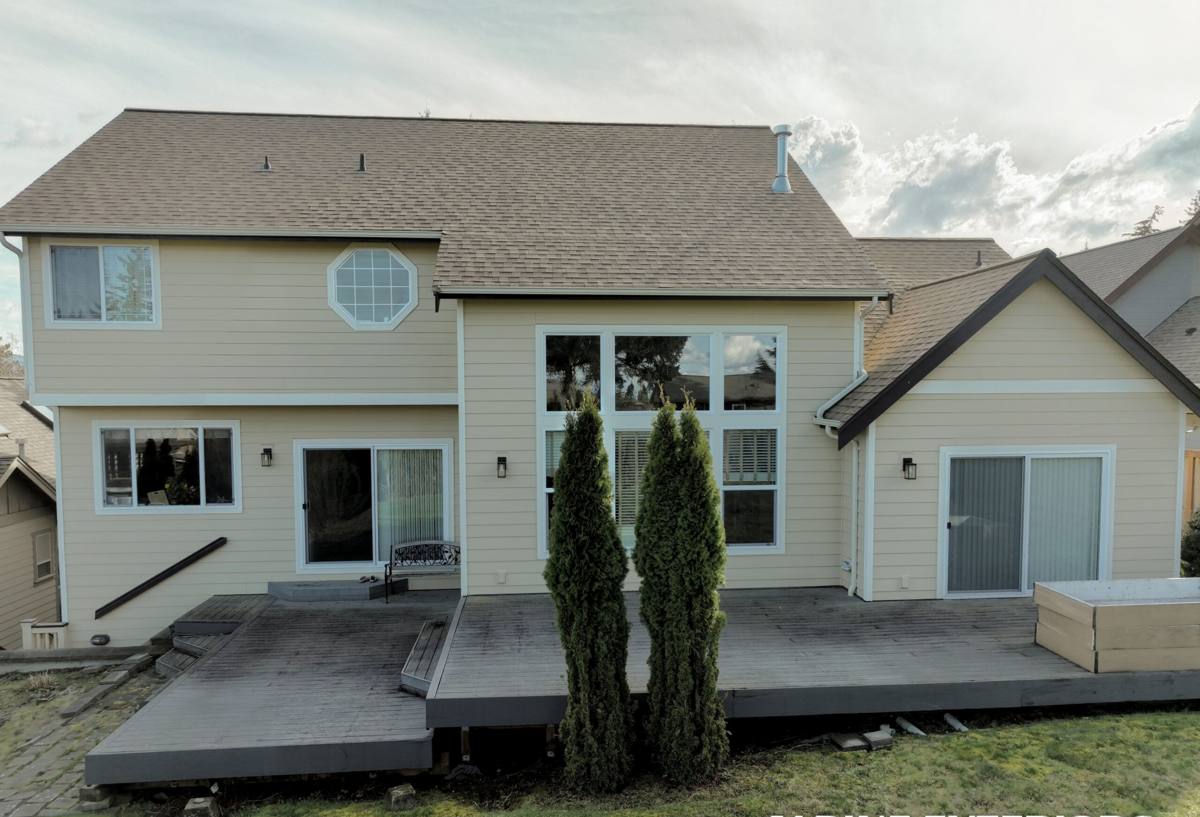
What Makes Shore Acres Tougher on a Deck Than a Typical Yard
A few things stack up in this part of Pinellas County that don't apply everywhere:
- Proximity to salt water: Many Shore Acres lots back up to canals or sit close enough to the bay that airborne salt reaches every exposed surface, accelerating corrosion on anything metal.
- Low elevation and drainage: Parts of the neighborhood sit at low elevation relative to the bay, so ground moisture, standing water after heavy rain, and periodic tidal influence are realities that affect how footings and ledger connections should be handled.
- Wind exposure: Being near open water means fewer windbreaks and more direct exposure during storms, which matters for how a deck's structure and railing are fastened.
- Sun load: St. Petersburg gets intense, near-constant UV exposure most of the year, which breaks down lower-grade wood finishes and some composite capstocks faster than manufacturers' glossy brochures suggest.
None of this means a deck in Shore Acres is a bad idea — it just means the build has to account for what the site is actually doing to the materials, not just what looks good on day one.
Choosing Decking Material for Salt Air and Sun
There's no single "best" decking material for every budget and every homeowner, but there are real trade-offs worth understanding before you pick one.
| Material | How It Holds Up Here | Maintenance | General Cost Range |
|---|---|---|---|
| Pressure-treated wood | Affordable, but needs consistent sealing to resist humidity, sun graying, and splitting; salt air speeds up fastener corrosion if hardware isn't rated for it | Annual cleaning and re-sealing recommended | Lowest upfront cost |
| Composite decking | Resists rot and doesn't need sealing; quality varies a lot by brand, and heat retention underfoot can be noticeable in direct summer sun | Occasional washing; no sealing or staining | Mid to upper range |
| PVC/capped polymer decking | Fully synthetic, handles moisture and salt exposure well, holds color under UV better than most composites | Low — soap and water cleaning | Higher upfront cost |
| Tropical hardwoods | Naturally dense and rot-resistant, but requires periodic oiling to prevent graying and surface checking in strong sun | Regular oiling, more labor-intensive upkeep | Higher upfront cost |
We'll walk through these options honestly based on your budget and how much upkeep you actually want to do. A homeowner who wants to spray it off twice a year and forget about it is a different conversation than one who likes the look and feel of real wood and doesn't mind maintaining it.
Why We're Selective About Certain Products
Some lower-tier composite boards on the market use a capstock or core formulation that doesn't hold up well to sustained coastal humidity — moisture can work into cut ends or fastener holes over time if they aren't properly sealed during installation. That's not a reason to avoid composite decking altogether; it's a reason we're particular about which brands we install and how we detail the cut ends, picture-frame boards, and fastener penetrations. It's an installation and product-selection standard we hold ourselves to, not a knock on every composite product out there.
What Happens Below the Decking — Framing, Footings, and Fasteners
The boards you walk on are the least important part of whether a deck lasts. What's underneath determines whether it's still solid in ten years.
Footings
Footing depth and design need to account for local soil and drainage conditions, and in low-lying areas near the bay, that sometimes means designing around a higher water table or occasional standing water after heavy rain. We size and place footings based on what the specific lot is doing, not a generic assumption.
Framing and Hardware
This is where salt air does the most damage if it's overlooked. Standard zinc-coated screws and joist hangers corrode faster near the water, leading to rust streaks, weakened connections, and — eventually — a deck that feels spongy or loose well before the decking boards themselves show any wear. We use fasteners and structural connectors rated for coastal and treated-lumber exposure (typically stainless steel or heavy-duty coated hardware appropriate to the application), because replacing rusted-out hardware later means tearing into a deck that otherwise looks fine on top.
Ledger Attachment
Where a deck attaches to the house, proper flashing and sealing at the ledger board is critical — this is one of the most common failure points on decks anywhere, and it's worse in a humid coastal environment where trapped moisture behind a poorly flashed ledger can lead to rot in the house's rim joist, not just the deck itself.
Permits, Wind Load, and Local Code
Decks in St. Petersburg and throughout Pinellas County generally require a permit and inspection, and structural elements — footings, ledger attachment, guardrails, and stair construction — are reviewed against the Florida Building Code, which accounts for the wind loads this region sees during storm season. Waterfront and low-lying lots can also involve additional review depending on flood zone designation. We handle the permitting and inspection process as part of the job rather than leaving it for the homeowner to sort out, and we build to pass inspection the first time, not to the bare minimum that might scrape by.
How Our Deck Building Process Works
- Site visit and assessment: We look at the lot's grade, drainage, sun exposure, and how close it sits to water or canal frontage, since that changes material and hardware recommendations.
- Design and material selection: We go over decking material options, layout, railing style, and any features like built-in seating or multi-level design, matched to your budget.
- Written estimate: A clear scope and price before anything starts — no vague allowances that turn into surprise add-ons later.
- Permitting: We prepare and submit the necessary permit documentation and coordinate inspections.
- Demolition (if replacing an old deck): Removal and disposal of the existing structure, checking the ledger and house connection for hidden rot before rebuilding.
- Framing: Footings, posts, beams, and joists built to the structural plan, using corrosion-resistant hardware throughout.
- Decking, railing, and stairs: Installed with proper spacing for drainage and expansion, and fastened using methods appropriate to the specific material.
- Final inspection and walkthrough: We confirm the deck passes inspection, then walk the finished project with you and go over care and maintenance specific to the material you chose.
Maintenance in a Salt-Air, High-UV Climate
Every deck needs some upkeep, but the schedule looks different this close to the water than it would in a drier, inland climate. A little routine attention prevents most of the expensive problems.
- Rinse salt residue and pollen off the deck surface and railings every few weeks, especially after storms with wind off the bay.
- Check fastener heads and structural hardware once a year for early rust or staining, particularly on older decks with standard-grade hardware.
- Reseal or re-stain wood decking on the manufacturer's recommended schedule — sun exposure here tends to shorten that interval compared to less intense climates.
- Keep gutters and downspouts clear so runoff isn't dumping directly onto or under the deck structure.
- Trim back landscaping that holds moisture against framing or footings.
- After any named storm, do a quick visual check of railings, stairs, and ledger flashing before assuming everything is fine.
Repair or Replace: Reading an Older Deck's Condition
A lot of our Shore Acres calls come from homeowners with an older deck that looks rough on top but hasn't been evaluated underneath. The decking boards are the easy part to judge — cupping, splintering, or soft spots are visible. What's harder to see without pulling a few boards is the condition of the ledger, joists, and footings. If those are structurally sound, refreshing or replacing the decking surface alone can be a reasonable, lower-cost path. If the framing has significant rot or corroded hardware, patching the surface just delays a full rebuild and can mask a safety issue. We'll always tell you honestly which situation you're in rather than defaulting to the bigger job.
Cost Factors to Expect
| Factor | Why It Changes the Price |
|---|---|
| Decking material | Pressure-treated, composite, PVC, and hardwood all carry different material costs and installation labor |
| Deck size and layout | Multi-level designs, curves, and built-ins add labor beyond a simple rectangular footprint |
| Height and stairs | Elevated decks need more structural framing, railing, and stair work than a low, ground-level deck |
| Site access and demolition | Removing an existing deck, and how easily equipment and materials can reach the site, affects labor time |
| Hardware upgrades | Stainless or coastal-rated fasteners and connectors cost more than standard-grade hardware but hold up far longer here |
| Permitting complexity | Waterfront or flood-zone lots can involve additional review beyond a standard inland permit |
Every deck quote should reflect your actual lot and material choices — we'll break the estimate down by these factors so you know what's driving the number, not just a flat total.
Why a Crew That Already Works Shore Acres Matters
Building a deck correctly for this neighborhood isn't about a secret technique — it's about not treating a waterfront St. Petersburg lot the same as an inland one. A contractor who mostly works drier, inland areas may default to standard-grade hardware, skip the extra flashing detail at the ledger, or underestimate how footing depth should respond to a higher water table, simply because that's what usually works where they normally build. We've built and repaired decks throughout this part of Pinellas County, so the material choices, fastener grade, and framing details in this page aren't theoretical — they're what we already specify by default because we've seen what standard-grade decisions turn into a few years later in this specific climate. That local familiarity shows up in fewer callbacks and a deck that's still solid well past the point a corner-cut one would need major repair.
Get a Straightforward Estimate
If you're planning a new deck or need to replace one that's showing its age, we're happy to take a look and give you a clear, no-pressure estimate built around your lot, your budget, and the realities of building this close to the water. Fill out the form below and we'll set up a time to come take a look.