 St. Petersburg Siding
 Siding Replacement Built for Euclid-St. Paul's Older Housing Stock
Euclid-St. Paul sits close enough to Tampa Bay's salt air and dense enough with mature tree canopy that its homes take a different kind of beating than new construction farther inland. Many of the houses in this part of St. Petersburg are older, with siding that has already been through decades of Gulf Coast summers, tropical storms, and humidity swings. When that siding starts failing, it's rarely a cosmetic problem alone — it's usually a sign that moisture has been finding its way behind the cladding for longer than anyone realized.
Siding replacement here isn't a one-size-fits-all job. It has to account for the age of the structure, the way the home was originally built, and the specific climate stresses that hit this neighborhood: humidity that never really lets up, intense UV exposure nearly year-round, wind-driven rain during storms, and salt-laden air drifting in off the bay. Get the replacement right and a home is protected for decades. Get it wrong — wrong material, wrong install, wrong water management — and you're looking at a repeat job in half the time.
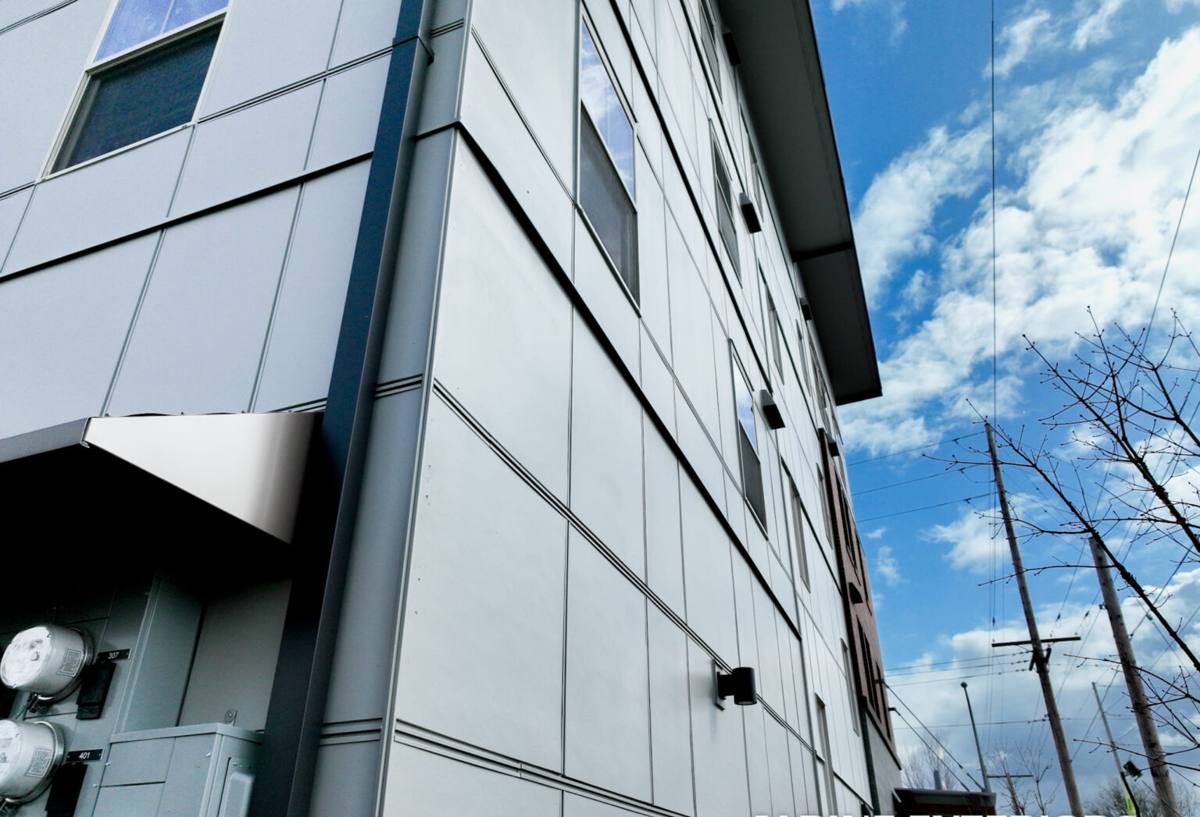
What Pinellas County's Climate Actually Does to Siding
It helps to be specific about what "Florida weather" means for a wall assembly, because each stressor attacks siding differently.
Hurricane-Force Wind
Wind doesn't just push on siding — it gets underneath it. Loose panels, degraded fasteners, and old lap siding with failed caulk joints give wind gusts something to grab. Once wind gets behind a panel, it can peel siding off in strips or drive rain deep into the wall cavity in a single storm.
Year-Round UV
St. Petersburg gets far more sun exposure annually than most U.S. markets. UV breaks down paint film, cooks caulk into a brittle, cracked mess, and causes some siding materials to fade unevenly depending on sun exposure per elevation. A south- or west-facing wall can look years older than the shaded side of the same house.
Wind-Driven Rain
Florida rain rarely falls straight down. During storms it comes in sideways, which means water gets tested against every seam, lap, and penetration in the siding system — not just the flat field of the wall. Any weakness in flashing or overlap shows up here first.
Salt Air
Even a few miles from open water, salt in the air accelerates corrosion on fasteners, trim fasteners, and any exposed metal components. Salt also holds moisture against surfaces longer, which keeps siding wetter, longer, after every rain event.
Signs a Euclid-St. Paul Home Needs Siding Replacement, Not Another Patch
Homeowners often ask for a repair when what the house actually needs is a full replacement. Here's how to tell which situation you're in:
- Soft or spongy spots when you press on the siding, especially near the bottom courses or under windows — usually means rot underneath.
- Persistent paint failure — paint that won't hold no matter how often it's redone often means the substrate underneath is compromised or moisture is trapped behind it.
- Visible warping, buckling, or separation at seams, which signals the panels have absorbed moisture and are no longer dimensionally stable.
- Gaps at trim and corners that keep reopening after caulking — a sign of ongoing movement or shrinkage, not a one-time defect.
- Interior symptoms like musty smells, peeling interior paint, or stains on interior walls that share an exterior wall with visibly aging siding.
- Age alone — many original siding materials in this neighborhood have already exceeded their realistic service life, even if damage isn't obvious yet.
If you're only seeing one or two isolated spots of damage on siding that's otherwise sound, a repair may be reasonable. If you're seeing several of the signs above, or if the home is due for a repaint anyway, replacement is almost always the better long-term investment — because it lets you fix what's underneath, not just what's visible.
Why We Only Install James Hardie Fiber Cement
We get asked regularly why we don't offer vinyl, LP SmartSide, or other fiber cement brands. The honest answer is that after years of installing and repairing siding in this climate, we standardized on one product line because it consistently holds up to what Pinellas County throws at it.
What rules out the alternatives, in our professional judgment
- Vinyl siding can warp and distort under sustained high heat and intense UV, and it's not rated for the wind speeds this region can see in a serious storm — it also isn't classified as non-combustible.
- LP SmartSide and other engineered wood products are wood-based, which means their long-term performance depends heavily on moisture management staying perfect for the life of the product — a hard standard to guarantee in a humid coastal climate.
- Other fiber cement brands (Cemplank, Allura) are reasonable products in general, but we don't stock or install them because we've built our installation process, flashing details, and warranty relationships entirely around one system, and mixing systems undermines the consistency we can guarantee.
What James Hardie gets right for this area
Hardie fiber cement is non-combustible, doesn't support rot, and holds paint and factory-applied ColorPlus finishes far longer under intense UV than most alternatives. Hardie's HZ5 product line is specifically engineered for high-humidity, storm-prone climates like ours. It carries a strong transferable warranty when installed to Hardie's specifications — which matters, because siding warranties are only as good as the installation behind them.
What a Correct Siding Replacement Involves
Replacing siding is a system-level job, not just a panel swap. Every layer matters as much as the visible surface.
1. Full tear-off and substrate inspection
Old siding comes off completely so the sheathing underneath can be inspected. This is where hidden rot, past water intrusion, or failed prior repairs get found and fixed before anything new goes up — skipping this step just seals existing problems back inside the wall.
2. Weather-resistive barrier and flashing
A properly lapped weather-resistant barrier, combined with correctly detailed flashing at windows, doors, and penetrations, is what actually keeps wind-driven rain out. This layer does more work than the siding itself when it comes to water management.
3. Hardie panel or lap installation to manufacturer spec
Correct fastener spacing, proper clearance from grade and roof lines, and correctly sized gaps at butt joints all affect long-term performance and warranty validity. This is also where corrosion-resistant fasteners matter most, given the salt air exposure here.
4. Trim, caulking, and factory finish detailing
ColorPlus finished products reduce the amount of field-painting needed, which reduces the number of joints relying on caulk alone — fewer weak points for UV and rain to exploit over time.
5. Final inspection and cleanup
A walk-through checking fastener lines, caulk joints, and trim details before the job is called complete.
Our Process for Euclid-St. Paul Projects
- On-site assessment — we inspect the current siding, check for hidden moisture damage, and evaluate the home's specific exposure (tree cover, elevation faces, proximity to water).
- Written estimate — a clear scope covering tear-off, substrate repair if needed, materials, and installation, with no vague allowances.
- Material selection — choosing the right Hardie plank profile, texture, and color line for the home's style and this neighborhood's aesthetic.
- Scheduling around weather — Florida installation timing has to work around storm season realities, and we plan accordingly rather than rushing a job into a bad weather window.
- Installation and daily site management — crews follow Hardie's installation spec, not shortcuts, to keep the manufacturer warranty intact.
- Final walkthrough — reviewing the completed work with the homeowner before considering the job done.
Why Local Experience in This Neighborhood Matters
A crew that already works in and around Euclid-St. Paul knows the housing stock here — the common construction eras, the typical substrate conditions found under old siding, and the exposure patterns specific to this part of St. Petersburg. That familiarity shows up in fewer surprises during tear-off, more accurate estimates up front, and installation details tuned to what actually survives here rather than generic best practices from a different climate. It also means faster response if a warranty question or storm-related concern comes up after the job is finished.
Cost Factors for Siding Replacement
Every home is different, but the following factors are what actually move the price on a siding replacement project. We don't publish blanket per-square-foot numbers because they're misleading without seeing the home — but here's what to expect to discuss during an estimate:
| Factor | Why It Matters |
|---|---|
| Extent of substrate repair needed | Hidden rot or water damage found during tear-off adds material and labor beyond the base siding job |
| Home size and wall complexity | More corners, dormers, and trim details mean more cutting, fitting, and finishing time |
| Siding profile and finish selection | Lap width, texture, and ColorPlus color choice affect material cost |
| Accessibility | Tight lot lines, mature landscaping, or multi-story sections affect labor time and equipment needs |
| Existing trim and fascia condition | Trim often needs attention alongside siding, especially on older homes |
Maintaining Your New Siding in This Climate
- Rinse siding periodically to remove salt residue and airborne grime buildup, especially on sides facing prevailing winds.
- Inspect caulk joints at trim and penetrations annually, ideally before storm season.
- Trim back vegetation and tree limbs that hold moisture against siding or drop debris during storms.
- Check gutters and downspouts regularly — clogged drainage sends more water directly against wall surfaces than the siding is designed to handle continuously.
- Address any impact damage from storms promptly rather than waiting, since exposed edges are where moisture intrusion starts.
If your Euclid-St. Paul home is showing signs of siding fatigue — or if you just want an honest read on what's under your current siding — we're happy to take a look. Fill out the form below for a free, no-pressure estimate.