 St. Petersburg Siding
 Building a Deck That Actually Holds Up in Snell Isle
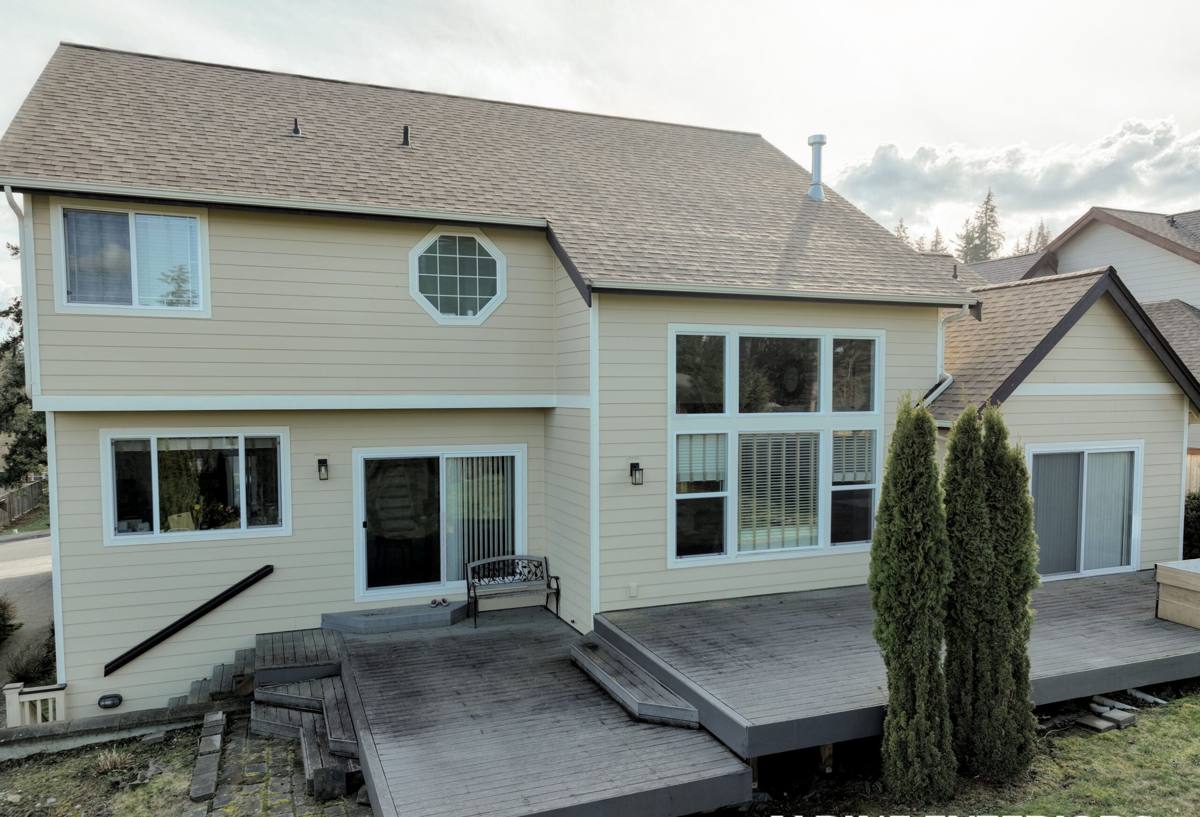
Snell Isle is one of St. Petersburg's older waterfront neighborhoods — canal-front and bay-adjacent lots, mature landscaping, and homes that sit close enough to the water to feel it every day. That's part of what makes the neighborhood desirable, and it's also exactly why a deck built here has to be engineered differently than a deck built inland. Salt air, near-constant UV exposure, wind-driven rain off Tampa Bay, and the threat of hurricane-force wind all work on outdoor structures faster in Snell Isle than they do a few miles inland. A deck that isn't built with that in mind will show it within a few seasons — loose railings, corroded hardware, cupped boards, soft framing.
This page is about one job in one neighborhood: custom deck construction for Snell Isle homes. We're not going to give you a generic rundown of decking options. We're going to walk through what the local climate actually does to a deck, what a correctly built one involves here, and why it matters to hire a crew that already understands the conditions on this side of St. Petersburg.
What Snell Isle's Climate Does to an Outdoor Structure
Salt Air and Corrosion
Homes on or near the canals get a steady exposure to salt-laden air, even without direct flooding or storm surge. Salt accelerates corrosion in metal fasteners, connectors, and hardware — the parts of a deck you don't see but that hold the whole thing together. Standard coated screws and joist hangers that would be fine 15 miles inland can start rusting within a couple of years this close to the water. Once a fastener corrodes, it loses holding strength, and that's a structural problem, not just a cosmetic one.
UV Exposure and Material Movement
Florida sun is intense and it's consistent — there's no real off-season for UV load. Wood decking dries out, checks, and grays. Composite and PVC boards can fade or chalk over time if they're a lower grade product, and dark-colored decking gets hot enough underfoot to matter in summer. UV also breaks down lesser-quality sealants and coatings faster than the label promises, which is part of why we don't rely on a coating alone to protect exposed wood here.
Wind-Driven Rain and Moisture Intrusion
Rain in this part of Florida rarely falls straight down. Wind-driven rain gets pushed sideways and upward into places a deck's structure was never designed to shed water from — behind ledger boards, into post bases, under railing posts. If the flashing and drainage details aren't done right, water gets trapped against the house structure or the deck framing and you get rot and mold you can't see until it's already a repair job, not a maintenance item.
Hurricane-Force Wind Loads
Pinellas County sits in a wind-borne debris region under the Florida Building Code, and St. Petersburg enforces those wind load requirements on any new deck structure. A deck isn't just a platform — it's a structure that has to resist uplift and lateral load, which comes down to how it's attached to the house, how the posts are anchored to their footings, and how the railing system is fastened. Undersized ledger connections and post bases are one of the most common failure points we see in decks that weren't built to current code.
Choosing Decking Material for a Waterfront Property
There's no single "best" decking material — there's a best fit for your budget, how much upkeep you want to do, and how close you are to the water. Here's an honest comparison for a Snell Isle setting:
| Material | Salt Air / Coastal Performance | Maintenance | Typical Lifespan |
|---|---|---|---|
| Pressure-treated wood | Fair — needs sealing to resist salt and moisture; fasteners must be corrosion-rated | Annual cleaning and re-sealing recommended | 10–15 years with upkeep |
| Composite decking | Good — resists rot and doesn't absorb moisture like wood; check manufacturer fade/warranty terms | Periodic cleaning, no sealing or staining | 20–30 years, per manufacturer warranty |
| PVC/cellular decking | Very good — fully synthetic, doesn't absorb moisture; performs well in humid, salty air | Low — occasional cleaning | 25+ years, per manufacturer warranty |
| Tropical hardwoods (e.g., ipe) | Good — naturally dense and rot-resistant, but still needs oiling to hold color | Regular oiling to prevent graying and checking | 20–25 years with upkeep |
Cost generally tracks with lifespan and maintenance burden — pressure-treated wood is the lowest up-front cost but the highest lifetime labor if you want it to look good, while PVC and higher-grade composites cost more initially and ask almost nothing of you afterward. We'll walk you through the real trade-offs for your specific project rather than steering you toward whatever's easiest for us to install.
What a Correctly Built Deck Involves Here
The visible decking is the smallest part of the job. What actually determines whether a deck survives a Pinellas County summer storm season — let alone a hurricane — is everything underneath it:
- Footings sized and set for local soil conditions and frost-free depth requirements, not guessed at
- Ledger board flashing installed to shed wind-driven rain away from the house structure, not just caulked
- Joist tape or equivalent moisture barrier on top of framing lumber to slow water absorption into fastener holes
- Corrosion-rated hardware — stainless steel or hot-dip galvanized connectors and fasteners rated for coastal exposure, not standard interior-grade coated screws
- Hurricane ties or equivalent uplift connectors at post-to-beam and beam-to-ledger connections
- Railing systems built to code — 42-inch height where required, baluster spacing that meets the 4-inch sphere rule, and posts anchored to resist lateral load
- Proper drainage and grading underneath and around the deck so water doesn't pool against footings or the house foundation
Skip any one of these and the deck might look fine for a year or two — the problems show up later, usually as soft spots, rust streaks, or a railing that's gone loose.
Permitting for a Deck in St. Petersburg
Any new or substantially rebuilt deck in the city needs a building permit, and St. Petersburg's review process checks the structural plan against Florida Building Code wind load requirements for our zone. If your property is close enough to the water that it falls within a flood zone overlay, there can be additional requirements around footing elevation or structure design — this gets checked at the plan review stage, not guessed at on-site. Waterfront and canal-front lots also sometimes carry deed restrictions or architectural review requirements specific to older established neighborhoods, so it's worth confirming that before design work goes too far. We handle the permit application and inspections as part of the job — it's not an extra step you have to manage yourself.
How the Project Works
- On-site consultation and measurement — we look at your lot, your soil, drainage, sun exposure, and how you actually want to use the space
- Design and material selection — sized and detailed for wind load, with decking and railing options that fit your budget and maintenance preference
- Permit submission — plans go to the city for review and approval before any framing starts
- Site prep and footings — footings dug and set to the sizes and depths the engineering calls for
- Framing — ledger, posts, beams, and joists installed with corrosion-rated hardware and proper flashing
- Decking and railing installation — final surface and railing system installed to code
- Inspection and walkthrough — city inspection sign-off, then a final walkthrough with you before we call it done
Why a Crew That Already Works Snell Isle Matters
A contractor who mostly works inland projects may not think twice about using standard-coated fasteners or skipping a corrosion-rated connector — because inland, it usually doesn't matter for years. On a canal-front Snell Isle lot, that same shortcut can mean visible rust and loosening hardware within a couple of seasons. We build decks across St. Petersburg and Pinellas County, and the waterfront neighborhoods get treated differently by design — different hardware specs, different attention to flashing, different assumptions about wind exposure. We also already know the city's permitting process and inspection expectations, which keeps your project from stalling on paperwork you didn't know you needed.
Keeping a Coastal Deck in Good Shape
Whatever material you choose, a little regular attention goes a long way in this climate. A simple seasonal checklist:
- Rinse salt residue and debris off decking and railings every few weeks, more often right after storms
- Check fastener heads and connectors once or twice a year for early rust — catching it early is a quick fix, not a rebuild
- Reseal or oil wood decking on the schedule the product calls for, not just when it starts to look gray
- Keep gutters and downspouts near the deck clear so water isn't dumping onto the structure
- Trim back landscaping that's trapping moisture or debris against the framing underneath
- After any major storm, do a visual check of railing stability and footing areas for erosion or standing water
None of this is complicated, but skipping it is how a well-built deck turns into an early repair.
Let's Talk About Your Deck
If you're planning a new deck or replacing one that hasn't held up on your Snell Isle property, we're happy to come take a look, walk the site with you, and give you a straight answer on what it'll take. There's a free, no-pressure estimate form below — fill it out and we'll get back to you.