 St. Petersburg Siding
 Why Snell Isle Homes Need a Different Approach to Windows
Snell Isle is one of the more demanding places in Pinellas County to get windows right. It's a waterfront neighborhood with canal and bay frontage on most sides, a mix of older Mediterranean-style and mid-century homes alongside newer construction, and openings that were often built to whatever dimensions the original builder chose — not to today's standard sizes. That combination means two things: the windows have to survive tougher weather exposure than an inland home sees, and they usually can't be ordered off a shelf. They have to be measured, built, and fitted to the actual opening in front of us.
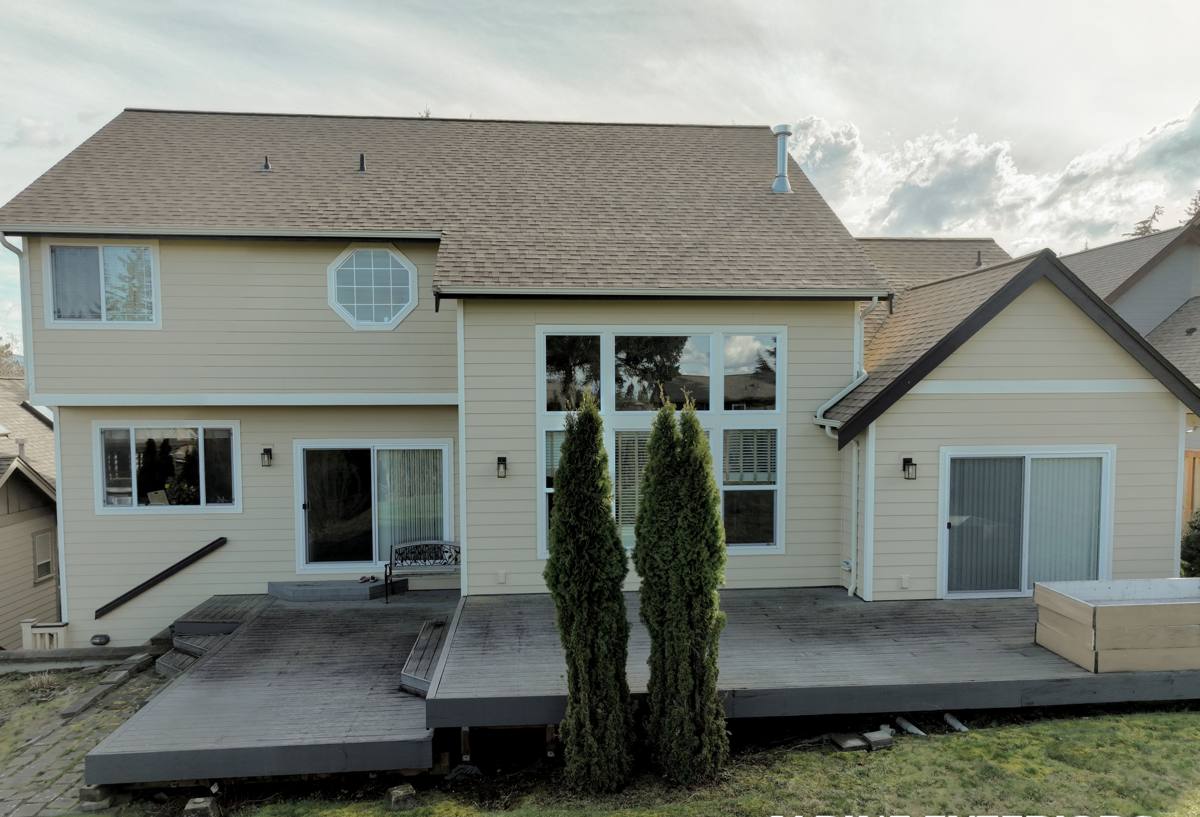
We're not talking in the abstract when we say "custom." On a lot of Snell Isle homes, the window openings are slightly out of square after decades of settling, the trim profiles are original to the house, and the sightlines matter because the house itself has real architectural character. A generic replacement window dropped into one of these openings without adjustment usually shows it — gaps, uneven reveals, trim that doesn't sit flush. Getting it right takes fieldwork before it takes product selection.
What Pinellas County's Climate Does to a Window Over Time
Every window on a Snell Isle property is fighting the same combination of stresses, year after year, and it's worth understanding what each one actually does to the glass and frame.
Hurricane-Force Wind and Wind-Driven Rain
St. Petersburg sits in a wind zone where windows need to handle sustained high winds and the debris impact that comes with them, not just resist rain in a normal storm. Wind-driven rain during a tropical system doesn't fall straight down — it's pushed sideways and upward under trim and through any gap in the flashing or sealant. A window that isn't installed with proper flashing and sealant detailing will leak long before it fails structurally.
Salt Air and Corrosion
Being surrounded by water on a barrier or near-barrier property means constant exposure to airborne salt. Salt accelerates corrosion on hardware, fasteners, and unprotected metal, and it pits and dulls certain aluminum finishes over time. This is a bigger factor on Snell Isle than it is a few miles inland, and it should influence hardware and frame choices, not just glass.
Year-Round UV Exposure
Florida sun is intense for most of the year, not just in summer. UV breaks down cheap vinyl compounds, fades interior finishes, and degrades sealants and gaskets faster than in milder climates. Glass packages and frame materials that aren't rated for sustained UV exposure show it within a few years — chalking, warping, or seal failure around the glass.
What "Custom" Actually Means on an Older or Waterfront Home
"Custom windows" gets used loosely in this trade. On a neighborhood like Snell Isle, it should mean a specific set of things:
- Field-measured openings rather than assumed standard sizes
- Attention to out-of-square or settled framing, common in older construction
- Matching or respecting existing trim, muntin patterns, and sightlines where the home has architectural detail worth preserving
- Non-rectangular or specialty shapes — arched, angled, or oversized openings — built to fit rather than forced
- Frame and glass selections chosen for that home's specific wind and water exposure, not a one-size-fits-all package
This is also where a lot of window jobs go wrong. A crew that only knows how to install stock-size replacement windows in newer subdivisions will struggle — or improvise — the first time they hit an odd-sized, out-of-square opening. On Snell Isle, that's not the exception, it's close to the rule.
Frame Materials and Glass That Hold Up Near the Bay
There's no single "best" frame material for every home — it depends on exposure, budget, and how much upkeep the homeowner wants to do. Here's how the common options actually perform in this environment:
| Frame Material | Salt Air / Corrosion Resistance | Maintenance | Typical Fit |
|---|---|---|---|
| Vinyl | Good — won't corrode, but lower-grade compounds can chalk or warp under sustained UV | Low | Cost-conscious replacements, most home styles |
| Aluminum | Fair — strong and slim profiles, but standard finishes are vulnerable to salt pitting without marine-grade coatings | Moderate | Larger openings, modern or mid-century homes |
| Fiberglass | Very good — dimensionally stable, resists UV and salt degradation well | Low | Higher-end custom openings, long-term durability priority |
| Wood / Wood-Clad | Poor without diligent upkeep — attractive on historic-style homes but needs regular sealing near saltwater | High | Restoration-focused projects where original appearance matters most |
On glass, the two things that matter most in this climate are impact resistance and solar performance. Laminated glass — two panes bonded around an interlayer — is what actually gives an impact-rated window its strength; it can crack under debris impact without coming out of the frame. Pair that with a Low-E coating and the right tint, and the window also cuts down significantly on heat gain, which matters when the AC is running most of the year. We'll walk through which combination fits your home and budget rather than pushing one glass package on every job.
Impact Ratings, Wind Zones, and Permitting in St. Petersburg
Pinellas County falls under the Florida Building Code's wind-borne debris requirements, and St. Petersburg enforces those standards through its permitting process. In practical terms, that means any window replacement needs to use products with a valid Florida product approval or Miami-Dade NOA rated for the wind pressures on that specific building, and the installation itself has to be permitted and inspected — it's not optional paperwork, and skipping it can create real problems at resale or with insurance claims after a storm.
Waterfront exposure on Snell Isle can also mean higher design wind pressures than a comparable inland lot a few miles away, depending on the home's height, exposure category, and proximity to open water. That's part of why we do an on-site evaluation before quoting a product — the right window for a Snell Isle waterfront elevation isn't automatically the right window for a home set back from the water on the same street.
How Our Custom Window Process Works
- On-site evaluation and measurement. We look at every opening individually — actual dimensions, squareness, existing flashing and framing condition, and the home's wind exposure.
- Product and glass selection. We go over frame material, glass package, and hardware options based on that specific home, budget, and how the openings face the water and prevailing wind.
- Permitting. We pull the required City of St. Petersburg permits and make sure the products specified carry current Florida product approval for the wind zone.
- Installation and flashing. This is where most window failures actually start. Proper flashing, sealant, and fastening schedule matter as much as the window itself — a great window installed with shortcuts here will still leak.
- Final inspection and walkthrough. We confirm the install passes inspection and walk the homeowner through operation, hardware, and any warranty paperwork.
What Drives the Cost of Custom Windows
There's a wide range in custom window pricing, and most of the spread comes down to a handful of factors rather than the brand name on the label:
| Cost Factor | Why It Matters |
|---|---|
| Opening size and shape | Oversized, arched, or angled openings require custom fabrication rather than stock sizing |
| Glass package | Impact-rated laminated glass with Low-E coatings costs more than standard glass but reduces storm shutter needs and energy loss |
| Frame material | Fiberglass and higher-grade vinyl generally cost more upfront than standard vinyl or aluminum but need less long-term upkeep near saltwater |
| Number of openings | Whole-house projects typically bring a better per-window cost than one-off replacements |
| Existing condition | Rot, out-of-square framing, or old flashing that needs correction adds labor beyond the window itself |
| Permitting and inspection | Required by code for this wind zone; factored into project cost, not an optional add-on |
Signs Your Current Windows Are Already Failing
A lot of homeowners on Snell Isle live with failing windows longer than they should because the signs are gradual. Worth checking for:
- Fogging or moisture between panes of double-glazed glass — the seal has failed
- Chalky, pitted, or discolored aluminum frames from salt exposure
- Windows that are hard to crank, lock, or slide, especially after humid weather
- Noticeable drafts or air movement around the frame when the AC is running
- Cracked, shrinking, or missing caulk and sealant around the exterior frame
- Soft or discolored wood at the sill or surrounding trim — a sign of water intrusion
- A jump in cooling costs without a clear cause elsewhere in the home
Any one of these is worth a look. Several together usually mean the windows are past patching and into replacement territory.
Why Hiring a Crew That Already Works in Snell Isle Matters
Window installation is one of those trades where local familiarity actually changes the outcome, not just the sales pitch. A crew that's worked on Snell Isle and similar Pinellas County waterfront neighborhoods already knows the kinds of framing quirks common to the area's older homes, understands how wind exposure differs between a canal-front lot and one set back from open water, and is used to working within any architectural expectations that waterfront and historic-influenced neighborhoods often carry. That's not something a crew coming from inland tract-home work picks up on the first job.
It also matters for the boring-but-critical parts: knowing the City of St. Petersburg permitting process, pulling the right documentation the first time, and not treating a hurricane-exposed waterfront home the same as a standard inland replacement. None of that shows up in a glossy brochure, but it's the difference between a window that performs through the next tropical season and one that needs attention again in three years.
If you're weighing custom windows for a Snell Isle home, we're glad to come take a look, measure the actual openings, and walk you through options honestly — including what we'd skip and why. Reach out for a free, no-pressure estimate using the form below.