 St. Petersburg Siding
 Why Decks in Snell Isle Wear Out Faster Than the National Average
Snell Isle is one of St. Petersburg's older waterfront neighborhoods, and a lot of the decks we get called out to see were built for a different climate assumption than the one Pinellas County actually delivers. A deck here isn't just furniture sitting in a backyard — it's a structure exposed to salt-laden air off the bay, intense UV nearly every day of the year, wind-driven rain during summer storms, and the occasional hurricane-force gust that tests every fastener and connection point.
That combination is harder on wood, metal hardware, and even some composite products than most manufacturers' warranty language accounts for. Salt air accelerates corrosion in fasteners and brackets long before the visible decking shows damage. UV breaks down surface fibers and finishes on wood, which is why boards that look fine one season can go soft or splintery the next. Wind-driven rain gets up under boards and around ledger connections in ways vertical rain never does, which is where a lot of hidden rot starts. None of this means a deck can't last in St. Petersburg — it means it has to be built and fastened with this specific environment in mind, not a generic national spec.
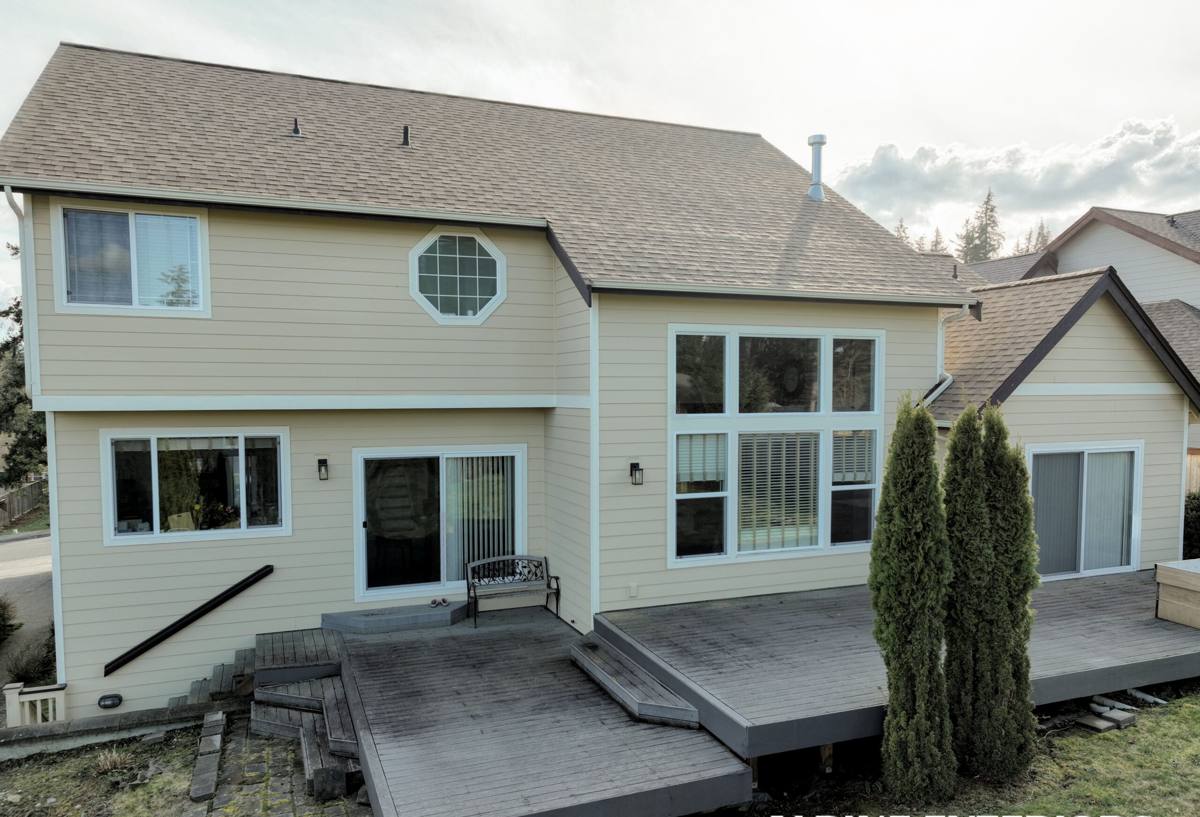
Signs a Snell Isle Deck Needs Replacement, Not Another Repair
We get calls every year from homeowners who've already paid for a board swap or two and want to know if it's worth doing again. Sometimes it is. Often, once you're this far in, replacement is the more honest answer. Here's what we actually check before recommending one over the other:
- Soft or spongy spots when you walk the deck, especially near the house connection or stair landings
- Visible rust bleeding from screws, joist hangers, or ledger bolts
- Gaps or movement where the deck attaches to the house framing
- Cupping, splitting, or graying boards across most of the surface rather than just one or two boards
- Railings that flex or wiggle under normal hand pressure
- A substructure (joists, beams, posts) that's more than 15-20 years old, even if the surface boards were replaced more recently
- Visible daylight or soft wood where support posts meet the ground or a footing
If the problems are limited to a handful of boards and the frame underneath is sound, a repair can buy time. If the ledger connection, joists, or posts are compromised, patching the surface just delays a bigger failure — and near the water, that failure tends to show up as a safety issue, not just a cosmetic one.
Why "It Looks Fine From the Top" Isn't Enough
A deck can look presentable and still have a compromised frame underneath, because the boards you walk on are almost never the first thing to fail structurally near saltwater exposure. The ledger board (where the deck bolts to the house) and the fasteners holding joists to beams are usually the first casualties, and they're hidden by design. Any honest inspection before a replacement quote includes getting underneath the deck, not just walking the surface.
Material Choices for a Waterfront Florida Climate
There's no single "best" decking material — there's a best fit for your budget, maintenance appetite, and how close you are to open water or a canal. Here's how the common options actually compare in this environment, in plain terms:
| Material | Salt air & moisture behavior | Maintenance | Typical lifespan here |
|---|---|---|---|
| Pressure-treated wood | Prone to warping, splitting, and fastener corrosion without diligent upkeep | Annual sealing/staining recommended | 8-15 years |
| Composite decking | Handles moisture well; won't rot, but board core and fastener quality still matter | Periodic cleaning; no sealing/staining | 20-30 years |
| PVC/capped polymer | Fully sealed surface, best resistance to moisture and salt exposure | Lowest maintenance of the group | 25+ years |
| Tropical hardwoods (ipe, etc.) | Naturally dense and rot-resistant, but demanding to fasten and finish correctly | Regular oiling to maintain color/protection | 20-25 years with upkeep |
We'll walk you through the honest trade-offs for your situation rather than pushing one product line. Wood costs less up front but asks more of you every year. Composite and PVC cost more initially but hold up better against the specific stresses — salt, sun, and moisture — that define this stretch of Florida coastline. Hardwoods sit in between: beautiful and durable, but installation quality matters enormously, because improper fastening in dense wood is a common source of early failure.
What a Correct Deck Replacement Actually Involves
A deck replacement done right is more than tearing off old boards and screwing down new ones. In a coastal environment like St. Petersburg, the details that don't show up in a driveway estimate are the ones that determine whether the deck holds up through hurricane season after hurricane season. That includes:
- Full substructure inspection: joists, beams, posts, and footings checked for rot, corrosion, and proper spacing before any new decking goes down
- Ledger board flashing: correctly flashed and sealed where the deck meets the house, so wind-driven rain can't work its way behind the connection
- Corrosion-resistant fasteners and hardware: stainless steel or coated hardware rated for coastal/salt-air exposure, not standard interior-grade hardware
- Proper joist spacing and blocking: matched to the decking material's span rating, not just whatever spacing was there before
- Footings sized and set to local code: especially important on older Snell Isle lots where original construction predates current wind-load standards
- Railing and stair connections built for wind uplift, not just downward load
Skipping any of these to save a day of labor is exactly how a deck ends up needing replacement again in eight years instead of twenty-five.
Permits, Wind Load, and Pinellas County Code
Deck replacement in St. Petersburg generally requires a permit, and Pinellas County's wind-load requirements are stricter than what you'll find inland — for good reason, given how exposed this part of the Gulf coast is during hurricane season. On waterfront and near-waterfront lots like those in Snell Isle, that can also mean added attention to flood zone guidelines depending on the property's elevation and location relative to the water. We handle the permitting and inspection scheduling as part of the job, and we build to the load and connection standards the county actually requires — not the bare minimum that might pass in a less exposed part of the state.
Our Process, Start to Finish
- On-site assessment: we inspect the existing deck from the frame up, not just the visible surface, and give you a straight answer on repair vs. replacement
- Material and design walkthrough: we go over the trade-offs above based on your budget and how exposed your property is to salt air and sun
- Written estimate: clear scope, materials, and timeline before any work starts
- Permitting: we pull the necessary permits and schedule required inspections
- Demolition and disposal: old decking, hardware, and any compromised framing removed and hauled off
- Rebuild: framing repaired or replaced as needed, then new decking, railings, and stairs installed to code
- Final walkthrough: we check the finished deck with you before calling the job done
Cost Factors for a Snell Isle Deck Replacement
Every deck is different, but the price generally moves based on a handful of factors:
| Factor | Why it affects cost |
|---|---|
| Deck size and shape | More square footage and complex angles mean more material and labor |
| Material selection | Pressure-treated wood costs less up front than composite or PVC |
| Substructure condition | Rotted or corroded framing adds repair scope beyond surface decking |
| Height and stairs | Elevated decks and multi-flight stairs add framing and railing complexity |
| Permit and inspection requirements | Waterfront and elevated properties may need additional review |
| Access to the work area | Tight side yards or waterfront lots can slow demolition and material staging |
We'll give you a real number in writing after seeing your deck — not a phone estimate based on square footage alone, since the substructure condition is often the biggest swing factor.
Why Local Experience in Snell Isle Actually Matters
A contractor who works this specific stretch of St. Petersburg knows what an original 1950s-60s Snell Isle deck frame typically looks like underneath, how prior renovations in the area tend to have been fastened, and what Pinellas County inspectors expect to see at a wind-load and flashing inspection. That familiarity shows up in fewer surprises mid-project and fewer callbacks after a storm season. It also means we're not learning the coastal-exposure lessons on your project — we've already applied them on decks up and down this part of the county.
If your deck is showing its age, or you just want an honest opinion on repair versus replacement, we're happy to take a look. Fill out the form below for a free, no-pressure estimate — we'll tell you what we actually see, not just what sounds good on a proposal.