 St. Petersburg Siding
 St. Pete Beach Puts Real Stress on a Home's Exterior
St. Pete Beach sits right on the Gulf, and that location is exactly why siding fails faster here than it does a few miles inland. Salt-laden air corrodes fasteners and trim, constant UV breaks down paint films and plastics, wind-driven rain forces water sideways into every seam and joint, and hurricane-force gusts put real uplift and racking load on whatever is fastened to the wall. Any one of those on its own is manageable. Together, day after day, year-round, they separate siding that was installed correctly from siding that was installed to code minimums and hoped for the best.
Homes here also tend to sit lower and closer to open water and canals than the typical St. Petersburg or Pinellas County lot, which means more humidity at the wall surface and more exposure to blowing sand and salt spray. That combination is hard on wood-based siding products in particular, and it's part of why we standardized on one material rather than offering several.
Why We Only Put James Hardie on Homes in This Area
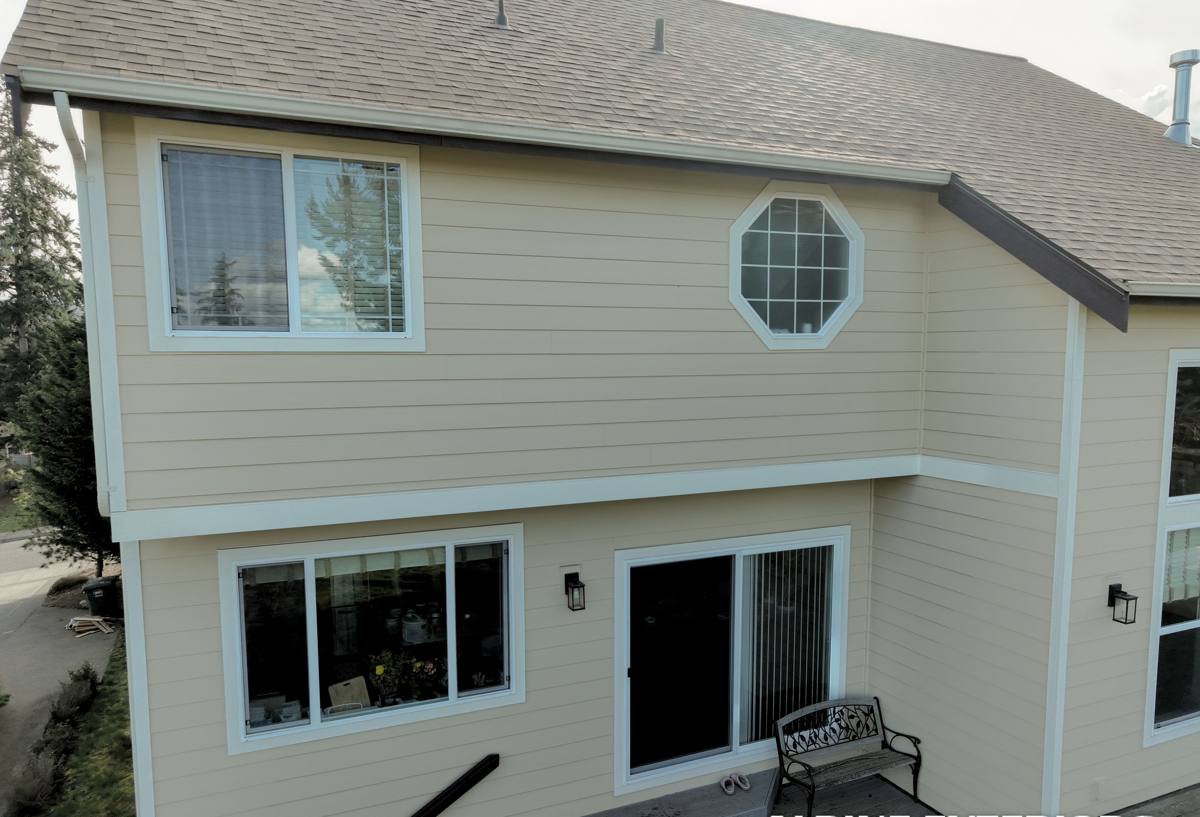
We install James Hardie fiber cement siding exclusively. We don't offer vinyl, LP SmartSide, Cemplank, Allura, primed spruce, or cedar, and that's a deliberate call, not a lack of options. Fiber cement doesn't rot, it doesn't provide food for wood-boring insects, and it's non-combustible, which matters on any home but especially on tightly built coastal streets. James Hardie backs its siding with a strong, transferable limited warranty and a factory-applied ColorPlus finish that's baked on rather than field-painted, which matters directly for this climate.
HZ10: Built for Gulf Coast Conditions
James Hardie engineers its siding by climate zone, and St. Pete Beach falls in the HZ10 zone — the product line formulated for high humidity, heavy UV exposure, and moisture-heavy Southeast and Gulf conditions. HZ10 panels are engineered to resist moisture intrusion and to hold up against the freeze-thaw non-issue Florida doesn't have but the humidity and UV issue it very much does. That's a meaningfully different product than what gets shipped to a dry inland climate, and it's one more reason a generic install from an out-of-area crew unfamiliar with HZ10 specifics can leave a home under-protected.
What the ColorPlus Finish Actually Buys You
Paint failure — chalking, fading, peeling — is one of the most common siding complaints in coastal Florida, mostly because job-site paint doesn't cure the same way a factory finish does, and it takes the brunt of UV and salt exposure without the same baked-on adhesion. ColorPlus finish is engineered specifically to resist fading and to hold color longer than field-applied paint, which is a real, practical difference on a home that sits in direct Gulf sun most of the year.
What a Correct Installation Actually Involves Here
Fiber cement siding is only as good as the water management and fastening behind it. In a wind-driven-rain environment like St. Pete Beach, the details most homeowners never see are the ones that determine whether the siding lasts fifteen years or fifty.
Flashing and Drainage Come First
Before a single piece of siding goes up, the wall needs a correctly lapped weather-resistant barrier, properly integrated window and door flashing, and flashing at every horizontal transition — roof lines, decks, trim boards. Water that gets behind the siding needs a way back out. Skipping or shortcutting this step is invisible on installation day and shows up as rot, staining, or interior damage years later.
Fastening for Wind Load
James Hardie publishes specific fastener types, spacing, and embedment requirements, and those requirements get more strict in high-wind zones like ours. Nails or screws need to be the correct type for the substrate, spaced to the manufacturer's engineering, and driven flush — not overdriven, which cracks the panel edge and creates a moisture entry point that isn't visible until the paint starts failing around it.
Clearances, Gaps, and Sealant
Hardie siding needs proper clearance from rooflines, decks, and grade, and gaps at butt joints and trim need to be caulked with a sealant rated for exterior movement and UV exposure — not whatever's left in the truck. In a salt-air environment, using the wrong sealant means recaulking within a couple of years instead of a decade.
Mistakes We Regularly Find When We Re-Side Homes in This Area
A meaningful share of our work in St. Pete Beach and along the beaches is replacing siding that failed well before it should have — not because fiber cement is a bad material, but because it was installed without accounting for this environment. The patterns repeat:
- Face-nailing or overdriven fasteners that cracked panels at the edge, letting water in behind the finish
- Missing or poorly lapped flashing above windows and at roof-to-wall transitions
- Panels butted tight with no expansion gap, causing buckling and cracked caulk lines
- Siding installed too close to grade or a deck surface, holding moisture against the bottom course
- Field-touch-up paint used instead of manufacturer-matched product, creating visible color mismatch and premature fading
None of these are exotic problems. They're the result of a crew treating a coastal install the same as an inland one, or rushing details that don't show up as a problem until well after the invoice is paid.
Our Process for a St. Pete Beach Project
The steps are the same fundamentals as any quality Hardie install, but every one of them gets adjusted for this environment — from the fastener spec to the sealant we use.
| Step | What Happens | Why It Matters Here |
|---|---|---|
| Site assessment | Inspect existing substrate, trim, and moisture history | Salt air and prior water intrusion aren't always visible from the outside |
| Tear-off and substrate check | Remove old siding, inspect and repair sheathing as needed | Hidden rot or water damage has to be addressed before new siding goes on |
| Weather barrier and flashing | Install house wrap and flash all penetrations and transitions | This is the layer that actually stops wind-driven rain |
| Hardie panel installation | Install to manufacturer fastening spec for our wind zone | Correct fastening is what keeps siding attached in a storm |
| Trim, caulk, and finish detail | Seal joints with UV- and movement-rated sealant | Prevents early caulk failure from sun and salt exposure |
| Final walkthrough | Review the finished exterior with the homeowner | Confirms the work matches what was scoped and priced |
What Affects Cost on a Job Like This
We don't quote firm numbers without seeing the house, but a few factors consistently move the price on St. Pete Beach projects specifically:
| Factor | Why It Changes Cost |
|---|---|
| Condition of the existing wall substrate | Rot or moisture damage found during tear-off adds repair work before siding can go on |
| Home elevation and access | Elevated coastal homes and tight lot lines can slow staging and material handling |
| Trim and architectural detail | More corners, dormers, and trim transitions mean more flashing and cut work |
| Product line and profile chosen | Lap siding, shingle-style panels, and board-and-batten carry different material and labor costs |
| Color and finish selection | Factory ColorPlus finishes vs. primed panels intended for field painting price differently |
Why It Matters That We Already Work This Island
A crew that only occasionally works St. Pete Beach doesn't build the habits that this environment requires — they default to standard practice from inland jobs. A crew that regularly works Pinellas County's coastal areas knows to spec fasteners and sealants for salt exposure without being told, knows what flashing failures actually look like on a barrier island home, and knows how local wind exposure should shape fastening decisions before a permit inspector ever asks. That familiarity isn't a marketing line — it shows up in fewer callbacks and fewer surprises during tear-off.
Living With Hardie Siding in a Salt-Air Environment
Fiber cement is low-maintenance compared to wood-based alternatives, but "low-maintenance" isn't "no-maintenance," especially this close to the Gulf. A simple annual routine keeps a correctly installed system performing for decades:
- Rinse the exterior periodically to remove salt residue and airborne grime, especially on sides facing the water
- Inspect caulk lines at trim and joints once a year and have any cracked or shrunk sealant replaced promptly
- Check that gutters and downspouts are directing water away from the base of the siding, not down the wall
- Keep an eye on any area near sprinklers or dense landscaping where moisture sits against the siding longer than it should
- Have flashing and trim checked after any major storm, since wind-driven debris can loosen or damage trim before the siding itself shows a problem
If you're weighing a siding replacement for a St. Pete Beach home, we're glad to walk the exterior with you, point out what we see, and put together a straightforward, no-pressure estimate — no obligation either way.