 St. Petersburg Siding
 Roser Park's Roofs Carry a Heavier Load Than Most
Roser Park is one of St. Petersburg's older, established neighborhoods — mature tree canopy, brick and shaded streets, and a mix of early-1900s bungalows alongside newer infill homes. That combination is good for curb appeal and terrible for roof longevity if the roofing system underneath isn't built correctly. Overhanging oaks mean more debris, more shade holding moisture on the shingles, and more granule wear from branches scraping in a storm. Add in what every roof in Pinellas County deals with — hurricane-force wind gusts, near-constant UV exposure, wind-driven rain that gets pushed sideways under poorly sealed edges, and salt air drifting in off Tampa Bay — and you get a roof that ages faster here than it would inland.
None of that means asphalt shingle roofing is a bad choice for Roser Park. It's still the most practical, cost-effective option for the vast majority of homes in the area. It just means the installation details matter more here than they would in a milder climate, and a roof that was installed "fine" for a drier, calmer market often isn't fine for St. Petersburg.
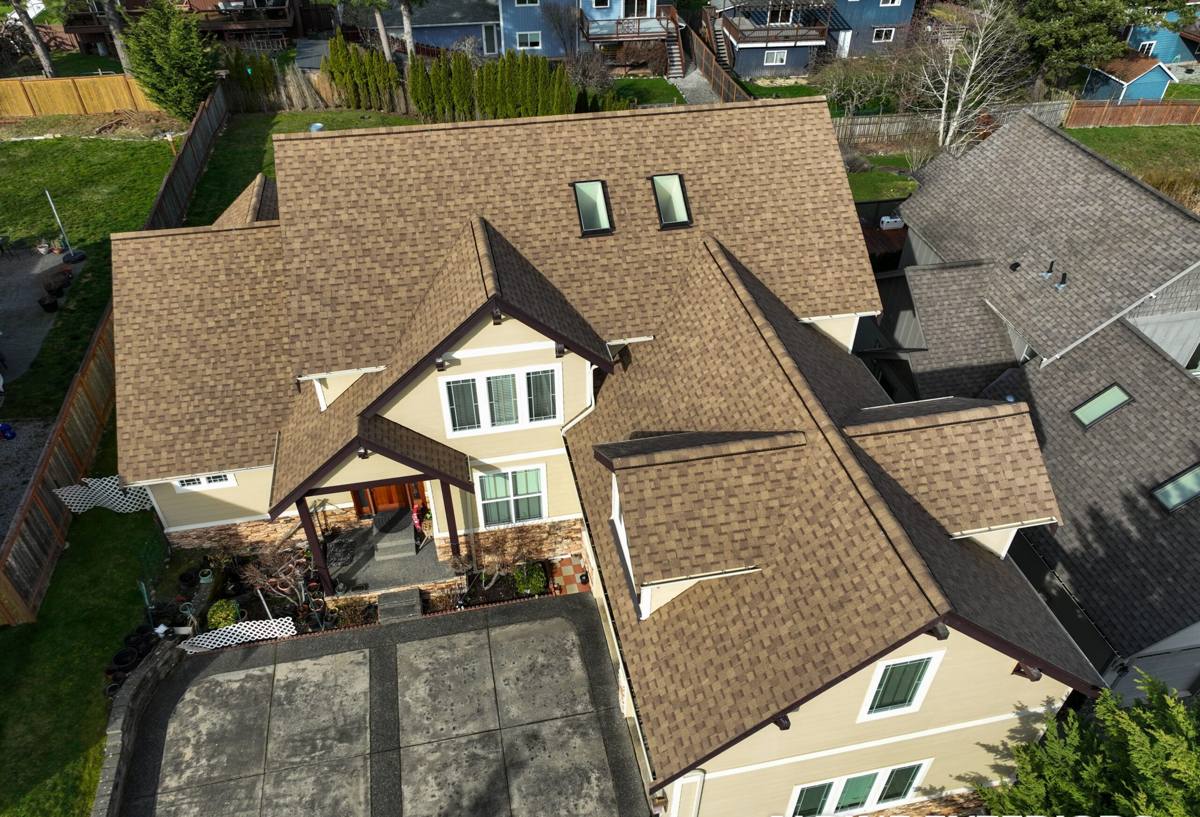
What Correct Asphalt Shingle Roofing Actually Requires Here
Wind-Rated Shingles, Installed to the Rating
A shingle's wind rating is only real if it's installed with the nailing pattern, nail count, and nail placement the manufacturer specifies for that rating. High-nail patterns (typically six nails per shingle rather than four) are standard practice for coastal Florida work, and they're the difference between a roof that stays put in a tropical storm and one that loses tabs in a summer squall.
Underlayment That Backs Up the Shingles
Shingles are the visible layer, but the underlayment is what keeps the deck dry if wind ever lifts a shingle or drives rain sideways under it. Synthetic underlayment or a self-adhering membrane in vulnerable zones (valleys, eaves, around penetrations) is worth the upgrade over builder-grade felt, especially on a home that will see decades of Gulf Coast storms.
Flashing and Sealing at Every Transition
Most roof leaks don't start in the open field of shingles — they start at a transition: a chimney, a wall intersection, a vent pipe, a skylight, or a valley. Every one of those needs properly formed and sealed flashing, not just roofing cement smeared over a gap. This is where a lot of corner-cutting happens, and it's usually invisible until the next hard rain finds it.
Wind-Driven Rain Protection
Because storms here rarely come straight down, edge details — drip edge, starter strip adhesion, and ridge cap sealing — matter more than they would in a calmer climate. A roof that looks fine from the street can still be letting water in sideways at the eaves during a squall if these details were rushed.
Older Homes Need a Different Starting Point
Before any shingle goes down, an older Roser Park roof deck needs an honest look. Decades of Florida heat cycling, past patch jobs, and sometimes multiple roofing layers can leave a deck with soft spots, undersized sheathing by today's code, or nailing that doesn't meet current wind standards. Re-roofing over a compromised deck just locks the problem under a new layer of shingles.
On a historic-character home, there's also a visual consideration. Many owners in older St. Petersburg neighborhoods want a shingle profile and color that reads as traditional rather than a shiny, modern laminate look. That's a legitimate design choice, and it's worth discussing before the material order goes in — not after.
Deck Condition Checklist Before Any Tear-Off
- Soft or spongy spots felt while walking the roof, indicating rotted decking
- Visible sagging between rafters when viewed from the attic or eave line
- Water staining, mold, or daylight visible through the roof deck from inside the attic
- Nail pull-through or exposed nail heads from a previous poor install
- Evidence of multiple roofing layers stacked on top of each other
- Undersized or deteriorated fascia and soffit that will need repair alongside the roof
How Our Process Works
1. Inspection and Honest Assessment
We walk the roof, check the attic from the inside, and tell you what we actually see — not a sales pitch. If a repair is a reasonable option instead of a full replacement, we say so.
2. Written Scope and Material Selection
You get a clear scope covering shingle product, underlayment type, flashing plan, ventilation, and any deck repair allowance, so there's no guessing about what's included.
3. Tear-Off and Deck Inspection
Old material comes off down to the deck so we can actually see what's underneath, rather than roofing over unknown conditions. Any rotted or undersized sheathing gets flagged and repaired before anything new goes down.
4. Installation to Manufacturer and Wind Specifications
Underlayment, flashing, starter strip, field shingles, and ridge cap go down in that order, following the nailing pattern required for the shingle's rated wind speed.
5. Cleanup and Final Walkthrough
Magnetic sweep for stray nails, debris hauled off, and a walkthrough so you can see the finished work and ask questions before we consider the job done.
Shingle Options Worth Comparing
| Shingle Type | Typical Wind Rating | Best Fit For | Trade-Offs |
|---|---|---|---|
| 3-tab asphalt | Lower end of rated range | Budget-conscious re-roofs, secondary structures | Shorter lifespan, less impact resistance in storms |
| Architectural (laminate) asphalt | Higher rated range with proper nailing | Most Roser Park homes, standard replacements | Higher upfront cost than 3-tab, worth it for durability |
| Impact-resistant (Class 4) asphalt | High wind and hail impact rating | Homes prioritizing storm resilience or insurance discounts | Higher material cost, may qualify for insurance credit |
We don't push one product on every job. The right call depends on your budget, how long you plan to stay in the home, and whether an insurance wind-mitigation discount makes a higher-tier shingle pay for itself over time.
Ventilation and Moisture: The Part That Gets Skipped
A shingle roof that isn't ventilated correctly traps heat and moisture in the attic, which shortens shingle life from underneath even if the surface looks fine. In St. Petersburg's climate, where attic temperatures can climb well past outdoor air temperature under a hot roof deck, balanced intake at the soffit and exhaust at the ridge is what actually moves that heat out. Skipping this step is one of the most common ways a shingle roof underperforms its warranty, and it's not something you can see just by looking at the roof from the ground.
What Shortens a Shingle Roof's Life Here — and What to Do About It
| Local Stress Factor | How It Damages the Roof | What Reduces the Risk |
|---|---|---|
| Hurricane-force wind gusts | Lifts tabs, works nails loose, strips shingles at edges | Correct nail pattern, rated shingle, sealed starter strip |
| Year-round intense UV | Bakes out asphalt oils, causes granule loss and brittleness | Quality shingle with UV-stable granules, adequate attic ventilation |
| Wind-driven rain | Pushes water sideways under poorly sealed edges and flashing | Proper flashing, sealed valleys, synthetic underlayment |
| Salt air | Accelerates corrosion of exposed metal flashing and fasteners | Corrosion-resistant flashing and fasteners rated for coastal use |
| Tree canopy and debris | Holds moisture, scrapes granules, clogs valleys | Regular gutter and valley clearing, periodic inspection |
Maintenance That Actually Extends the Roof
Asphalt shingle roofs are low-maintenance, not no-maintenance. A short annual routine catches small problems before they become deck repairs.
- Clear leaves and debris from valleys and gutters, especially after storm season
- Look for lifted, cracked, or missing shingles after any major wind event
- Check attic ventilation isn't blocked by insulation piled over soffit vents
- Watch for granules collecting in gutters, a sign of accelerating wear
- Have flashing around chimneys, vents, and skylights checked every few years
Permits, Wind Mitigation, and Insurance
A re-roof in Pinellas County requires a permit and inspection, and it's also an opportunity to update your home's wind mitigation report. Insurers often give credits for things like a properly sealed roof deck, hip roof geometry, and secondary water barrier — details that are far easier to document during a full re-roof than to retrofit later. We handle the permit process and can point you toward what documentation to keep for your insurer once the job is done.
Why It Matters That We Already Work in Roser Park
A crew that regularly works this neighborhood already understands the mix of older roof decks and mature landscaping that comes with the territory, and shows up with realistic expectations rather than surprises mid-job. We're not guessing at what an early-1900s bungalow deck might need or how tree canopy affects valley design — we've already worked through it on homes nearby. That familiarity shows up in a more accurate initial quote, fewer change orders once tear-off exposes the deck, and a finished roof that fits both the climate and the character of the neighborhood.
If you're weighing a repair against a full replacement, or just want a straight answer on what your current roof needs, we're happy to take a look. Reach out for a free, no-pressure estimate using the form below.