 St. Petersburg Siding
 Bartlett Park is one of St. Petersburg's older, established neighborhoods, which means a lot of its homes are carrying siding that has already been through several decades of Florida weather. Whether your house has aging wood, vinyl, an older fiber cement product, or Hardie siding that's due for a repair after storm damage, the same question comes up: is this a patch job, or does it point to something bigger going on behind the wall? That's the judgment call a local crew that actually works this part of Pinellas County is equipped to make.
Why Siding Fails Faster in This Part of Pinellas County
St. Petersburg sits in a climate that is genuinely hard on exterior building materials, and Bartlett Park's mix of mature tree canopy, older housing stock, and proximity to Tampa Bay means homes here see the full range of it. Four things do most of the damage over time:
- Hurricane-force wind: Even storms that don't make direct landfall send sustained wind and gusts through the area that work siding loose at the nail line, crack panels at corners, and peel back pieces that were already weakened.
- Year-round UV exposure: Florida sun is relentless nearly twelve months a year. It breaks down paint films, fades color, and dries out caulking and wood fiber faster than in most parts of the country.
- Wind-driven rain: It's not the rain falling straight down that causes problems — it's rain pushed sideways into seams, laps, and trim joints during storms, which is where water intrusion actually starts.
- Salt air: Being close to the bay means airborne salt settles on exterior surfaces, accelerates corrosion of fasteners and metal trim, and can shorten the life of paint and caulk.
None of these forces act alone. A house that's taken UV damage to its caulking is more vulnerable the next time wind-driven rain hits, and a fastener that's corroding from salt exposure gives wind something to work loose. That combination is why siding problems in this neighborhood often show up faster, and in different places, than a one-size-fits-all repair approach expects.
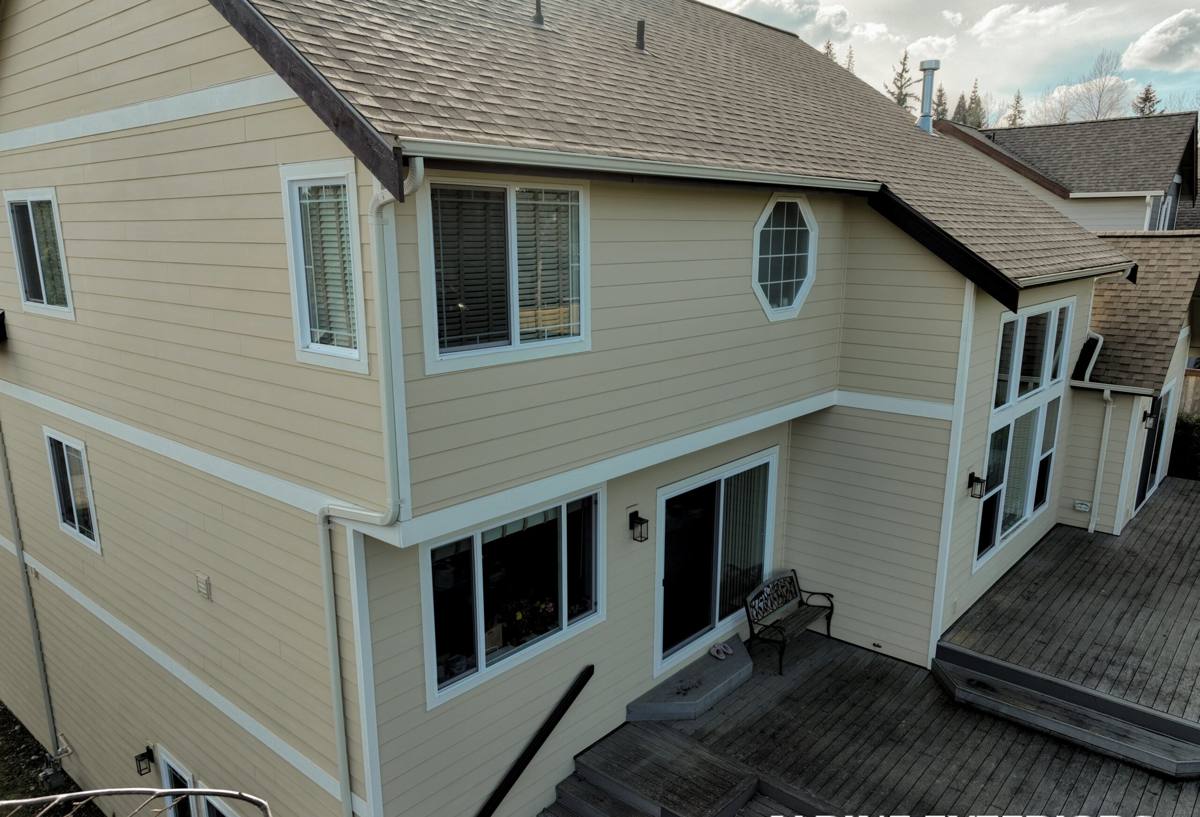
What "Correct" Siding Repair Actually Involves
A lot of siding repair work in this climate is done as a quick patch: caulk over a crack, nail a loose panel back down, call it done. That approach almost never holds up here, because it treats the visible symptom without checking what caused it. A correct repair follows a different sequence.
1. Find the Actual Source, Not Just the Visible Damage
Cracked or buckled siding is often a symptom of something happening behind the panel — a failed seal at a window or door, a gap at a butt joint, trim that's pulled away and is letting water behind the cladding. Repairing the visible panel without addressing the entry point means the same failure comes back, usually worse, after the next storm season.
2. Check for Moisture and Substrate Damage
Any time siding has been compromised for a while — cracked, gapped, or missing — there's a real chance water has been getting behind it. That can mean soft or rotted sheathing, compromised house wrap, or in older homes, deteriorated framing. A repair that just covers this up without inspecting and correcting the substrate is a repair that fails again, and often sooner than the original problem did.
3. Match Material and Installation Method
Repairs need to match the existing siding in profile, reveal, and finish — and they need to be installed the way that material is actually engineered to be installed, including proper fastening, clearances, and sealed joints. A mismatched patch is not just a cosmetic problem; done wrong, it can create a new point where water gets in.
4. Reseal and Repaint to Spec
Caulking and touch-up paint are part of the repair, not an afterthought. The wrong caulk, applied at the wrong joints, is one of the more common reasons a "fixed" section fails again within a year or two in this climate.
Patch, Section Replacement, or Full Re-Side?
Not every damaged section needs the same fix. Part of doing this well is being honest with the homeowner about which category the damage falls into.
| Situation | Typical Approach | What to Watch For |
|---|---|---|
| Isolated crack or impact damage, substrate dry | Targeted panel or plank replacement | Confirm no hidden moisture before closing it back up |
| Storm-loosened panels across one wall or corner | Section replacement with re-fastening to spec | Check adjacent fasteners and trim, not just the obvious damage |
| Recurring failures at the same joints or seams | Investigate underlying moisture or original install quality | Repeated failure in the same spot usually means a systemic issue, not bad luck |
| Widespread deterioration, aging original siding nearing end of life | Full re-side may be more cost-effective long term | Compare cumulative repair cost against replacement over a 3-5 year horizon |
A contractor who's only interested in the next invoice will patch everything, every time. A contractor who's straight with you will tell you when it's time to stop patching.
Why a Crew That Already Works Bartlett Park Matters
There's a real advantage to hiring people who already have hands-on familiarity with this neighborhood's housing stock and the way St. Petersburg's climate treats it. That familiarity shows up in a few practical ways:
- Recognizing common failure points on the older home styles found throughout the area, rather than treating every house as a blank slate.
- Knowing what typical wind and rain exposure looks like for homes in this part of the county, since orientation and tree cover affect where damage tends to concentrate.
- Being available for follow-up if a repair needs adjustment, without a long drive or a new company learning your house from scratch.
- Working efficiently because the permitting and inspection process for exterior work in St. Petersburg and Pinellas County is already familiar territory.
A crew that's local in name only, dispatched from wherever the next job happens to be, doesn't carry any of that context. It's not disqualifying on its own, but it's a real difference in how fast a problem gets correctly diagnosed.
What We Install When Repair Isn't Enough
When damage is limited to a section, repair is almost always the right call — there's no reason to re-side a whole house over a storm-damaged corner. But when siding is failing broadly, or repeated repairs aren't holding, we only install one product: James Hardie fiber cement siding. We don't install vinyl, LP SmartSide, Cemplank, Allura, or primed wood siding, and we're upfront about why.
Fiber cement doesn't swell, rot, or attract termites the way wood-based products can, and it's non-combustible, which matters in a state where storm season brings its own separate risks. Hardie's HZ5 product line is engineered specifically for climates like ours — high humidity, heat, and moisture exposure — and the ColorPlus factory finish holds color under UV exposure far better than field-applied paint, which matters enormously given how hard the Florida sun is on painted surfaces. It also carries a strong transferable warranty when installed to Hardie's specifications, which is worth something to a future buyer if you sell the house.
That said, Hardie siding isn't magic, and it isn't installed magically either — the warranty and the performance both depend on correct installation: proper clearances, fastening pattern, and flashing detail. A poorly installed Hardie repair can fail just like a poorly installed anything-else repair. That's why the installation matters at least as much as the product choice.
What to Have Ready Before You Call
A little preparation makes the first visit more useful for everyone:
- Note when you first noticed the damage and whether it followed a specific storm or wind event.
- Check for any soft spots, discoloration, or bubbling on interior walls near the damaged exterior section — that can indicate moisture has already gotten through.
- If you know roughly how old the siding is, or whether it's been repaired in that spot before, mention it.
- Look for loose trim, gaps at corners, or separated caulk lines nearby — damage is rarely limited to just the panel you noticed first.
Our Process for a Repair Call
- On-site inspection of the damaged area and the surrounding siding, trim, and fastening.
- Moisture check where there's any reason to suspect water has gotten behind the cladding.
- A clear explanation of what's causing the damage, not just what's visible.
- An honest recommendation — patch, section replacement, or a conversation about full replacement if that's genuinely the better value.
- Repair work matched to the existing material and installed to spec, including proper sealing and finish work.
If you've got storm-damaged, sun-worn, or aging siding on a Bartlett Park home, we're glad to take a look and give you a straight answer about what it actually needs. The estimate is free, there's no pressure, and you'll know exactly what you're dealing with before you decide anything — just fill out the form below.