 St. Petersburg Siding
 Board & Batten Siding on Snell Isle: A Style That Has to Earn Its Keep
Board and batten has become one of the most requested siding styles in St. Petersburg, and Snell Isle is no exception. The look works with the neighborhood's mix of Mediterranean, coastal, and updated modern homes — clean vertical lines, strong shadow definition, and a custom, architectural feel that flat lap siding doesn't quite deliver. But on a peninsula neighborhood surrounded by water on three sides, board and batten isn't just a design choice. Every seam, fastener, and joint in that pattern is a decision about how the wall behaves in wind-driven rain and salt air over the next 20 years, not just how it looks on install day.
This page is about that specific combination: the board and batten profile, installed correctly, on homes in a waterfront St. Petersburg neighborhood. We install exclusively James Hardie fiber cement siding — we don't offer vinyl, LP SmartSide, primed wood, or engineered wood board and batten — and the reasons for that standard show up most clearly in a style like this one, where the vertical battens and exposed seams are exactly where cheaper materials tend to fail first.
What Board & Batten Siding Actually Is
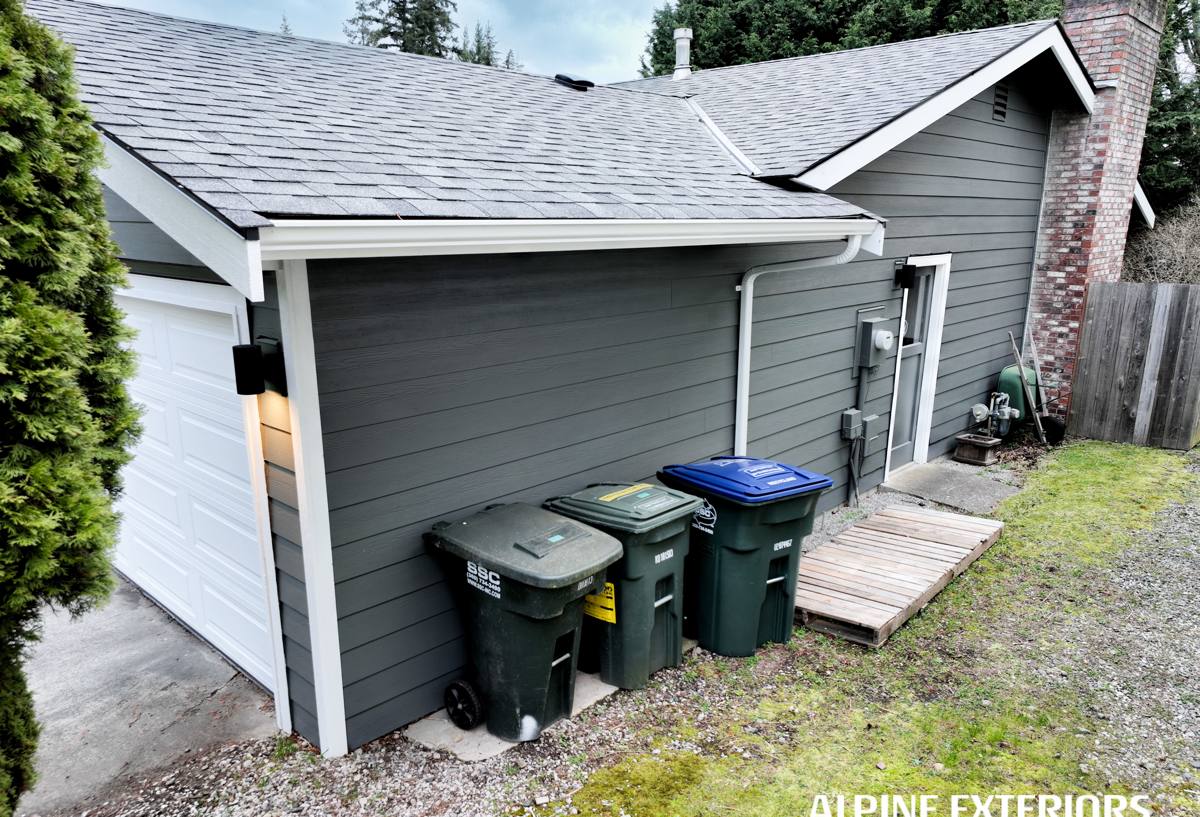
Board and batten refers to a vertical siding pattern: wide flat panels installed vertically, with narrower strips (battens) fastened over the seams between panels. Historically it was a barn and farmhouse style built from raw lumber, but it has been adapted into a refined, architectural look that reads well on both traditional and contemporary homes.
Where It Works Best
- Full-elevation facades where a vertical line breaks up an otherwise flat wall
- Accent applications — gables, dormers, entry features, second-story bump-outs
- Homes mixing board and batten with a horizontal lap siding field for contrast
- Waterfront and canal-facing elevations where a cleaner, more modern silhouette is wanted
Why the Pattern Matters Structurally, Not Just Visually
Every seam in a board and batten wall is a potential water entry point unless it's detailed correctly. Flat lap siding sheds water by overlap alone; board and batten depends on the batten strip, the fastening pattern beneath it, and the water-resistive barrier behind the whole assembly to do that job instead. That's a meaningfully different set of installation requirements, and it's where a lot of board and batten jobs — regardless of material — go wrong.
What Snell Isle's Climate Actually Does to This Style
Homes on Snell Isle sit close to Tampa Bay, which means more direct salt air exposure than homes farther inland in Pinellas County, along with the same hurricane-season wind loads and afternoon storm patterns that hit all of St. Petersburg. Board and batten siding takes that exposure differently than lap siding does, because of the vertical seams and the amount of trim involved.
| Climate Factor | Effect on Board & Batten Specifically |
|---|---|
| Hurricane-force and sustained coastal wind | Vertical panels and battens see direct wind-load and uplift forces at every seam; fastening pattern and panel attachment matter more than on lap siding |
| Wind-driven rain | Rain is pushed sideways and upward into seams; batten placement and the water-resistive barrier behind the panel have to actually work, not just look finished |
| Year-round intense UV | Vertical surfaces and battens take direct sun exposure most of the day; unstable finishes chalk, fade, and show streaking faster than on shaded elevations |
| Salt air off the bay | Accelerates corrosion of fasteners and metal trim, and breaks down finishes and raw substrates that aren't engineered for coastal exposure |
None of these factors are unique to Snell Isle, but the combination — waterfront exposure plus a siding style with more seams and trim per square foot than a standard lap job — is exactly why board and batten deserves more attention to detail here than it might get elsewhere.
Why We Install James Hardie Board & Batten — Not the Alternatives
Board and batten is available in several materials: vinyl, engineered wood (like LP SmartSide), primed spruce or cedar, and fiber cement. We only install James Hardie fiber cement, and this particular style is a good example of why.
| Material | Why We Don't Install It for This Application |
|---|---|
| Vinyl board and batten | Thin panels flex and can pull loose under sustained coastal wind; battens are often a printed appearance rather than a true fastened trim piece, and the material softens and warps under prolonged direct UV |
| LP SmartSide / engineered wood | Wood-based core is more moisture-sensitive at cut edges and seams — precisely where board and batten has the most of them; performance depends heavily on every seam being caulked and maintained correctly, indefinitely |
| Primed spruce or cedar | Raw or primed wood needs ongoing paint maintenance to stay sealed; in salt air and heavy UV, that maintenance cycle shortens, and any gap at a batten seam lets moisture into the wood itself |
| James Hardie fiber cement | Non-combustible, dimensionally stable in heat and humidity, factory-applied ColorPlus finish resists UV fade and doesn't require repainting on the same cycle as wood-based products |
Fiber cement doesn't eliminate the need for correct seam and batten detailing — nothing does — but it removes the material itself as the weak point. A Hardie panel doesn't absorb water at a cut edge the way an engineered wood product can, and it doesn't rely on paint film alone to keep moisture out over the long run.
What a Correct Board & Batten Installation Involves
The siding material is only part of the equation. Most board and batten failures we're asked to look at, on this style specifically, trace back to installation shortcuts rather than the product itself. A correct job on a Snell Isle home should include:
- A continuous, properly lapped water-resistive barrier installed behind the panels before any siding goes up
- Panel joints and seams positioned over framing, not floating, with fastening that meets Hardie's published spec for the wind zone
- Battens fastened through to structural framing wherever possible, not just into the panel face
- Correct clearance at the bottom of the wall assembly and anywhere siding meets a roofline, deck, or grade — a common water-entry point on vertical siding
- Factory-finished ColorPlus panels and trim, minimizing field-cut exposed edges and the touch-up paint they'd otherwise require
- Corrosion-resistant fasteners appropriate for coastal, salt-air exposure
- Manufacturer-spec caulking and sealant at trim transitions, penetrations, and terminations — not general-purpose caulk applied as an afterthought
Any one of these steps done wrong won't necessarily show up right away. It usually shows up two, five, or ten years later, as a seam failure, a soft spot, or a section that's fading or staining differently than the rest of the wall — which is exactly why the installation crew's habits matter as much as the material they're using.
Our Process
- On-site walkthrough: We assess the existing siding or substrate, look at how each elevation is exposed to wind and rain, and identify where board and batten makes sense — full elevation, accent areas, or paired with lap siding.
- Written estimate: A clear scope covering panel and batten layout, trim, fastening approach, and finish color, with no vague allowances.
- Preparation: Removal of old siding where applicable, substrate inspection for hidden moisture damage, and correction of any framing or sheathing issues before new siding goes up.
- Water-resistive barrier and flashing: Installed and inspected before a single panel is hung — this step is invisible once the job is done, which is exactly why it can't be rushed.
- Panel and batten installation: To James Hardie's published fastening and clearance specifications for this wind zone.
- Final walkthrough: We review the finished work with you on-site before calling the job complete.
Why Local Experience on Snell Isle Matters
A crew that regularly works waterfront St. Petersburg neighborhoods already knows what a peninsula lot demands: tighter wind-load expectations, more corrosion-resistant fasteners as a default rather than an upsell, and an understanding that a home two blocks from the bay isn't getting the same weather exposure as one further inland in Pinellas County. That's not something a crew unfamiliar with this area picks up on a single job — it's a standard they either build into every project here or they don't.
It also matters for board and batten specifically because the style is less forgiving of a rushed or unfamiliar crew. A lap siding mistake often self-corrects by overlap; a board and batten seam mistake usually doesn't.
Ongoing Maintenance
- Rinse salt residue off the siding periodically, especially on elevations facing open water
- Inspect caulking at trim and penetrations annually, and after major storms
- Keep gutters and downspouts clear so water isn't sheeting down the wall face
- Watch for any staining or discoloration at seams, which can signal a sealant failure worth addressing early
James Hardie's ColorPlus finish is engineered to reduce how often that maintenance is needed compared to a painted wood or engineered wood product, but "reduced maintenance" isn't "no maintenance" — a quick seasonal check is still worth the ten minutes it takes.
Get a Straight Answer for Your Home
If you're considering board and batten siding for a home on Snell Isle, we're happy to walk the property, talk through where the style makes sense, and give you a clear, no-pressure estimate for a James Hardie installation built for this exact climate. Reach out through the form below to get started.