 St. Petersburg Siding
 Board & Batten Siding, Done Right, for Childs Park
Board and batten has a clean, vertical look that works on everything from a classic bungalow to a newer build, and it's one of the most requested siding styles we install in Childs Park. But the style is only half the story. In Pinellas County, siding doesn't just have to look good — it has to survive hurricane-force winds, months of intense direct sun, wind-driven rain, and the slow corrosive effect of salt-laden air coming off Tampa Bay and the Gulf. A board and batten job that isn't built for that combination will show it within a few years, no matter how sharp it looks on installation day.
This page covers what board and batten siding actually needs to hold up on a Childs Park home, how a correct installation is put together, and why we install it exclusively in James Hardie fiber cement rather than vinyl, wood, or other fiber cement brands.
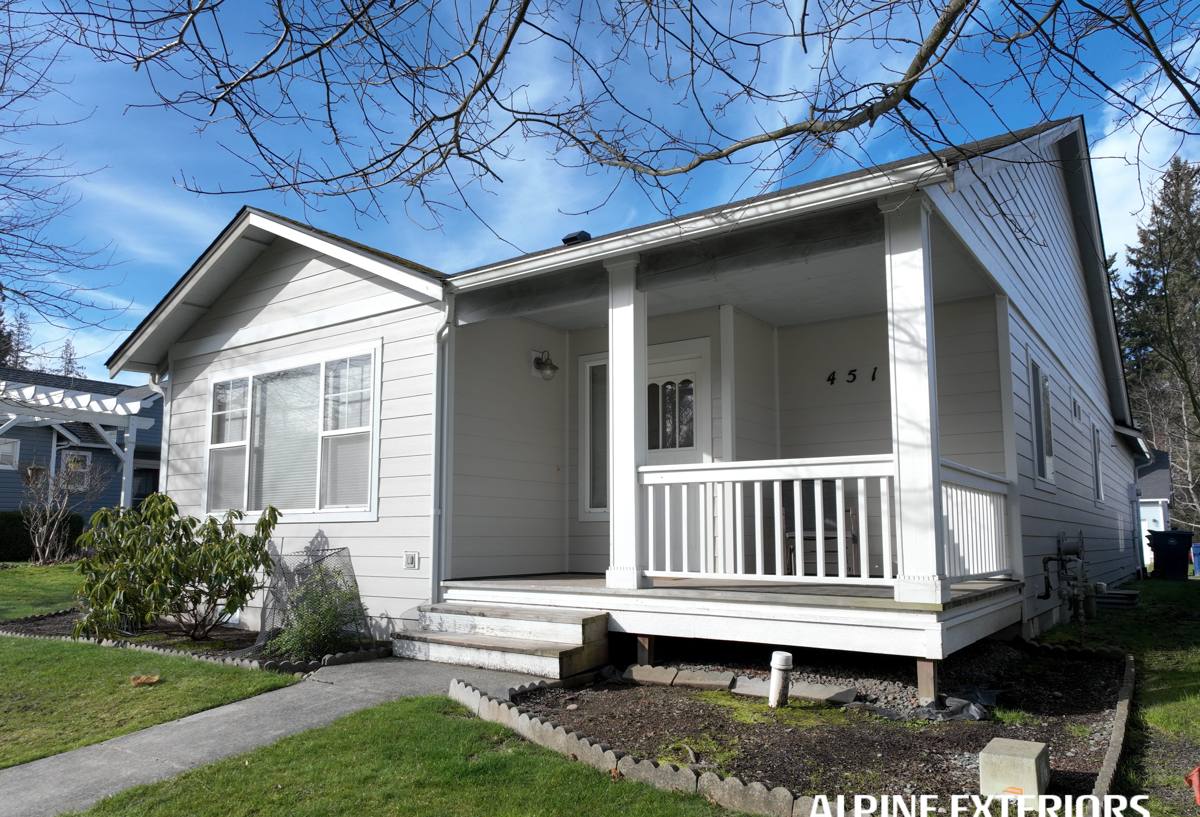
What Pinellas County's Climate Actually Demands From Vertical Siding
Board and batten siding creates more seams, more fastener penetrations, and more vertical joints than standard lap siding. That's part of why it looks distinctive — but it also means the material and the installation method have to account for a few specific stresses that are constant in this part of Florida.
Hurricane-Force Wind and Wind-Driven Rain
St. Petersburg sits in a high wind-exposure zone, and every siding installation here needs to be able to shed water that's being driven sideways and upward, not just downward. On board and batten, that means the underlying weather-resistive barrier, flashing details, and batten spacing all have to work together — because a batten that's simply nailed over a gap without proper drainage behind it will trap moisture instead of shedding it.
Year-Round, High-Intensity UV
Florida sun is relentless on painted and coated exterior surfaces. Field-applied paint on wood or engineered wood siding chalks, fades, and breaks down faster here than in milder climates, which means repainting cycles come around sooner and the substrate underneath is exposed to moisture sooner too.
Salt Air and Humidity
Proximity to the coast means airborne salt is a constant, low-grade exposure — it accelerates corrosion on fasteners and metal flashing, and it interacts with humidity to keep organic materials like untreated wood damp longer than they'd stay in a drier climate. Combined with Pinellas County's humidity levels, this is exactly the environment where moisture-sensitive materials struggle.
How Board & Batten Siding Is Actually Built
Board and batten isn't a single flat panel — it's a system. Wide vertical boards are installed first, then narrower battens are fastened over the seams between them, creating the shadow-line look. Getting that system right involves several layers most homeowners never see:
- A code-compliant weather-resistive barrier installed and lapped correctly behind the boards
- Proper flashing at every window, door, and horizontal transition to direct water outward and down
- Correct board and batten spacing and reveal, sized for the specific product being used
- Fastening patterns that meet both the manufacturer's specification and Florida's wind-load requirements
- Sealed and back-primed cut ends, since a cut edge is the most vulnerable point on any siding board
Skip or shortcut any one of these steps and the siding may look fine for a season or two before problems start showing up at the seams — which, on a board and batten profile, are more numerous than on standard lap siding.
Why We Install Board & Batten Only in James Hardie Fiber Cement
We get asked regularly whether we'll install vinyl board and batten, or a primed wood or engineered wood product, since both are available and often cheaper up front. We don't, and the reasoning comes down to how each material actually performs under Pinellas County conditions over time — not marketing.
Vinyl Board and Batten
Vinyl is affordable and low-maintenance in the sense that it never needs paint, but it's a thin plastic product that softens in extreme heat and becomes brittle with age and UV exposure. In a high-wind coastal market, vinyl panels are more prone to cracking on impact and to deforming or pulling loose in sustained high winds than a rigid fiber cement board. Its color is also baked in as a surface tint rather than a manufactured finish system, so it tends to fade unevenly over years of direct Florida sun.
Wood and Primed Engineered Wood
Real wood and primed spruce board and batten can look excellent when new, but wood is an organic material, and organic materials and Gulf Coast humidity are not a good long-term match. Field-primed cut ends, fastener holes, and any gap in caulking become entry points for moisture, and once water gets behind a wood board in this climate, rot follows faster than it would in a drier region. That means a shorter realistic service life and a maintenance schedule — recaulking, repainting, spot repairs — that doesn't fit how we want to stand behind our work.
Why James Hardie
James Hardie fiber cement is non-combustible, dimensionally stable, and manufactured with a factory-applied ColorPlus finish that's baked on and warrantied against fading and peeling — it isn't relying on a field-applied coat of paint to survive Florida sun. Hardie's HZ5 product line is engineered specifically for climates like ours: higher humidity, more moisture exposure, more UV. It holds up to wind-blown debris and heavy rain better than vinyl, and it doesn't carry the rot risk that wood and engineered wood do. That combination is why it's the only product we put on a house.
| Factor | James Hardie Fiber Cement | Vinyl Board & Batten | Wood / Primed Engineered Wood |
|---|---|---|---|
| Moisture & rot resistance | Engineered for humid, coastal climates | Won't rot, but can trap moisture behind it | Vulnerable once moisture gets behind the board |
| Wind performance | Rigid, dense, built for high wind-load zones | Can crack, warp, or pull loose in sustained high wind | Adequate if fastened correctly, but joints are a weak point |
| UV / color stability | Factory-baked ColorPlus finish, fade-resistant | Surface color fades and can chalk unevenly over time | Field-applied paint fades faster under intense Florida sun |
| Maintenance | Occasional wash, no repainting needed | Low, but repairs are hard to color-match once faded | Recurring caulk and repaint cycle |
| Fire performance | Non-combustible | Combustible plastic | Combustible |
What a Correct Installation Involves, Start to Finish
A good board and batten job on a Childs Park home follows a specific sequence, and each step matters as much as the next:
- Substrate assessment — checking the existing sheathing and framing for hidden moisture damage before anything new goes up, since covering a problem doesn't solve it
- Removal of failing siding and inspection of what's underneath
- Weather-resistive barrier installation, properly lapped and sealed
- Flashing at every penetration — windows, doors, hose bibs, light fixtures, vents
- Board installation with correct fastener type, spacing, and embedment depth per James Hardie's specifications
- Batten installation over the seams with the reveal and spacing appropriate to the product line
- Sealing and caulking at trim, corners, and transitions using products rated for exterior, coastal exposure
- Final inspection against manufacturer installation standards, which also protects your product warranty
That last point matters more than most homeowners realize — James Hardie's warranty coverage depends on the product being installed to spec. An installer who doesn't follow the manufacturer's fastening and clearance requirements can leave you with siding that looks correct but isn't actually covered if something goes wrong.
What We See Go Wrong on Existing Siding in This Area
Established neighborhoods like Childs Park have homes spanning a range of ages and prior renovations, and the board and batten or other siding we're asked to replace often shows the same handful of patterns: caulk that's failed and let water behind the boards, fasteners that have corroded or backed out from years of coastal humidity, and batten seams that were never properly flashed to begin with. None of these are visible from the street until they've already caused damage underneath — which is exactly why the layers you can't see matter as much as the finish you can.
Signs Your Current Siding May Be Past Its Service Life
- Soft, spongy, or discolored spots, especially near the bottom of boards or below windows
- Visible gaps or separation at batten seams
- Paint or finish that's peeling, chalking heavily, or has an uneven, blotchy fade
- Persistent moisture, mustiness, or staining on interior walls that back onto exterior siding
- Fasteners that are rusted, popped, or visibly corroded
Our Process for Childs Park Projects
We start with an on-site assessment of the home's current siding and any underlying moisture or structural issues, then walk through James Hardie's board and batten options and ColorPlus color selections that fit the home. From there we handle removal, prep, and installation as an in-house crew — not a rotating group of subcontractors — which keeps the work consistent from the first board to the last. Because we work regularly throughout St. Petersburg and Pinellas County, we're familiar with the local permitting process and wind-load requirements that apply to exterior work in this jurisdiction, and we build every job to meet them.
Maintenance and What to Expect Long-Term
One of the practical advantages of Hardie fiber cement in this climate is how little ongoing maintenance it asks for. Periodic washing to clear salt residue and organic buildup is typically enough — there's no repainting cycle to plan around the way there is with wood siding, and no risk of the material itself softening or warping in summer heat. Combined with a transferable warranty, that's a meaningfully lower long-term cost of ownership than it first appears next to a cheaper up-front vinyl or wood quote.
If you're considering board and batten siding for a home in Childs Park, we're happy to walk the exterior with you, point out anything we see, and put together a straightforward, no-pressure estimate — just fill out the form below.