 St. Petersburg Siding
 Composite Decking in Pinellas Park: Built for This Climate, Not Just Installed
Pinellas Park sits in the middle of a peninsula that takes weather from two directions — Gulf humidity and afternoon storms rolling in from the bay side. A deck here isn't just outdoor furniture space; it's a structure that has to survive months of intense UV, sudden downpours, hurricane-force wind events, and the slow corrosive drip of salt-laden air that reaches well inland from Tampa Bay and the Gulf. Composite decking, installed correctly, handles that combination better than most alternatives — but "installed correctly" is doing a lot of work in that sentence, and it's the part that separates a deck that looks good for two years from one that performs for twenty.
We build and repair decks for homes throughout the St. Petersburg and Pinellas County area, and Pinellas Park jobs come with their own set of considerations: older subdivisions with slab-on-grade homes, a mix of concrete block and frame construction, and yards where drainage patterns matter more than homeowners expect. This page covers what a composite deck actually needs to hold up here, what a correct installation looks like, and why local experience changes the outcome.
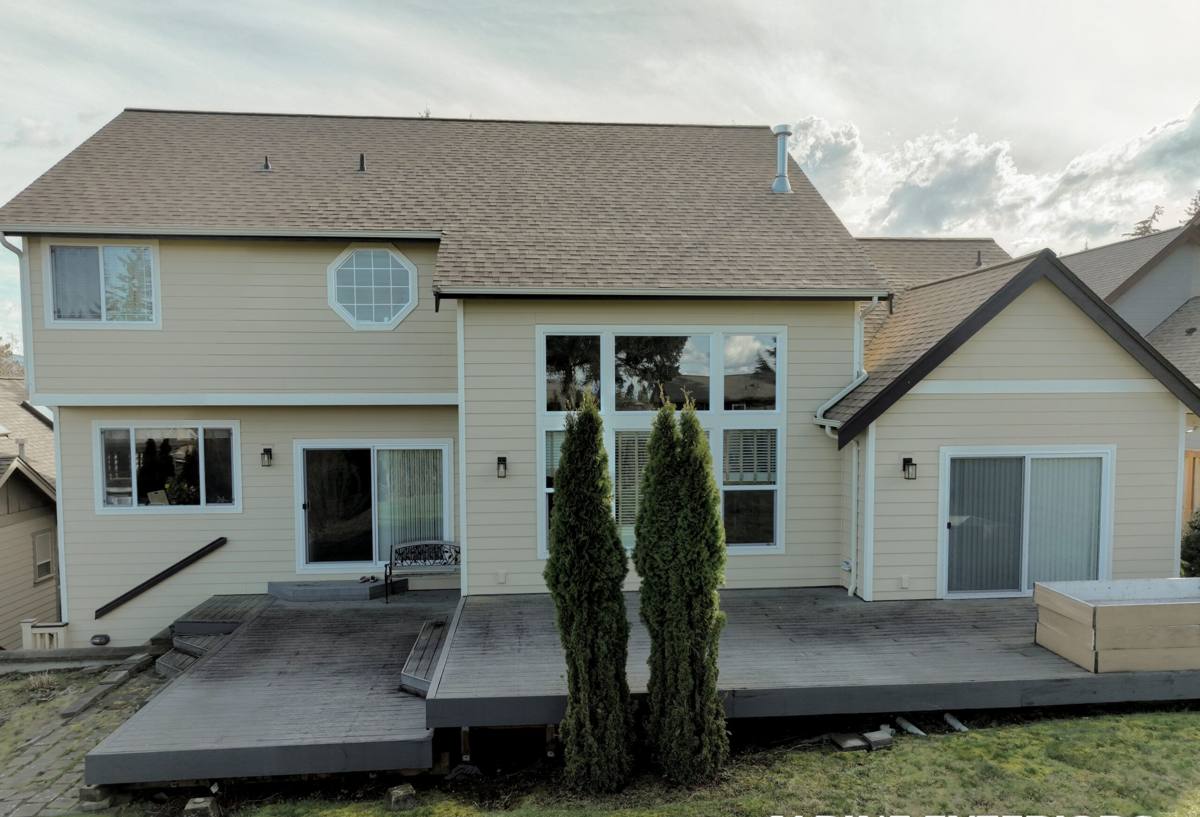
What Pinellas Park's Climate Actually Does to a Deck
UV and Heat
Florida sun is not the same stress as sun in a northern state. Boards face near-daily UV exposure across most of the year, and surface temperatures on a dark composite deck can climb well above ambient air temperature on a clear afternoon. Cheaper composite formulations without adequate UV stabilizers will fade unevenly, chalk, or go brittle at the surface faster than the manufacturer's marketing suggests. This is why cap-stock quality and the specific product line matter more here than in milder climates.
Humidity and Wind-Driven Rain
Pinellas County's rainy season brings short, intense downpours, often with wind pushing water sideways into structures rather than straight down. For a deck, that means water gets driven against ledger boards, into fastener holes, and under poorly flashed connections. Composite boards themselves resist moisture absorption well, but the substructure underneath — joists, ledger, fasteners — is where water damage actually starts if it isn't detailed properly.
Salt Air
Even a few miles inland from the bay, airborne salt accelerates corrosion on any exposed metal — screws, brackets, joist hangers, structural connectors. A deck built with standard hardware instead of coastal-rated stainless or heavily coated fasteners can develop rust streaks and weakened connections years before the decking surface itself shows any wear.
Hurricane and High-Wind Loading
Pinellas County falls within a high-velocity wind zone under the Florida Building Code, and decks attached to a home are structural elements, not furniture. Ledger attachment, post anchoring, and lateral bracing all need to be sized for wind uplift and lateral load, not just the static weight of people standing on the deck.
Composite vs. Other Decking Materials for This Area
Homeowners in Pinellas Park usually compare composite against pressure-treated wood and, less often, PVC decking. Each has real trade-offs in this climate — we'll lay them out honestly rather than push one product as universally "best."
| Factor | Composite | Pressure-Treated Wood | PVC/Cellular |
|---|---|---|---|
| Moisture behavior | Doesn't absorb water into the board; core stays stable | Absorbs and releases moisture seasonally; prone to cupping/splitting in humidity swings | Fully moisture-resistant, even in the core |
| UV/fade resistance | Good with quality cap-stock; varies by brand | Grays and roughens with UV exposure; needs periodic sealing | Very stable, but limited color depth on some lines |
| Maintenance | Occasional washing; no staining or sealing needed | Annual/biannual sealing or staining to hold up here | Low; similar to composite |
| Upfront cost | Mid-to-upper range | Lowest | Highest |
| Heat underfoot | Can run hot in dark colors; lighter tones help | Moderate | Can also run hot in dark colors |
| Structural substructure needs | Same coastal-grade framing/fasteners required regardless of surface material | Same | Same |
We install pressure-treated substructures and coastal-rated hardware under every deck we build, regardless of which surface material a homeowner chooses — the framing and fastening is what actually determines long-term survival in this climate, and we don't cut corners there to hit a lower price point.
What a Correct Composite Deck Installation Involves
Substructure First
The visible composite boards get the attention, but the framing underneath is what fails first if it's done wrong. For Pinellas Park homes, that means pressure-treated joists sized and spaced for the wind and load requirements, proper joist tape or flashing tape over the tops of joists to keep moisture from wicking into the wood under the boards, and a ledger board attachment that's properly flashed and lag-bolted (or through-bolted) into the home's structure — never just nailed to siding or trim.
Fasteners and Hardware
Every joist hanger, post base, and structural screw should be coastal-rated stainless steel or a heavy hot-dip galvanized equivalent. Standard zinc-coated hardware corrodes faster than most homeowners realize in this salt air environment, and a rusted joist hanger is a hidden failure point you won't see until something moves.
Fastening the Boards
Hidden fastener clip systems are the standard for composite decking and allow for the board's natural thermal expansion and contraction — which is more pronounced here given the daily temperature swings between hot afternoons and cooler nights. Boards fastened too tightly, with no expansion gap, will buckle or bow within a season or two.
Ventilation and Drainage Underneath
Composite decks built low to the ground or over patios need airflow underneath to prevent moisture and mildew buildup, and the ground or slab below should be graded to drain away from the house rather than pooling under the deck.
Structural Anchoring for Wind
Post-to-beam and beam-to-ledger connections should include the structural connectors and hold-down hardware required for our wind zone — not just toe-nailed or screwed joints. This is one of the most commonly skipped steps on lower-bid deck jobs, and it's the difference between a deck that stays put in a tropical storm and one that doesn't.
Our Process for Pinellas Park Deck Projects
- On-site evaluation: We look at your existing structure (if replacing a deck), the home's ledger attachment point, drainage/grading, sun exposure, and any existing damage before quoting anything.
- Design and material selection: We walk through composite board lines, colors, and railing options suited to your budget and how the space is actually used.
- Permitting: Decks attached to a home in Pinellas County typically require a permit and inspection under the Florida Building Code. We handle the permitting process rather than leaving it to the homeowner.
- Demolition (if applicable): Old decking and any compromised framing is removed and hauled off.
- Framing and hardware installation: Pressure-treated substructure, joist protection tape, coastal-rated hardware, and structural anchoring go in first and get inspected before boards go down.
- Composite board and railing installation: Hidden fastener systems, proper expansion gaps, and manufacturer-specified spacing.
- Final walkthrough: We check every board, fastener, and railing connection with you before calling the job done.
Permitting and Local Code Considerations
Because Pinellas County sits in a high-wind coastal zone, deck permits here often carry stricter requirements than what you'd see in an inland state — engineered ledger connections, specific post spacing, and inspection sign-off before the deck can be considered complete. Skipping permitting on an attached deck isn't just a legal risk; it also usually means skipping the engineering checks that keep the structure safe in a storm. Any contractor proposing to build or replace an attached deck in Pinellas Park without pulling a permit should be a red flag, not a cost-saving feature.
Maintaining a Composite Deck in This Climate
Composite decking is low-maintenance compared to wood, but "low-maintenance" doesn't mean "no-maintenance" in a climate this demanding. A little seasonal attention keeps a composite deck looking and performing the way it should for its full service life.
- Wash the deck surface every few months to remove pollen, salt residue, and mildew buildup before it sets into the cap-stock texture.
- Keep gutters and downspouts near the deck clear so runoff isn't dumping extra water onto or under the structure during heavy rain.
- Check railing posts and stair connections once or twice a year for any looseness, especially after a named storm or high-wind event.
- Trim back vegetation that holds moisture against the deck edge or blocks airflow underneath.
- Inspect visible fasteners and hardware periodically for early rust staining, which signals it's time for a closer look rather than a wait-and-see approach.
- Avoid dragging metal furniture or grills directly across the surface, which can scuff the cap-stock finish over time.
Why Hiring a Crew That Already Works in Pinellas Park Matters
A deck built to a generic national spec sheet isn't necessarily a deck built for Pinellas Park's actual conditions. Crews who work this area regularly know which fastener grades hold up against the local salt air, how to detail ledger flashing against wind-driven rain rather than just vertical rainfall, and what the county's permitting office actually expects to see on plans before it signs off. That local pattern-recognition is the difference between a deck that needs re-work in year three and one that's still solid well past a decade.
We've built our process around the realities of this specific climate — not a one-size-fits-all national playbook — because that's what actually determines whether a composite deck earns its higher upfront cost over the life of the structure.
If you're weighing a new composite deck or need an honest look at an aging one, we're happy to come take a look. Use the form below to request a free, no-pressure estimate for your Pinellas Park property.