 St. Petersburg Siding
 Why Coquina Key Decks Wear Out Faster Than Most
Coquina Key sits on a network of canals in St. Petersburg, and that waterfront setting is exactly what makes deck repair here different from a typical inland job. Homes on or near the water get near-constant exposure to salt-laden air, higher ambient humidity, and standing moisture underneath the structure that inland decks never deal with. Add in the sun this part of Pinellas County gets almost every day of the year, plus the wind-driven rain and occasional hurricane-force gusts that come with a Florida hurricane season, and you have a structure that's fighting four different forms of deterioration at once.
None of that means a deck can't last — it means it has to be built and repaired with those specific stresses in mind. A repair that would hold up fine in a dry inland climate can fail within a season or two on a canal-front lot if it ignores moisture and salt exposure.
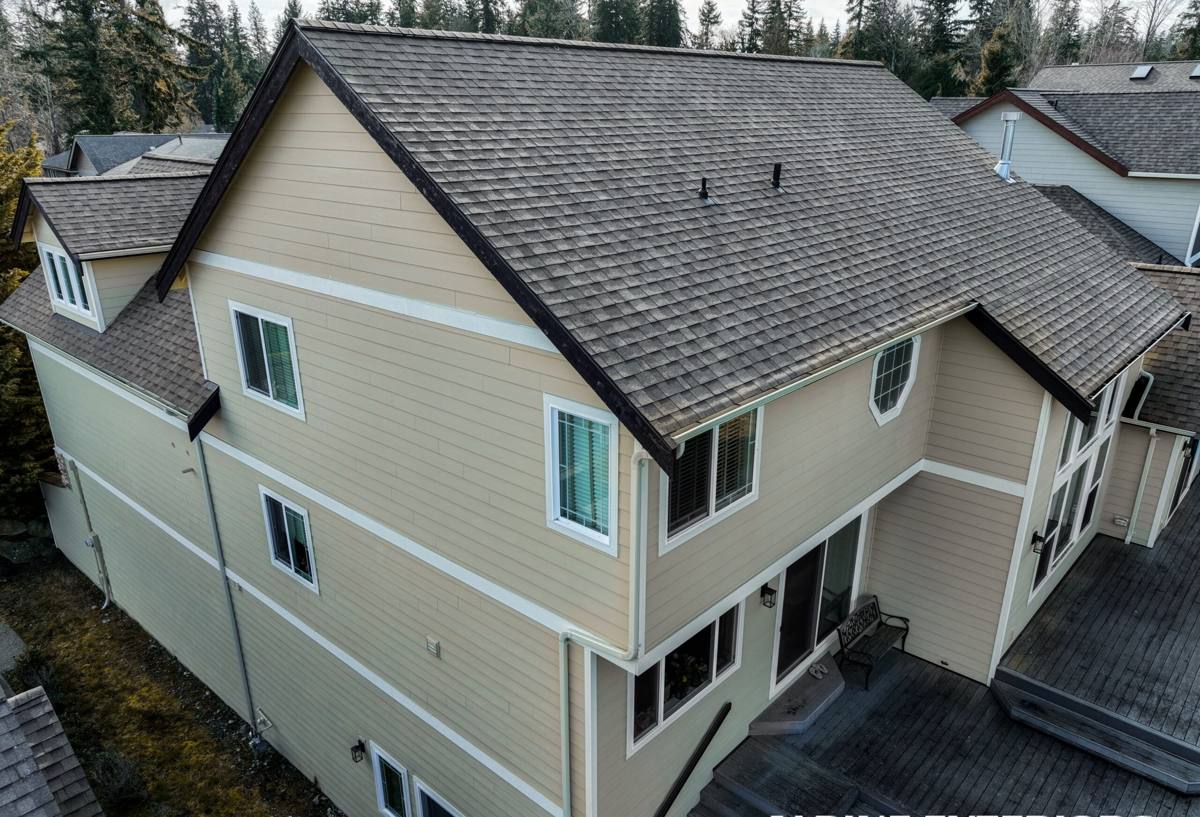
How the Local Climate Actually Damages a Deck
Salt Air and Metal Fasteners
Salt-laden air off the canals accelerates corrosion in nails, screws, joist hangers, and bolts. Once a fastener starts rusting, it loses holding strength long before it looks obviously bad from the surface — which is why a deck can seem stable and still have a compromised connection underneath.
Humidity and Wood Rot
St. Petersburg's humidity keeps wood decks damp longer after every rain, especially in shaded areas, near the ground, and anywhere airflow is restricted. That prolonged moisture is what drives rot, not the rain itself — a board that dries out quickly rarely rots, one that stays wet for days almost always will eventually.
UV Exposure
Year-round sun breaks down the surface fibers of wood decking and dries out the plasticizers in composite boards over time, leading to graying, splintering, or surface chalking well before the structure itself is compromised.
Wind and Storm Loading
Hurricane-force wind events put lateral and uplift stress on railings, stair connections, and ledger boards — the points where a deck attaches to the house or is anchored to its posts. These are the connections most likely to loosen or fail after a major storm, even when the decking surface looks untouched.
Signs Your Deck Needs Repair, Not Just a Cleaning
- Soft, spongy, or springy spots when you walk across the decking
- Visible gaps or rust streaks around fasteners and joist hangers
- A ledger board pulling away from the house, even slightly
- Railings or posts that wiggle or flex under normal pressure
- Wood that's gray, splintering, or shows dark streaking (early rot or fungal staining)
- Stairs that feel uneven, bouncy, or have visibly sagging stringers
- Standing water or persistent damp ground underneath the deck
- Nails backing out or popping up through the decking surface
Any one of these on its own might be minor. Several together, especially near the ledger board or support posts, usually mean the structural framing needs attention — not just the visible boards.
What a Correct Deck Repair Actually Involves
A lot of deck "repairs" amount to swapping out obviously bad boards and calling it done. That fixes the symptom but not necessarily the cause, especially in a humid, salt-air environment where the framing underneath is often further along in deterioration than the surface suggests.
A Proper Repair Sequence
- Full structural inspection — checking the ledger board attachment, joists, beams, posts, and footings, not just the decking surface
- Identifying the actual cause — poor drainage, missing flashing, undersized fasteners, or lack of airflow underneath are common root causes in this area
- Replacing compromised framing members — joists, beams, or posts with rot or corrosion damage, not just cosmetic repair
- Correcting fastener and hardware issues — swapping corroded hardware for coated or stainless fasteners rated for coastal exposure
- Replacing decking boards as needed, matching or upgrading material based on the homeowner's priorities
- Re-securing railings and stairs to current structural standards
- Addressing drainage and airflow underneath the deck so the same moisture problem doesn't recur
Skipping the diagnostic step is the most common shortcut in this trade, and it's the one that costs homeowners the most in the long run — a new board bolted to a rotting joist is a repair that fails again within a year or two.
Wood vs. Composite: What Makes Sense for a Coquina Key Deck
Both materials can perform well here, but they demand different maintenance commitments given the salt air, humidity, and sun exposure.
| Factor | Pressure-Treated / Wood | Composite |
|---|---|---|
| Upfront repair cost | Generally lower per board | Higher material cost |
| Maintenance | Needs periodic sealing/staining, especially with this humidity | No sealing required, occasional cleaning |
| UV fading | Grays without maintenance | Fades gradually but more evenly, capped boards resist it better |
| Moisture behavior | Can absorb and release moisture; rot risk if not sealed and ventilated | Doesn't rot, but poor-quality cores can swell if water intrudes at cut edges |
| Salt air resistance | Wood itself is fine; fasteners and hardware are the weak point | Board material handles salt air well; hardware still needs to be corrosion-rated |
| Repair pattern | Board-by-board replacement is straightforward and affordable | Matching older composite boards can be harder if the product line has changed |
Our standard for this area is to use coated or stainless fasteners and hardware regardless of decking material, since corroded connectors are the single most common structural failure point we see on canal-adjacent homes — the decking material almost never fails before the hardware does.
Framing and Structure: Where the Real Work Happens
The visible decking is the smallest part of a deck's job. The framing — ledger board, joists, beams, and posts — carries the actual load, and it's the part most affected by the moisture and airflow conditions common on lower-elevation, canal-adjacent lots. A deck built low to the ground with limited clearance underneath dries out slower after rain, which is a common contributor to framing rot on this kind of property. Part of a correct repair is often improving that clearance or drainage path, not just replacing the wood that rotted because of it.
The ledger board — where the deck attaches to the house — deserves particular attention. It's a frequent source of water intrusion into the house itself if flashing is missing or degraded, and it's also the connection point most stressed during high wind events. We check it on every repair, even when the homeowner's concern is something else entirely.
Our Repair Process
- On-site assessment — we walk the full structure, not just the area you flagged, since related issues often hide nearby
- Honest scope and estimate — what needs replacing, what can be repaired, and why
- Permitting where required — structural deck work in Pinellas County jurisdictions often requires a permit; we handle that rather than skip it
- Repair work — framing, fasteners, decking, and railings brought up to a standard built for coastal exposure
- Final walkthrough — so you understand what was done and what to watch for going forward
What Deck Repair Typically Costs
Every deck is different, but the factors below are what actually move the price on a Coquina Key repair.
| Cost Factor | Why It Matters |
|---|---|
| Extent of framing damage | Joist and beam replacement costs more than swapping decking boards |
| Decking material | Composite repairs generally run higher per board than wood |
| Accessibility | Waterfront lots and lower clearance under the deck can add labor time |
| Railing and stair condition | Code-compliant railing work adds cost but is not optional when compromised |
| Permit requirements | Structural repairs often need a permit and inspection, which adds time and a fee |
| Root cause fixes | Drainage or flashing corrections add upfront cost but prevent repeat failures |
We give a written estimate after the on-site inspection, broken down by the actual scope of work — not a flat per-square-foot number that ignores what's really going on underneath.
Why It Matters to Hire a Crew That Already Works in Coquina Key
Deck repair isn't a one-size-fits-all trade. A crew that mostly works dry, inland properties may not think to check ledger flashing for salt-driven corrosion, or may not recognize early rot patterns caused by restricted airflow under a low canal-front deck. Working regularly in this specific part of St. Petersburg means recognizing these patterns quickly, knowing which fastener and hardware upgrades hold up here, and understanding the local permitting process without it slowing the job down. That familiarity shows up in fewer callbacks and repairs that actually last through the next storm season, not just until the next one.
Maintaining Your Deck After Repair
- Rinse salt residue off decking and railings periodically, especially after storms
- Keep the area underneath the deck clear of debris to preserve airflow
- Reseal or restain wood decking on a regular schedule appropriate to sun exposure
- Check railings and stair connections for looseness after any major wind event
- Address small issues — a loose board, a rust spot on a fastener — before they spread
A deck in this climate isn't maintenance-free no matter what it's built from, but a correct repair with the right hardware and attention to drainage will hold up far longer than a surface-level patch.
If your deck in Coquina Key has soft spots, loose railings, or storm damage you'd like a second opinion on, we're happy to take a look. Fill out the form below for a free, no-pressure estimate.