 St. Petersburg Siding
 Siding Built for Coquina Key's Waterfront Conditions
Coquina Key sits on the water, and that changes what "good siding" means. Homes here don't just deal with the general Florida climate — they deal with it at close range. Salt-laden air drifts off the canals and open water almost constantly, humidity stays high for most of the year, and afternoon storms roll in fast off Tampa Bay. Siding that would hold up fine a few miles inland can wear out noticeably faster on a waterfront lot like this.
We install siding across St. Petersburg and Pinellas County, and Coquina Key is one of the neighborhoods where the difference between a correctly installed job and a rushed one shows up the quickest — sometimes within a couple of storm seasons. This page covers what siding installation actually needs to account for on a property like this, what a correct installation involves step by step, and why we've standardized on one product system instead of offering the usual menu of options.
What the Local Climate Actually Does to Siding
It's worth being specific about the stresses at play, because they compound rather than act one at a time.
Hurricane-Force Wind Loads
Pinellas County sits in a high-velocity hurricane zone, and Florida Building Code wind requirements reflect that. Siding on a waterfront property has less to slow wind down before it hits the building envelope. Fastening pattern, panel overlap, and the starter strip detail all matter more here than they would on a sheltered inland lot — a siding job that's "close enough" on fastener spacing is exactly the kind of detail that fails first when a named storm comes through.
Wind-Driven Rain
Wind and rain rarely arrive separately in this part of Florida — they arrive together, and wind pushes rain sideways into wall assemblies with real force. Siding that isn't lapped, flashed, and sealed correctly at every penetration (windows, doors, hose bibs, electrical) gives that water a path behind the cladding, where it can sit against sheathing and framing for days without anyone noticing.
Intense, Near-Constant UV
St. Petersburg gets sun exposure most of the year, not just in summer. UV breaks down pigments and resins in lower-grade siding and paint finishes, which is why field-painted siding on Florida homes so often shows fading, chalking, or uneven color within a handful of years — long before the material itself is structurally worn out.
Salt Air and Humidity
Being on or near canal water means salt is in the air even when there's no visible spray. Combined with Florida's humidity, that's a tough environment for anything that relies on paint film integrity or that swells and softens when it stays damp — fasteners, trim, and the siding material itself all take more punishment here than on a typical inland street.
Why We Install Only James Hardie Fiber Cement
We don't offer vinyl, LP SmartSide, primed wood, Cemplank, or Allura. That's a deliberate standard, not a lack of options. Vinyl softens and warps in sustained heat and can crack in wind events; wood-based and OSB-substrate products are vulnerable if moisture gets behind them and stays there, which is a real risk on a coastal lot with high humidity and wind-driven rain. We're not saying those products are worthless everywhere — we're saying that after years of installing and repairing siding around the bay, we stopped installing products whose failure modes line up too closely with exactly the conditions Coquina Key homes face.
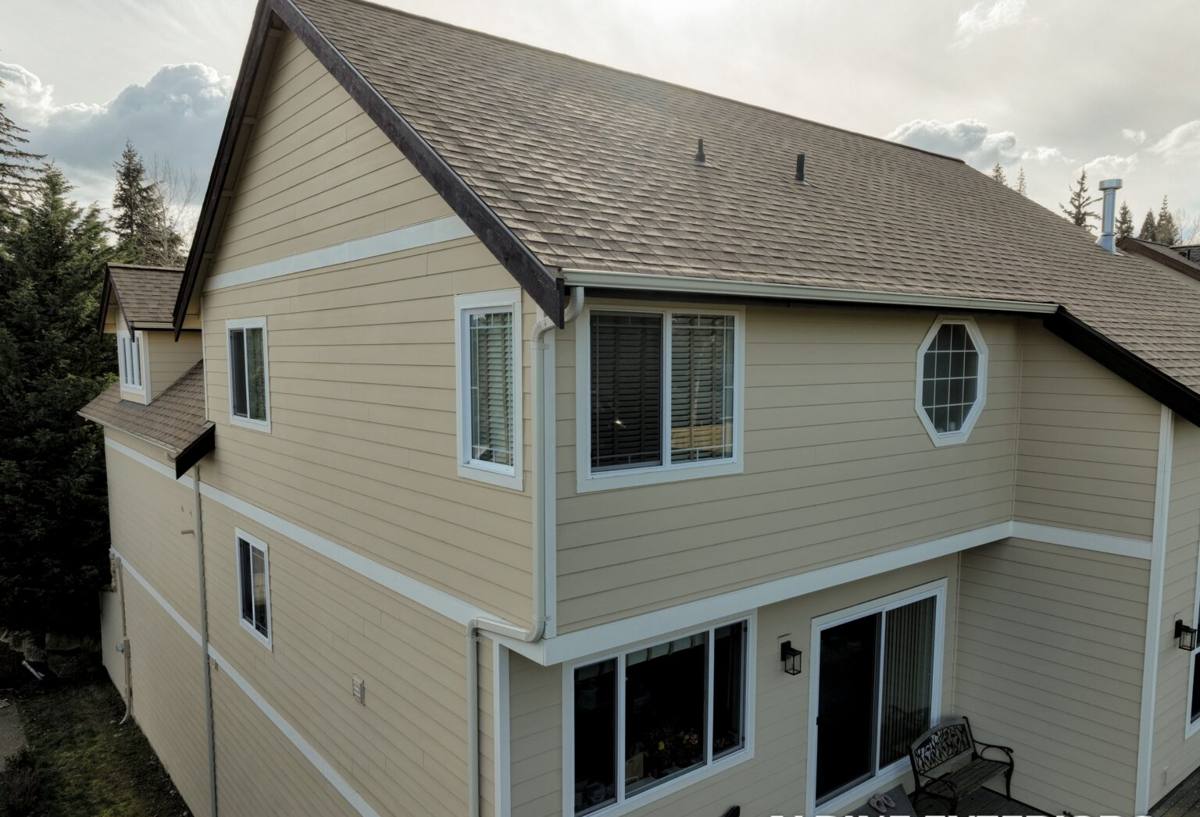
James Hardie fiber cement is non-combustible, doesn't absorb water the way wood-based products do, and holds its shape in heat instead of softening. The ColorPlus factory finish is baked on under controlled conditions rather than applied on-site, which matters directly for UV fade resistance in a market that gets this much sun. Hardie's HZ5 product line is engineered specifically for higher-moisture, hurricane-prone climates like ours. It's also backed by a strong transferable warranty when installed to Hardie's published specifications — which is the operative phrase, because the warranty and the performance both depend on correct installation, not just the product itself.
What a Correct Siding Installation Actually Involves
Fiber cement siding is only as good as the assembly underneath it. On a waterfront lot, cutting corners here is the single most common reason a siding job underperforms.
- Substrate inspection and repair — checking sheathing for existing moisture damage or rot before anything new goes on; new siding over a compromised substrate just hides a problem
- Weather-resistive barrier — a continuous, correctly lapped moisture barrier behind the siding, since this is the layer actually keeping wind-driven rain out of the wall assembly
- Flashing at every penetration — windows, doors, hose bibs, vents, and any wall-mounted fixtures need proper flashing so water sheds outward instead of tracking inward
- Correct fastener type, spacing, and depth — per Hardie's specifications and Florida Building Code wind requirements, not a generic pattern used everywhere regardless of local wind zone
- Proper clearances — siding held clear of roof lines, decks, and grade so water doesn't wick up into the bottom edge of the panels
- Correct joint and butt-seam treatment — sealed and caulked per manufacturer detail, since this is a common weak point where installers rush
Every one of these is a spec detail, not a judgment call — and they're exactly the details that separate a Hardie installation that earns its 30-year performance from one that develops problems in year five.
Our Installation Process
1. On-Site Assessment
We look at the existing siding or substrate, note any moisture or structural issues, and check the specifics of the elevation — sun exposure, water proximity, and existing drainage patterns around the home.
2. Product and Color Selection
We walk through Hardie's HZ5 lap siding, panel, and trim options and ColorPlus finishes, matching the profile and color to the home and to what holds up well in this specific coastal environment.
3. Tear-Off and Substrate Prep
Old siding comes off, sheathing is inspected and repaired as needed, and any hidden moisture damage gets addressed before we close the wall back up — not painted over.
4. Weather Barrier and Flashing
We install a continuous weather-resistive barrier and flash every penetration before a single piece of siding goes up. This step is invisible once the job is done, which is exactly why it's the step most often shortcut by crews trying to move fast.
5. Installation to Hardie Spec
Panels and fasteners go in per Hardie's published installation guide and current Florida Building Code wind requirements for this zone — not a one-size-fits-all approach used regardless of location.
6. Trim, Caulking, and Final Detail
Trim, corners, and joints get sealed correctly, and we do a final walk-through to check fastener lines, gaps, and finish quality before calling the job done.
Comparing Siding Materials for a Coastal Pinellas County Home
| Factor | Vinyl | Wood-Based / OSB Siding | James Hardie Fiber Cement |
|---|---|---|---|
| High wind performance | Can crack or blow off in sustained gusts | Adequate if installed and sealed correctly | Engineered and rated for high-wind zones (HZ5) |
| Moisture / humidity resistance | Doesn't absorb water, but seams can trap it | Vulnerable if moisture gets behind it | Doesn't swell, rot, or support fungal growth |
| UV / fade resistance | Can fade or chalk over time | Field-applied paint fades unevenly | Factory-baked ColorPlus finish resists fading |
| Salt air durability | Generally stable but can become brittle | More vulnerable if finish is compromised | Non-combustible, holds up well near salt air |
| Long-term maintenance | Low, but limited repair options if damaged | Higher — repainting, moisture checks | Low, with a strong transferable warranty when installed to spec |
Signs Your Coquina Key Home May Need New Siding
It's not always obvious from the street. A few things worth checking, especially after storm season:
- Soft or spongy spots when you press on the siding near the bottom edge or around windows
- Visible warping, buckling, or panels that no longer sit flat
- Paint that's peeling, bubbling, or chalking heavily to the touch
- Persistent musty smell along an exterior wall, which can point to trapped moisture behind the siding
- Cracked or missing caulk at seams, corners, and window trim
- Visible gaps or separation where siding meets flashing, trim, or the roofline
Any one of these is worth a closer look before it turns into a substrate issue.
Why It Matters That We Already Work in Coquina Key
A crew that's already done siding work on this side of St. Petersburg isn't guessing at wind zone requirements, permitting expectations, or how a waterfront lot's exposure differs from a home a mile inland. We know what Pinellas County's permitting and inspection process looks like, we know how to plan around the area's storm season timing, and we've seen firsthand what happens to siding on canal-front and near-water properties when it's installed to a lower standard. That local track record is worth something — it's the difference between a crew that treats every job as a first attempt and one that already knows what this specific neighborhood asks of a siding system.
Warranty and Long-Term Value
James Hardie's transferable warranty is a real asset if you ever sell the home, but it only holds up if the installation follows Hardie's specifications from the start — which is why we treat the installation detail work, not just the product choice, as the main deliverable. A correctly installed Hardie system on a Coquina Key home is a long-term investment against the specific conditions this location deals with every year: wind, rain, sun, and salt, all at once.
If you're weighing a siding replacement or dealing with visible wear on a Coquina Key home, we're happy to take a look and give you a straightforward, no-pressure assessment of what your home actually needs. Use the form below to request a free estimate.