 St. Petersburg Siding
 Why Crescent Lake Roofs Wear Differently Than You'd Expect
Crescent Lake sits inside one of St. Petersburg's older, tree-canopied neighborhoods, and that mix of mature landscaping and an established housing stock creates a specific set of roofing problems. Overhanging oak limbs drop leaf litter and debris into valleys and gutters year-round, shaded sections of roof stay damp longer after a storm than sections that get full sun, and older homes in this part of St. Petersburg often have roof penetrations, flashing details, and decking that were code-compliant decades ago but don't match how a roof needs to perform today.
Layer on top of that the broader climate reality of living in Pinellas County: hurricane-force winds during storm season, intense year-round UV exposure that bakes shingles and degrades sealants, wind-driven rain that finds its way in sideways rather than straight down, and salt air drifting in off Tampa Bay that accelerates corrosion on fasteners, flashing, and vents. A roof repair here has to account for all of that at once, not just patch the spot that's leaking.
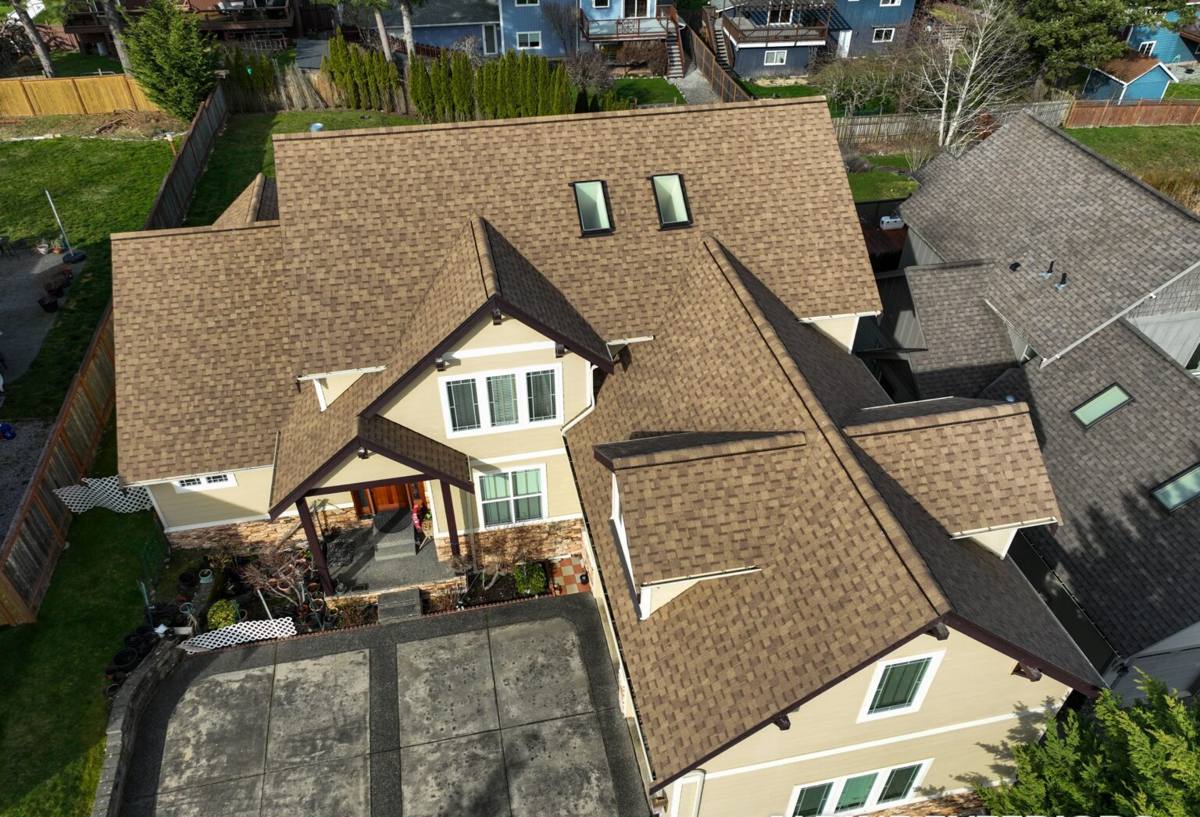
What "Roof Repair" Actually Means for a Crescent Lake Home
Roof repair is targeted work — fixing a specific failure point without replacing the whole roof system. Done correctly, it should extend the life of the roof, not just mask a symptom. Done poorly, it becomes a recurring expense because the underlying cause never got addressed.
Signs a Repair Is the Right Call
- A stain on an interior ceiling or wall that traces back to a single roof penetration, valley, or flashing point
- Missing, cracked, or lifted shingles in a localized area, especially near ridges, hips, or roof-to-wall transitions
- Visible daylight or water staining in the attic near a vent pipe, chimney, or skylight
- Granule loss or blistering concentrated in one section rather than spread evenly across the whole roof
- Recent storm damage — wind-lifted shingles or debris impact — on a roof that's otherwise in decent shape
When Repair Isn't the Honest Answer
If a roof is near or past the end of its expected service life, if there are multiple failure points across different roof planes, or if the decking underneath a leak has been saturated for long enough to soften or delaminate, patching one spot is a short-term fix that doesn't solve the real problem. Part of doing this work honestly is telling a homeowner when repair is the wrong recommendation, even if it's the smaller job.
The Local Roofing Mix Around Crescent Lake
Homes in and around this part of St. Petersburg run a wide range of ages and roof types — architectural shingle, three-tab shingle on older homes, some tile, and a growing number of metal roofs on renovated properties. Each of those materials fails differently, and a repair crew needs to know how to work on all of them without introducing a new problem.
Common Failure Points by Roof Type
| Roof Type | Typical Repair Issue | What a Correct Fix Requires |
|---|---|---|
| Architectural shingle | Wind-lifted or cracked shingles, exposed nail heads | Matching shingle profile, proper nail pattern, sealed tabs |
| Three-tab shingle (older homes) | UV-brittle shingles that crack when disturbed | Careful removal, compatible replacement material, reinforced fastening |
| Tile | Cracked or slipped tiles, failed underlayment beneath intact tile | Tile-safe walk boards, underlayment access without breaking more tile |
| Metal panel | Fastener backout, sealant failure at seams and penetrations | Correct fastener replacement, panel-rated sealant, seam inspection |
What a Correct Repair Actually Involves
A roof repair that holds up through a Pinellas County storm season involves more steps than most homeowners see from the ground. Skipping any of them is usually why a "repaired" roof leaks again within a year or two.
Diagnosis Before Anything Gets Touched
The leak location inside a house is rarely directly below the actual entry point on the roof — water travels along decking, framing, and underlayment before it shows up as a stain. A correct repair starts with tracing the water path, not just patching where the ceiling stain is.
Flashing Gets as Much Attention as Shingles
Most roof leaks in this climate start at flashing, not in the field of the roof itself — around chimneys, skylights, vent pipes, and roof-to-wall intersections. Flashing has to be re-bedded, re-sealed, or replaced with the right metal and profile, not just caulked over. Caulk is a maintenance item, not a repair.
Underlayment Integrity
Shingles are the visible layer, but underlayment is what actually keeps a roof dry when wind drives rain sideways under lifted shingles, which happens regularly during Gulf storm systems. If underlayment is compromised in the repair area, it needs to be replaced, not just covered.
Decking Condition
Before any new material goes down, the decking underneath has to be checked for soft spots or rot. Fastening new shingles or panels to compromised decking doesn't hold, and it hides a structural problem instead of fixing it.
Matching Materials, Not Just Covering the Hole
Mismatched shingle color, profile, or granule type is a cosmetic problem, but mismatched fastener type or incompatible flashing metal is a durability problem — especially with salt air in the mix, which accelerates galvanic corrosion when incompatible metals touch.
How Our Process Works on a Crescent Lake Repair
We keep the process straightforward because a roof repair shouldn't feel like a mystery to the homeowner paying for it.
- On-site inspection. We walk the roof (when safely walkable) and check the attic from the inside, tracing the actual water path rather than guessing from the interior stain location.
- Written scope and honest recommendation. We tell you what's actually wrong, what a proper repair involves, and whether repair or a larger conversation about replacement is the right call — before any work starts.
- Repair execution. Flashing, underlayment, decking, and shingle or panel work performed to match the existing roof system, using fasteners and materials suited to a coastal, high-UV climate.
- Cleanup and debris removal. Old material, nails, and packaging removed from the property — including gutters and landscaping below the work area.
- Documentation. Photos of the repair area and a summary of what was done, useful for your own records and for insurance if the damage was storm-related.
Storm Season and Emergency Repairs
Hurricane season puts a specific kind of stress on St. Petersburg roofs that doesn't show up the rest of the year: sustained high winds that test every fastener and seam, followed immediately by heavy, wind-driven rain that exploits any weakness the wind just created. A shingle that was merely loose in July can be gone entirely after a storm, and the underlayment beneath it is now exposed.
After a named storm or a significant wind event, the priority is stopping active water intrusion first — a tarp or temporary seal if needed — and then scheduling the permanent repair once materials and access allow. If the damage may be covered by insurance, documenting the roof's condition before and after temporary measures matters for the claim.
Practical Storm-Season Checklist for Homeowners
- Trim overhanging tree limbs near the roofline before storm season, especially given the tree cover common around Crescent Lake
- Clear gutters and valleys of leaf debris so wind-driven rain has somewhere to go
- Photograph your roof's condition before storm season as a baseline for any future insurance claim
- After a storm, check the attic for new moisture or light before assuming the roof is fine
- Don't wait on a small leak — a slow drip after a windstorm is often a sign of a bigger flashing or underlayment failure starting
Why a Crew That Already Works Crescent Lake Matters
A repair crew that regularly works this specific area of St. Petersburg already knows the roof ages and construction styles common to the neighborhood, understands local permitting requirements through the City of St. Petersburg and Pinellas County, and isn't guessing at how tree canopy and shading affect a particular roof's wear pattern. That familiarity shows up in faster, more accurate diagnosis and fewer surprises once work starts.
It also matters for response time. When wind-driven rain is actively coming through a ceiling, a crew that's already working jobs in the area can typically get eyes on the roof faster than one dispatching from across the bay.
What Drives the Cost of a Roof Repair
Roof repair pricing varies based on the scope and severity of the damage, and any honest contractor should walk you through the specific factors before quoting a number rather than giving a flat rate over the phone.
| Factor | Why It Matters |
|---|---|
| Size of the affected area | A single flashing point costs far less to fix than a section spanning multiple roof planes |
| Roof pitch and accessibility | Steeper roofs and limited access (tight side yards, tree cover) add labor time |
| Decking condition | Rotted or soft decking under the repair area adds material and labor beyond the surface fix |
| Material match | Discontinued or specialty shingle profiles and tile can take longer to source |
| Roof type | Tile and metal repairs generally require more specialized labor than shingle |
As a general rule, straightforward localized repairs (a section of flashing, a handful of shingles) tend to run in the low hundreds to low thousands of dollars, while repairs involving decking replacement or larger affected areas run higher. An accurate number only comes from an actual inspection — anything quoted without one is a guess.
Maintaining a Repair Long-Term
A repair is only as good as the maintenance around it. In this climate, that means periodic gutter and valley cleaning to keep water moving off the roof, a visual check after major storms, and not ignoring small signs — a slightly discolored ceiling patch, a granule buildup in a downspout — until they become bigger problems. The combination of UV exposure and salt air means sealants and fasteners age faster here than in inland, drier climates, so a roof that got a quality repair still benefits from being looked at every year or two.
If you're dealing with a leak, storm damage, or just want an honest opinion on a section of roof that's been bothering you, we're happy to take a look. Fill out the form below for a free, no-pressure estimate — we'll give you a straight answer on what's actually needed.