 St. Petersburg Siding
 Deck Repair Built for Old Northeast's Older Homes and Gulf Coast Weather
Old Northeast is one of St. Petersburg's oldest residential neighborhoods, and its decks carry that history with them. Between the brick-street charm, the mature oak canopy, and the closeness to Tampa Bay, decks here take on a different kind of wear than a deck ten miles inland. We repair decks in this neighborhood regularly, and the patterns are consistent enough that we can usually tell what's going on before we even climb underneath.
This page is about deck repair specifically — not full rebuilds, not new construction. If your deck is structurally sound but showing its age, or if one section has gone soft while the rest is fine, repair is very often the right call. We'll walk through what damages decks in this part of Pinellas County, what a repair should actually include, and how to tell when repair stops making sense.
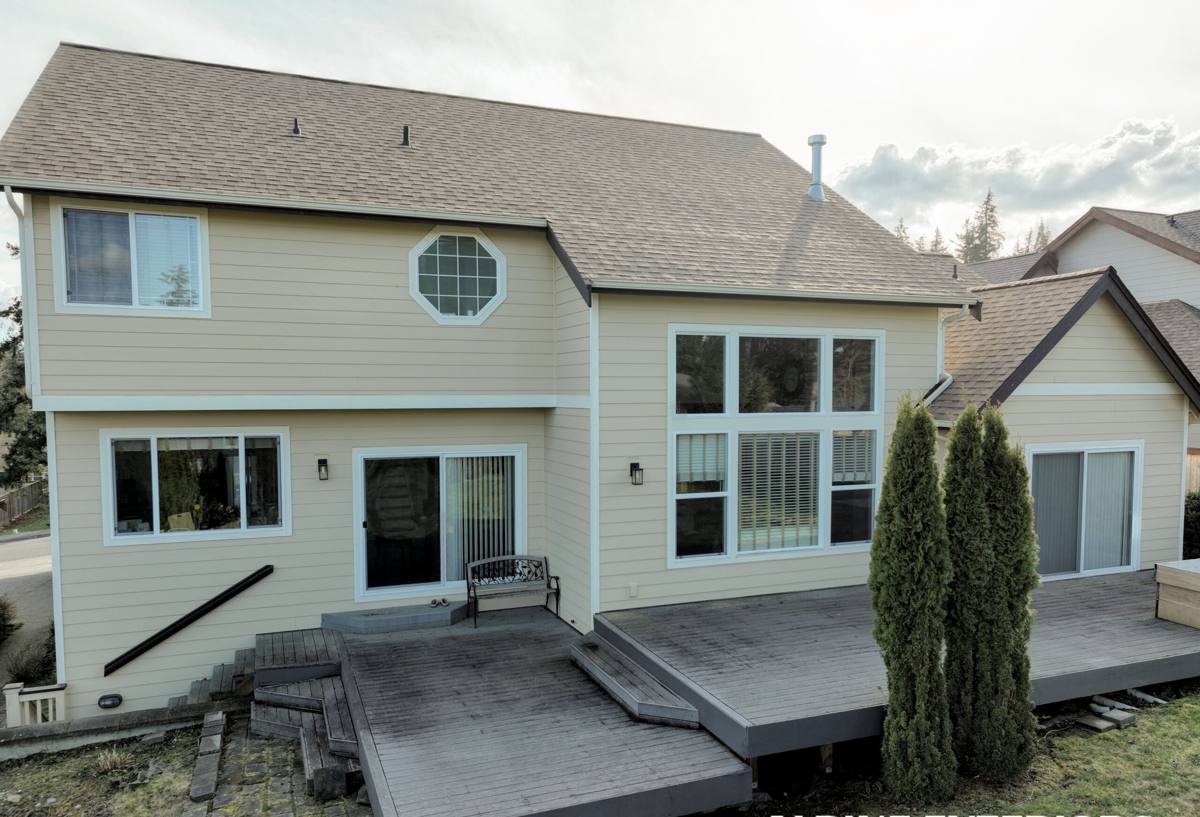
What St. Petersburg's Climate Does to a Deck
Every deck in the Tampa Bay area is fighting the same combination of stressors, but Old Northeast's tree cover and proximity to the water shift the balance a bit compared to a newer, more open subdivision.
Salt Air and Moisture
Being close to Tampa Bay means airborne salt settles on everything, including deck hardware. Salt accelerates corrosion in fasteners and metal connectors, and corroding hardware is one of the most common hidden causes of a deck that feels "loose" or springy even when the boards look fine.
UV Exposure
Florida sun is intense and year-round, not seasonal. UV breaks down the lignin in wood fiber, drying and graying boards, and it degrades the UV inhibitors in composite decking over time too. Any deck surface facing full sun for most of the day will age faster than one in partial shade.
Wind-Driven Rain and Tree Canopy
Old Northeast's oak canopy is one of the neighborhood's defining features, and it's a double-edged sword for a deck. Shade reduces some UV exposure, but it also keeps decking damp longer after rain, drops leaf litter and debris into gaps between boards, and can hold moisture against framing that would otherwise dry out in open sun. Wind-driven rain during Gulf storms pushes water sideways under railings and into joints that a straight-down rain would never reach.
Hurricane-Force Wind Loads
Pinellas County sits squarely in hurricane territory, and decks — especially railings, stair stringers, and ledger connections — take real lateral load during high wind events. A connection that's marginal in calm weather can fail outright under storm-force gusts.
Common Problems We Find on Old Northeast Decks
Because a lot of the housing stock here is older, we see a recurring set of issues:
- Ledger boards (where the deck attaches to the house) with hidden rot behind the flashing, often the single most safety-critical repair on any deck
- Corroded joist hangers and fasteners, especially on decks built before stainless or coated hardware was standard practice
- Soft or spongy decking boards where moisture has been trapped by shade or debris
- Wobbly or under-braced railings that were adequate when built but don't meet current wind and safety expectations
- Stair stringers with checked or split wood at the point where they meet the ground or a concrete pad
- Surface-level cosmetic wear (graying, splintering) that homeowners assume means the whole deck needs replacing, when the structure underneath is actually fine
What a Correct Deck Repair Actually Involves
A repair that's done right starts below the surface, not with the boards you can see.
Structural Inspection First
Before we replace a single board, we check the framing: joists, beams, posts, and especially the ledger connection to the house. Surface rot on a board is easy to spot. Rot in a joist or a weakened ledger is not, and it's the part that actually keeps people safe.
Fastener and Hardware Upgrades
If we're opening up a section of deck, that's the time to swap out corroded fasteners and connectors for stainless steel or hot-dip galvanized hardware rated for coastal exposure. Reusing old hardware because it "still holds" is a false economy this close to the bay.
Matching Materials the Right Way
Board replacement should match the existing decking as closely as possible in species or composite line, and it should be installed with proper gapping for drainage and expansion — tight, gap-free replacement boards are a common DIY mistake that traps water and causes the new boards to fail faster than the old ones did.
Code-Aware Railing and Stair Work
Any railing or stair repair gets checked against current baluster spacing and height requirements, not just rebuilt to match what was there. An old deck may predate current standards, and a repair is a reasonable opportunity to bring those elements up to code without a full rebuild.
Repair vs. Replace: How We Help You Decide
Not every deck problem calls for the same fix. Here's how we generally think through it:
| Factor | Leans Toward Repair | Leans Toward Replacement |
|---|---|---|
| Framing condition | Joists and beams are sound; damage is isolated | Widespread rot or corrosion in the structural frame |
| Ledger board | Solid connection, proper flashing intact | Rotted ledger or missing/failed flashing |
| Age of the deck | Under 15-20 years, one problem area | Original construction is decades old with multiple failure points |
| Extent of damage | A few boards, one railing section, isolated hardware | Damage spread across most of the deck surface and substructure |
| Design and layout | Layout still works for how you use the space | You want a different footprint, size, or material entirely |
Most of the time, an honest inspection makes the answer obvious. We'll tell you straight if repair is the smarter money, and we'll tell you just as directly if patching a failing structure would just be delaying an inevitable rebuild.
Our Repair Process
- On-site inspection of decking, framing, ledger connection, railings, and stairs
- Identify which issues are cosmetic and which are structural, and explain the difference to you clearly
- Written scope and estimate before any work starts — no surprise change orders
- Remove and replace damaged boards, framing members, or hardware as needed
- Upgrade fasteners and connectors to coastal-rated stainless or hot-dip galvanized where hardware is exposed
- Reinspect the full deck once repairs are complete, including a check of railing stability and stair connections
Materials and Standards We Hold To
Whether your deck is pressure-treated wood, a hardwood species, or composite decking, the repair standard doesn't change: proper fastener gauge and coating, correct board spacing for drainage, and flashing that actually sheds water away from the structure. We don't cut corners on ledger flashing or hardware just because it's the part nobody sees once the boards go back down — that's usually the part that fails first in this climate.
For wood repairs, we use pressure-treated lumber rated for ground contact where it's structurally appropriate, and we match existing decking material as closely as possible for a consistent look. For composite repairs, board matching is more limited since colors and profiles change between manufacturers and product runs, and we'll be upfront with you about what's achievable versus what would require replacing a larger section for a uniform appearance.
Signs Your Deck Needs a Repair Estimate
You don't need to wait for something to break. A few warning signs worth a call:
- Boards that feel spongy or flex noticeably underfoot
- Visible rust streaks around fasteners or hardware
- Railings that wobble or shift when you lean on them
- Gaps or separation where the deck meets the house
- Cracking, splitting, or checking at stair stringers
- Standing water or slow drainage after rain
- Visible daylight or soft spots around the ledger board
Why a Local Crew Matters for a Neighborhood Like This
Old Northeast has its own quirks — established landscaping and tree root systems close to foundations, older utility and drainage layouts, and a housing stock where "standard" framing dimensions from a big-box repair guide don't always apply. A crew that works this neighborhood regularly has already seen how these homes were built and how they've aged under Pinellas County's specific combination of sun, salt, and storm exposure. That familiarity means fewer surprises once we open up a section of decking, and a repair plan that accounts for what's actually common here rather than a generic checklist.
If your deck needs a closer look, we're glad to come out, walk the structure with you, and give you a straightforward assessment — repair, partial replacement, or otherwise. The estimate is free, there's no pressure, and you'll get a clear answer either way. Use the form below to get started.