 St. Petersburg Siding
 Why Childs Park Homes Need Siding Built for the Gulf Coast
Childs Park sits inside St. Petersburg, which means every exterior surface on a home here answers to the same set of demands: hurricane-force wind loads, wind-driven rain that finds every unsealed seam, intense year-round UV, and a steady dose of salt-laden air moving in off Tampa Bay and the Gulf. Siding in this part of Pinellas County isn't just a cosmetic layer — it's the first line of defense for the wall assembly behind it, and it has to hold up to all four of those stressors at once, every year, not just during storm season.
A lot of siding failures we see in this area aren't dramatic. They're slow: a hairline gap at a butt joint that lets wind-driven rain track behind the cladding, a caulk line that gave up under UV exposure years before anyone noticed, or paint that chalked and faded because the product underneath was never engineered for this much sun. By the time a homeowner sees a visible problem — bubbling, staining, soft spots — the damage is usually already working its way into the sheathing.
Hurricane Wind and Wind-Driven Rain
Wind doesn't just push on siding, it pulls at it, creating negative pressure that works fasteners and panels loose over repeated storm cycles. Wind-driven rain adds to that by forcing water sideways and upward, so any flashing detail or joint that assumes water only ever falls straight down will fail here. Products and installation methods have to account for both.
Year-Round UV and Heat
St. Petersburg doesn't get a real winter break from sun exposure. Siding faces months of high UV intensity every year, which breaks down pigments, softens caulk, and accelerates the aging of any coating that isn't formulated to resist it.
Salt Air and Humidity
Proximity to the Bay and Gulf means airborne salt settles on exterior surfaces and combines with near-constant humidity. That combination accelerates corrosion of fasteners and trim, and it's part of why material choice and installation hardware matter as much as the siding itself.
Why Fiber Cement Fits Childs Park's Housing Stock
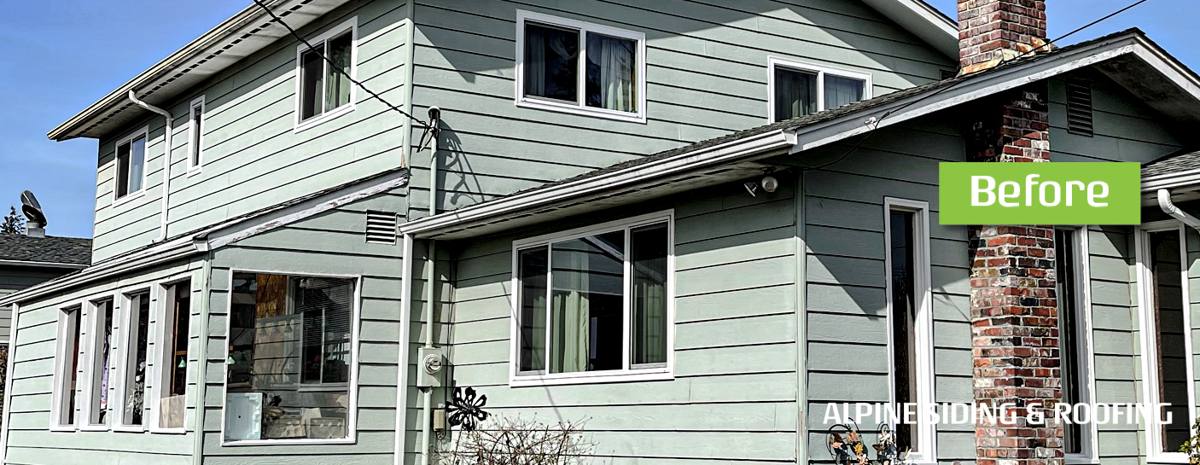
Like much of St. Petersburg, Childs Park has a mix of home ages and construction styles — older frame houses alongside newer builds and additions. Wood-frame construction is common, and wood-frame homes in a humid, storm-exposed climate need a siding material that manages moisture well rather than trapping it. Fiber cement is dense, dimensionally stable, and doesn't swell, rot, or feed pests the way wood-based products can. It also carries a Class A fire rating, which matters on closely spaced lots where a fire on one property can threaten a neighbor's.
The other reason fiber cement fits this neighborhood specifically: it holds a factory-applied finish far better than field-painted materials, which matters when a home is going to spend decades under Florida sun without the color fading or the surface needing repainting every few years.
What a Correct Fiber Cement Installation Involves
Fiber cement is a forgiving material in terms of durability, but it's unforgiving of installation shortcuts. Most of the "fiber cement problems" homeowners hear about aren't product failures — they're installation failures. A correct job in this climate involves several details that are easy to skip and expensive to fix later.
Manufacturer Clearances and Flashing
Fiber cement panels need proper clearance from grade, roof lines, decks, and other flatwork so water can't wick up into the bottom edge. Every window, door, and penetration needs flashing integrated with a weather-resistive barrier underneath the siding, not caulk used as a substitute for flashing.
Fastening and Joint Treatment
Fasteners need to be corrosion-resistant and driven to the manufacturer's specified depth and pattern — overdriven or underdriven nails are one of the most common causes of premature failure. Butt joints and panel seams need to be treated with the correct sealant system, and in a wind-driven-rain climate, joint placement and shingle-lap direction matter more than they would somewhere drier.
Factory Finish Integrity
Cut edges and field-cut ends need to be sealed with manufacturer-approved edge sealer before installation. Skipping this step is invisible on install day and shows up as edge swelling or finish failure years later — exactly the kind of defect that's hard to trace back to its cause once it appears.
Comparing Siding Materials for This Climate
Homeowners in Childs Park often ask how fiber cement stacks up against the other materials they see advertised. Here's an honest comparison focused on how each performs under Gulf Coast conditions specifically, not just on sticker price.
| Material | Wind & Storm Performance | Moisture Behavior | UV/Fade Resistance | Typical Lifespan Here |
|---|---|---|---|---|
| James Hardie Fiber Cement | Strong when installed to spec; non-combustible | Dimensionally stable, doesn't rot | Factory ColorPlus finish resists fading | Decades with proper install and upkeep |
| Vinyl | Can deform or blow off in high wind | Doesn't rot but traps moisture behind panels if not vented properly | Prone to fading and chalking in intense sun | Shorter, especially in direct coastal exposure |
| Engineered Wood (e.g. LP SmartSide) | Reasonable if installed correctly | Wood-based core is more moisture-sensitive than fiber cement | Requires field paint maintenance | Shorter than fiber cement in humid coastal zones |
| Primed Wood/Cedar | Variable | Most moisture-sensitive option; needs vigilant sealing | Requires frequent repainting | Shortest without heavy ongoing maintenance |
None of these materials are "bad" products in the abstract — they all have applications where they make sense. But for a coastal Florida neighborhood dealing with wind, rain, sun, and salt simultaneously, the moisture and maintenance trade-offs of the alternatives are exactly the kind of long-term headaches fiber cement was engineered to avoid.
Our Process, Start to Finish
A siding project on a Childs Park home generally follows the same sequence, though the details shift depending on the home's age, current siding, and how much of the wall assembly needs attention underneath.
- On-site assessment — we look at the existing siding, sheathing condition, trim, and any areas showing past water intrusion before quoting anything.
- Tear-off and substrate check — removing old siding is also when hidden rot, damaged sheathing, or old flashing problems get found and addressed, not covered over.
- Weather barrier and flashing — a proper weather-resistive barrier and flashing details go in before a single piece of siding is hung.
- Installation to manufacturer spec — correct clearances, fastening, and joint treatment, following James Hardie's published installation requirements for this climate zone.
- Trim, caulking, and final inspection — walking the full exterior to check reveals, seams, and finish before calling the job done.
Why We Install Only James Hardie
We don't install vinyl, LP SmartSide, Cemplank, Allura, or primed spruce or cedar siding. That's not a marketing position — it's a standard we hold because we don't want to put a product on a Childs Park home that we know has meaningful trade-offs in this specific climate, even if that product performs fine elsewhere. James Hardie's HZ product lines are engineered for climate zones, including humid, high-UV, storm-prone regions like ours. The ColorPlus factory finish is baked on under controlled conditions rather than applied on-site, which produces a more consistent and longer-lasting result than field paint. James Hardie also backs its products with a strong, transferable warranty — meaningful for homeowners who may sell within the product's service life.
We recognize the alternatives aren't defective products; they're built for different priorities and different climates. Our decision is about matching material to conditions, and for this part of Florida, fiber cement from a manufacturer that engineers specifically for coastal exposure is the standard we're willing to put our name behind.
Why a Crew That Already Works Childs Park Matters
Installation quality is the single biggest variable in how long fiber cement siding actually lasts. A crew that already works in St. Petersburg and understands Pinellas County's wind and moisture conditions isn't guessing at clearances, fastening schedules, or flashing details — they're applying the same discipline job after job in the same climate. That familiarity shows up in the small decisions: how joints are staggered, how much clearance is left at grade, how penetrations are flashed, how edges are sealed before they're covered.
It also matters for accountability. A local crew is reachable after the job is done if a question comes up, and has a reputation in the neighborhood worth protecting — which is a different incentive structure than a traveling crew with no ongoing presence here.
Signs Your Current Siding May Need Attention
- Visible warping, bubbling, or soft spots anywhere on the siding surface
- Paint that's chalking, peeling, or fading noticeably faster than the rest of the home's trim
- Gaps opening up at butt joints, corners, or around window and door trim
- Staining or discoloration that tracks downward from seams, suggesting water intrusion
- Soft or spongy sheathing felt through the siding when pressed near the base of walls
- Siding that flexed, cracked, or came loose after the last significant storm
Any one of these is worth a professional look before it's addressed — Florida's climate doesn't give minor issues much time to stay minor.
Maintenance and Long-Term Care
One advantage of correctly installed fiber cement with a factory finish is how little ongoing maintenance it needs compared to field-painted alternatives. That said, a coastal climate still calls for some basic upkeep: periodic rinsing to remove salt buildup and grime, prompt attention to any physical damage from storm debris, and re-caulking joints and trim as needed over the years rather than waiting until water has already gotten behind them. None of this is heavy maintenance — it's the kind of occasional check that keeps a well-installed system performing the way it's designed to for the long haul.
If you're in Childs Park and want a straight answer about your siding's condition or what a fiber cement replacement would actually involve on your home, we're happy to take a look. Reach out for a free, no-pressure estimate using the form below.