 St. Petersburg Siding
 Why Gulfport Decks Wear Out Faster Than You'd Expect
Gulfport sits right on Boca Ciega Bay, and that waterfront location is exactly why decks here take more abuse than a deck built inland. Salt-laden air drifts off the bay every day, and it doesn't just smell like the coast — it actively corrodes metal fasteners, brackets, and connectors from the inside out, often long before any damage shows on the wood surface. Add in Pinellas County's intense, nearly year-round UV exposure, and you get wood fibers that dry out, split, and gray faster than the same lumber would age in a less sun-soaked climate.
Then there's the water. Florida's wind-driven rain doesn't just fall straight down — during a squall or tropical system, it gets pushed sideways into every gap, seam, and joint on a deck structure. That means ledger boards, stair stringers, and the framing tucked underneath the decking surface can stay damp for hours after a storm passes, which is exactly the environment wood rot and fungal decay need to take hold. And when a named storm brings hurricane-force gusts, any weak connection point — a corroded joist hanger, a loose railing post, an under-fastened ledger — becomes the failure point.
None of this means a deck in Gulfport can't last. It means the repair work has to account for salt, sun, and wind from the start, not just patch what's visibly broken.
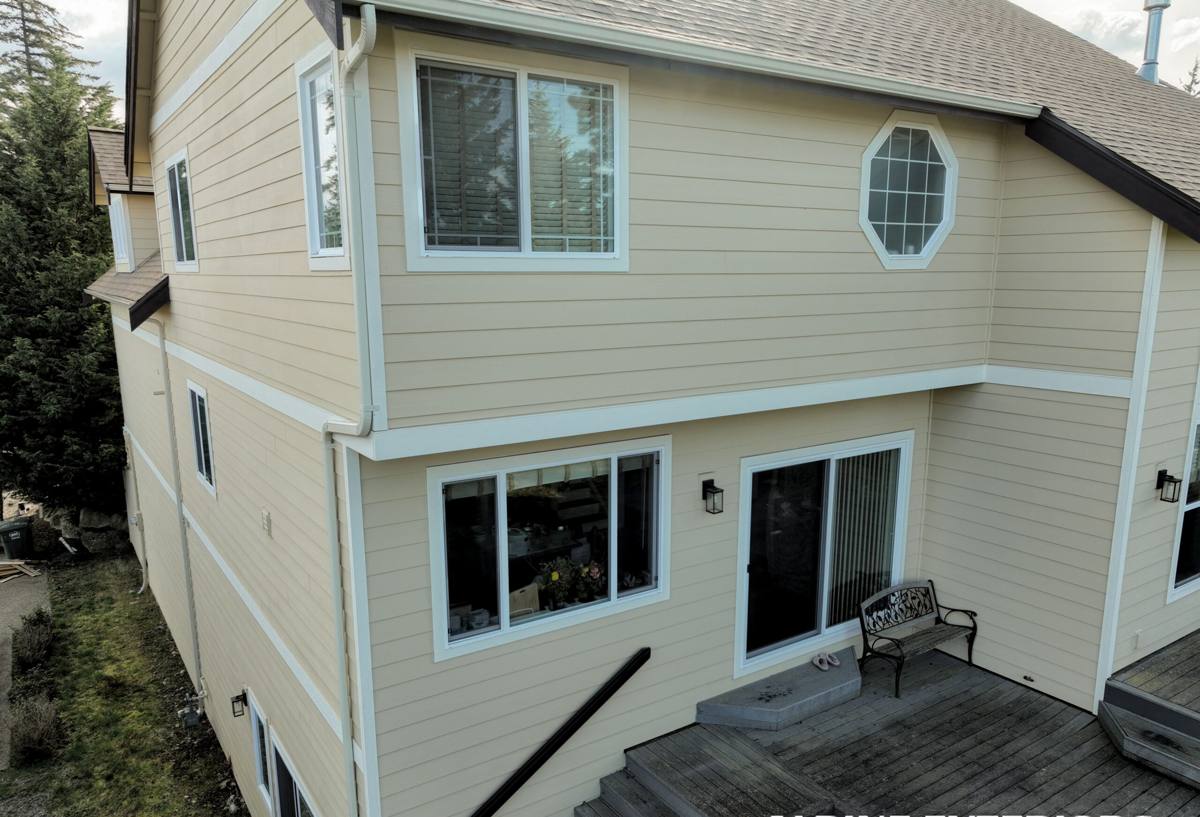
The Deck Problems We Run Into Most Often in This Area
Fastener and Hardware Corrosion
This is the single most common issue we find on Gulfport decks, and it's usually invisible until someone steps on a soft spot or a railing wobbles. Standard galvanized screws and joist hangers that would hold up fine 20 miles inland can rust and weaken within a few years this close to saltwater. The wood around the fastener often looks fine even as the connection itself is failing.
Ledger Board and Flashing Failures
The ledger board — the piece that attaches the deck to the house — is the most structurally critical part of any deck, and it's also the part most exposed to trapped moisture if flashing wasn't installed correctly (or wasn't installed at all). Wind-driven rain finds its way behind poorly flashed ledgers and rots the framing before it's ever visible from outside.
Sun-Damaged and Warped Boards
UV breaks down the lignin in wood fibers, leaving boards gray, splintered, and prone to cupping or warping. On composite decking, sun exposure can cause fading and, on lower-grade products, surface degradation over time.
Loose or Unsafe Railings and Stairs
Railing posts anchored into rotted or corroded framing are one of the more serious safety issues we get called out for. A railing that feels "a little loose" is often a sign the post's base connection has already failed.
Wood vs. Composite: What Repair Looks Like for Each
The right repair approach depends heavily on what the deck is built from. Here's how the two most common decking materials compare when it comes to storm and salt-air exposure in this area:
| Factor | Pressure-Treated Wood | Composite Decking |
|---|---|---|
| Salt air resistance | Fair — treatment slows rot, but surface needs upkeep | Good — surface won't rot, but fasteners and framing underneath still can |
| UV impact | Grays and dries out; needs refinishing every 1-2 years | Fades gradually; lower-grade boards may show surface wear |
| Repair method | Board-by-board replacement is straightforward and affordable | Matching discontinued colors/profiles can be difficult |
| Underlying framing | Usually wood — same rot risk as the decking itself | Almost always wood or treated lumber — still needs inspection |
| Typical failure point | Board surface and ledger connections | Fastener corrosion and hidden joist damage |
One thing that surprises a lot of homeowners: even an all-composite deck has a wood or treated-lumber frame underneath. Composite boards can look brand new while the structure holding them up is quietly failing from salt exposure. That's why a proper repair always includes an inspection below the surface, not just the decking itself.
What an Honest Deck Repair Actually Involves
A repair that just swaps out the board someone tripped on isn't really a repair — it's a patch. Here's what we consider the baseline for doing it right on a Gulfport home:
- Full structural inspection of joists, beams, posts, and the ledger board connection — not just the visible surface
- Moisture testing on wood framing in areas that stay shaded or damp longer, since that's where rot spreads fastest
- Inspection and replacement of corroded fasteners and hardware, even where the wood around them still looks sound
- Verification that ledger flashing is present and properly lapped to shed water away from the house
- Confirmation that railing posts are anchored into solid, undamaged framing — not just re-tightened where they are
- Matching replacement materials as closely as possible to existing decking for a consistent look and even weathering
Skipping the structural check to save time is how a "fixed" deck ends up with a new problem eighteen months later, usually right after the next round of summer storms.
How We Approach a Deck Repair, Step by Step
1. On-Site Assessment
We walk the entire deck, check for soft spots, test railings, and get underneath to look at the framing, hardware, and ledger connection directly — this is where most hidden problems actually get found.
2. Straight Answers on Scope
We tell you plainly whether you're looking at a targeted repair or something more extensive, and why. If a deck is structurally sound with a few isolated issues, we say so. If the framing is compromised in multiple spots, we explain that too, rather than either overselling the job or underselling a real safety issue.
3. Repair Work
This includes replacing damaged boards, sistering or replacing compromised joists, swapping corroded hardware for fasteners rated for coastal exposure, and correcting flashing or ledger issues where we find them.
4. Code and Attachment Check
Pinellas County has building code requirements around deck ledger attachment and railing height for good reason — high wind events test every connection point on a structure. We make sure repaired sections meet current standards, not just match what was there before.
5. Cleanup and Walkthrough
We walk the finished repair with you, point out what was done and why, and flag anything worth watching going forward.
What Affects the Cost of a Deck Repair
Every deck is different, but these are the factors that typically drive the scope — and cost — of a repair in this area:
| Factor | Why It Matters |
|---|---|
| Extent of framing damage | Surface board swaps cost far less than joist or beam replacement |
| Ledger board condition | Ledger repairs involve more disassembly and are labor-intensive |
| Decking material | Matching discontinued composite colors can add cost versus standard wood |
| Hardware condition | Full hardware replacement adds cost but prevents near-term repeat failures |
| Deck height and access | Elevated or hard-to-access decks take longer to inspect and repair safely |
| Railing and stair scope | Safety-critical elements often need attention even if not the original complaint |
We'd rather walk a homeowner through these factors during the estimate than throw out a number that doesn't reflect what's actually going on underneath the deck.
Maintenance That Extends the Life of a Repair
A good repair holds up longer with a little ongoing attention, especially this close to the water. Between professional inspections, here's what we recommend homeowners keep an eye on:
- Rinse salt residue off decking and railings periodically, especially after windy stretches off the bay
- Check for soft or spongy spots underfoot, particularly near the house connection and stair landings
- Look for rust streaks around screws or brackets — an early sign of hardware corrosion
- Keep gutters and downspouts near the deck clear so runoff doesn't pool against ledger boards or posts
- Reseal or refinish wood decking on a regular schedule rather than waiting for visible graying and splitting
- After any major storm, do a visual check of railings and stair connections before assuming everything's fine
When Repair Makes Sense — and When It Doesn't
Not every deck problem is worth fixing piecemeal. If the damage is isolated — a few rotted boards, one corroded bracket, a loose railing section — repair is almost always the right call and the more cost-effective one. But if we find widespread joist damage, multiple failed ledger connections, or a structure that's been patched repeatedly over the years without addressing the underlying moisture problem, we'll tell you honestly when replacement is the more sound long-term investment. We'd rather lose a repair job than sell a homeowner a fix that won't hold up through the next hurricane season.
Why a Crew That Already Works in Gulfport Matters
Deck repair isn't identical everywhere in Florida, and it certainly isn't identical to deck work done in a drier, inland climate. A crew that regularly works Gulfport and the surrounding St. Petersburg area already knows which fastener grades actually hold up against bay-side salt exposure, how local wind exposure affects railing and post anchoring, and what Pinellas County's permitting and inspection process expects for ledger attachment and structural repairs. That familiarity means fewer surprises, fewer callbacks, and a repair built for the conditions the deck will actually face — not a generic fix that happens to be installed in a coastal town.
Local presence also means faster response when it matters, whether that's a routine repair or an assessment after a storm has come through. You're not waiting on a crew driving in from another county to fit you into their schedule.
If you've got a deck in Gulfport that's showing its age, feels less solid than it used to, or just needs an honest look after this year's storms, we're happy to come take a look. Fill out the form below for a free, no-pressure estimate — we'll tell you straight what we find and what it would take to fix it right.