 St. Petersburg Siding
 Decking Built for Old Southeast's Older Homes and Harder Climate
Old Southeast is one of St. Petersburg's older neighborhoods, and that shows in the housing stock: bungalows, Craftsman-style homes, and early-to-mid-century construction sitting on lots that have had decades to settle, grow mature tree canopy, and accumulate a mix of past additions and repairs. A deck on one of these homes isn't going onto a blank slate — it's tying into older framing, established grade, and in many cases a look the homeowner wants to respect rather than overwrite with something that reads as out of place.
At the same time, this is still Pinellas County, a few minutes from Tampa Bay. That means salt-laden air working on every metal fastener and connector, intense UV exposure nearly year-round, wind-driven rain that finds its way into any gap in flashing or ledger board attachment, and the real possibility of hurricane-force wind loads during storm season. A deck here has to survive that environment while still fitting a home that's often 60, 80, or more years old. That combination — historic character plus coastal punishment — is what makes this a different job than decking in a newer subdivision.
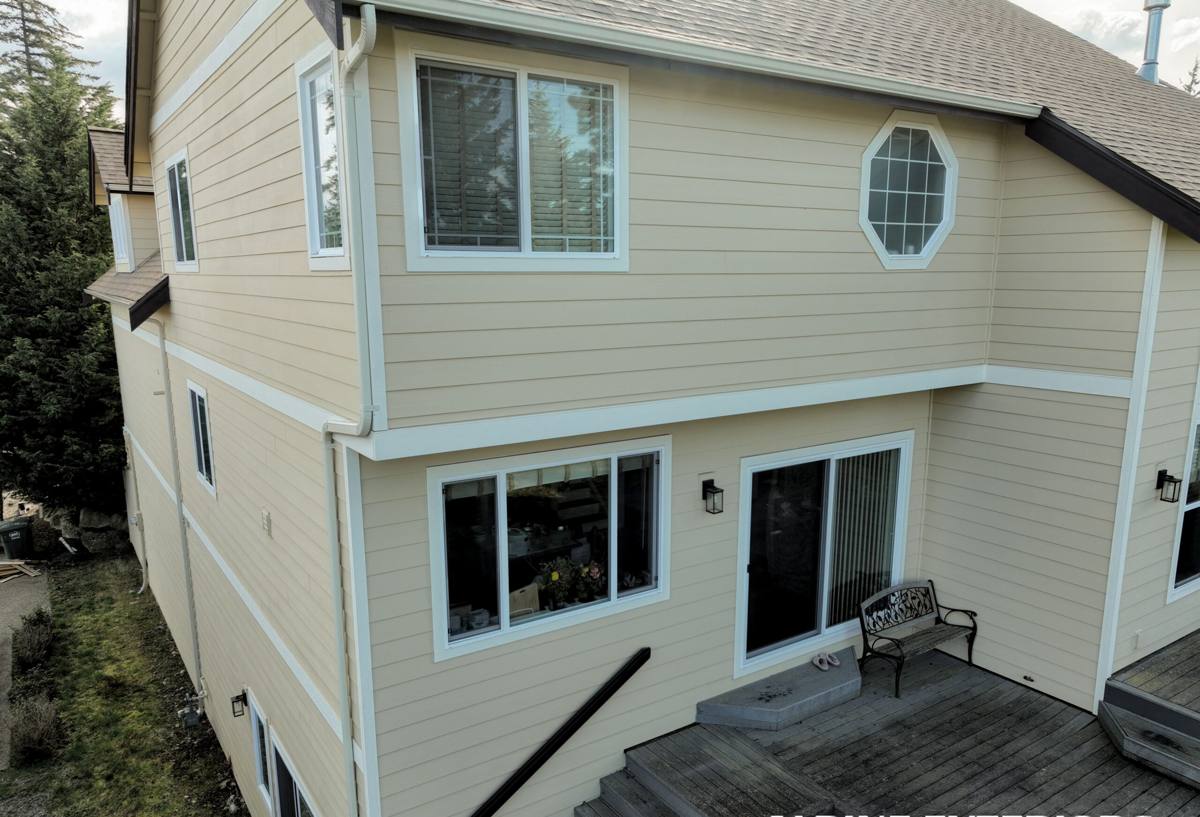
Why Composite Makes Sense in This Neighborhood
Wood decking has a place, and plenty of homeowners still prefer it for cost or authenticity reasons. But for Old Southeast specifically, composite decking solves problems that show up faster here than almost anywhere else in the region:
- Moisture and humidity resistance — composite boards don't absorb water the way wood does, which matters under a canopy of live oaks that keep decks shaded and slow to dry after rain.
- No annual sanding, staining, or sealing — a real advantage for owners of older homes who are often already managing paint, roofing, or foundation maintenance on the house itself.
- Stable color and surface under constant UV — St. Petersburg sun is unforgiving on any exterior material, and quality composite is engineered specifically to resist fading and surface breakdown.
- No splintering, warping, or cupping — boards stay flat and safe underfoot even after repeated wet-dry cycles.
- Better long-term value against salt air corrosion — when paired with the right coastal-grade fasteners and hardware, a composite deck holds up to the salt exposure that eats through lesser hardware over a handful of seasons.
None of this means composite is "better" in every sense — it's a different set of trade-offs than wood, and a deck contractor who's honest with you will walk through both rather than push one product because it's easier to sell.
What a Correct Composite Deck Job Actually Involves
The Substructure Still Matters Most
Composite decking is only as good as what's underneath it. The framing, footings, posts, and ledger attachment are almost always still built from pressure-treated lumber, and on an older Old Southeast home, that substructure work is where the real decisions get made. A deck that looks great on the surface but sits on undersized footings or a poorly flashed ledger board will fail regardless of what decking material sits on top.
Ledger Attachment on Older Framing
Attaching a deck ledger to an older home means dealing with rim joists and sheathing that may not match modern framing standards. Proper flashing behind the ledger is non-negotiable in this climate — wind-driven rain will find any shortcut here, and on a historic home, water intrusion at the ledger can lead to rot that's expensive to trace and repair once it's behind siding.
Fasteners and Hardware
Standard hardware corrodes fast this close to the bay. Stainless steel or coated coastal-grade fasteners, hidden fastener clip systems, and corrosion-resistant joist hangers cost more up front but are what keeps a deck sound past year five instead of showing rust streaks and loosening connections.
Wind and Code Compliance
Florida Building Code wind load requirements apply to deck construction just as they do to roofing or window work, and Pinellas County inspects to that standard. Railing height, baluster spacing, guard post attachment, and structural connections all need to meet code — not just for the inspection, but because these decks genuinely need to survive real storm wind.
Matching the Historic Character of the Home
A lot of composite decking today comes in wood-look grain patterns and muted color families specifically because manufacturers know homeowners with older or historic-style homes don't want a deck that looks like a synthetic add-on. For Old Southeast, that usually means:
- Choosing board colors and grain patterns that complement the home's existing trim and siding tones rather than contrasting sharply with them.
- Selecting railing styles — square baluster, simple top rail profiles — that read as traditional rather than modern-minimalist, when the goal is to keep the home's original character intact.
- Keeping deck footprint and height proportional to the home, especially on smaller historic lots where an oversized deck can visually overwhelm the house.
If your home sits within a designated historic district or has any deed restrictions tied to exterior changes, that's worth checking with the city before final design — we can help you think through the design side, but any historic-district approval process runs through St. Petersburg directly.
Composite vs. Wood for This Climate: An Honest Comparison
| Factor | Composite Decking | Pressure-Treated Wood |
|---|---|---|
| Upfront cost | Higher material cost | Lower material cost |
| Maintenance | Occasional cleaning, no staining/sealing | Annual sanding, staining, or sealing recommended |
| Salt air / humidity behavior | Resists moisture absorption and rot | Vulnerable to rot and swelling without diligent upkeep |
| UV fade resistance | Engineered for color stability | Grays and weathers without regular treatment |
| Historic aesthetic flexibility | Wide range of wood-look tones and grain patterns | Natural wood look, but weathers unevenly over time |
| Lifespan in this climate | Typically longer with less intervention | Can last well, but only with consistent maintenance |
Storm and Structural Considerations Specific to This Area
Old Southeast sits close enough to Tampa Bay that flood zone status, elevation, and drainage around the home are worth factoring into deck design — not just for code compliance, but for how the deck sheds water and handles storm surge risk over its life. Mature tree root systems common in this neighborhood can also affect footing placement; we check for root interference before digging rather than after a footing cracks or shifts.
During hurricane season, a properly built composite deck with correctly rated hardware and code-compliant railing attachment is genuinely safer than an older, deteriorating wood deck. If your current deck predates modern wind-load requirements, replacement is often the more honest recommendation than patching around a structure that was never built to today's standard.
Our Process for an Old Southeast Composite Deck
- On-site assessment — we evaluate existing substructure (if any), grade, drainage, tree root proximity, and how the deck ties into the home's framing.
- Design and material selection — board color/grain, railing style, and layout chosen to fit the home's historic character and your actual use of the space.
- Permitting — we handle the permit submission and any structural documentation Pinellas County or the City of St. Petersburg requires.
- Substructure build — footings, posts, and framing built to current wind-load and code standards, with proper ledger flashing and coastal-grade hardware throughout.
- Composite decking installation — hidden fastener systems where appropriate, correct board spacing for expansion, and clean edge/fascia finishing.
- Railing and final details — code-compliant railing installed and inspected before final walkthrough.
- Final inspection and walkthrough — we confirm the deck passes inspection and walk you through basic care before we consider the job done.
What to Ask Before You Hire a Decking Contractor Here
- Do they pull permits and handle Pinellas County / St. Petersburg inspections, or leave that to you?
- Do they use stainless steel or coastal-rated fasteners and hardware, or standard hardware that corrodes faster this close to the bay?
- Can they show you how they'll flash the ledger board attachment on an older home?
- Have they worked on homes with mature tree canopy and older lot grading, and how do they handle root interference?
- Are they familiar with the character of older neighborhoods and willing to talk through design choices that fit the home, not just the fastest build?
A crew that already works in Old Southeast has usually run into these specifics before — the older framing quirks, the tree roots, the salt air corrosion timeline — and builds around them from the start instead of learning on your project.
Get a Straight Answer on Your Deck Project
If you're weighing a new composite deck, a replacement for an aging wood structure, or just want an honest read on what your home needs, we're happy to take a look and walk the property with you. There's no pressure and no obligation — just a straightforward assessment and a clear estimate so you can make the call with real information. Fill out the form below to schedule a free estimate for your Old Southeast home.