 St. Petersburg Siding
 A New Roof Is a System, Not Just a Covering
When a roof in Kenneth City reaches the point where patching no longer makes sense — age, storm damage, chronic leaks, or an insurance company that's stopped renewing without an upgrade — a full new roof installation is a bigger decision than picking a color and a material. Everything from the deck up gets touched: the plywood or boards underneath, the underlayment and membrane layers, the flashing at every wall, chimney, and vent, the ventilation system, and finally the outer roofing material itself. Get any one of those layers wrong and the finished roof can look fine for years while quietly failing where you can't see it.
Kenneth City sits inside Pinellas County, tucked within the greater St. Petersburg area, close enough to Tampa Bay and the Gulf that its homes deal with a specific combination of stresses: hurricane-force wind events during storm season, intense UV exposure that runs nearly year-round instead of easing off in winter, wind-driven rain that gets forced sideways into transitions during a real blow, and salt-carrying air drifting inland that slowly corrodes exposed metal. A new roof installed here needs to be built around all four of those conditions from the start, not have them addressed as an afterthought. This page covers what that looks like in practice — the materials, the sequence, the permitting, and what to actually look for in a contractor doing the work.
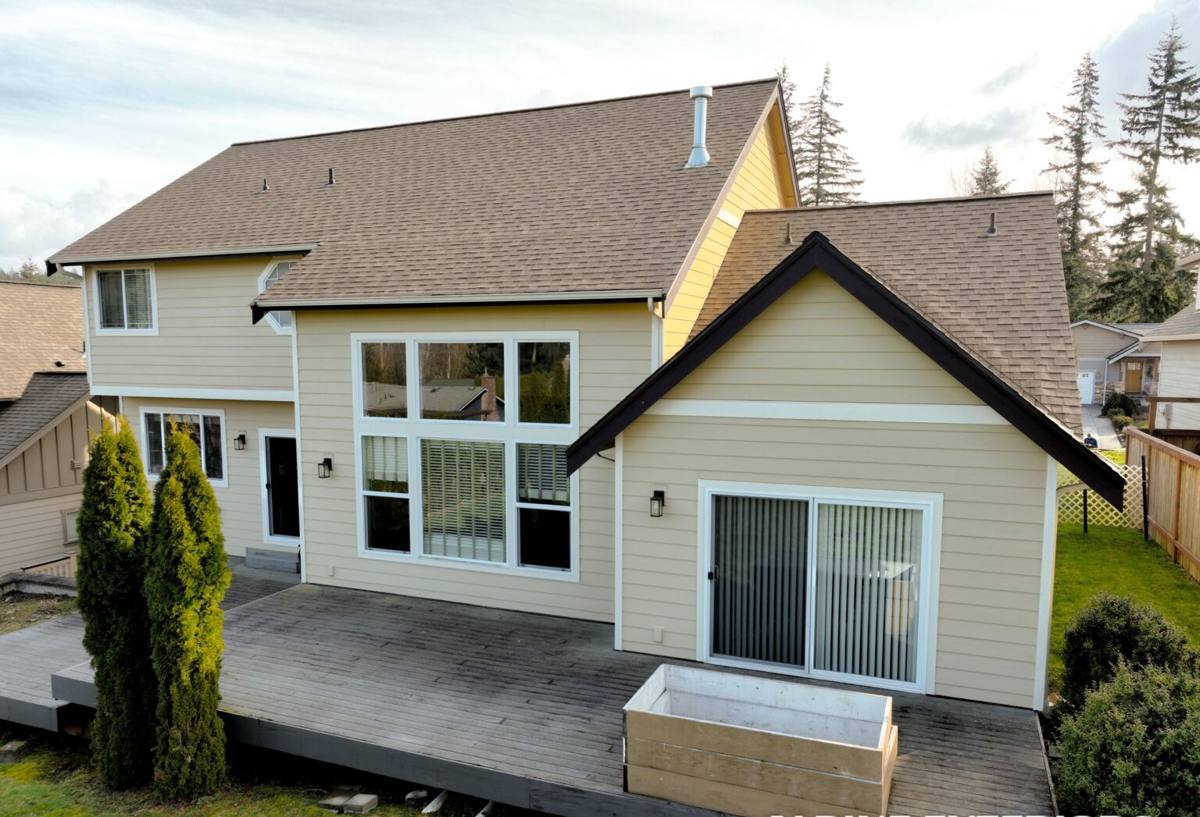
Signs a Repair Isn't Enough Anymore
Not every roof problem calls for full replacement, but a few signs consistently point that direction rather than toward another patch:
- Granule loss heavy enough to expose bare asphalt across large sections of a shingle roof
- Multiple leak locations appearing in different parts of the roof rather than one isolated spot
- Soft or spongy decking discovered during any repair work, suggesting wider moisture damage underneath
- A roof already carrying more than one layer of shingles, which limits what repair or overlay options remain
- Visible sagging along the roofline, which usually points to structural or decking issues below the surface
- An insurance company flagging the roof's age or condition as a renewal or rate concern
When we're called out to look at a roof showing several of these at once, a full replacement is usually the more honest recommendation — and often the more economical one over time compared to a string of repairs on a roof that's already past its useful service life.
What Kenneth City's Climate Demands From a New Roof
Wind Rating and Fastening
Florida Building Code sets minimum wind resistance requirements for this part of the state, but the code minimum and a roof that actually performs at that rating aren't automatically the same thing. Wind performance comes down to nail count, nail placement inside the manufacturer's specified zone, and fastener length matched to the deck — details that don't show up in a curb-side look at a finished roof but matter enormously the first time real wind hits it.
Continuous UV Exposure
Roofs in this part of Florida don't get a real seasonal break from direct sun. That constant UV load accelerates the breakdown of asphalt, ages sealants faster, and puts real stress on any material not formulated with this kind of year-round exposure in mind. It's one of the clearest reasons a roofing product that performs well in a milder climate can underperform here.
Wind-Driven Rain at Transitions
Open roof field rarely leaks. Valleys, chimney bases, wall-to-roof transitions, and vent penetrations are where water gets pushed by wind rather than gravity, and where the underlayment and flashing — not the visible roofing material — do the real waterproofing work. A new roof installation is the best possible opportunity to get these details right, since every layer is accessible and nothing has to be worked around.
Salt Air and Corrosion
Kenneth City isn't waterfront, but it's close enough to Tampa Bay and the Gulf that salt-carrying air reaches it regularly, especially on onshore wind. Left unaddressed, that air corrodes standard fasteners, drip edge, and flashing over time — a slow process that's easy to overlook when a roof is new and shows up years later as an unexplained leak.
Roofing Material Options for a Full Replacement
There's no single correct material for every Kenneth City home — budget, roof pitch, HOA rules, and how long you plan to stay in the house all factor in. Here's how the common options generally compare for this climate.
| Material | Wind & Storm Performance | Maintenance | Typical Fit |
|---|---|---|---|
| Standard architectural shingles | Solid wind rating when installed correctly | Low; periodic inspection recommended | Most full reroofs; balances cost and durability |
| Impact-rated architectural shingles | Reinforced mat resists wind-blown debris; may qualify for insurance credits | Low | Homeowners prioritizing storm resilience |
| Standing seam metal | Excellent wind uplift resistance when properly fastened | Very low over a long service life | Owners planning to stay long-term or wanting minimal upkeep |
| Concrete or clay tile | Heavy and wind-resistant, but individual tiles can crack from impact | Moderate; occasional tile replacement | Homes matching a tile-dominant streetscape or HOA requirement |
We'll walk through these options against your budget and the specifics of your home rather than push a single default. What we won't do is recommend a material without being upfront about its real trade-offs — every roofing system on this list has strengths and limitations, and pretending otherwise doesn't serve you well ten years into ownership.
Underlayment and Deck: The Part That Actually Waterproofs
Whatever material ends up on top, the underlayment and the deck beneath it do most of the actual work keeping water out. A synthetic or self-adhering underlayment rated for sustained heat holds up better under a hot Florida roof deck than older felt products, which dry out and become brittle faster than most homeowners expect. Full tear-off is the only way to genuinely inspect the deck underneath — soft spots, delamination, and old nail holes need to be addressed directly, not covered over and left as a future problem.
How a New Roof Installation Actually Proceeds
- On-site inspection and honest assessment of whether repair or replacement is the right call
- Material selection, with real trade-offs explained rather than a single default pushed
- Written scope and pricing before any work begins
- Permit pulled through Pinellas County or the applicable local jurisdiction
- Complete tear-off of the old roof so the deck can be inspected directly
- Repair of any soft, rotted, or delaminated decking found during tear-off
- Drip edge, underlayment, and self-adhering membrane installed at valleys and other high-exposure areas
- New flashing at all walls, chimneys, and penetrations — not reused, weathered hardware
- Ventilation intake and exhaust balanced to the actual attic
- Roofing material installed to the manufacturer's specification and the applicable wind rating
- Final walk-through with the homeowner, followed by the required county inspection
Skipping or rushing any one of these steps is exactly how a roof that looks fine at handoff starts failing within a few years — usually at the transitions and penetrations rather than the open field, which is why those details matter more than the shingle color most homeowners spend their time deciding on.
Permitting and Inspection in Pinellas County
A full roof replacement in Kenneth City requires a permit through the applicable Pinellas County or municipal building department, along with inspections at defined points in the process — typically after tear-off and dry-in, and again at final completion. This isn't paperwork you can skip to save time; an unpermitted reroof can create real problems later, from insurance claim denials to complications when the home is sold. A contractor who regularly pulls permits in this specific area moves through that process efficiently, since they already know the local requirements and inspector expectations rather than encountering them for the first time on your project.
What Drives the Cost of a New Roof
| Factor | Why It Matters |
|---|---|
| Roof size and pitch | Larger and steeper roofs require more material and labor time |
| Number of layers to remove | Tearing off multiple existing layers adds cost over a single-layer tear-off |
| Deck condition | Rotted or delaminated decking found during tear-off adds material and labor |
| Material tier chosen | Standard shingles, impact-rated products, metal, and tile carry different material and labor costs |
| Penetrations and valleys | More vents, pipes, and valleys mean more flashing and membrane work |
| Ventilation corrections | Adding or fixing intake/exhaust vents is far cheaper during a full reroof than afterward |
We'll give you a scope-based number specific to your roof rather than a rough per-square estimate, since the factors above can shift the total meaningfully from one Kenneth City home to another.
Why Hiring a Crew Already Working in Kenneth City Matters
A new roof installation is one of the largest single investments most homeowners make in a property, and the difference between a correct install and a rushed one usually doesn't show up until the next serious storm tests it. A crew with an established presence in Kenneth City and the broader St. Petersburg area has a practical sense of the local housing stock — common deck materials, typical roof ages, and the pitch styles and permitting quirks specific to Pinellas County — which cuts down on surprises once tear-off actually starts.
That local footprint matters even more in the aftermath of a major storm moving through the Tampa Bay region, when material and skilled labor availability tighten across the entire area at once. A contractor already established here, with existing supplier relationships and a known track record with local permitting offices, is in a far better position to get your roof handled without your project sitting at the back of a months-long line.
If your roof is nearing the end of its service life, showing storm damage, or you just want a straight, no-pressure opinion on what shape it's really in, we're glad to come take a look. Use the form below to schedule a free estimate.