 St. Petersburg Siding
 Building Decks for Pinellas Park's Climate
Pinellas Park sits in the middle of Pinellas County, close enough to Tampa Bay and the Gulf that the same air that keeps winters mild also works against anything built outdoors. A deck here isn't just a weekend woodworking project — it's an outdoor structure that has to survive intense year-round UV, sudden wind-driven downpours, hurricane-force wind events, and the slow corrosive effect of salt-laden air moving in off the water. Homes in this part of the county see more direct sun exposure than northern climates, more standing humidity, and a hurricane season that runs June through November every single year.
A deck built without that in mind will show it fast: fasteners rust and streak the boards, wood cups and splits as it dries out and re-wets in the same week, and railings or ledger connections that weren't engineered for wind uplift become a real liability the first time a storm rolls through. We build decks in Pinellas Park the way the climate actually demands, not the way a generic national framing guide assumes.
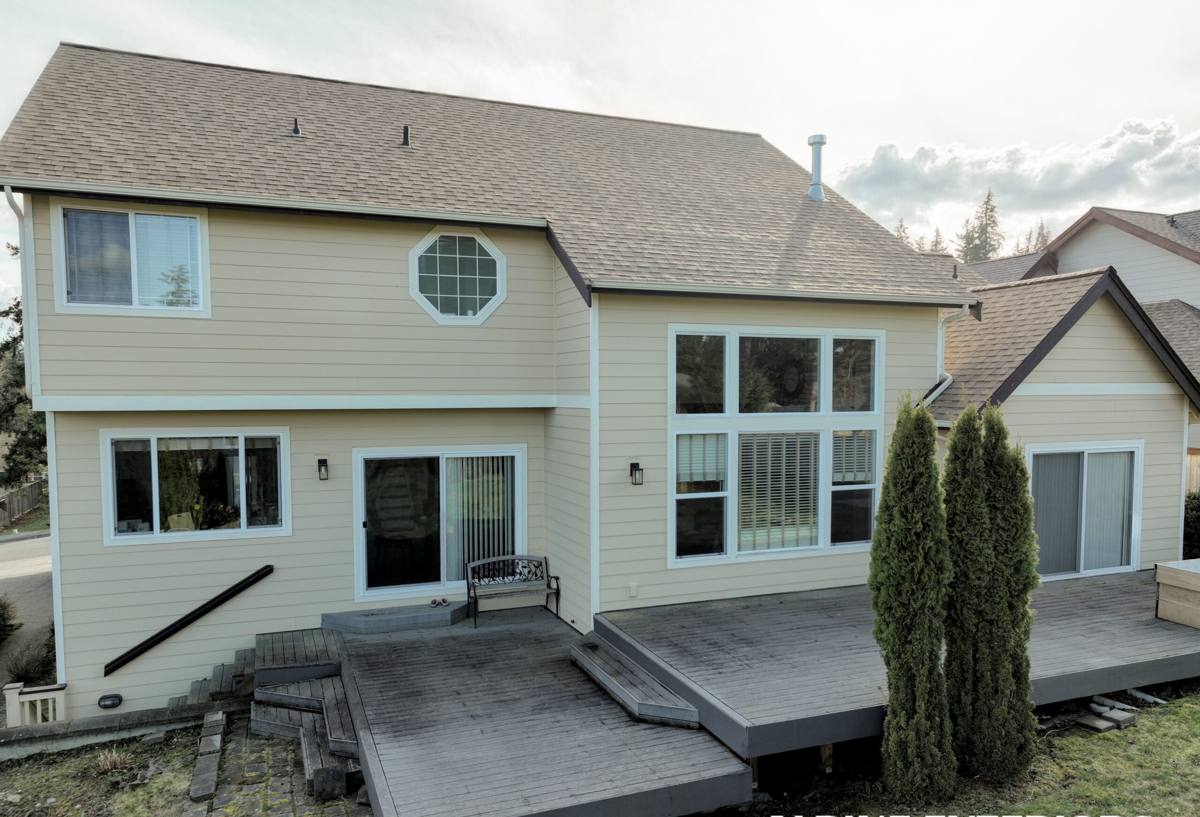
What a Correctly Built Deck Requires Here
Framing That Accounts for Wind and Moisture
Florida's building code isn't the same as a standard national deck guide — wind load and uplift resistance are baked into span tables, connector requirements, and ledger attachment methods specifically because this state gets hit by tropical systems on a predictable schedule. Framing lumber needs to be properly rated, spaced, and connected with hardware designed to resist both lateral wind loads and the uplift forces that try to peel a deck off a house during a storm.
Ledger Attachment Done Right
The ledger board — where the deck attaches to the house — is the single most common failure point on poorly built decks nationwide, and it matters even more in a wind-prone area. Proper flashing keeps wind-driven rain from getting behind the ledger and rotting the house's rim joist from the inside out, which is a slow, hidden problem that often isn't discovered until the deck is already sagging.
Footings Sized for Florida Soil
Footings need to be sized and set to local code, accounting for Pinellas County's sandy soil composition and the frost-free depth requirements that are different from what a contractor coming from a northern state might default to. Undersized or shallow footings are a common shortcut that doesn't show up as a problem until the deck starts to shift or rack.
Choosing a Decking Material That Holds Up
The decking surface itself takes the most direct abuse from sun and rain, so material choice matters more in Pinellas Park than it would in a milder climate. There's no universally "best" option — each has real trade-offs in cost, maintenance, and long-term behavior in heat and humidity.
| Material | UV & Heat Behavior | Moisture Behavior | Maintenance |
|---|---|---|---|
| Pressure-treated wood | Fades and can check/split under intense sun without upkeep | Absorbs and releases moisture; prone to cupping if not sealed | Needs sealing/staining every 1-2 years in this climate |
| Composite decking | Resists fading better than wood; can retain more surface heat underfoot | Doesn't rot or absorb water like wood; some older formulations can trap moisture at the core if capped stock isn't used | Occasional washing; no sealing or staining required |
| PVC/cellular decking | Very stable in sun; some lighter colors resist heat gain | Fully moisture-resistant; won't rot or support mold growth | Lowest maintenance; higher upfront material cost |
| Tropical hardwoods | Naturally dense and UV-resistant, but color fades without oil treatment | Naturally moisture-resistant when properly finished | Requires periodic oiling to maintain color and prevent surface checking |
We'll walk through these trade-offs honestly based on your budget, how much upkeep you actually want to commit to, and how the deck will be used. A pool deck that stays wet often needs a different answer than a shaded deck off a back porch.
Fasteners and Hardware: Where Salt Air Does the Most Damage
This is the detail that separates a deck that looks good for two years from one that holds up for fifteen. Standard galvanized fasteners can start showing corrosion and staining within a couple of seasons in a coastal-influenced climate like Pinellas County's, especially anywhere close to a pool or exposed to prevailing Gulf winds. We use stainless steel or heavy-duty coated fasteners and structural connectors rated for the moisture and salt exposure this area sees, along with hardware compatible with whatever treated lumber or composite system is being installed — mixing incompatible metals and treated wood chemistry accelerates corrosion in ways that aren't obvious until streaking and hardware failure show up.
Our Deck Building Process
- On-site assessment — we look at your yard's drainage, sun exposure, existing structure (if attaching to the house), and any HOA or setback considerations specific to your Pinellas Park property.
- Design and material selection — we go over decking material, railing style, and layout based on how you'll actually use the space and your maintenance tolerance.
- Permitting — we handle the permit application and code review with Pinellas Park and Pinellas County as required for the scope of work.
- Framing and structural work — footings, posts, beams, joists, and ledger attachment (if applicable), built to current Florida code for wind and moisture.
- Decking, railing, and finish work — surface installation, railing systems, stairs, and any fascia or skirting.
- Final inspection and walkthrough — we make sure the deck passes inspection and walk you through what maintenance (if any) the material you chose will need.
Permits and Code Compliance for Pinellas Park Decks
Most deck projects in Pinellas Park require a building permit, and the specifics — required inspections, setback rules, railing height requirements above a certain deck height, and structural review — are handled at the local level. Skipping the permit process is a real risk: unpermitted work can complicate a future home sale, create insurance claim issues after storm damage, and in some cases require the deck to be torn out and rebuilt to code. We pull the appropriate permits and schedule inspections as part of the job, so you're not left sorting that out after the fact.
Protecting Your Deck After It's Built
How much upkeep a deck needs depends heavily on the material you chose, but a few habits apply across the board in this climate:
- Rinse the deck surface periodically to clear salt residue, pollen, and organic buildup before it stains the surface
- Check fastener heads and hardware once or twice a year for early signs of corrosion or loosening
- Reseal or restain wood decking on the schedule appropriate to the product — don't wait until it's visibly gray and dry
- Keep gutters and downspouts near the deck clear so runoff isn't pooling against footings or ledger flashing
- After any major storm, do a quick visual check of railings, stairs, and the ledger connection before heavy use resumes
- Trim back vegetation that's holding moisture against the deck structure or blocking airflow underneath
Common Mistakes We See on Older Pinellas Park Decks
A lot of the repair and rebuild calls we get in this area trace back to the same handful of shortcuts: ledger boards attached without proper flashing, standard fasteners used instead of corrosion-resistant hardware, footings that are undersized for the deck's actual load, and railings that weren't secured to resist wind loading. None of these show up as a problem on day one — they show up two, five, or ten years later, usually after a storm season has had time to find the weak point. Building it correctly the first time costs less than fixing it after the fact, and it's a lot less disruptive than a mid-life deck rebuild.
Why Local Experience in Pinellas Park Matters
A contractor who already works in Pinellas Park and the surrounding Pinellas County area knows the local permitting process, understands how the sandy soil here behaves for footings, and has already seen how different decking materials actually perform through a full Florida summer and hurricane season — not just how they're rated on paper. That local track record means fewer surprises during permitting, a build that's sized correctly for this area's wind and soil conditions from the start, and a crew that's around after the job is done if you ever have a question about maintenance or storm prep.
If you're planning a new deck or replacing one that's showing its age, we're happy to come take a look and give you a straightforward, no-pressure estimate — just fill out the form below and we'll get in touch.