 St. Petersburg Siding
 Building a Deck in Pinellas Point Isn't the Same as Building One Inland
Pinellas Point sits at the southern tip of St. Petersburg, close enough to Tampa Bay and Boca Ciega Bay that the air itself is different from a deck job twenty miles north in a landlocked subdivision. Salt-laden humidity settles into fasteners and framing hardware year-round. UV exposure here runs stronger and more consistent than almost anywhere else in the continental U.S., which breaks down wood fibers and fades or chalks lower-grade composite decking faster than manufacturers like to advertise. And when a named storm tracks up the Gulf or through Tampa Bay, a deck near the water takes wind-driven rain and gusts that a builder working from a generic spec sheet won't have accounted for.
None of this means a deck in Pinellas Point can't last. It means the material choices, fastener grade, and framing details that are "good enough" in a drier, calmer climate aren't good enough here. A deck built to a national average standard is a deck that's going to show corrosion streaks, loose railings, and cupped boards years ahead of schedule.
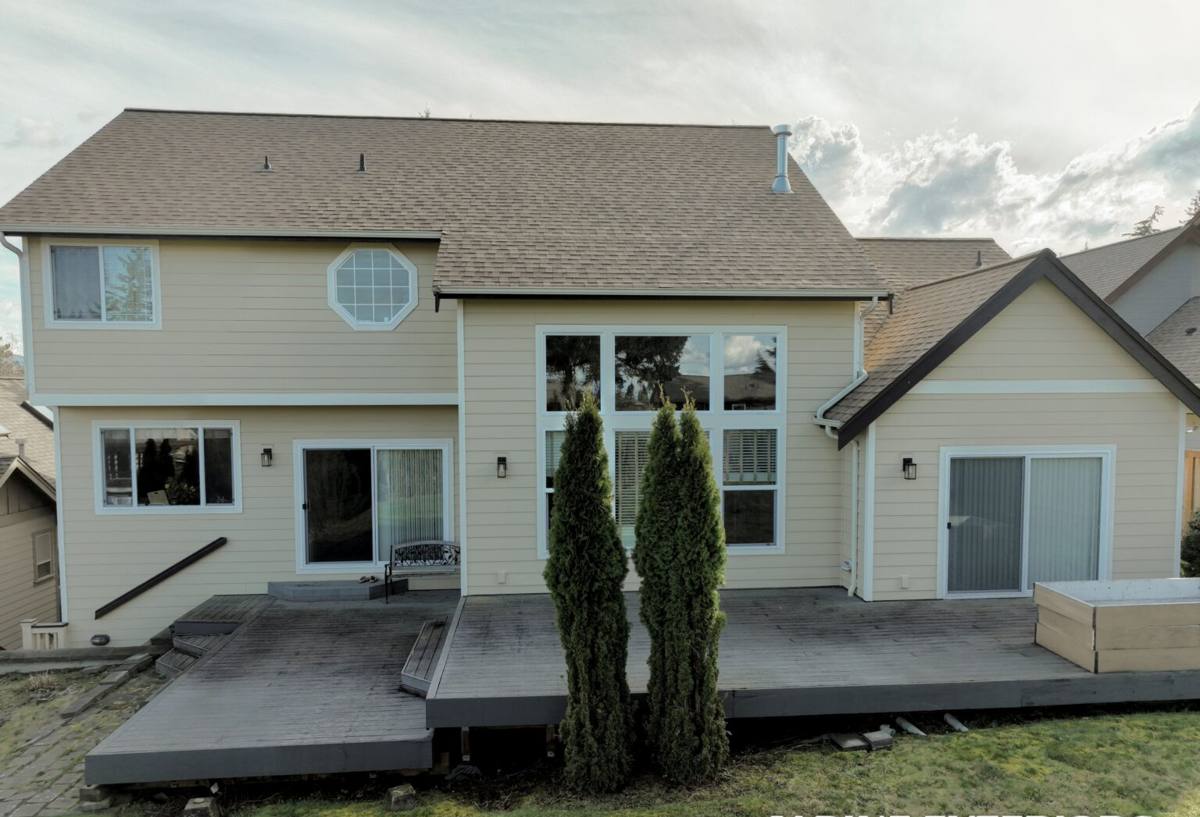
What Local Conditions Actually Demand From a Deck
Salt Air and Corrosion
Standard zinc-coated screws and joist hangers hold up fine in most of the country. Close to Pinellas County's shoreline, that same coating can start breaking down within a few seasons, especially on decks with any water view or exposure to onshore breezes. Once a fastener starts to rust, it weakens, stains the surrounding wood or composite, and eventually needs replacing — which means pulling boards.
UV and Heat
Florida sun bleaches wood tone, degrades sealers, and can make dark-colored composite decking uncomfortably hot underfoot in summer. Homeowners who choose decking purely on showroom looks are sometimes surprised the first July they walk on it barefoot.
Wind and Wind-Driven Rain
Pinellas County requires framing and attachment methods that account for hurricane-region wind loads, not just gravity loads. That affects how a ledger board is bolted to the house, how joists are hung, and how railings and posts are anchored — details that are invisible once the deck is finished but matter enormously when a storm rolls through.
Moisture and Ventilation
High humidity plus afternoon thunderstorms means decking needs proper gapping and airflow underneath to shed water and resist mold and mildew growth, particularly on lower or ground-level decks with limited air circulation.
Decking Material Options for This Climate
There's no single "best" decking material — there's a best fit for the budget, the maintenance appetite, and how close the deck sits to salt air and direct sun. Here's how the common options actually compare for a Pinellas Point install:
| Material | Salt Air Resistance | Heat Underfoot | Maintenance | Typical Lifespan Here |
|---|---|---|---|---|
| Pressure-treated pine | Fair — needs sealing | Moderate | Annual sealing/staining | 10–15 years with upkeep |
| Tropical hardwood (e.g., ipe) | Good | Low-moderate | Periodic oiling | 20-25+ years |
| Capped composite | Excellent | Higher in dark colors | Occasional washing | 25-30 years |
| PVC decking | Excellent | Moderate to high | Occasional washing | 25-30+ years |
We steer most Pinellas Point homeowners toward capped composite or PVC for anything within a block or two of open water, simply because the maintenance burden of sealing and re-staining wood in this humidity is real and recurring. That's an honest trade-off, not a knock on wood decking — some homeowners genuinely prefer the natural look and are willing to keep up with the sealing schedule, and for shaded or more inland lots, a well-maintained wood deck holds up fine.
Framing and Hardware: Where Corners Actually Get Cut
The decking boards are what a homeowner sees and touches, but the framing underneath is what determines whether the deck is still solid in ten years. This is also where a rushed or budget build cuts corners, because nobody's inspecting it after the final board goes down.
- Ledger board bolted (not just nailed) into structural framing, with proper flashing to keep water from getting behind it
- Stainless steel or heavy-duty coated fasteners rated for coastal/ground-contact exposure, not standard interior-grade hardware
- Hot-dip galvanized or stainless joist hangers and post bases, sized correctly for the load
- Concrete footings poured to local frost-free depth requirements and sized for both vertical load and uplift resistance
- Railing posts through-bolted into framing, not just toe-screwed into decking boards
- Proper board spacing for drainage and airflow underneath the structure
If a contractor's bid seems noticeably cheaper than others, this is usually where the savings come from — lighter hardware, fewer footings, or standard fasteners instead of corrosion-rated ones. It doesn't show up as a problem on day one. It shows up two or three humid seasons later.
Permitting and Wind Load in St. Petersburg
Deck construction in St. Petersburg and unincorporated Pinellas County requires a building permit in most cases, and inspections at key stages — typically footings/framing before decking goes on, and a final inspection. The permit process also confirms the design meets current wind load requirements for the area, which is not optional in a hurricane-prone county. Homeowners occasionally ask us to skip the permit to save time or money; we won't do that. An unpermitted deck can complicate a home sale, cause issues with insurance claims after storm damage, and in some cases requires being torn out. Pulling the permit and scheduling inspections adds a little time upfront, but it's the only way to know the structure is actually built to code rather than just built to look finished.
Elevation and Drainage
Because much of Pinellas Point sits at low elevation relative to the bay, drainage and finished grade around the deck's footings matter more here than on a higher, inland lot. We check how water moves across the yard during heavy rain before finalizing footing placement, so the deck isn't sitting somewhere that collects standing water after every summer storm.
How We Approach a Pinellas Point Deck Project
1. On-Site Assessment
We walk the property, look at sun exposure, wind exposure, drainage, and how close the deck will sit to the house's existing structure and utilities. Proximity to water and prevailing wind direction both factor into material and hardware recommendations.
2. Design and Material Selection
We go over decking material options honestly, including maintenance expectations for each, and design the layout, railing style, and any stairs or multi-level sections around how the space will actually be used.
3. Permitting
We handle the permit application and coordinate required inspections with the city or county so the homeowner isn't chasing paperwork.
4. Framing and Structural Work
Footings, ledger attachment, and framing go in first, built to the wind and load requirements noted above, and this stage gets inspected before we move on.
5. Decking, Railing, and Finish Work
Decking boards, railings, stairs, and any lighting or finishing details are installed, with attention to fastener placement and spacing for drainage.
6. Final Walkthrough
We walk the finished deck with the homeowner, confirm everything meets the agreed design, and go over basic care specific to whatever material was installed.
Keeping a Coastal Deck in Good Shape
Every deck material needs some upkeep in this climate — the difference is how much and how often. This basic checklist applies to most Pinellas Point decks regardless of material:
- Rinse off salt residue and debris periodically, especially after storms with onshore wind
- Check railings and stair posts twice a year for any looseness at the connection points
- Inspect fasteners for early rust staining, particularly on wood decks
- Keep gutters and downspouts near the deck clear so runoff isn't pooling against footings
- Re-seal or re-stain wood decking on the schedule recommended for the specific wood species
- Sweep out debris between boards to keep drainage gaps clear
- After any major storm, do a visual check of framing connections and post bases before heavy use
Why a Crew That Already Works Pinellas Point Is Worth Choosing
A contractor who works Pinellas County regularly already knows the local permitting office's process, the inspectors' expectations, and which fastener and hardware grades actually hold up a few blocks from Tampa Bay versus what's sold as "standard" at a big-box store. That's not a marketing line — it's the difference between a first design that meets code and drainage reality on the first pass, versus back-and-forth revisions after a permit gets kicked back or a footing needs to be relocated. A crew based here also isn't disappearing to the next county over if a warranty issue or a post-storm check-in comes up. For a structure that's meant to hold up under Gulf Coast sun, salt air, and hurricane season for decades, that local continuity matters as much as the materials themselves.
If you're planning a new deck or replacing an aging one in Pinellas Point, we're happy to come take a look, walk the property, and put together a straightforward estimate — no pressure, no obligation. Use the form below to get started.