 St. Petersburg Siding
 A Peninsula Neighborhood That's Hard on Siding
Pinellas Point sits on a peninsula in south St. Petersburg, with water on multiple sides and open exposure that most inland Pinellas County neighborhoods don't deal with. Homes here take a steadier beating from wind-driven rain, salt-laden air, and direct sun than siding manufacturers assume when they write general installation guidelines. That's not a knock on the neighborhood — it's simply the trade-off of living close to the water. It does mean the siding on a Pinellas Point home has a harder job to do than siding on a home ten miles inland, and it needs to be installed with that reality in mind, not as an afterthought.
We work in this area regularly, which matters more than it sounds like it should. A crew that's only seen a handful of coastal-adjacent jobs tends to install siding the same way they would in a subdivision away from the water. A crew that works Pinellas Point routinely already knows where moisture collects, which elevations take the worst weather, and what actually holds up over years, not just what passes inspection on install day.
What Siding Has to Withstand Here
Hurricane-Force Wind
Pinellas County sits in a high-wind coastal zone, and Pinellas Point's exposure means gusts arrive with less to slow them down first. Siding that isn't fastened to the manufacturer's wind-rated spacing and nailing pattern can work loose, crack at the edges, or blow off outright in a strong storm — and once a section fails, wind-driven rain gets behind the wall assembly and the damage compounds fast.
Year-Round, High-Intensity UV
Florida sun doesn't take a season off. Siding with a painted-on finish — especially field-applied paint — chalks, fades, and breaks down faster here than it would in a milder climate. The finish is your siding's first line of defense; when it degrades, the substrate underneath is exposed to moisture and heat cycling it wasn't designed to face alone.
Wind-Driven Rain
It's not the rain itself that causes most siding failures — it's rain pushed sideways and upward by wind, forced into seams, laps, and penetrations that were never properly flashed or sealed. This is where installation quality matters more than product choice. Even a premium siding product will fail early if the water management behind it was done carelessly.
Salt Air
Salt in the air accelerates corrosion of fasteners, trim accessories, and any exposed metal, and it can contribute to premature wear on lower-grade siding materials. Homes closer to open water see this effect more than homes set further back, which is part of why material and hardware selection is not a one-size-fits-all decision across St. Petersburg.
Why Fiber Cement Is the Right Category of Material Here
Fiber cement is dense, dimensionally stable, and non-combustible. It doesn't warp, swell, or rot the way wood-based products can when they take on repeated moisture exposure, and it holds paint and factory finishes far longer than most alternatives because the substrate itself doesn't move much with humidity and temperature swings. For a peninsula neighborhood dealing with sun, salt, and storms in the same year, that stability is the whole point.
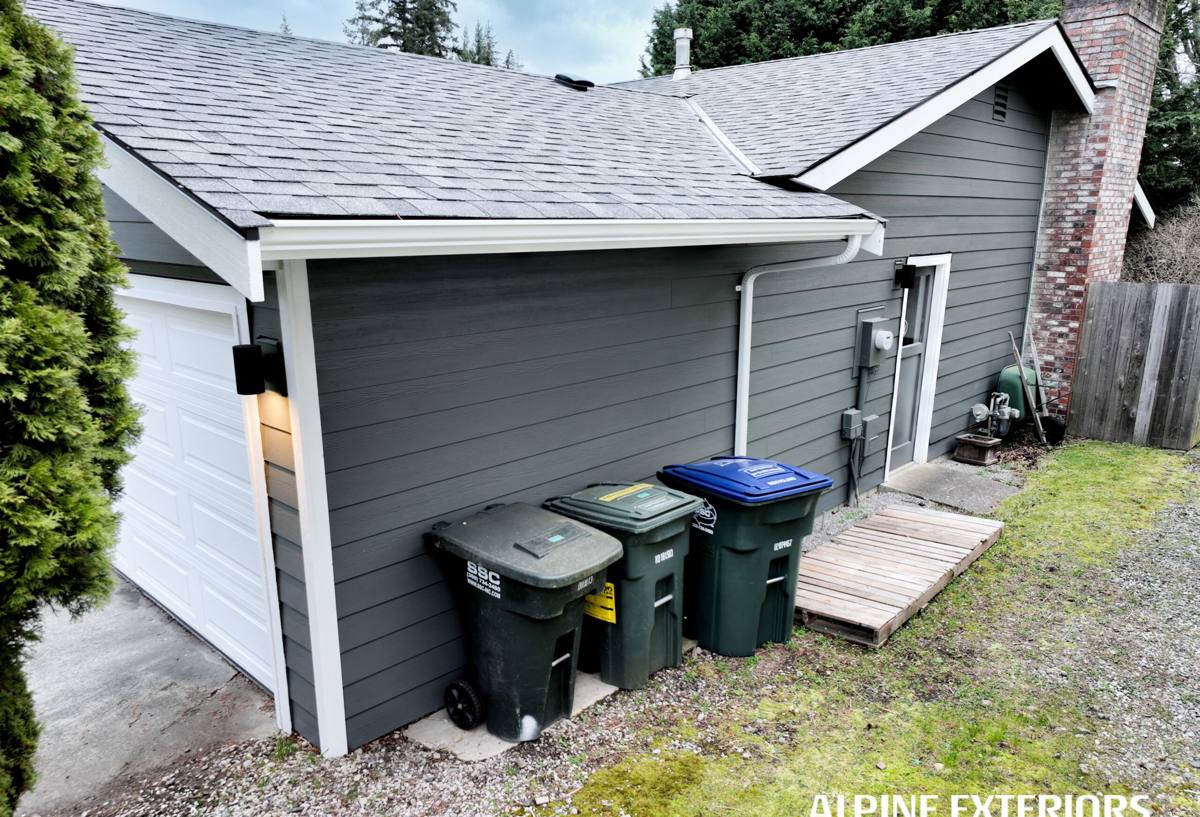
We install James Hardie fiber cement siding exclusively — we don't install vinyl, LP SmartSide, Cemplank, Allura, or primed wood siding. That's a deliberate standard, not a sales pitch. Hardie's ColorPlus factory finish is baked on and warrantied against fading and peeling in a way field-applied paint isn't, its HZ5 product line is engineered specifically for Florida's humidity and moisture exposure, and the company backs installations with a long, transferable limited warranty when the job is done to spec. We'd rather install one product line correctly, every time, than juggle several and hope each one holds up.
What a Correct Installation Actually Involves
Moisture Management Behind the Siding
The siding itself is the least important part of keeping water out of a wall. A correctly installed weather-resistive barrier, properly lapped and taped seams, and flashing at every window, door, and penetration are what actually stop wind-driven rain. Skip this and even the best siding on the market will eventually let water in behind it.
Fastening for Wind Exposure
James Hardie publishes specific nailing patterns and fastener spacing tied to wind zone and exposure category. A peninsula lot facing open water may call for tighter fastener spacing than a sheltered inland lot a mile away. This is a case where "close enough" isn't — under-fastened siding is one of the most common causes of wind failure we see.
Clearance and Drainage
Fiber cement siding needs proper clearance from grade, roofing, decks, and other hard surfaces, plus a drainage gap in many wall assemblies, so water has somewhere to go instead of wicking into the bottom edge of the boards. Butt joints need to be caulked and back-primed or fitted with a joint flashing system — not just pushed tight and painted over.
Trim and Accessory Selection
Corner boards, trim, and fasteners should be corrosion-resistant given the salt air near the water. Mixing budget trim hardware with premium siding is a common shortcut that shows up as rust streaks and failed joints years before the siding itself would have needed attention.
Choosing the Right Hardie Line and Profile
Not every Hardie product or profile fits every home. HardiePlank lap siding is the most common choice for the traditional look found throughout St. Petersburg, while HardieShingle or HardiePanel may suit an accent wall, gable, or a home with a more coastal or craftsman style. For homes with direct or near-direct water exposure, we lean toward the HZ5 formulation and pay closer attention to fastener and flashing detail regardless of which profile is chosen. Color and texture are worth walking through in person, since ColorPlus finishes and reveal sizes read differently in strong Florida sun than they do on a sample chip.
Our Process for Pinellas Point Homes
- Exterior assessment: we walk the whole home, not just the visibly damaged sections, checking for moisture intrusion, soft trim, and areas where wind or water exposure is worse than average.
- Moisture and substrate check: where existing siding or sheathing shows signs of water damage, we identify it before covering it back up — installing new siding over a wet wall just hides the problem.
- Water management plan: weather-resistive barrier, flashing details, and drainage approach are mapped out for the specific home before the first board goes up.
- Installation to Hardie's fastening and clearance specs: adjusted for the home's exposure, not just installed by generic default.
- Final walkthrough: we review the completed work with you, including how the warranty registration works and what maintenance, if any, is expected going forward.
What Drives Cost on a Job Like This
| Factor | Why It Matters Here |
|---|---|
| Extent of moisture or substrate damage found | Coastal exposure means a higher chance of hidden rot behind old siding that needs to be addressed before re-siding |
| Home elevation and wall height | Peninsula lots with water views often have more exposed wall area and access complexity |
| Siding profile and finish selection | Lap, shingle, and panel profiles, plus ColorPlus color, affect material cost |
| Trim, corner, and flashing detail | Corrosion-resistant hardware and proper flashing cost more upfront but prevent early failure |
| Existing siding removal and disposal | Tear-off scope depends on the current material and its condition |
We provide a written estimate after an in-person assessment rather than a phone-quote guess, since two homes of similar size on the same street can have very different scopes of work once we're up on a ladder.
Maintenance in a Salt-Air Coastal Climate
Fiber cement is low-maintenance, not no-maintenance. In a salt-air environment near the water, we recommend homeowners periodically rinse the exterior to clear salt residue and check caulked joints and trim annually for cracking or separation. ColorPlus finishes hold their color far longer than field-applied paint, but caulking and sealant at joints and penetrations is the part of any siding job that ages fastest and is worth a quick yearly look.
Signs Your Current Siding Needs Attention
- Visible warping, buckling, or soft spots when pressed
- Cracked or missing caulk at joints, corners, and window trim
- Peeling or chalking paint, especially on sun-facing walls
- Rust staining running down from fasteners or trim
- Soft or discolored drywall or trim on the interior near exterior walls
Why Local Experience on This Specific Job Matters
A siding crew that regularly works Pinellas Point has already seen how water moves around this particular kind of lot, which walls take the worst of the wind, and where past installs in the area have failed early and why. That's knowledge you can't get from a manufacturer's install manual alone — it comes from doing the work here, on homes with the same exposure yours has. Combined with installing only one product system we know inside and out, that local pattern-recognition is what keeps a siding job from becoming a five-year problem instead of a decades-long solution.
If you're weighing a siding replacement or repair for a Pinellas Point home, we're happy to take a look and walk you through what we're seeing — no pressure, no obligation. Reach out below for a free estimate.