 St. Petersburg Siding
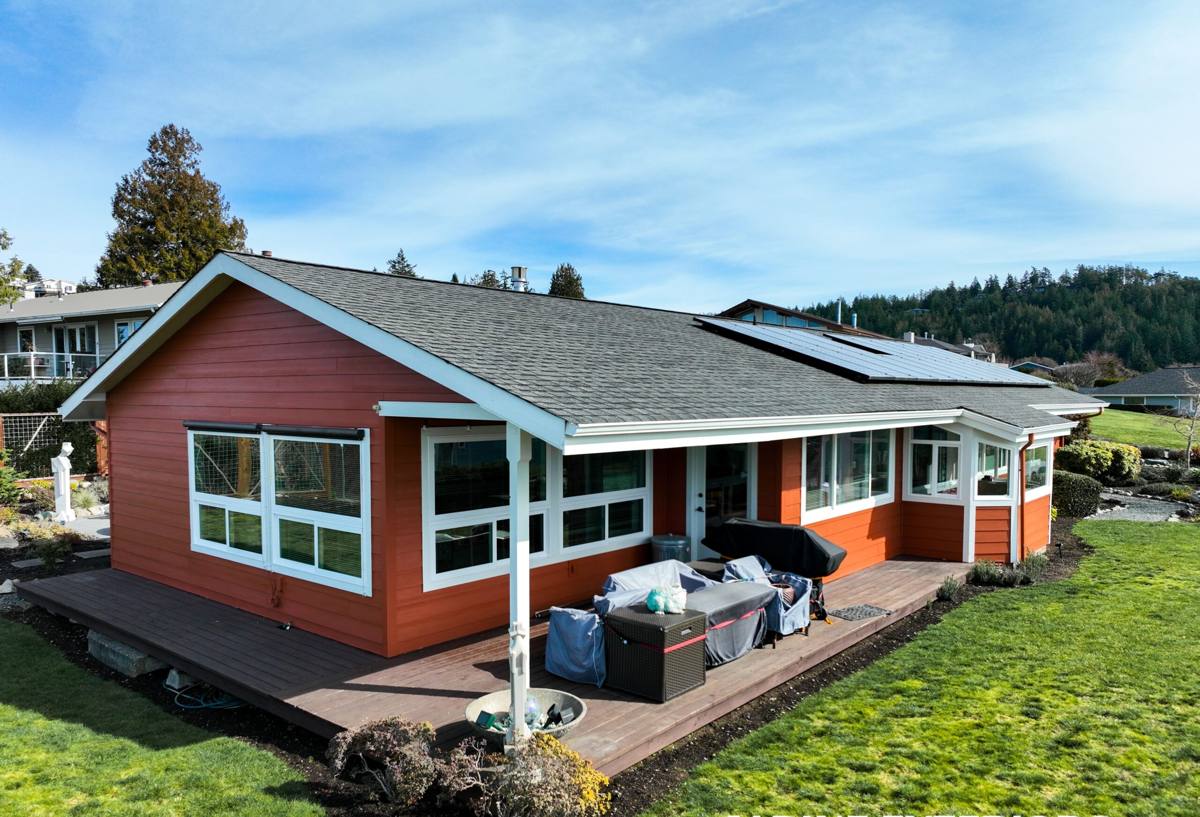
 Board & Batten Siding in Shore Acres: What the Climate Actually Demands
Shore Acres sits along the water on St. Petersburg's northeast side, and that waterfront position shapes everything about how siding performs there. Homes in this part of Pinellas County take on a combination most inland neighborhoods don't see at the same intensity: near-constant humidity off the bay, salt-laden air that corrodes fasteners and finishes faster than it does a few miles inland, intense year-round UV that bakes exposed surfaces, and the wind-driven rain that comes with every tropical system and seasonal squall line. Board and batten siding — with its vertical panels and raised battens creating extra seams and shadow lines — has more places for water to find a way in than a flat lap profile does if it's not detailed correctly.
That's the honest starting point for this page: board and batten is a great look for the coastal, craftsman, and Florida-vernacular styles common in Shore Acres, but it is less forgiving of shortcuts than standard horizontal lap siding. Get the material, the fastening, and the water management right, and it will outlast anything a builder-grade install can offer. Get it wrong, and the same styling that makes it attractive becomes the reason water gets behind the wall.
What "waterfront exposure" means for a siding job
Being close to the water doesn't just mean occasional flooding risk during storms — it means the building envelope is dealing with airborne salt and moisture on a daily basis, year-round. Metal components corrode faster. Caulk and sealants break down sooner under UV and salt exposure. And any siding product with a weak point for moisture intrusion — a poorly sealed batten seam, an unflashed window head, a butt joint without proper backing — will show problems on a Shore Acres home well before it would on the same house set back from the water.
Why We Only Install James Hardie for This Application
We install James Hardie fiber cement exclusively — we don't offer vinyl board and batten, LP SmartSide, Cemplank, Allura, or primed wood alternatives, and on a job like this the reasoning is straightforward.
Board and batten specifically punishes the wrong material choice
Vertical board and batten profiles have more seams per square foot than lap siding, and every seam is a place where the material's dimensional stability matters. Vinyl board and batten expands and contracts significantly with heat, which is a real problem under intense Florida sun — panels can bow, buckle, or pull loose from fasteners over time, and vinyl offers essentially no impact resistance against wind-driven debris. Engineered wood products like LP SmartSide perform reasonably well when perfectly maintained, but they depend on an intact factory coating and diligent caulking to keep moisture out of the wood strand core; skip a re-caulk cycle in a salt-air environment and you're inviting rot exactly at the seams this profile is full of. Primed wood and cedar board and batten look beautiful but require the most maintenance of all in humid coastal air — repainting, sealing, and monitoring for moisture damage on a recurring schedule.
James Hardie fiber cement doesn't expand and contract the way vinyl does, isn't a wood product that can rot, and holds its factory finish far longer under UV and salt exposure than site-painted alternatives. That's not marketing — it's the specific reason we standardized on it before we ever raised the question of what to install on a home near the water.
The HardiePanel and batten system
For this style, we install James Hardie vertical panel siding (HardiePanel) with Hardie trim battens over the seams, or a true board-and-batten configuration depending on the home's design and existing wall condition. James Hardie's HZ10 product line is engineered specifically for humid, high-moisture climate zones like the Gulf Coast — it's formulated to resist moisture-related damage that generic fiber cement or wood-based products aren't built for. The factory-applied ColorPlus finish is baked on and warrantied against fading and peeling, which matters enormously in a location getting this much direct sun exposure.
What a Correct Board and Batten Installation Involves
The visual result of board and batten siding is simple — vertical lines and shadow reveals. What's happening behind those lines is where the job is won or lost.
Water management comes before the siding goes up
- A weather-resistant barrier installed correctly, lapped shingle-style so water sheds outward and down, never inward
- Proper flashing at every window and door head, integrated with the barrier — not just caulked as an afterthought
- Correct fastener placement and spacing per James Hardie's published installation instructions, not "close enough"
- Rain-screen or furring strategy where the wall assembly calls for it, so panels aren't sitting flush against a moisture-trapping surface
- Batten seams sealed and fastened per spec, since these are the highest-risk points on a vertical profile
- Bottom clearance maintained above grade, decks, and roof lines so the siding isn't wicking up ground or splash moisture
- Butt joints backed and sealed, not simply pushed together and caulked over
Every one of those steps is invisible once the job is finished. That's exactly why it matters who's doing the work — a rushed or unfamiliar crew can produce a board and batten job that looks correct for a year or two before problems at the seams and flashing points start showing up.
Why manufacturer specifications aren't optional
James Hardie publishes detailed installation requirements for a reason: their product warranty depends on the installation meeting those specs. A crew that doesn't install to spec can void the manufacturer warranty even when the product itself is sound. This is one of the most common gaps between a low bid and a job done right — the material cost is the same either way, but the labor and attention to detail behind the walls is not.
Comparing Siding Options for a Shore Acres Home
| Factor | James Hardie Fiber Cement | Vinyl Board & Batten | Engineered Wood (e.g. LP SmartSide) | Primed Wood / Cedar |
|---|---|---|---|---|
| Salt air / coastal durability | Strong — non-combustible, engineered for humid climates (HZ10) | Moderate — can warp/bow under heat, seams stress over time | Moderate — depends on unbroken coating and caulk maintenance | Weakest — needs ongoing sealing and repainting |
| UV / fade resistance | Factory ColorPlus finish, long fade warranty | Fades and chalks over time, color is molded-in not finish-applied | Factory finish, but touch-up matching can be difficult | Fades quickly, repaint cycle required |
| Wind/impact resistance | High — rigid, holds up to wind-driven debris | Lower — can crack or blow off in high wind | Moderate | Moderate, dents and dings show |
| Maintenance burden | Low — occasional wash, no repainting | Low labor but limited repair options | Moderate — caulk and coating upkeep required | High — recurring paint/seal schedule |
| Fire performance | Non-combustible | Combustible | Combustible | Combustible |
How Our Process Works for a Shore Acres Job
Assessment before anything is quoted
We walk the exterior and look specifically at what a waterfront St. Petersburg home tends to show: soffit and fascia condition, existing moisture damage at window heads and bottom courses, current flashing (or lack of it), and how the existing siding — whatever it is — has handled the salt air and sun exposure so far. That inspection is what a real estimate is based on, not a generic per-square-foot number.
A crew that already works this area
A crew that regularly works Shore Acres and the surrounding St. Petersburg neighborhoods isn't guessing at what this climate does to a wall assembly — they've seen which details hold up and which ones fail first in this exact environment. That translates into fewer callbacks, correct flashing choices without having to relearn them on your house, and a realistic sense of timeline around Florida's rainy season and storm windows.
What happens during installation
- Removal of existing siding and inspection of the sheathing underneath for hidden moisture or rot
- Repair of any compromised sheathing before a single panel goes up — covering a problem is not an option
- Weather-resistant barrier and flashing installed to spec
- James Hardie panels and battens installed with correct fastening, spacing, and seam treatment
- Final inspection of seams, corners, and penetrations before the job is called complete
Cost Factors Homeowners Should Understand
Board and batten costs more in labor than a straightforward lap siding job because of the extra trim work and seam detailing, and pricing on any given home depends on a handful of concrete factors rather than a flat rate.
| Factor | Why it affects cost |
|---|---|
| Extent of sheathing repair needed | Hidden moisture damage found during tear-off adds labor before new siding can go up |
| Wall height and roofline complexity | More cuts, corners, and staging affect labor time |
| Amount of trim and batten detail | Board and batten inherently requires more trim work than lap siding |
| Window and door count | Each opening needs correct flashing and trim integration |
| Existing siding removal | Full tear-off vs. simpler substrate conditions changes labor scope |
We give a firm, written number after the on-site assessment — not a phone estimate — because the factors above genuinely change the job.
What to Ask Any Contractor Bidding This Job
- Are they James Hardie certified or experienced specifically with fiber cement board and batten installation, not just lap siding?
- Will they detail flashing and the weather-resistant barrier before any panels go up, and can they explain how?
- Do they inspect and repair sheathing as part of the job, or just cover what's there?
- Can they speak to how they handle seams and fastening for a vertical profile specifically?
- Are they familiar with St. Petersburg permitting and wind-load requirements for exterior work?
- Do they carry proper licensing and insurance, and will they put the installation spec in writing?
Longevity and Maintenance After Installation
Once a James Hardie board and batten system is installed correctly, upkeep in Shore Acres is genuinely low. An occasional rinse to clear salt residue and pollen, a visual check of caulking at trim joints every year or two, and prompt attention if a storm causes any impact damage is realistically all it takes. Compare that to the recurring repaint and reseal cycle that wood and engineered-wood products need in this climate, and the lower long-term burden is a major part of why we don't offer those alternatives even when they'd be a cheaper day-one quote.
If you're weighing board and batten siding for a Shore Acres home, we're glad to come take a look and walk you through what your specific house needs — no pressure, no generic phone quote, just a straight assessment and a written estimate. Reach out below to get a free evaluation scheduled.