 St. Petersburg Siding
 Shore Acres Homes Face a Specific Set of Exterior Problems
Shore Acres sits close to Tampa Bay, which means the homes here take on a combination of exterior stressors that inland Pinellas County neighborhoods don't deal with in the same way. Salt-laden air moves off the water and settles on siding, trim, and fasteners year-round. Afternoon storms roll in fast and hard, driving rain sideways against the sides of the house that face the water or open yard. And the sun is simply relentless — Florida gets more UV exposure than almost anywhere else in the country, and it doesn't let up seasonally the way it does farther north.
Add hurricane season into that mix and you get a climate that is genuinely tough on building materials. Siding in Shore Acres isn't just a cosmetic layer — it's the first line of defense against wind-driven rain finding its way behind the wall assembly, and against UV degrading whatever's on the outside of the house. Homeowners here who've dealt with wood siding, older vinyl, or peeling paint know this isn't theoretical. It's a maintenance cycle that never fully stops.
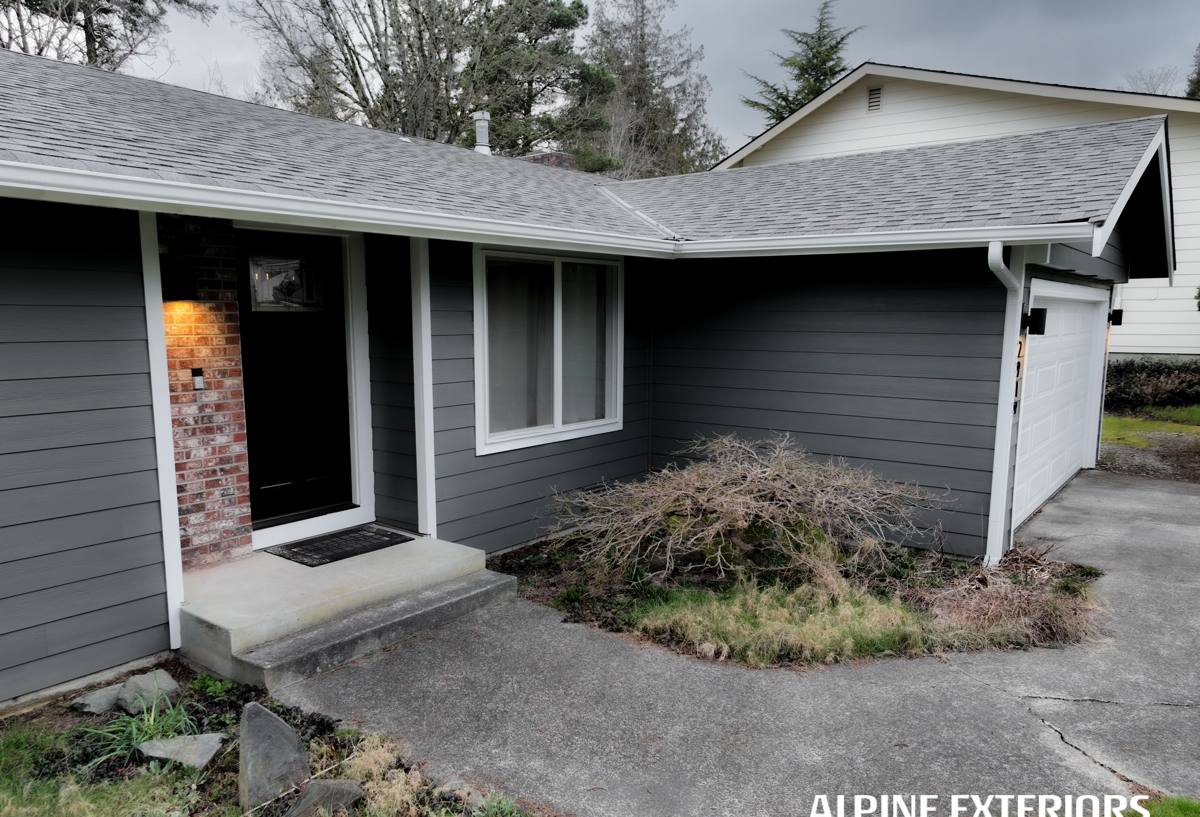
Why We Install Only James Hardie Fiber Cement
St. Petersburg Siding Co made a deliberate decision to install one product system — James Hardie fiber cement — rather than carrying multiple lines. That's not a marketing angle; it's because fiber cement is the material that actually holds up to what this specific climate does to a house.
Fiber cement is non-combustible, which matters in a state where afternoon lightning starts more than a few brush fires near residential areas. It doesn't rot, and it isn't food for wood-boring insects. Most importantly for a neighborhood like Shore Acres, it's engineered to resist moisture intrusion and doesn't warp or cup the way wood-based products can when they take on repeated wetting and drying cycles from wind-driven rain.
What This Means Specifically for a Salt-Air Environment
Salt air accelerates corrosion on fasteners and metal trim, and it can shorten the life of some paint systems by breaking down the finish faster than inland exposure would. James Hardie's ColorPlus Technology is a factory-applied, baked-on finish that's formulated to hold color and resist fading substantially better than field-applied paint — which matters when your house is absorbing salt spray and UV at the same time. We also spec corrosion-resistant fasteners on every Shore Acres install specifically because of the coastal exposure.
The HZ5 Product Line and Why It's the Right Fit Here
James Hardie engineers its siding in different formulations for different climate zones — this is a real engineering distinction, not a marketing label. For Florida and other Gulf Coast and hurricane-exposed regions, Hardie's HZ5 line is formulated with moisture and humidity resistance suited to this exact climate. It's built to perform in the wet, humid, storm-exposed conditions that define a Pinellas County summer.
This matters because siding that's engineered for a dry climate and shipped to a humid one can behave differently over time — moisture absorption rates, expansion and contraction behavior, and long-term durability are all climate-dependent. We install the HZ5 formulation on Shore Acres homes because it's what the product line was actually designed to do in this environment, not because it's the only option on a shelf.
| Concern | What Shore Acres Homes Face | How HZ5 James Hardie Addresses It |
|---|---|---|
| Wind-driven rain | Storms push moisture sideways into wall assemblies | Engineered moisture resistance, correct flashing and gapping at installation |
| UV exposure | Near year-round intense sun fades and chalks painted surfaces | ColorPlus factory finish holds color far longer than field paint |
| Salt air | Accelerates fastener corrosion and finish breakdown | Corrosion-resistant fastener specification, durable factory finish |
| High wind events | Hurricane-force gusts test attachment and edge details | Manufacturer-rated installation methods and fastening schedules |
| Humidity/moisture cycling | Constant wet-dry cycling degrades wood-based products | Fiber cement doesn't rot, swell, or support fungal growth |
What a Correct James Hardie Installation Actually Involves
The product is only half the equation. A huge amount of the long-term performance of James Hardie siding comes down to how it's installed — this is true everywhere, but it's especially unforgiving in a coastal wind-and-rain climate like Shore Acres, where installation shortcuts show up as real problems within a few storm seasons instead of a decade or more.
The Details That Separate a Correct Install From a Problem Waiting to Happen
- Proper clearance and gapping — siding needs the manufacturer-specified gap from rooflines, decks, and other trim to allow water to drain and the material to perform as engineered.
- Correct fastener type, spacing, and penetration — under-driven or over-driven fasteners, or the wrong fastener material, are one of the most common causes of premature siding failure.
- Weather-resistive barrier and flashing done right — the siding is the visible layer, but the water-management system behind it is what actually keeps a wall assembly dry during wind-driven rain.
- Butt joints and seams treated per spec — sealed and flashed correctly so they don't become entry points for moisture over time.
- Manufacturer-rated fastening schedule for wind zones — hurricane-prone areas call for tighter fastening patterns than the minimum spec used in calmer climates.
James Hardie backs its product with a strong, transferable limited warranty — but that warranty is tied to installation according to their guidelines. A crew that cuts corners on any of the above doesn't just risk premature failure; it can also put the manufacturer warranty itself at risk. That's part of why we treat installation method as seriously as product selection.
Our Process for Shore Acres Projects
1. On-Site Assessment
We walk the property, look at current siding condition, check for signs of moisture intrusion or underlying rot, and evaluate exposure — a home facing open water or prevailing wind gets different attention to detail than one tucked behind other structures.
2. Product and Color Selection
We go over HZ5 profile options (lap siding, board and batten, panel systems) and ColorPlus finish colors, factoring in what holds up well under intense Florida sun and what fits the look of the neighborhood.
3. Removal and Substrate Check
Old siding comes off and we inspect the sheathing underneath. Any moisture damage or rot gets addressed before new siding goes on — covering up an existing problem is how small issues become expensive ones.
4. Water Management Installation
Weather-resistive barrier, flashing at windows, doors, and penetrations, and correct overlaps get installed before a single piece of siding goes up. This layer does more long-term work than people expect.
5. Siding Installation to Manufacturer Spec
Correct gapping, fastening schedule, and joint treatment, installed by a crew that installs this exact product regularly rather than occasionally.
6. Final Walkthrough
We review the finished work with the homeowner and confirm everything matches what was scoped.
Why Local Experience in Shore Acres Specifically Matters
Siding installation isn't one-size-fits-all across Pinellas County. A crew that regularly works the neighborhoods closer to the water understands things that don't show up in a generic install checklist: which sides of a house take the worst of prevailing wind and storm exposure, how salt air affects fastener choice over years rather than months, and what kind of substrate condition to expect on homes of a certain age in this part of St. Petersburg.
That local pattern recognition is the difference between a crew that installs a product correctly on paper and one that installs it correctly for this specific environment. It also means faster, more accurate estimates — we're not guessing at exposure conditions, we already know what this neighborhood's homes are up against.
Cost Factors for Shore Acres Homes
Every home is different, so we don't publish blanket pricing, but the main factors that move the number are consistent across projects:
- Home size and siding profile — square footage and whether you choose lap, panel, or board-and-batten styles.
- Substrate condition — whether removal reveals rot or moisture damage that needs repair before new siding goes on.
- Trim and detail work — corner boards, window trim, and architectural details add labor time.
- Home accessibility — lot size, landscaping, and how the crew can stage material and equipment.
- Color and finish selection — ColorPlus factory-finished options versus field-painted options can affect cost differently depending on the job.
We provide a written estimate after the on-site assessment so you know exactly what you're paying for and why, with no vague allowances hiding in the fine print.
Get a Straight Answer on Your Shore Acres Siding Project
If your siding is showing its age — fading, warping, soft spots, or just a look that's fallen behind the rest of the house — it's worth getting an honest, no-pressure look from a crew that installs James Hardie exclusively and knows what Shore Acres homes are up against. We'll walk the property, answer your questions straight, and give you a clear estimate with no obligation attached.